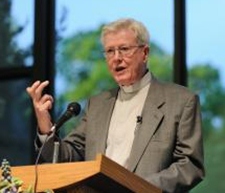
Australian Bishop Geoffrey Robinson in 2008 (by Amy Elliott). At the Seventh National Symposium on Catholicism and Homosexuality held in Baltimore on Friday, retired Australian Roman Catholic Bishop Geoffrey Robinson called for “a new study of everything to do with sexuality” — a kind of study that he predicted “would have a profound influence on church teaching concerning all sexual relationships, both heterosexual and homosexual.”
The National Catholic Reporter covered the event, quoting Bishop Robinson as saying, “If [church] teaching on homosexual acts is ever to change, the basic teaching governing all sexual acts must change.”
Robinson, a priest since 1960 and auxiliary bishop of Sydney from 1984 until his retirement in 2004, told the conference participants, sponsored by New Ways Ministry, that “because sex is so vital a way of expressing love, sex is always serious.”
1. There is no possibility whatsoever of a change in the teaching of the Catholic Church on the subject of homosexual acts unless and until there is first a change in its teaching on heterosexual acts;
2. There is a serious need for change in the Church’s teaching on heterosexual acts;
3. If and when this change occurs, it will inevitably have its effect on teaching on homosexual acts.
And on the topic of same-sex marriage, Catholic priest Ceirion Gilbert, diocesan youth director in south Wales, wrote recently in The Tablet:
“I sense that once again, as so often on issues of sexual morality, that there is a gulf between the diktats of the institution and the “sensus fidelium”, that concept that seems to have almost disappeared in recent years for some reason from the ecclesiastical vocabulary. …
I welcome the debate on the meaning of marriage and its role and purpose in a liberal diverse society. But growing ever stronger in my mind is the fear that while as a Church we worry about language and words – Welsh or English or Latin; rock or plainsong; marriage or civil partnership – the message and meaning that we are here to proclaim is passing us by … .”
Retiring Archbishop of Canterbury Rowan Williams gave a thoughtful lecture on “monastic virtues and ecumencial hopes” this week at the Monasticism and Ecumenism conference at San Gregorio Magno al Celio in Rome.
The gathering was to celebrate the millennium of the monastic community of Camaldoli. Williams was followed by Robert Hale, prior of the New Camaldoli Hermitage in Big Sur, California. The Camaldolese (Benedictine) monastic community invited Archbishop Williams to join their millennial celebrations in Rome in recognition of the close connection of San Gregorio Magno with the Church of England and the Anglican Communion. The ancient Roman monastery on the Caelian Hill which bears the name of Pope St Gregory the Great was the place from which Gregory (himself a monk) sent St. Augustine of Canterbury and a party of fellow Benedictine monks to Britain in the late 590s. The Camaldolese have occupied the monastery buildings at San Gregorio since 1573.
Here’s an excerpt for Lenten reflection:
“This search to hold together what seem like opposites is of course grounded in a deeply traditional Christian anthropology. Christian solitude is the way in which we allow God to challenge and overcome our individualism; in solitude, we are led to recognize the strength and resilience of our selfishness, and the need to let God dissolve the fantasies with which we protect ourselves. In the desert there is no-one to impress or persuade; there it is necessary to confront your own emptiness or be consumed by it. But such solitude is framed by the common life in which we have begun to learn the basic habits of selflessness through mutual service, and in which we are enabled to serve more radically and completely, to be more profoundly in the heart of common life in Christ’s Body, because we have had our private myths and defensive strategies stripped away by God in silence.”–Rowan Williams, Anglican Archbishop of Canterbury
“St. Benedict never said a monk must never go out, never receive a letter, never have a visitor, never talk to anyone, never hear any news. He meant that the monk should distinguish what is useless or harmful from what is useful and salutary, and in all things glorify God.” —Thomas Merton
“The divine mystery is not a collection of problems. As the mystics keep chanting, it is a light so bright that it blinds us, that we are bound to experience it as darkness. To become intimate with it, we have to “unknow” worldly knowledge. We have to give up our tendency to assault it as we would a problem, learning to wait patiently for it to reveal itself as an intimate, at times even shy and vulnerable, lover … The mystery never fails to nourish and heal me. I know that my spirit has been made to contemplate it, to love it as the central reality and treasure of my being. It is my lever for moving the world.”–John Carmody
Pelican bleeding to feed her young, Sculpture, Musee des Beaux Arts, Angers
“Without a mythological context, sacred text, or some symbolic universe to reveal the greater meaning and significance of our life, we can become trapped in our own very small story. And in that limited story, without any larger perspective, our wounds can make us into embittered victims. We just keep repeating the story line to ourselves over and over, and soon it suffocates us like a python.
The Jesus way is to embrace our wounds and accept them as the price of the journey. We can choose to carry our wounds with dignity until the time comes when we forget why they were so important or debilitating to begin with. The wounds in Jesus’ hands, feet and side are still carried in his resurrected body—this is quite significant! (John 20:25-28) I think we carry our wounds until the end; they do not fully go away but keep us humble, patient and more open to trust and intimacy. The healing lies in the fact that those same wounds no longer defeat us or cause us to harm ourselves or others. My favorite mystic, Lady Julian of Norwich, puts it this way, “our wounds become our honors.” —Richard Rohr, ofm
Carol Keehan, president of the Catholic Health Association
A quick round-up of “some things Catholic.” First, the American Catholic Council‘s Janet Hauter has a short reflection (see below) on the American bishops and power that illustrates the deep theological divide at the foundation of of post-Vatican II Catholicism and the current issue between the US Catholic bishops and the Obama administration. Hauter highlights David DeCrosse’s excellent NCR article on the “Bishops’ Conscience Model.”
Next, the newly formed Association of U.S. Catholic Priests (self-described “Vatican II priests“) will have its inaugural convention in June. This is part of a world-wide movement of priests forming their own associations, not under control of the bishops’ conference, in order to discuss issues happening within their churches and speak with a unique voice. (more…)
Wanblee, South Dakota – Oglala Lakota Nation – March 5, 2012. Marie Randall is 92 and standing in the road blocking the trucks carrying segments for the Keystone XL pipeline. Five Lakotas on Pine Ridge Indian land in South Dakota were arrested Monday after attempting to block two tarsands pipeline trucks from entering their land. According to the Lakota activist the six-hour standoff started when the trucks refused to turn around claiming they had “corporate rights that supersede any other law.”
Here are three films on the Pipeline for use with your communities and congregations.
Exposing the environmental and human rights issues in Alberta’s toxic oil sands, the film traces the environmental and social impacts of Canadian oil on both sides of the U.S. border. It follows pipelines from the Alberta oil sands to the American Midwest to witness how U.S. refineries, much like their Canadian counterparts, are increasing toxic dumping into the Great Lakes. It features interviews with top environmentalists, scientists, government officials, local residents and chiefs of nearby aboriginal tribes. Narrated by Neve Campbell. Directed by Leslie Iwerks.
Across the heartland of America, farmers and landowners are fighting to protect their land, their water and their livelihood in what has become a controversial environmental battle. This film spotlights the David and Goliath struggle over the tar sands Keystone XL Pipeline, proposed to be routed from Hardisty, Alberta to the Texas Gulf Coast, crossing the country’s largest freshwater resource, the Ogallala Aquifer, and the fragile Sandhills of Nebraska, posing devastating consequences to human health, livestock, and agriculture. Interviews are featured with farmers and ranchers along the pipeline’s route and with Susan Casey-Lefkowitz, International Program Director, Natural Resources Defense Council. Narrated by Daryl Hannah. Directed and produced by Leslie Iwerks.
At the heart of the multi-billion dollar Oil Sands industry in Alberta, Canada, a doctor’s career is jeopardized as he fights for the lives of the aboriginal people living and dying of rare cancers downstream from one of the most polluting oil operations in the world.
In the 1990s I was able to visit Christ in the Desert Monastery near Abiquiu, New Mexico. Though my time there as a guest was too short, the visit expanded by gaze of the spiritual landscape. The lives of the monks there connected me more deeply with the early Desert Mothers and Fathers. Walking the rough lumenaria-lit trail to the chapel at 3 a.m. under a diamond-studded velvet desert sky was a conversion experience.
Possibly most profound was for the first time in my life I experienced a community of men where I felt completely safe and cared for. Women around the world live in constant fear and rarely have the joys of walking at night alone. At Christ in the Desert I experienced the best of the masculine spirit in service to God.
The UK government has recently initiated a “consultation” on same-sex marriage. The Anglican dean of St. Paul’s Cathedral has urged the Church of England to welcome any couple that wishes to take on the virtues of Christian marriage. The senior Catholic cleric in the UK, Cardinal Keith O’Brien, has strenuously argued the Vatican’s position and opposes and possible change in British law.
This week’s edition of excellent UK Catholic newspaper The Tablet features three prominent Catholic thinkers–Timothy Radcliffe, Martin Pendergast, and Tina Beattie–reflecting on the issue of marriage in the Church.
The Catholic Church does not oppose gay marriage. It considers it to be impossible. If it were possible, then we would have to support it since the Church tells us that we must oppose all discrimination on the basis of sexual orientation. The issue is not gay rights but a wonderful truth of our humanity, which is that we are animals: rational animals according to the medievals, spiritual animals open to sharing the life of God.
In the sacraments, the fundamental dramas of our bodily life are blessed and become open to God’s grace: birth and death, eating and drinking, sex and illness. St Thomas Aquinas says that grace perfects nature and does not destroy it.
Marriage is founded on the glorious fact of sexual difference and its potential fertility. Without this, there would be no life on this planet, no evolution, no human beings, no future. Marriage takes all sorts of forms, from the alliance of clans through bride exchange to modern romantic love. We have come to see that it implies the equal love and dignity of man and woman. But everywhere and always, it remains founded on the union in difference of male and female. Through ceremonies and sacrament this is given a deeper meaning, which for Christians includes the union of God and humanity in Christ.
This is not to denigrate committed love of people of the same sex. This too should be cherished and supported, which is why church leaders are slowly coming to support same-sex civil unions. The God of love can be present in every true love. But “gay marriage” is impossible because it attempts to cut loose marriage from its grounding in our biological life. If we do that, we deny our humanity. It would be like trying to make a cheese soufflé without the cheese, or wine without grapes.
From the beginning, Christianity has stood up for the beauty and dignity of our bodily life, blessed by our God who became flesh and blood like us. This has always seemed a little scandalous to “spiritual” people, who think that we should escape the messy realities of bodies. And so the Church had to oppose Gnosticism in the second century, Manichaeism in the fourth, Catharism in the thirteenth. These all either had contempt for the body or regarded it as unimportant.
We, too, influenced as we are by Cartesianism, tend to think of ourselves as minds trapped in bodies, ghosts in machines. A friend said to me the other day: “I am a soul, but I have a body.” But the Catholic tradition has always insisted on the fundamental unity of the human person. Aquinas famously said: “I am not my soul.”
Lynne Featherstone, the Equalities Minister, is right to say the Churches do not have an exclusive right to determine who can marry – but nor does the State, because we cannot simply decide by some mental or legal act what it means to be a human being. Our civilisation will flourish only if it recognises the gift of our bodily existence, which includes the amazing creativity of sexual difference, lifted up into love. Giving formal recognition to this through the institution of marriage in no way disparages the blessings brought to us by gay people.
Timothy Radcliffe OP is a former master of the Dominicans. His latest book is Taking the Plunge: living baptism and confirmation, to be published by Continuum on 28 April.
Timothy Radcliffe is trying to be typically generous to lesbian and gay people in his comments. Nevertheless when he states, in much less strident tones than some religious leaders, that “marriage” cannot be redefined by either State or Church, he has got himself into a double bind. Church and State have frequently redefined marriage and its structures over centuries due to a variety of factors: cultural patterns and religious influences, as well as social and human development. The model of marriage that we have today is rooted more strongly in eighteenth- and nineteenth-century social patterns than it is in earlier religious traditions.
In the Hebrew Scriptures, David could write of the love shared between himself and Jonathan as surpassing even that of a man and woman. The relationship between the Roman centurion and his beloved “servant” who was healed (made whole) by Jesus in the gospel story is now widely accepted by scholars to indicate an affirmation of the love between the two men. Then there is the love between Ruth and Naomi, between Felicity and Perpetua, if the traditions are to be respected.
I believe Timothy Radcliffe risks idealising marriage too strongly, seeing it through his own dedicated prism of vowed celibacy. He states that “marriage is founded on the glorious fact of sexual difference and its potential fertility”. But the social and anthropological structures of marriage are rooted not in biology but in relationality. As the Hebrew Scriptures say: “It is not good for a person to be alone.” Also, what of those who clearly have no potential for fertility – are they to be prevented from marrying, limited to a version of civil unions?
Faith communities have redefined marriage throughout their history, countenancing and rejecting polygamous marriage, allowing divorce and remarriage, and the Second Vatican Council stated that the ends of marriage are twofold, not solely based upon procreation. In medieval times the focus was so strongly on betrothal rites that marriage, in some places, was a rarity, since so few people could fulfil the social and economic requirements for a marriage to take place before the altar. And what of all those “sworn brotherhood” rites, adapted also to include same-sex female partners, identified by researchers such as Alan Bray and John Boswell? In spite of all this, I am not a supporter of same-sex marriage for myself. I hold, conscientiously, that the institution of marriage, in spite of all its cultural and social variability, is essentially patriarchal and not a status I wish to adopt.
The essence of civil unions is that they are based on an equality of persons legally expressed in a mutual signing of a contractual covenant, rather than expressed in vows of subjection, one to another. It is this value of equality that same-sex couples in civil unions bring to the common good. Rather than buying into a marital bond, the sacramentality of such unions is what many of us strive to live out. It is to be hoped this will increasingly be recognised by faith communities and their leadership. Happily, many congregation members, parents and families have got this message.
Martin Pendergast is gay, Catholic and a founder member of the Cutting Edge Consortium, which promotes equality and human rights across religions and beliefs.
If we allow the marriage between Christ and the Church to become the mystery within which all human loving participates and towards which all human love is drawn, and if we accept that sexual love is good even when it is non-procreative, can we not go beyond this “impossibility” of gay marriage?
Marriage is not just about sex but about a lifelong commitment to bodily unity in difference with another human being in all the interwoven materiality of our lives. Yes, of course, we are our bodies, and in some species (not all) the reproduction of the species depends upon heterosexual intercourse. Yet couldn’t marriage become an inclusive rather than an exclusive sacrament?
A good heterosexual marriage models a fertile way of human loving that entails a lifelong commitment to the other and an openness to the vulnerable outsider (a newborn child is definitely such a person, but so is any person in need of the love and stability that a loving relationship can offer). A sexual relationship – homosexual or heterosexual, fertile or infertile – which is turned in on itself and closed to others, which lacks permanent commitment for better or worse, or which is violent and abusive, is not what Christians mean by marriage.
If we want to understand the sacrament, we need to look to Christ and the Church, not to the abundant diversity of participation within that sacramental love that constitutes our bodily human relationships. I’ve been married for 37 years and I have four children, but the loving relationships of my gay friends have helped me to understand more deeply what marriage means as a partnership of equals. I hope that they in turn have been enriched by their married heterosexual friends, and have better understood what their love means within the sacramental love of Christ and the Church.
In these times of radical change in our understanding of sexuality and human dignity (especially the full and equal dignity of women in this life and not just in the life to come), maybe we heterosexuals need the marriages of our homosexual friends to help us to understand what marriage looks like when it’s not corrupted by traditions of domination and subordination.
Professor Tina Beattie is director of the Digby Stuart Research Centre for Catholic Studies at the University of Roehampton.
“We only become enlightened as the ego dies to its pretenses, and we begin to be led by soul and Spirit. That dying is something we are led through by the grace of God and by confronting our own shadow. As we learn to move into a Larger Realm, we will almost naturally weep over those sins, as we recognize that we are everything that we hate and attack in other people. Then we begin to become and to live the Great Mystery of compassion.
God’s one-of-a-kind job description is that God actually uses our problems to lead us to the full solution. God is the perfect Recycler, and in the economy of grace, nothing is wasted, not even our worst sins and our most stupid mistakes.” –Richard Rohr, ofm
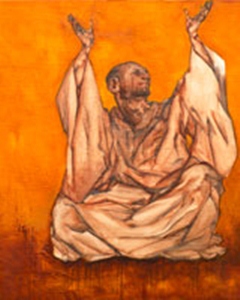 Retiring Archbishop of Canterbury Rowan Williams gave a thoughtful lecture on “monastic virtues and ecumencial hopes” this week at the Monasticism and Ecumenism conference at San Gregorio Magno al Celio in Rome.


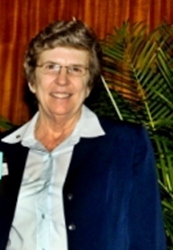
 The UK government has recently initiated a “consultation” on same-sex marriage. The Anglican dean of St. Paul’s Cathedral has urged the Church of England to welcome any couple that wishes to take on the virtues of Christian marriage. The senior Catholic cleric in the UK, Cardinal Keith O’Brien, has strenuously argued the Vatican’s position and opposes and possible change in British law.


