-
G.C. Waldrep: ‘A Poem is an Ark’
 “A poem is an ark. It is a vessel that carries a message across a void. And–this is the crucial difference, I think–carries that message to an audience that will include people who do not know the poet, whom the poet does not know. Perhaps not now. Perhaps not ever.
Prayer is that which conveys a message to God, who is either known or knowing, more or less by definition. Poetry is that which conveys a message to a stranger.”–G.C. Waldrep
From “Messages to Strangers,” (A God in the House, Tupelo, 2012)
-
Gerald Stern: ‘Arriving at a Condition of Faith’
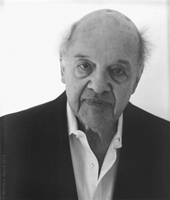
“Poets–maybe all artists–get away from their own religious upbringing in order to arrive at a condition of faith.”–Gerald Stern
From “The Devotion of a Mourner” in A God in the House, (Tupelo, 2012).
-
Poetry: ‘If There Must Be A God In the House’

Less and Less Human, O Savage Spirit
By Wallace StevensIf there must be a god in the house, must be,
Saying things in the rooms and on the stair,Let him move as the sunlight moves on the floor,
Or moonlight, silently, as Plato’s ghostOr Aristotle’s skeleton. Let him hang out
His stars on the wall. He must dwell quietly.He must be incapable of speaking, closed,
As those are: as light, for all its motion, is;As color, even the closest to us, is;
As shapes, though they portend us, are.It is the human that is the alien,
The human that has no cousin in the moon.It is the human that demands his speech
From beasts or from the incommunicable mass.If there must be a god in the house, let him be one
That will not hear us when we speak: a coolness,A vermilioned nothingness, any stick of the mass
Of which we are too distantly a part.Excerpted from The Voice That is Great Within Us (edited by Hayden Carruth, Bantam, 1983)
-
Sally Ride – Ad Astra Per Alas Fideles
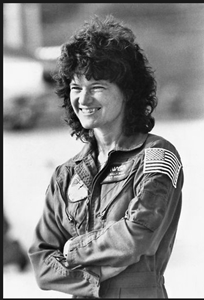 Remembering the extraordinary Sally Ride (May 26, 1951 – July 23, 2012).
In the first half of the 1980s, I was making my way through college at the University of California’s “farm school” in the crunchy, sleepy town of Davis. Between working toward a BA in Science (with an eye toward marine biology and aquaculture) and keeping my GPA up with classes in world religions, philosophy, and advanced poetry, I spent a lot of time at the Women’s Resources Center.
I can’t remember which building it was in, but remember it was in the basement. It was cool, happy, and had couches. I’d lay down there for hours memorizing chemical equations and Elizabeth Bishop. I loved listening to the women’s voices swirling around me. These were women living beyond the social norms in so many different ways. I loved the creative energy.
It was in the hallway outside the Women’s Center that I met Sally Ride. I have no idea what she was doing on campus. Maybe she came to give a talk. But as I was heading in to the Center, she was heading out, walking with a couple of friends and all laughing hysterically. She was slim, wearing a t-shirt and jeans and no shoes. (I have no idea why she wasn’t wearing shoes. I just remember thinking, “Wow! It must be nice to walk barefoot after having to wear those heavy space suits.” Though I realize now that they didn’t have to wear those lead-lined boots in the shape shuttle!)
I can’t remember if she was wearing the shirt or if one of her friends had it on, but it said “Ride Sally, Ride!”–the refrain from Wilson Pickett’s “Mustang Sally” that became her motto worldwide, as the first American woman in space and the youngest.
I stopped her in the hallway and shook her hand, introduced myself, saying how excited I was to meet her and that I was studying science at UC Davis (women in science was a passion of hers, as her career attests). She shook my hand and thanked me for introducing myself and off they went. “Ride, Sally Ride,” I called out as they left and she waved her hand.
She was an extraordinary woman. Brilliant and gutsy and with enormous personal courage and conviction. Her work on the Challenger shuttle disaster investigation committee was nothing short of heroic as she supported whistleblowers who had been saying for months that the O-rings were going to fail in cold weather. Her work on climate change has been prophetic.
Both Sally’s parents were Presbyterian elders and her sister in a Presbyterian minister. Below is an excerpt from Sally’s sister, Bear Ride:
“Sally Ride was the first American woman to go into space and she was my big sister. Sally died peacefully on July 23rd after a courageous 17-month battle with pancreatic cancer. I was at her side. We grew up in Encino, CA. Our parents, Joyce and Dale Ride, encouraged us to study hard, to do our best and to be anything we wanted to be. In 1983 Newsweek quoted our father as saying, ‘We might have encouraged, but mostly we just let them explore.’ Our parents encouraged us to be curious, to keep our minds and hearts open and to respect all persons as children of God. Our parents taught us to explore, and we did. Sally studied science and I went to seminary. She became an astronaut and I was ordained as a Presbyterian minister.
Sally lived her life to the fullest with boundless energy, curiosity, intelligence, passion, joy, and love. Her integrity was absolute; her spirit was immeasurable; her approach to life was fearless. Sally died the same way she lived: without fear. Sally’s signature statement was ‘Reach for the Stars.’ Surely she did this, and she blazed a trail for all the rest of us.”
Sally, Ad astra per alas fideles! (“to the stars on the wings of the faithful”)
More on the death and life of Sally Ride:
Sally Ride pushed us to understand our climate and our world by Philip BumpWhy Sally Ride waited until her death to tell the world she was gay by Alan Boyle
American Woman Who Shattered Space Ceiling by Denise Grady
-
Ramadan: Remembering Our Utter Dependence on the Unutterable One
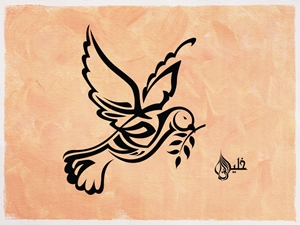
by Khaleelullah Chemnad Our Muslim cousins are in the season of Ramadan, from the first glimpse of the new moon on July 19 until the next new moon on August 18. A chance for all of us to remember our creaturliness and our utter dependence on the Unknowable and Unutterable One.
During this season consider reading The Illuminated Prayer: The Five-Times Prayer of the Sufis by Coleman Barks and Michael Green or The Heart of the Qu’ran by Lex Hixon to explore the beauty and grandeur of Islamic spirituality.
Below is an excerpt from Rabia Harris’ excellent short essay on Islamic Nonviolence. Rabia is the founder of the Muslim Peace Fellowship at the Fellowship of Reconciliation.
“… The Arabic term for that which is truly in charge in the world, upon which nonviolence depends, is ALLAH. You can hear that name in your heartbeat. In English, we generally refer to God. There’s only one.
The Muslim Peace Fellowship holds that nonviolence is the core social teaching of all the great religious traditions, and has been carried by all of the Messengers of God.
An Islamic approach to nonviolence will, however, differ in important ways from other understandings. Every religious community takes its distinctive quality from the Messenger who founded it. It follows that the community of Muhammad is perfumed with the perfume of Muhammad, peace and blessings be upon him. And Muhammad {peace and blessings be upon him: PBBUH}, like all of us, possesses both a worldly and a spiritual dimension.
-
Thomas Merton: Both Question and Answer

“The life of contemplation implies two levels of awareness: first, awareness of the question, and second, awareness of the answer. Though these are two distinct and enormously different levels, yet they are in fact an awareness of the same thing. The question is, itself, the answer. And we are ourselves are both.”–Thomas Merton
From New Seeds of Contemplation by Thomas Merton (New Directions Books, p.4)
-
In Colorado, A Cry From The Heart

Aurora, CO: Prayer vigil for victims of shooting (Ted S. Warren/AP) Continuing to reflect on the evil in Aurora, Colorado… How it gripped a young man, James Holmes … How it relishes and feeds off of the rippled effects of violence in victims and families and ultimately anyone who hears the story … How it must be confronted with the lamentations of Jeremiah and the righteous accountability of Job. Job …who gets to ask God face-to-face why evil happens and gets no satisfactory reply.
Below is an excerpt from a lovely letter written by a Lutheran pastor in Fort Collins. It helped me keep my reflections grounded in the unknowable heart of God.
… In the coming days and weeks, you will probably encounter well-meaning people who will say to you, it is all part of God’s plan, even if we don’t understand it now. Everything happens for a reason. If these words are helpful for you to hear, I’m glad. But if these words tear at already-raw places in you and fill you with anger or despair, please know this: not all people of faith believe these things. I do not believe them.
The God I know in Jesus Christ does not use natural disasters or human-caused massacres to reward some and punish others. I believe God is able to reach into sin and death and pull out healing and life; this is a different thing from engineering tragedy for a so-called greater purpose. The God I serve and proclaim to others does not cause or desire human suffering.
I also suspect many of you, like us, may be asking why. Why did this happen? The media and the justice system will do their best to answer this question in the literal sense, trying to determine why James Holmes apparently entered a movie theater and began shooting at random. In a sense, however, it doesn’t matter. It doesn’t matter, because even if we get a “why”–an explanation from the shooter, or a more comprehensive understanding of the circumstances that comes with time–these answers will still not be enough.
In its deepest sense, the question “why?” is not a request for a logical explanation; no logical explanation will justify or make sense of what is indefensible and senseless. It is a cry of the heart, an expression of grief. It is a cry as ancient as it was new again this morning. In the Bible, it is “Rachel weeping for her children and refusing to be comforted, because her children are no more” (Jeremiah 31:15). …–Meghan Johnston Aelabouni, Pastor, Trinity Lutheran Church in Fort Collins, CO
Read the whole letter.
-
George Kodhr: When ‘God’ Becomes a Word for Will to Power
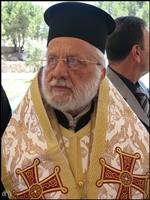 Remembering the victims of violence, as well as the souls of the perpetrators …
“When the soul is invaded by the thirst for blood, faith gives way to ideology. The religious vocabulary is maintained but the words change their content. The hieratic society that empties the name of God of all content practices a horrible paganism. “God” becomes just a word used to express the will to power and the religious symbol becomes a sign of terror. In this way God can ultimately be transformed first into a concept, and then into an idol. Our faith in God at that point is based on this idolatrous foundation. It is now God who scatters death among our enemies, not us. Holiness gives way to heroism: the warrior is holy, salvation through combat on behalf of God. …
We do not sufficiently realize that murder springs from the heart, that no evil is external, and that violence is simply the forthright expression of the vanity of tribes who cannot recognize God’s face in the other. A Christian people, whose heart has been converted to the Holy Face and which lives the kenosis of the face of God, may in fidelity to the absolute never produce anything spectacular in this world, but simply transmit the words that have been said to it. Carrying the cross of Jesus in obedience to the commandment of love, it will bear witness, in the darkness of history, to the truth of Jesus, the eternal Passover.”–Metropolitan Archbishop George Khodr
Excerpted from Violence and the Gospel by Metropolitan Archbishop George (Khodr), Orthodox Archdiocese of Byblos and Botris, Church of Antioch. This article was first given at a conference in Lyon of the Association of Christians Against Torture, and appeared in Supplément de la vie Spirituelle, Sept. 1987.
-
Africa Elects First Female Anglican Bishop

Bishop Ellinah N. Wamukoya of Swaziland “Africa has elected its first female Anglican bishop. On 18 July 2012 an Elective Assembly meeting in Mbabane elected the Rev. Ellinah Wamukoya as fifth Bishop of the Diocese of Swaziland.
Bishop-elect Wamukoya (61) will be the first female Anglican bishop in Africa and the continent’s third female bishop of a mainline church – in 2001 Bishop Purity Malinga was elected the Methodist bishop of South Africa, and in 2008 the Rt. Rev. Joaquina Nhanala was elected the Methodist bishop of Mozambique.
Educated at the University of Botswana, Lesotho and Swaziland, the new bishop has exercised a bi-vocational ministry. She serves as Anglican chaplain at the University of Swaziland and at St Michael’s High School in Manzini. Bishop-elect Wamukoya is also the Town Clerk and CEO of the City Council of the town of Manzini and is a skilled and seasoned financial administrator.
The new bishop enters the stage at a difficult moment in the political and ecclesial life of Swaziland. Her predecessor, the Rt. Rev. Meshack Mabuza has been a sharp critic of King Mswati III, the last absolute monarch in sub-Saharan Africa. King Mswati has ruled the landlocked mountain kingdom since 1986 and has been denounced by church and civil society leaders for mismanagement of the economy. The king also has earned a public image as a profligate ruler unconcerned with his subjects’ poverty. …”
Read more at Anglican Ink.
-
Eve Jailed for Choosing Life
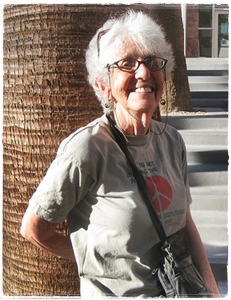 On June 27, 2012, Eve Tetaz, 80, was found guilty of violating 40 USC 6135 for holding a banner on the grounds of the U.S. Supreme Court protesting the use of capital punishment in the United States.
Eve was initially sentenced to a $350 fine, a 3-year probationary term and stay-away from the U.S. Supreme Court, and a 30 day sentence, all suspended but 15 days. However, at her June 27 sentencing before Judge McKenna Eve said she could not in good conscience cooperate with fines, probation, or a stay way order from the court grounds. Consequently, she was sentenced to 60 days in D.C. Jail – the maximum statutory sentence allowed.
“I’ve spoken with Eve a few times by phone,” said her sister. “Her spirits are good, although she still is not receiving all her medicines. Visiting hours are restrictive – one hour once a week. She still does not have commissary privileges and they confiscated her pen and writing paper so she’s not able to write except when a fellow inmate gives her paper and pen. She enjoys being with her co-prisoners and is doing some tutoring.”
I’ve been arrested with Eve, a former public school teacher and member of Eighth Day Faith Community, several times. Fearless, clear, willing to put her body on the line for justice when so many others can not. If you would like to send letters of support, you can address them to: Eve Tetaz Inmate # 316087, DC JAIL, 1901 E St SE, Washington, D.C. 20003. Please keep her in your prayers — especially that she receives all her medications.
-
Subscribe
Subscribed
Have a WordPress.com account? Log in now.

