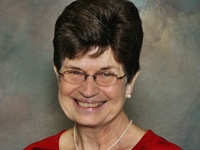
“Our gift to the church is to be with those who have been made poorer, with those on the margins. Questions there are much less black and white because human realities are much less black and white. That’s where we spend our days.” — Sister Pat Farrell, president of the Leadership Conference of Women Religious and the vice president of the Sisters of St. Francis in Dubuque, Iowa.
Read the transcript and listen to Sr. Pat Farrell’s interview with NPR’s Terry Gross on Fresh Air (July 17, 2012).
Rabbi Susan Talve is founding Rabbi of Central Reform Congregation of St. Louis, MO. She shares her story of the decision by her congregation to open their doors to the Roman Catholic Womenpriests for their ordination ceremony. Thanks to Rabbi Waskow and The Shalom Center for sharing this story:
Standing with the Sisters
When the line between the personal and the political dissolves, it is usually due to religion.
In the summer of 2007, two women came to our synagogue to tour the sanctuary. Someone had told them that the sanctuary is a welcoming space used for many different interfaith activities. Indeed, a fundamental value of CRC is that our sanctuary provides a safe space for change, that we always practice radical hospitality. Afterwards, the women came to me in my office and said, “We would love to have our ordination here.”
Our response was gratitude for the gift they were giving us. Here is why:
When we began our congregation 28 years ago, it was with a core value never to own a building. This was so that we would never have to put more resources into bricks than people. We also have a strong commitment to serving the city of St Louis where there seemed to be plenty of buildings that we could recycle and reuse.
But our growth rate made it challenging to stay in the church that originally housed us, and our commitment to being ‘”green” made it difficult to move into an older, inefficient building. So, we built a building after all, promising that we would practice radical hospitality and that it would be a disabled-accessible resource for the entire community. The request from these women to house their ordination offered us another way of fulfilling our promise.
But this act of “radical hospitality” was radical indeed. For the women who sought to use our sanctuary for their ordination were Roman Catholics, and they planned to be ordained as Roman Catholic priests.
The risk involved in ordaining these two women was that they – and therefore we – were challenging the Roman Catholic hierarchy in St Louis.
Our synagogue is the only one in the “parish” of the Archdiocese. Our city’s namesake is Louis IX, sainted for his role in the Crusades and for burning thousands of Talmudic commentaries and other valuable Jewish books in 1242. But in this generation, we and the Archdiocese have often stood together — for immigration reform, for access to health care, and for other causes that champion the rights of the most vulnerable. I had also been invited to be in the front rows at the Cathedral when the former Pope John Paul visited.
The board of our congregation decided that we should host the ordination in spite of the tremendous controversy it might bring. We then received pressure from the Jewish and Catholic leadership to revoke our invitation. Leaders in both the Jewish and Catholic communities warned that we were setting back Catholic-Jewish relations two hundred years. I personally received death threats from anonymous sources.
The day of the ordination, the Archbishop at the time sent a videographer to the service who secretly taped the crowd. Many of the Catholic leaders who dared to come that day lost their jobs. Some were even excommunicated, a terrible threat to those who believe in the essential nature of the sacraments to one’s life.
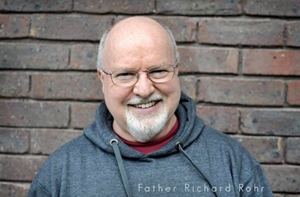
“I’m told that the word “nonviolence” did not exist (at least in the English and German languages) until the 1950s. There’s a reason for that: the notion didn’t exist in our consciousness. We didn’t create a word for it because we didn’t get it yet! When Gandhi came along, he pointed out that every religion in the world knows that Jesus of Nazareth taught and lived nonviolence except one religion—Christianity. In very short order, after Gandhi, this became obvious to many wise people throughout the world.
Martin Luther King, Jr. was the one who most influenced our American culture regarding nonviolence. That’s why I speak of it as a recovery of nonviolence. We had it, but we couldn’t hear it, especially after Christianity became the imperial religion. When you’re imperial, you can’t hear any talk of nonviolence. You have to be violent to be an empire. So after 313 AD, we pretty much lost the nonviolent teaching of Jesus and it was not recovered until the twentieth century. It’s sort of unbelievable, but in between, nonviolence was almost universally forgotten, denied, or ignored as Christianity needed to justify its own violence.”–Richard Rohr, OFM (Adapted from Fr. Richard’s teachings on his lineage)
Lynne Hybels, co-founder of the evangelical mega-church Willow Creek Community Church near Chicago, has branched beyond Willow Creek to become a leading Christian voice for women around the world. While proofing her regular column for Sojourners, I found this prayer below.
How wonderful if we read this aloud in our churches! (And since some still cling to the notion that “man” should be interpreted universally, then I think we could do the same for “woman” and interpret it universally.)
Dear God, please make us dangerous women.
May we be women who acknowledge our power to change, and grow,
and be radically alive for God.
May we be healers of wounds and righters of wrongs.
May we weep with those who weep and speak for those who cannot
speak for themselves.
May we cherish children, embrace the elderly, and empower the poor.
May we pray deeply and teach wisely.
May we be strong and gentle leaders.
May we sing songs of joy and talk down fear.
May we never hesitate to let passion push us, conviction compel us,
and righteous anger energize us.
May we strike fear into all that is unjust and evil in the world.
May we dismantle abusive systems and silence lies with truth.
May we shine like stars in a darkened generation.
May we overflow with goodness in the name of God and by the power of Jesus.
And in that name and by that power, may we change the world.
Dear God, please make us dangerous women. Amen.
Dr. Suzanne Simard, University of British Columbia, has a 4-minute video on forest communication systems, her most recent ecosystem research.
As you watch the film, meditate on Isaiah 14:6-8:
The Lord has broken the rod of the wicked, the scepter of the rulers, which in anger struck down peoples with unceasing blows, and in fury subdued nations with relentless aggression. All the lands are at rest and at peace; they break into singing. Even the pine trees and the cedars of Lebanon exult over you and say, “Now that you have been laid low, no woodsman comes to cut us down.”
For you science wonks, Dr. Simard’s professional publication on this topic is published as “Mycorrhizal networks and seedling establishment in Douglas-fir forests Biocomplexity of Plant–Fungal Interactions” by S.W. Simard (Biocomplexity of Plant-Fungal Interactions, Chapter 4, edited by Darlene Southworth. John Wiley & Sons, Inc. 2012)
I’ve been on the West Coast for a much needed, much enjoyed vacation. Here’s a photo I took at Bodega Head on the north coast of California. And below a scrap of poem from the Welsh poet Edward Thomas.
Mother, the root of this little yellow flower
Among the stones has the taste of quinine.
Things are strange to-day on the cliff. The sun shines so bright,
And the grasshopper works at his sewing-machine
So hard. Here’s one on my hand, mother, look;
I lie so still. There’s one on your book.
“An option for the poor does not mean that we reject those who ‘have,’ but will be rejected by them. When we are classed with the poor, it is a sign that we are living out our option.” — Medical Mission Sisters, Rubiataba, Brazil, 1978
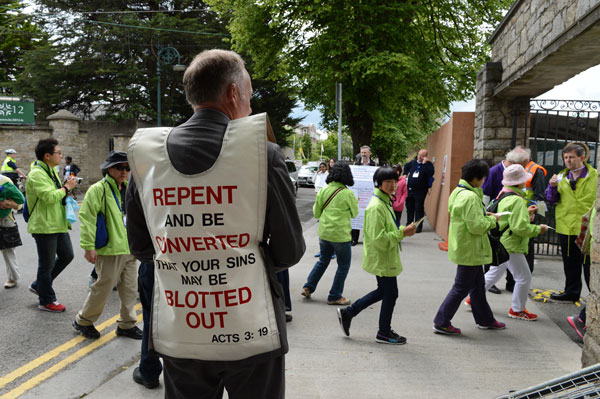
Thousands of pilgrims have travelled to Dublin for the International Eucharistic Congress, which comes at a time when public trust in the Catholic Church has been deeply damaged by the clerical sexual abuse scandal and the criminal conspiracy to cover it up. The tone of many of the addresses was subdued – no false rhetoric like we are hearing here in the U.S. – just an acknowledgement that the Church’s journey to renewal will be a long one and the male institutional hierarchy of the Catholic Church must, with great humility, ask forgiveness of those it let down.
Read key speeches from the Dublin Congress:
Archbishop Diarmuid Martin: the Church’s journey to renewal will be long: “The 50 years since the Second Vatican Council have brought many graces to the Church in Ireland. The message and teaching of the Council still constitute the blueprint for our renewal. But those 50 years have also been marked with a darker side, of sinful and criminal abuse and neglect of those weakest in our society: children, who should have been the object of the greatest care and support and Christ-like love. We recall all those who suffered abuse and who still today bear the mark of that abuse and may well carry it with them for the rest of their lives. In a spirit of repentance, let us remember each of them in the silence of our hearts.”
The Pope’s representative, Cardinal Ouellet, apologizes to abuse victims on behalf of the Church: “I come here with the specific intention of seeking forgiveness, from God and from the victims, for the grave sin of sexual abuse of children by clerics. We have learned over the last decades how much harm and despair such abuse has caused to thousands of victims. We learned too that the response of some Church authorities to these crimes was often inadequate and inefficient in stopping the crimes, in spite of clear indications in the code of Canon Law. In the name of the Church, I apologize once again to the victims … ”
Cardinal Sean Brady apologises for the Church’s failure to safeguard children and young people: “There is a much larger stone that sits in a place of honour here before this altar. It will serve as a reminder of those children and young people who were hurt by a Church that first betrayed their trust and then failed to respond adequately to their pain. The words of the Gospel echo in my mind: “It is not the will of your Father that any of these little ones should be lost”. May God forgive us for the times when we as individuals and as a Church failed to seek out and care for those little ones who were frightened, alone and in pain because someone was abusing them. That we did not always respond to your cries with the concern of the Good Shepherd is a matter of deep shame. We lament the burdens of the painful memories you carry. We pray for healing and peace for those whose suffering continues. I want to take this opportunity of the 50th International Eucharistic Congress to apologise for the times when some of us were blind to your fear, deaf to your cries and silent in response to your pain. My prayer is that one day this stone might become a symbol of conversion, healing and hope.”
Vera BrittainMy summer reading includes Jacqueline Winspear’s Maisie Dobbs novels set in England during and after World War I. Maisie is an intriguing character is an age when much is changing for women–as suffragettes they are taking to the Parliament their fight for the right to vote; at the same time, the war with Germany is bringing many women to a very different “front line.”
Winspear’s novels prompted me to re-read some of the WWI “war poets,” whose description of war’s realities make them anything but jingoistic. Below is a poem by Vera Brittain who served as a Voluntary Aid Detachment (VAD) nurse and requested to be sent to France in 1917. She was stationed at 24 General Hospital at Étaples, where she nursed German prisoners of war. The poem below reflects her experience:
THE GERMAN WARD by VERA BRITTAIN
When the years of strife are over and my
recollection fades
Of the wards wherein I worked the weeks
away,
I shall still see, as a visions rising ‘mid the War-
time shades,
The ward in France where German wounded
lay.
I shall see the pallid faces and the half-sus-
picious eyes,
I shall hear the bitter groans and laboured
breath,
And recall the loud complaining and the weary
tedious cries,
And the sights and smells of blood and wounds
and death.
I shall see the convoy cases, blanket-covered
on the floor,
And watch the heavy stretcher-work begin,
And the gleam of knives and bottles through
the open theatre door,
And the operation patients carried in.
I shall see the Sister standing, with her form
of youthful grace,
And the humour and the wisdom of her
smile,
And the tale of three years’ warfare on her thin
expressive face-
The weariness of many a toil-filled while.
I shall think of how I worked for her with
nerve and heart and mind,
And marvelled at her courage and her skill,
And how the dying enemy her tenderness
would find
Beneath her scornful energy of will.
And I learnt that human mercy turns alike to
friend or foe
When the darkest hour of all is creeping
nigh,
And those who slew our dearest, when their
lamps were burning low,
Found help and pity ere they came to die.
So, though much will be forgotton when the
sound of War’s alarms
And the days of death and strife have passed
away,
I shall always see the vision of Love working
amidst arms
In the ward wherein the wounded prisoners
lay.
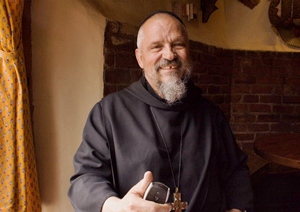
“The only thing that makes monastic life possible is keeping one’s eyes on the Lord and not on one’s brothers or even on the life itself. Saint Benedict knew that he was setting up a life that would not be easy, even though he calls it only a Rule for beginners. One of the big challenges today is about the use of time. Modern people want hours of personal time for their own enjoyment and relaxation. Our Rule does not have that kind of time. Contemplative life is not about sitting around doing nothing. It is not about just thinking of God and good things.
Serious monastic life is about being on the go all day long: from prayer to work to reading to eating to sleeping. We have no large expanses of time in which we just sit and do nothing. We actually have some personal time. Saint Benedict would never have dreamed of such a thing. He does talk about writing letters and so perhaps there were some personal moment from time to time. Because a monk is always on the go and always has things to do, the life of prayer is picked up in that way. We must learn how to pray while we are singing our prayers. Singing itself is a discipline. We must learn how to pray while we are working, and we must concentrate on the work. We must learn to pray while we are reading Scripture and other spiritual books.
On good days, after spending the first hour of the day in common prayer, called Vigils, then I go to my cell and meditate for 45 minutes until the next common prayer. After Lauds and Mass, I have another opportunity of about 45 minutes that I can also use for meditation. Then we have the work meeting. Most often after that I teach a class to the men in formation. Then we pray Terce in the Church and I begin our normal work period and work until 12:40 pm. Then there is a short break before praying Sext in the Church. Then there is the main meal of the day, which ends about 1:50 pm. That means that from rising at 3:30 am until 1:50 pm, there has been no personal time at all.
After the main meal there is time for a siesta or exercise or some personal reading. This is a period of about an hour and a half. After that there is prayer again at 3:30 pm, the Office of None. Then there is Holy Reading until 5:20 pm, when we have adoration of the Blessed Sacrament for a half hour and then Vespers for a half hour. So at 6:20 pm there is an optional supper, which I don’t normally take. I usually come to my room again and work or read for the 50 minutes until the evening Chapter meeting at 7:10 pm, which is followed by Compline at 7:30 pm. The day ends about 7:55 pm. I am usually in bed by 8:15 pm and asleep by 8:30 pm.
This is a life of leisure? No! And it is not supposed to be. It is a life that can focus all of one’s energies on seeking God. There is very little time to do anything else. Monks who try to live some other kind of life here simply don’t manage to persevere. Even those of us who do persevere have to keep working at it. It would be very easy to stop praying and find ways to do other things. For myself, during all of these years, I have fluctuated from being really serious about seeking God to periods of not caring much, one way or the other. Somehow, I have always been brought back to seeking God. I know that is a grace of God. My own witness is that this is a truly wonderful life when I strive to live it well. The older I get, the more this life appeals to me and the more I strive to live it well. In so many ways, it is not different from the life of anyone who is serious about looking for God.”–Abbot Philip, OSB



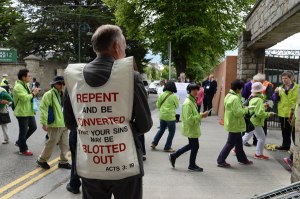 Thousands of pilgrims have travelled to Dublin for the International Eucharistic Congress, which comes at a time when public trust in the Catholic Church has been deeply damaged by the clerical sexual abuse scandal and the criminal conspiracy to cover it up. The tone of many of the addresses was subdued – no false rhetoric like we are hearing here in the U.S. – just an acknowledgement that the Church’s journey to renewal will be a long one and the male institutional hierarchy of the Catholic Church must, with great humility, ask forgiveness of those it let down.