On FaithStreet, Sr. Joan Chittister also put out a great short essay on why God doesn’t want to hold women back and never has wanted to. It’s our human sin that keeps us from humility before God and equality among humanity.
“Don’t believe what they’re saying. The world is not in upheaval in our era because radical feminism has gotten out of hand.
No, our world is being shaken to the core and will never again be the same because its old systems are being challenged, its old certainties being rethought.
The political world has had to give up its reliance on the securities of the old geography. The social world has had to give up its notions of the natural privileges of class. The White West has had to give up its ideas of racial preeminence. And men are having to give up the old theology of male superiority.
In that old world, whole classes of people could be underdeveloped, abused, enslaved, oppressed, and disenfranchised — all with impunity. Unknown and unchallenged, local potentates, all male, declared their autocracy, and all-male institutions of every system institutionalized it. It was a world of nobles over peons, the powerful over the powerless, freemen over slaves, men over women. And all of them insisting to the oppressed that such stratified systems were, ironically, for their own good.
Most serious of all, religious people argued that God wanted it that way.
In the West, they said that the Judeo-Christian creation story taught that God designed, defined and created a hierarchical world that developed from one stage to another, from the dust of the earth to the crown of creation, Adam, the male agent of a male God.
In this world, women were not “bone of my bone, flesh of my flesh,” equal partners in the human enterprise, as those words imply. Instead, women were labeled “help-mates” rather than, as David Freedman points out, ”a power equal to,” as the corresponding Hebrew term is translated in other places in scripture. …”–Joan Chittister, OSBRead the rest.
Last week Pope Francis addressed the families of those killed by the Italian mafia. After expressing his sorrow, hope, and solidarity with the victims, he went on to address directly those engaged in mafia economics, corruption, and violence:
“I feel that I cannot finish without saying a word to those who are absent today, to the absent protagonists: to the men and women of the mafia. Please, change your lives, convert, stop what you are doing, stop doing harm. And we pray for you. Convert, I ask you this on my knees; it is for your own good. This life you are living now will not bring you pleasure, it will not bring you joy, it will not bring you happiness. Power, the money you have now from your many dirty dealings, from your many mafia crimes, is blood money, it is power that is stained with blood, and you will not be able to take it with you to the next life. Repent, there is still time, so as not to end up in hell. This is what awaits you if you continue on this path. You have a father and a mother: think of them. Cry a little, and repent.”–Pope Francis
As someone who regularly invites non-Catholic Christians to Mass with me I sometimes get this response afterward: “I love that the priest wears a dress and does the dishes, but why is he always a man?”
Joan Chittister writes:
“The major problem of eucharistic theology in our century is not that people do not understand and value the meaning of Eucharist. The problem is that they do.
The Eucharist, every child learns young, is the sign of Christian community, the very heart of it, in fact. And who would deny the bond, the depth, the electrical force that welds us together in it? Here, we know, is the linkage between us and the Christ, between us and the Gospel, between us and the Tradition that links us to Jesus himself and so to the world around us. No, what the Eucharist is meant to be is not what’s in doubt.
Ice art outside our front door. 18 March 2014, Washington, D.C.
Yesterday was St. Paddy’s day and tomorrow is the feast of St. Joseph the Worker, but in between we’ve got a brother from the ancient Celtic church.
“Beyond the fact that he was Abbot of the first Cistercian monastery ever established in Ireland, practically nothing at all can be stated with certainty about Blessed Christian, otherwise called Christian O’Conarchy or Giolla Criost Ua Condoirche. The various traditions and legends are confused and conflicting. According to some accounts, he was born at Bangor in Ulster, and Colgan says that he was the disciple and afterwards the archdeacon of St. Malachy of Armagh, and that he probably accompanied the prelate on a visit to Rome, staying at Clairvaux on his way there. He would appear to have been one of the four disciples who remained behind at Clairvaux on the homeward journey and who received the habit from St. Bernard himself. Upon his return to Ireland, St. Malachy was anxious to introduce the Cistercian Order into his country, and at his prompting Donouth O’Carroll set about building Mellifont. Malachy applied to the founder for a superior and some monks to start the new foundation, and St. Bernard sent Christian and several French brothers in 1142.
Abbot Christian is said by some writers to have become bishop of Lismore and papal legate for Ireland. An ancient anonymous Irish analyst notes the year 1186 as the date of the death of Christian, the illustrious prelate of Lismore, “formally legate of Ireland, emulator of the virtues which he saw and heard from his holy father St. Bernard and from the supreme pontiff, the venerable man Eugenius, with whom he was in the novitiate at Clairvaux”. His feast day is March 18th.”
“I finished these calligraphy items in time to share with you all for Lent. Hopefully this will help you in your prayers and reflections in the coming 40 days of Lent.” — Franklin Fong, OFM
Pastor Trey Hall of Urban Village Church, offers ashes as part of “Ash Wednesday” observances signifying the beginning of the Christian penitential season of Lent, at an El station in Chicago.
Since 2011, I’ve placed my “Archimedes lever” in the battle against the Keystone XL pipeline. From there I hope to be part of a living Christian witness to tip the world toward renewable energy and away from climate disaster.
On Sunday, more than 350 students were arrested in front of the White House as part of #XLDissent public demonstration. There is a lot of energy in this campaign!
I’ve written, prayed, spoken publicly, organized, led Bible studies, met with State Department officials, talked with White House officials, trained activists, led public worship, signed numerous petitions, gotten arrested, spent time in jail and in the court room, given urine samples, read lots of books and articles, met new friends, and spent more time than expected reading transnational banking and energy industry reports. This is one face of Christian witness in the 21st century.
Thanks goodness, not everyone does everything. So sometimes it’s helpful to have a catch up on issues you care about but can’t stay in the weeds on.
So here are two videos on the anti-Keystone XL movement that will catch you up on where we are. The first is an 8-minute news clip that gives an overview of the pipeline itself and where big business is with the issue. The second is a recap of the history of the Keystone XL resistance movement.
Also see the cool movement timeline created by the folks at 350.org.
“Resistance” is the secret of joy, wrote Alice Walker in Possessing the Secret of Joy. In the great 20th century experiment of nonviolent civil disobedience, there are currently two cases worth keeping an eye on, reading about, and providing prayerful and material support to those involved.
Dennis Apel
1. Dennis Apel, longtime Catholic Worker, founder of Beatitude House in Guadalupe, Calif., and organizer of the peace witness outside the Vandenburg Air Force base, recently had his case heard before the U.S. Supreme Court. [Send donations to support Beatitude House here: 4575 9th St., Guadalupe, CA 93434]
Issue: When a military installation share custody over a public highway and designated “protest area,” can the base commander bar someone from that area? In what cases is a “public road” a “military zone”?
Judgment: Yes, a “military . . . installation” for purposes of § 1382 encompasses the commanding officer’s area of responsibility, and it includes Vandenberg’s highways and protest area.
Justice Ginsburg and Sotomayor concurred with the judgement. But, they said, “a key inquiry remains, for the fence, checkpoint, and painted line, while they do not alter the Base boundaries, may alter the First Amendment calculus … it is questionable whether Apel’s ouster from the protest area can withstand constitutional review.”
It’s likely that Dennis’ lawyer will bring the case again, this time making a constitutional argument. Read more on this case here.
2. Greg Boertje-Obed (age 58), Sister Megan Rice (age 84), and Michael Walli (age 65), Catholic peace witnesses, were sentenced last week to federal prison for roughly 5 years for Greg and Michael and 3 years for Sister Megan, for crossing the property line of the Oak Ridge, Tenn., nuclear weapons facility and spray painting bible verses and religious slogans on the outbuildings. (Read Washington Post reporter Dan Zak’s groundbreaking coverage.) [Send donations to assist the Transform Plowshares here: Dorothy Day Catholic Worker 503 Rock Creek Church Road, NW, Washington, D.C. 20010]
Their public witness was called Transform Now Plowshares. It is part of the faith-based Plowshares Movement, an effort by people of faith to transform weapons into real, life-giving alternatives, to build true peace. Inspired by the prophets Micah and Isaiah, Jesus and Gandhi, Transform Now Plowshares began a symbolic conversion of the Y-12 Highly-Enriched Uranium Manufacturing Facility on July 28, 2012.
Issue: The U.S. government charged the defendants with willful injury of a national defense premises with intent to harm the national defense (“Count One”) and willful injury or depredation of property of the United States in excess of $1,000 (“Count Two”). On May 10, 2013, Thapar cited the definition of “federal crime of terrorism” to rule that the protesters must remain in jail until their sentencing. The charge of sabotage – which could have brought a life sentence – was brought forward, discussed, and ultimately dropped.
Judgement: Judge Thapar sentenced Megan Rice to three years in prison for breaking into the U.S. nuclear weapons complex and defacing a bunker holding bomb-grade uranium, a demonstration that exposed serious security flaws. The two other defendants were sentenced to more than five years in prison, in part because they had much longer criminal histories. Judge Thapar said he was concerned they showed no remorse and he wanted the punishment to be a deterrent for other activists. They were also charged with more than $50,000 in fines.
Quotes worth noting:
A. “What is the national defense the three are accused of sabotaging? The answer to that question is not defined in the statute. The prosecution wishes to punish the defendants for interfering with national defense without 1) defining what national defense is and without 2) defining what part of their definition of national defense was interfered with by defendants.
The prosecution wants to use the vague sabotage charge as a blunt instrument to prosecute defendants and also as an impregnable shield to avoid admitting that there are preparations for a nuclear war going on at Y-12. The prosecution wants to proceed without admitting that materials for nuclear weapons are prepared, refurbished and stored at Y-12 or allowing defendants to put on any evidence about those weapons. There is a very good reason for the reluctance of the prosecution – the weapons themselves, thermonuclear warheads produced or refurbished at Y-12 are designed solely to reliably and effectively unleash mammoth amounts of heat, blast and radiation. The uncontested fact is that these weapons, as the prosecution well knows, cannot discriminate between civilian and military and are uncontrollable in space and time. They are designed to cause such massive damage that they necessarily would inflict unnecessary and indiscriminate suffering upon non-combatants and thus violate 18 U.S.C. § 2441. Likewise, the planning, preparations or threat to commit the war crime in 18 U.S.C. § 2441 are crimes in themselves.
B. “[Judge] Thapar said the recommended sentences seemed extreme given the circumstances and did not distinguish between saboteurs and peace protesters. “Here, it seems like overkill,” Thapar said of Rice’s recommended sentence. “Six-and-a-half years for Megan Rice? Isn’t it supposed to be sufficient but not greater than necessary?”
Announcing the shorter sentences, the judge cited Rice’s decades of service and Walli’s military history, among other things. And he said he gave similar sentences to Walli and Boertje-Obed to avoid sentencing disparities. Even while emphasizing the importance of deterrence, though, Thapar acknowledged the good works of the defendants, which have ranged from volunteering in soup kitchens to teaching science in Africa.
“The court can say it is generally distressed to place good people behind bars,” Thapar said. “But I continue to hold out hope that a significant sentence may deter…and lead (the defendants) back to the political process that they seem to have given up on. Without question, the law does not permit the breaking and entering into the secure facilities of the United States.” Thapar urged the trio to use the political process and their community of supporters to go to Washington, D.C., to try to abolish nuclear weapons.”–Oak Ridge Today
C. Also fascinating is the “Heartland” Amicus brief and response by the defense on federal sentencing guidelines. Judge Thapar asked for guidance on whether he had to use the federal sentencing guidelines for “terrorism” in judging a nonviolent peace witness and how much he could take into account a defendant’s “good works” and contribution to the community.
Both cases remind me of practices in the early Christian church. A 3rd century Christian manual, called the Didascalia, reads as follows:
You shall not turn away your eyes from a Christian who for the name of God and for His faith and love is condemned to the games, or to the beasts, or to the mines; but of your labor and of the sweat of your face do you send to him for nourishment, and for a payment to the soldiers that guard him, that he may have relief and that care may be taken of him, so that your blessed brother be not utterly afflicted.[]
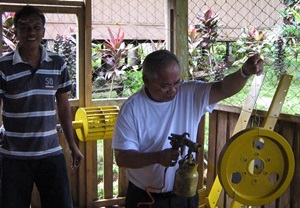
Cardinal Quevedo helps paint turbines in rural Philippines.“The origin of the church is poverty,” said newly minted Philippine Cardinal Orlando Quevedo at a press briefing in Rome last week. “And the journey of Jesus Christ was the journey with poor people. Today, the church has riches, institutions. But I would like to think that the only way the church can redeem these resources as well as its institutions would be to place them at the service of justice and of the poor for the sake of the kingdom of God.”
Cardinal Orlando Quevedo has been a lead architect in the Federation of Asian Bishops’ Conferences, a body representing more than 100 million Catholics that has courageously pushed forward the values of Vatican II amid traditionalist backlash. According to an article yesterday in the National Catholic Reporter, Quevedo spoke of an Asian vision of church built on basic ecclesial communities with a collaborative leadership style. (Read more on Quevedo and the Pope’s new cardinals here).
What might that look like? According to Tom Kyle who has researched Asian Catholicism and in particular the Federation of Asian Bishops’ Conferences, there are certain identifiable characteristics in Asian Catholicism that should mark everything the local church does.
 With the release of the new Shriver Report: A Woman’s Nation Pushes Back from the Brink, we learned that “if women received pay equal to their male counterparts, the U.S. economy would produce $447.6 billion in additional income.”
 Last week Pope Francis addressed the families of those killed by the Italian mafia. After expressing his sorrow, hope, and solidarity with the victims, he went on to address directly those engaged in mafia economics, corruption, and violence:
 As someone who regularly invites non-Catholic Christians to Mass with me I sometimes get this response afterward: “I love that the priest wears a dress and does the dishes, but why is he always a man?”
 “I finished these calligraphy items in time to share with you all for Lent. Hopefully this will help you in your prayers and reflections in the coming 40 days of Lent.” — Franklin Fong, OFM
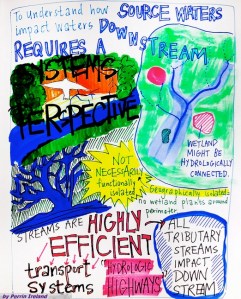 Coming Into Our Sacred Watershed: A Lenten Journey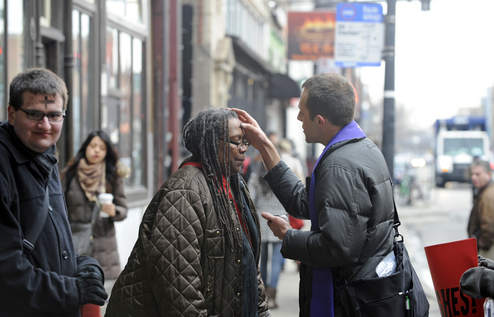
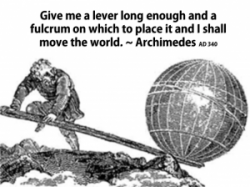 Since 2011, I’ve placed my “Archimedes lever” in the battle against the Keystone XL pipeline. From there I hope to be part of a living Christian witness to tip the world toward renewable energy and away from climate disaster.
 2. Greg Boertje-Obed (age 58), Sister Megan Rice (age 84), and Michael Walli (age 65), Catholic peace witnesses, were sentenced last week to federal prison for roughly 5 years for Greg and Michael and 3 years for Sister Megan, for crossing the property line of the Oak Ridge, Tenn., nuclear weapons facility and spray painting bible verses and religious slogans on the outbuildings. (Read Washington Post reporter Dan Zak’s groundbreaking coverage.) [Send donations to assist the Transform Plowshares here: Dorothy Day Catholic Worker 503 Rock Creek Church Road, NW, Washington, D.C. 20010]