-
Thirty-six Words Reveal Why the World Loves Obama, says Bono
 There’s a nice Op-Ed by U2’s Bono in today’s New York Times. “An America that’s tired of being the world’s policeman, and is too pinched to be the world’s philanthropist, could still be the world’s partner,” he writes.
It’s easy for me to get lost in the smoke of Obama criticism and helpful to have the perspective of someone like Bono who carries a global passport. He highlights a short phrase from Obama’s speech to the United Nations that didn’t get a lot of press coverage in the U.S. but, says Bono, is the reason the rest of the world – including the Nobel committee in Norway – loves this guy. Obama said in his Sept. 23 speech:
“We will support the Millennium Development Goals, and approach next year’s summit with a global plan to make them a reality. And we will set our sights on the eradication of extreme poverty in our time.”
Thirty-six words, says Bono, that are the reason the world loves Obama.
I also took comfort in another section of Obama’s speech in which he reminded us that in the 10 months since he took office:
[The United States has ] also re-engaged the United Nations. We have paid our bills. We have joined the Human Rights Council. We have signed the Convention of the Rights of Persons with Disabilities. We have fully embraced the Millennium Development Goals. And we address our priorities here, in this institution — for instance, through the Security Council meeting that I will chair tomorrow on nuclear non-proliferation and disarmament, and through the issues that I will discuss today.
In Bono’s Op-Ed, he identifies the “unholy trinity” of our time: extreme poverty, extreme ideology, and extreme climate change. Obama is equipped with the intellect, reason, and vision to understand the complexities of these three and develop strategies for – at least – pulling the “extreme” stinger out of each of them. We may not have all the money we want right now to do this, but we can at least offer up the political and moral will.
Political and moral will doesn’t come from Obama. It comes from us – you and me. So, keep pressing on. Keep leaning forward. Keep telling your president, your Congress, your governor, your mayor, your church committee, your grocery clerk and mail carrier, your neighbor and yourself: Yes, we can/Si, se puede. This is the challenge for OUR times and we need everyone to take up the challenge in her or his own way.
-
Friday Night in Family Land

It’s Friday evening and I’m in Edmonds, Washington, just north of Seattle, with my Mom and my brother Joe’s family. I got to meet my nephew Zev for the first time! He’s about 7 months old and likes to have the dogs lick his face. (ick) I also haven’t seen my niece Sorelle since she was 4 months old and now she’s 2 years. She’s strong-willed–that’s the German side of the family. My nephew Gage is 6 and in kindergarten at St. Thomas More Catholic school. He got home from school around 3 p.m. and looks great in his navy blue uniform (that was appropriately covered with his light-up Spiderman hoodie). They had Mass today, he told me. There was a lot of “get down and get up,” he said.
This trip was unexpected. At the end of August, our family got a bit of a scare when my sister-in-law found a fairly large tumor in her right lung. It was detected by her chiropractor during a routine spine X-ray. The first tests revealed a very grim diagnosis. But subsequent tests revealed kidney cancer that had metasticized to her lung from a cancerous kidney that she’d had removed when she was 15 years old. We went from a fairly dire prognosis to a very positive one. But in the meantime she has had to undergo major surgery to remove a portion of her lung, to be followed up by chemo therapy. She’s got a long road to recovery. But she’s very strong and very strong-willed with a great desire to get well. Every day she’s getting stronger and is giving all of her energy to healing.
In the meantime, an amazing circle of friends have kicked into gear to help take care of the kids and provide meals. None of our family live near Seattle, so we are staging our visits to stay with the kids and give the circle of friends a break.
Thanks be to God, in all likelihood my sister-in-law will recover from this scare and with several months of healing will be back to her old self.
Like so many Americans dealing with health issues, this one hangs by a thread. My brother works as a glazier in downtown Seattle (our joke is that he actually DID install windows for Microsoft because he worked on the new MS office building). Their health insurance depends completely on him. If he loses his job, they lose insurance. So, much to his despair, he hasn’t taken a day off from work during all of this family crisis. He’s left early at times–sometimes paid, sometimes not. But he couldn’t risk getting laid off. “If I show up, they’ll keep me on,” he says. Otherwise, probably not. Right now my sister-in-law has 100% coverage (because Zev is still under a year old). On December 31, her coverage drops to 80%. I’m not sure what they will do then. Like most couples raising three kids on one salary, there is absolutely nothing left at the end of the month.
A recent study found that 62 percent of all bankruptcies filed in 2007 were linked to medical expenses. Of those who filed for bankruptcy, nearly 80 percent had some kind of health insurance. I would guess, like most American families, we’ll all share our resources as best we can to cover the additional expenses. But this is the kind of situation that can and does financially devastate families for years.
Right now, Congress has gotten farther on health-care reform than it’s ever gotten in 50 years. The House bill is probably the one that will help the most people the most. Let’s just get it done–and deal with the tweaks later.
Now … back to playing “Indiana Jones” with Gage on his DS (whatever THAT is!)
-
A Playful Hallelujah Chorus
 I was very encouraged and humbled by the blog post over at Sighs & Hallelujahs responding to my August Sojourners column On the Seventh Day, God Played. My thanks go out to him. I need a daily reminder on what God intends for our life and love.
Have a read:
Last week I read an article in Sojourners magazine by Rose Marie Berger titled “On the Seventh Day, God Played.” Just by the title of the article you get a sense of her main points: that we don’t rest and play enough; and that we need to incorporate play into our lives more if we want to imitate God.
Granted, I was on vacation when I read this — a vacation that was filled with rest and play. But, the point remains pertinent to me tonight as I feel like writing a blog post is the final thing to check-off my to do list for the weekend. The concept that play is holy and necessary is freeing. You mean I don’t always have to be productive? …
As Berger notes in her article, Christians often fail the worst at incorporating play into their lifestyles. “The ‘Protestant work ethic’,” she says, “has left us with a slight religious distaste for fun.” So, some of us have that working against us.
But, I find that I often have another thing working against me as a man born without arms. The best I can describe the feeling is that I feel like I live life “working from a deficit.” In other words, due to my disability I often feel like I need to put in more effort (or play less) in order to make up for what I lack physically. I type slower than some others, so I need to work extra hours to make up for that. I need your help to replace a light bulb in my condo, so I do all I can to help you in other ways to make up for it. You may think less of me due to my lack of arms, so I’ll make sure my car, house or work space is clean in order to impress you. Sounds crazy, huh? When you feel less than those around you, you’ll do interesting things to compensate for it.
Read his whole post here.
-
A Rising Tide Lifts All … Death Tolls

Oct 11: Filipino police dig for bodies in La Trinidad, Philippines, after Typhoon Parma. Scientists say that 350 parts per million CO2 in the atmosphere is the safe limit for humanity. We are now at 385.92. Not good.
A new report from UCLA scientist Aradhna Tripati says that the last time we were this hot was 20 million years ago – and the seas covered the earth.
Read an excerpt from Tripati’s report below:
“The last time carbon dioxide levels were apparently as high as they are today — and were sustained at those levels — global temperatures were 5 to 10 degrees Fahrenheit higher than they are today, the sea level was approximately 75 to 120 feet higher than today, there was no permanent sea ice cap in the Arctic and very little ice on Antarctica and Greenland,” said the paper’s lead author, Aradhna Tripati, a UCLA assistant professor in the department of Earth and space sciences and the department of atmospheric and oceanic sciences.
“A slightly shocking finding,” Tripati said, “is that the only time in the last 20 million years that we find evidence for carbon dioxide levels similar to the modern level of 387 parts per million was 15 to 20 million years ago, when the planet was dramatically different.”
Levels of carbon dioxide have varied only between 180 and 300 parts per million over the last 800,000 years — until recent decades, said Tripati, who is also a member of UCLA’s Institute of Geophysics and Planetary Physics. It has been known that modern-day levels of carbon dioxide are unprecedented over the last 800,000 years, but the finding that modern levels have not been reached in the last 15 million years is new.
Prior to the Industrial Revolution of the late 19th and early 20th centuries, the carbon dioxide level was about 280 parts per million, Tripati said. That figure had changed very little over the previous 1,000 years. But since the Industrial Revolution, the carbon dioxide level has been rising and is likely to soar unless action is taken to reverse the trend, Tripati said.
“During the Middle Miocene (the time period approximately 14 to 20 million years ago), carbon dioxide levels were sustained at about 400 parts per million, which is about where we are today,” Tripati said. “Globally, temperatures were 5 to 10 degrees Fahrenheit warmer, a huge amount.”
In the last 20 million years, key features of the climate record include the sudden appearance of ice on Antarctica about 14 million years ago and a rise in sea level of approximately 75 to 120 feet.
“We have shown that this dramatic rise in sea level is associated with an increase in carbon dioxide levels of about 100 parts per million, a huge change,” Tripati said. “This record is the first evidence that carbon dioxide may be linked with environmental changes, such as changes in the terrestrial ecosystem, distribution of ice, sea level and monsoon intensity.”
Read the whole article here. And check out the 350 Campaign.
-
Obama Addresses the Human Rights Campaign on His Support for Full Citizenship for Gay Americans
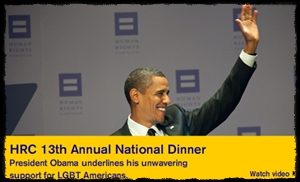 President Obama gave the keynote at the Human Rights Campaign annual dinner last night. It is surely a new day in America when the words “Stonewall protest” come out of the mouth of an American president — especially in a way that links Stonewall with the great tradition of civil rights movements in the United States.
I appreciated the humility and wisdom of Obama when he said before this crowd of people who do not have equal access under the law that “it’s not for me to tell you to be patient, any more than it was for others to counsel patience to African Americans petitioning for equal rights half a century ago.” He’s right.
The context then was liberal religious leaders in Alabama telling Dr. King and the civil rights movement that the current tactics for justice in Birmingham were “unwise and untimely.”
King responded famously with his Letter from Birmingham Jail, in which he wrote: “There comes a time when the cup of endurance runs over, and men are no longer willing to be plunged into the abyss of despair. I hope, sirs, you can understand our legitimate and unavoidable impatience.”
I hope you’ll read President Obama’s whole speech below:
Thank you so much, all of you. It is a privilege to be here tonight to open for Lady GaGa. I’ve made it. I want to thank the Human Rights Campaign for inviting me to speak and for the work you do every day in pursuit of equality on behalf of the millions of people in this country who work hard in their jobs and care deeply about their families — and who are gay, lesbian, bisexual, or transgender.
For nearly 30 years, you’ve advocated on behalf of those without a voice. That’s not easy. For despite the real gains that we’ve made, there’s still laws to change and there’s still hearts to open. There are still fellow citizens, perhaps neighbors, even loved ones — good and decent people — who hold fast to outworn arguments and old attitudes; who fail to see your families like their families; who would deny you the rights most Americans take for granted. And that’s painful and it’s heartbreaking. And yet you continue, leading by the force of the arguments you make, and by the power of the example that you set in your own lives — as parents and friends, as PTA members and church members, as advocates and leaders in your communities. And you’re making a difference.
That’s the story of the movement for fairness and equality, and not just for those who are gay, but for all those in our history who’ve been denied the rights and responsibilities of citizenship — for all who’ve been told that the full blessings and opportunities of this country were closed to them. It’s the story of progress sought by those with little influence or power; by men and women who brought about change through quiet, personal acts of compassion — and defiance — wherever and whenever they could.
It’s the story of the Stonewall protests, when a group of citizens – when a group of citizens with few options, and fewer supporters stood up against discrimination and helped to inspire a movement. It’s the story of an epidemic that decimated a community — and the gay men and women who came to support one another and save one another; who continue to fight this scourge; and who have demonstrated before the world that different kinds of families can show the same compassion in a time of need. And it’s the story of the Human Rights Campaign and the fights you’ve fought for nearly 30 years: helping to elect candidates who share your values; standing against those who would enshrine discrimination into our Constitution; advocating on behalf of those living with HIV/AIDS; and fighting for progress in our capital and across America.
This story, this fight continue now. And I’m here with a simple message: I’m here with you in that fight. For even as we face extraordinary challenges as a nation, we cannot — and we will not — put aside issues of basic equality. I greatly appreciate the support I’ve received from many in this room. I also appreciate that many of you don’t believe progress has come fast enough. I want to be honest about that, because it’s important to be honest among friends.
Now, I’ve said this before, I’ll repeat it again — it’s not for me to tell you to be patient, any more than it was for others to counsel patience to African Americans petitioning for equal rights half a century ago. But I will say this: We have made progress and we will make more. And I think it’s important to remember that there is not a single issue that my administration deals with on a daily basis that does not touch on the lives of the LGBT community. We all have a stake in reviving this economy. We all have a stake in putting people back to work. We all have a stake in improving our schools and achieving quality, affordable health care. We all have a stake in meeting the difficult challenges we face in Iraq and Afghanistan.
For while some may wish to define you solely by your sexual orientation or gender identity alone, you know — and I know — that none of us wants to be defined by just one part of what makes us whole. You’re also parents worried about your children’s futures. You’re spouses who fear that you or the person you love will lose a job. You’re workers worried about the rising cost of health insurance. You’re soldiers. You are neighbors. You are friends. And, most importantly, you are Americans who care deeply about this country and its future.
So I know you want me working on jobs and the economy and all the other issues that we’re dealing with. But my commitment to you is unwavering even as we wrestle with these enormous problems. And while progress may be taking longer than you’d like as a result of all that we face — and that’s the truth — do not doubt the direction we are heading and the destination we will reach.
My expectation is that when you look back on these years, you will see a time in which we put a stop to discrimination against gays and lesbians — whether in the office or on the battlefield. You will see a time in which we as a nation finally recognize relationships between two men or two women as just as real and admirable as relationships between a man and a woman. You will see a nation that’s valuing and cherishing these families as we build a more perfect union — a union in which gay Americans are an important part. I am committed to these goals. And my administration will continue fighting to achieve them.
And there’s no more poignant or painful reminder of how important it is that we do so than the loss experienced by Dennis and Judy Shepard, whose son Matthew was stolen in a terrible act of violence 11 years ago. In May, I met with Judy — who’s here tonight with her husband — I met her in the Oval Office, and I promised her that we were going to pass an inclusive hate crimes bill — a bill named for her son.
This struggle has been long. Time and again we faced opposition. Time and again, the measure was defeated or delayed. But the Shepards never gave up. They turned tragedy into an unshakeable commitment. Countless activists and organizers never gave up. You held vigils, you spoke out, year after year, Congress after Congress. The House passed the bill again this week. And I can announce that after more than a decade, this bill is set to pass and I will sign it into law.
It’s a testament to the decade-long struggle of Judy and Dennis, who tonight will receive a tribute named for somebody who inspired so many of us — named for Senator Ted Kennedy, who fought tirelessly for this legislation.And it’s a testament to the Human Rights Campaign and those who organized and advocated. And it’s a testament to Matthew and to others who’ve been the victims of attacks not just meant to break bones, but to break spirits — not meant just to inflict harm, but to instill fear. Together, we will have moved closer to that day when no one has to be afraid to be gay in America. When no one has to fear walking down the street holding the hand of the person they love.
But we know there’s far more work to do. We’re pushing hard to pass an inclusive employee non-discrimination bill. For the first time ever, an administration official testified in Congress in favor of this law. Nobody in America should be fired because they’re gay, despite doing a great job and meeting their responsibilities. It’s not fair. It’s not right. We’re going to put a stop to it. And it’s for this reason that if any of my nominees are attacked not for what they believe but for who they are, I will not waver in my support, because I will not waver in my commitment to ending discrimination in all its forms.
We are reinvigorating our response to HIV/AIDS here at home and around the world. We’re working closely with the Congress to renew the Ryan White program and I look forward to signing it into law in the very near future. We are rescinding the discriminatory ban on entry to the United States based on HIV status. The regulatory process to enact this important change is already underway. And we also know that HIV/AIDS continues to be a public health threat in many communities, including right here in the District of Columbia. Jeffrey Crowley, the Director of the Office of National AIDS Policy, recently held a forum in Washington, D.C., and is holding forums across the country, to seek input as we craft a national strategy to address this crisis.
We are moving ahead on Don’t Ask Don’t Tell. We should not be punishing patriotic Americans who have stepped forward to serve this country. We should be celebrating their willingness to show such courage and selflessness on behalf of their fellow citizens, especially when we’re fighting two wars.
We cannot afford to cut from our ranks people with the critical skills we need to fight any more than we can afford — for our military’s integrity — to force those willing to do so into careers encumbered and compromised by having to live a lie. So I’m working with the Pentagon, its leadership, and the members of the House and Senate on ending this policy. Legislation has been introduced in the House to make this happen. I will end Don’t Ask, Don’t Tell. That’s my commitment to you.
It is no secret that issues of great concern to gays and lesbians are ones that raise a great deal of emotion in this country. And it’s no secret that progress has been incredibly difficult — we can see that with the time and dedication it took to pass hate crimes legislation. But these issues also go to the heart of who we are as a people. Are we a nation that can transcend old attitudes and worn divides? Can we embrace our differences and look to the hopes and dreams that we share? Will we uphold the ideals on which this nation was founded: that all of us are equal, that all of us deserve the same opportunity to live our lives freely and pursue our chance at happiness? I believe we can; I believe we will.
And that is why — that’s why I support ensuring that committed gay couples have the same rights and responsibilities afforded to any married couple in this country. I believe strongly in stopping laws designed to take rights away and passing laws that extend equal rights to gay couples. I’ve required all agencies in the federal government to extend as many federal benefits as possible to LGBT families as the current law allows. And I’ve called on Congress to repeal the so-called Defense of Marriage Act and to pass the Domestic Partners Benefits and Obligations Act. And we must all stand together against divisive and deceptive efforts to feed people’s lingering fears for political and ideological gain.
For the struggle waged by the Human Rights Campaign is about more than any policy we can enshrine into law. It’s about our capacity to love and commit to one another. It’s about whether or not we value as a society that love and commitment. It’s about our common humanity and our willingness to walk in someone else’s shoes: to imagine losing a job not because of your performance at work but because of your relationship at home; to imagine worrying about a spouse in the hospital, with the added fear that you’ll have to produce a legal document just to comfort the person you love, to imagine the pain of losing a partner of decades and then discovering that the law treats you like a stranger.
If we are honest with ourselves we’ll admit that there are too many who do not yet know in their lives or feel in their hearts the urgency of this struggle. That’s why I continue to speak about the importance of equality for LGBT families — and not just in front of gay audiences. That’s why Michelle and I have invited LGBT families to the White House to participate in events like the Easter Egg Roll — because we want to send a message. And that’s why it’s so important that you continue to speak out, that you continue to set an example, that you continue to pressure leaders — including me — and to make the case all across America.
So, tonight I’m hopeful — because of the activism I see in this room, because of the compassion I’ve seen all across America, and because of the progress we have made throughout our history, including the history of the movement for LGBT equality.
Soon after the protests at Stonewall 40 years ago, the phone rang in the home of a soft-spoken elementary school teacher named Jeanne Manford. It was 1:00 in the morning, and it was the police. Now, her son, Morty, had been at the Stonewall the night of the raids. Ever since, he had felt within him a new sense of purpose. So when the officer told Jeanne that her son had been arrested, which was happening often to gay protesters, she was not entirely caught off guard. And then the officer added one more thing, “And you know, he’s homosexual.”Well, that police officer sure was surprised when Jeanne responded, “Yes, I know. Why are you bothering him?”
And not long after, Jeanne would be marching side-by-side with her son through the streets of New York. She carried a sign that stated her support. People cheered. Young men and women ran up to her, kissed her, and asked her to talk to their parents. And this gave Jeanne and Morty an idea.
And so, after that march on the anniversary of the Stonewall protests, amidst the violence and the vitriol of a difficult time for our nation, Jeanne and her husband Jules — two parents who loved their son deeply — formed a group to support other parents and, in turn, to support their children, as well. At the first meeting Jeanne held, in 1973, about 20 people showed up. But slowly, interest grew. Morty’s life, tragically, was cut short by AIDS. But the cause endured. Today, the organization they founded for parents, families, and friends of lesbians and gays has more than 200,000 members and supporters, and has made a difference for countless families across America. And Jeanne would later say, “I considered myself such a traditional person. I didn’t even cross the street against the light.” “But I wasn’t going to let anybody walk over Morty.”
That’s the story of America: of ordinary citizens organizing, agitating and advocating for change; of hope stronger than hate; of love more powerful than any insult or injury; of Americans fighting to build for themselves and their families a nation in which no one is a second-class citizen, in which no one is denied their basic rights, in which all of us are free to live and love as we see fit.
Tonight, somewhere in America, a young person, let’s say a young man, will struggle to fall to sleep, wrestling alone with a secret he’s held as long as he can remember. Soon, perhaps, he will decide it’s time to let that secret out. What happens next depends on him, his family, as well as his friends and his teachers and his community. But it also depends on us — on the kind of society we engender, the kind of future we build.
I believe the future is bright for that young person. For while there will be setbacks and bumps along the road, the truth is that our common ideals are a force far stronger than any division that some might sow. These ideals, when voiced by generations of citizens, are what made it possible for me to stand here today. These ideals are what made it possible for the people in this room to live freely and openly when for most of history that would have been inconceivable. That’s the promise of America, HRC. That’s the promise we’re called to fulfill. Day by day, law by law, changing mind by mind, that is the promise we are fulfilling.
Thank you for the work you’re doing. God bless you. God bless America.--President Barack Obama
-
Video: How To Build A Memorial Prayer Altar
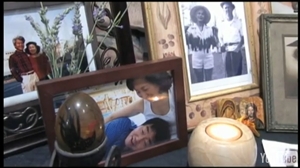 Thanks to Sojourners editorial staffer Jeannie Choi and mix-master videographer Matt Hildreth for another DIY video from Sojourners. (Apparently, the previous one Jeannie and I did on contemplative prayer was a huge internet sensation–within very defined parameters, of course.)
How To Build a Memorial Prayer Altar
Remember your loved ones in November with a beautiful prayer altarFrom the beginning, God’s people have built altars of remembrance in prayer to God. Noah built an altar to the Lord, offering burnt sacrifices of thanksgiving (Genesis 8:20). Abram also built an altar to God after he was given the promise, “To your offspring I will give this land,” (Gensis 12:7). Moses built an altar and called it, The Lord is my banner (Exodus 17:15). In each of these instances, physical objects were erected in remembrance of the providence, grace, and mercy of God.
In this how-to video created to accompany an article on liturgical worship resources by Bryan Cones, associate editor Rose Marie Berger teaches assistant editor Jeannie Choi how to create a memorial prayer altar, a tradition she has practiced in her family for years. Watch and learn how to create your own prayer altar to remember those who have passed and those still living who bring you to your knees before God with thanksgiving for their presence in your life.
-
Kerri Powers: Alligator Boots in Church
Kerri Powers’ song “Tallulah Send a Car for Me” (2009) is totally excellent!
With an opening line like “Can’t wear my alligator boots in church … Preacher says all they ever do is drag in dirt. I think I got some dirt on his clean white shirt” you hardly need anything else.
But Powers presses on with more great lyrics and a broken-bourbon bottle bluesy voice that recalls crickets in the holler on the dark of the moon — all with that steel-string guitar keeping up the rest of the conversation.
Thanks to my friend Brenda over at Brenda Prescott Muses for the tip on Kerri Powers.
-
Is Nationalism a Heresy? Bishops of Africa Discuss.
 Cardinal Sodano, dean of the Roman Catholic College of Cardinals, addressed the Synod of African Bishops (happening this week in Rome) on how Christian values shape patriotism, nationalism, and love for one’s country.
“Nationalism,” of which the U.S. seems to have a very bad case, is a deviation or heresy that is wholly anti-Christian.
“Love of one’s nation — concretely, of one’s people, one’s compatriots — is certainly a Christian duty, but we also have to add that the deviation of nationalism is wholly anti-Christian.
Christianity has always condemned every deformation in this concept of nation, a deformation that frequently descends into nationalism or even racism, the true negation of Christian universality.
In reality, the two basic principles of the Christian community have always been as follows: the dignity of each human person, on the one hand, and the unity of the human species, on the other. These are two inviolable frontiers, within which various concepts of nation can evolve, depending on time and place.”–Angelo Sodano, Roman Catholic cardinal
Read Cardinal Sodano’s whole address here.
-
Good-bye ‘Norma Rae,’ Sorry About the Health Care
 Crystal Lee Sutton, the textile worker and union organizer from Burlington, North Carolina, who was the inspiration for the 1979 Academy Award-winning film Norma Rae, died last month from cancer.
Norma Rae was a ground-breaking film for the American labor movement and also launched Sally Field, who played the lead, in her film career.
“Crystal Lee Sutton was a remarkable woman whose brave struggles have left a lasting impact on this country and without doubt, on me personally,” Field said in a statement responding to the news of Sutton’s death. “Portraying Crystal Lee in Norma Rae, however loosely based, not only elevated me as an actress, but as a human being.”
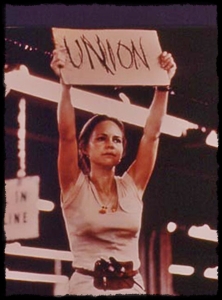 Linda Meric, executive director of 9 to 5, the national association of working women, has a sobering post over at Facing South on Sutton’s death as it connects to delayed coverage from her health insurance company. Meric writes:
Crystal Lee Sutton, the woman whose life inspired the 1979 film Norma Rae, about a brave union organizer, died of cancer on Sept. 11, 2009, after struggling in 2008 with her health insurance company.
Her insurer delayed her treatment by two months, initially by denying coverage of her medications, according to an article published last year in North Carolina’s Burlington Times News.
Her untimely passing at age 68 speaks powerfully to the continuing debate over health care reform.
Read Linda Meric’s full post here.
Substantive health-care reform includes 1) a publicly funded option for obtaining health insurance, 2) provides accessible and affordable insurance for everyone who is uninsured or under-insured, including legal and undocumented immigrants, and 3) contains clear “conscience clauses” around the issues that are morally sensitive.
Without it, we will continue to lose our heroes–known and unknown.
-
Joan Chittister: Seduced by the Good
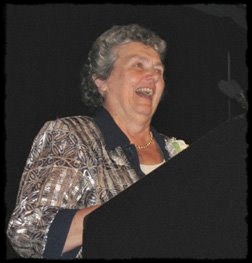
Catholic Benedictine sister, author, and spiritual leader Joan Chittister writes in her newest book, The Breath of the Soul, about how the ways we pray must change over our lifetime in order to meet the changing needs of our souls. God wants to love us in a thousand different ways.
Chittister writes:
It is so easy to be seduced, even by the good. But once it happens we stand to lose the very gain the finding of the good should have given us.
We find a prayer form that satisfies, even uplifts our spirits, often brings us to a new level of awareness and enlightenment. Everything is going well until the prayer form itself becomes our God.
If I can’t pray every day in this pew at this time, the day is disturbed. If I can’t sing this hymn on this feast in this place, the feast has failed me. If someone changes the translation of the “Our Father,” I can’t concentrate on it. If someone uses universal language for God rather than male pronouns, I get angry. If there are no candles, no incense, no flowers and bright clothes and robes, it can’t possibly be real prayer.
Though those things are all good, all important at some time in some circumstances, none of them is a worthy substitute for God. In fact, the very fact of needing to have them—at whatever cost to anyone else — may be the real sign of how little we’ve learned about God while doing them.
Just as we change as we go through life, so must our prayer forms change in order to nourish the new growth the last phase of our spiritual journey planted in us.
When we stop in the course of the spiritual journey declaring that we have already achieved the end of our search — that we have found the God for whom we seek—it is doubtful that we have found anything more than our own comfort, our own will, the god we have made for ourselves out of our own image. And that is a puny God indeed.
Once we begin a real spiritual journey we will be led from prayer point to prayer point, deeper and deeper into the Mystery that is God. We will be expected to let go so that God can lead us now. And that path has no end.–Joan Chittister
From The Breath of the Soul: Reflections on Prayer by Joan Chittister
-
Subscribe
Subscribed
Have a WordPress.com account? Log in now.

