Filmmaker Michael Moore’s critique of capitalism is filled with respectful images and ideals from the Catholic Church, writes Tony Stevens-Arroyo in The Washington Post‘s column On Faith.
Stevens-Arroyo, a professor of Puerto Rican and Latino Studies at Brooklyn College and scholar at City University of New York, looks at Moore’s favorable light on his lived experience with Catholic priests, the human face Moore puts on those suffering under unjust economic structures, the solutions-oriented approach taken by Moore to structural sin, and the emphasis he puts on a vibrant democracy vs rapacious capitalism.
Here’s an excerpt:
Should Michael Moore be named “Catholic of the Year”? Some people love his films and some hate them: but his newest film, “Capitalism: A Love Story,” provokes such passion on either side that — on that count alone — it becomes a tribute to his skill as filmmaker. Avoiding a film review here, let me offer reasons for considering “Capitalism” a special kind of Catholic achievement. …
Admittedly, Moore’s style borders on buffoonery, but his message is nonetheless important. I admire the Catholic currents of social justice in this film. And just like the feast days of Halloween and All Saints Day follow each other in the calendar; maybe Michael Moore is “Clown of the Year” and “Catholic of the Year” at the same time.
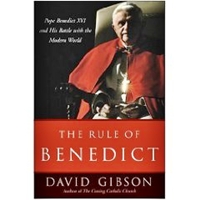
Sunday’s Washington Post had an interesting article by David Gibson on Pope Benedict’s radical regressive reforms. For the Pope who predicted he’d only have the papacy for a few short years, he’s certainly getting a lot of mileage out of it. It appears that this pope is outgrowing the Fisherman’s shoes with all the changes he wants to make.
Gibson, a religion journalist, is author of the book The Rule of Benedict, a psychological profile of Benedict XVI and his battle with the modern world.
Here’s an excerpt from Gibson’s article:
Thus far, Benedict’s papacy has been one of constant movement and change, the sort of dynamic that liberal Catholics — or Protestants — are usually criticized for pursuing. In Benedict’s case, this liberalism serves a conservative agenda. But his activism should not be surprising: As a sharp critic of the reforms of Vatican II, Ratzinger has long pushed for what he calls a “reform of the reform” to correct what he considers the excesses or abuses of the time. …
Of course a “reformed reform” doesn’t equal a return to the past, even if that were the goal. Indeed, Benedict’s reforms are rapidly creating something entirely new in Catholicism. For example, when the pope restored the old Latin Mass, he also restored the use of the old Good Friday prayer, which spoke of the “blindness” of the Jews and called for their conversion. That prayer was often a spur to anti-Jewish pogroms in the past, so its revival appalled Jewish leaders. After months of protests, the pope agreed to modify the language of the prayer; that change and other modifications made the “traditional” Mass more a hybrid than a restoration.
More important, with the latest accommodation to Anglicans, Benedict has signaled that the standards for what it means to be Catholic — such as the belief in the real presence of Christ in the Mass as celebrated by a validly ordained priest — are changing or, some might argue, falling. The Vatican is in effect saying that disagreements over gay priests and female bishops are the main issues dividing Catholics and Anglicans, rather than, say, the sacraments and the papacy and infallible dogmas on the Virgin Mary, to name just a few past points of contention.
That is revolutionary — and unexpected from a pope like Benedict. It could encourage the view, which he and other conservatives say they reject, that all Christians are pretty much the same when it comes to beliefs, and the differences are just arguments over details.
Pope Benedict and the Archbishop of CanteburyLast week, the Vatican took the unprecedented step of inviting Anglicans who don’t like gays or women priests to join the Catholic Church.
The Vatican has offered to set up a special “Anglican rite” that allows Anglican priests to continue their priestly duties under the auspices of Catholicism. (Read Laurie Goodstein’s NYT article here.)
Actually, this move isn’t totally unprecedented. The Vatican did the same thing in 1992 when the Church of England began officially ordaining women. Attention was given then to the male Anglican priests who “fled” to the male bastion of the Catholic hierarchy. While the Vatican made nice comments about how happy it was to welcome these new brothers, it made little comment about the many many exceptional Catholic women who had “fled” to the Episcopal Church in the U.S. and would go to the Church of England in order to follow their call to ordination.
This latest show of welcoming conservative Anglicans may prove to be a boon however for progressive Catholics. Since, most of the Anglican priests joining the Catholic church are married with families, this move may push the Catholic church another step forward in accepting married priests. If the Vatican can find room for married Anglican priests, then surely it can find room for the 110,000 Catholic priests around the world who left active ministry in order to marry!
See the article from FutureChurch below:
The organization FutureChurch has welcomed the decision of the Vatican to allow married Anglican clergy who become Catholic to continue to serve as priests, but they are calling for the option of a married priesthood in the Latin rite of the Catholic Church too.
FutureChurch director, Sr. Christine Schenk, said: “Parishes in Europe, the United States and the United Kingdom are closing, while thousands of Catholics in the developing world have virtually no access to Mass and the sacraments because of too few celibate priests.”
According to a 2007 article in the New York Times, 80% of all Sunday celebrations in Brazil are led by lay leaders because there are no priests, she said.
“I think this may be painful news for married Catholic priests who are not permitted to serve the Church”, said FutureChurch board member Bill Wisniewski, himself a married Catholic priest.
“It’s past time for Rome to welcome back the nearly 110,000 priests around the world who left the active ministry to marry. We must also work to enfranchise the tens of thousands of women ministering in the Church.”
“I’m just wondering how its going to work to have Catholic seminarians who cannot marry, study next to Anglican seminarians who will presumably be able to marry,” said Mary Lou Hartman, a FutureChurch board member from Princeton, New Jersey.
“I’m guessing more than a few Catholic seminarians may just decide to join the Anglican branch.”
Hartman was referring to a statement by Cardinal Levada issued on 20 October in which he said: ‘The seminarians in the Ordinariate are to be prepared alongside other Catholic seminarians, though the Ordinariate may establish a house of formation to address the particular needs of formation in the Anglican patrimony.”
Four years ago, FutureChurch lobbied the Vatican’s International Synod on The Eucharist asking for open discussion of mandatory celibacy and women deacons.
Four of the synod’s twelve working groups wanted to study married priests.
“At the synod there was much talk of allowing ‘viri probati’ (tested men) to perform priestly functions,” said Schenk. “So perhaps that conversation helped prepare the way for yesterday¹s announcement that Rome will make special adaptations for married Anglican priests and bishops to join the Church.”
Last June, FutureChurch launched a new initiative: Optional Celibacy: So All Can Be At the Table. The international electronic and paper postcard campaign asks Cardinal Hummes at the Congregation for the Clergy in Rome begin “discussion at the highest levels of the Church about the need to return to our earliest tradition of permitting both a married and celibate clergy.”
To date over 2000 postcards have been sent from the US and scores of organizing packets have been downloaded from the FutureChurch website. An international campaign will begin in November with electronic postcards in German, French and Spanish.
Because of the priest shortage, U.S. dioceses will be forced to reconfigure parishes for the foreseeable future. According to the Center for Applied Research in the Apostolate, 75% of the 18,000 active diocesan priests in the US are over 55 years old, but the US is only ordaining about 350 new diocesan priests each year. In 20 years, presuming ordinations remain constant, the US could have as few as 11,500 active diocesan priests for its 19,000 parishes. At the same time, numbers of deacons and paid lay ministers have increased significantly to 14,000 and 30,000 respectively. Presently ‘parish life coordinators’ are pastoring an estimated 600 U.S. parishes.
Between 1975 and 2005 the world’s Catholics increased by fifty-seven percent from 709.6 million to 1.115 billion, but the number of priests increased only four-tenths of one percent (0.4%). (Center for Applied Research in the Apostolate (CARA)
In June, the president of Paraguay, Fernando Lugo, who is a former bishop, said the church should rethink its stance on celibacy. Lugo created a sensation when he admitted to fathering a child after he resigned as a bishop but before being laicized. His remarks prompted archbishop Eustaquio Cuquejo Verga of Asuncion to say the Catholic Church has no reason to reconsider celibacy for Latin-rite priests. This, despite a February 2008 petition from some 18,000 South American priests asking to change celibacy rules.
For more information about FutureChurch’s international Optional Celibacy campaign , Official Catholic Directory statistics for every US diocese, and results of their survey of priests in 57 US dioceses see: www.futurechurch.org
Catholic monk Thomas Merton had a very human and real understanding of “faith” and the rigors of trying to live as a human being in an inhumane society.
Most of you, even with all that you have to suffer, are much better off than you realize. Yet the [human] heart can be full of so much pain, even when things are exteriorly “all right.” It becomes all the more difficult because today we are used to thinking that there are explanations for everything. But there is no explanation for most of what goes on in our own hearts, and we cannot account for it all. No use resorting to mental tranquilizers that even religious explanations sometimes offer. Faith must be deeper than that, rooted in the unknown and in the abyss of darkness that is the ground of our being. No use teasing the darkness to try to make answers grow out of it. But if we learn how to have a deep inner patience, things solve themselves, or God solves them if you prefer, but do not expect to see how. Just learn to wait, and do what you can and help other people.–Thomas Merton
The Road to Joy, Robert E. Daggy, editor (FSG 1989, p.94)
Two poems by A.K. Scipioni on peace and war in the Middle East.
“When We Decided to Build the Wall”
I want an olive tree.
I take yours and I smash it.
I move your home sixty
percent to the left, and I take
the lakes. All the fish
are mine. I send the men
to kill your mothers for
the olive trees and your fish,
now my fish. Your men
send their children into
the stems, the ovules
and filaments, the stamens,
pistils, and trees, back
to the source to consume
my children. I scatter
them wildly. In some ways,
one wall can make a factory,
and when the village
works in your factory,
having a god or not having
When We Decided to
Build the Wall
a god is a matter of profit.
This has a major impact
on how I see flowers and trees.
Married, the schoolboys make the shells
at night, parting their nails and triggers,
branding an emptied plain, and the pocks
of the empty plain, with powder and wax,
and the smell of clementines. The rolling
hills of Hezbollah, one dead boy and
a tangerine. Customarily the schoolboys
fill the caves with scraps and rinds. In
the center of Hebron, a nest of chewed-
up pips. The women flower the threads
of the piths, but little things want the least
of widows. In the hymns of the turrets,
an order of turtle doves, Streptopelia turtur.
Make one dead motion for your father
to the sky and he will forget you.
Right now, as the world prepares for the international climate change meeting in Copenhagen in December, the world lacks one thing to save itself: political will. We have the technology to make appropriate changes. But political will is forged through moral vision and religious persuasion brought to bear by a diverse set of grassroots actions. And grassroot action requires you.
For Christians, part of our mission in the world is to bring religious imagination to bear on the crises of our day. Climate change is one of the most critical crises of our day.
Thanks to Tim Kumfer over at Always New Depths for posting his short essay written for his Ecofeminist Theology and Philosophy class at Duke responding to this question: What resources exist in your religious and/or spiritual tradition for thinking about ecological crises like climate change, pollution, scarce resources like water and food, and species loss?
Here’s part of Tim’s response, but I encourage you to read the whole thing and consider what resources you draw on for shaping religious vision. Also, what fun and effective thing can you do for International Day of Climate Action on Oct. 24. Tim writes:
These themes of resistance to dominant ecological and economic practices within the Bible must be brought into the mix as Christians begin to reflect on our contemporary many-headed ecological crisis. Listening deeply to these stories and paying attention to the dynamics in which they were formed I think we will find more radical conversation partners than we might have first imagined. Our present lives in the first world are supported by structures of empire similar to those which our foremothers and fathers in the faith strove to leave or subvert from within. The rapacious practices of consumer capitalism need to be stopped; Sabbath can point towards alternatives which honor the earth and workers through the recognition of natural limits. A whole-earth Jubilee is necessary now more than ever, one which not only brings greater equality between humans but recognizes the inherent worth, beauty, and necessity of non-human species and the ecosystem. This is perhaps the most important thing which the Christian (and Jewish) tradition at its best can bring to the table: an uncompromising moral vision which can go beneath green washing and eco-capitalist hype to re-present to us the truth which we already know: our lives in the first world need to change drastically for life on this planet to be sustained.
I’m giving a shout out to Susan Toepfer over at Truth/Slant for her post Nuns on the Run: Why Is the Pope Targeting Women? Even though Toepfer’s not Catholic herself, like many Americans she’s benefited from the amazing gift and wisdom of American Catholic sisters.
I’m doing my best to track good posts and stories on the current Vatican investigation into Catholic sisters. If you see any, send them my way.
Here’s a snippet from Toepfer’s piece:
It is a story worthy of a Dan Brown thriller, replete with secret ceremonies, powerful adversaries and hidden motives. Yet this high-level plot is playing out in real time, right under our noses, and it all begins with a modern-day inquisition into the lives of nuns.
Nuns, as even non-Catholics know (and I am not Catholic, though my husband and children are), haven’t been quite the same since the ’60s, when they started shedding their habits for street clothes and venturing out more self-assuredly into the world. Nuns, as you might also have noticed, have severely decreased in number since then. The dwindling religious who remain have not only often fled traditional communities but have expanded their interests to such contemporary concerns as saving the environment and rescuing sex slaves.
That, apparently, is enough to make this current, most conservative of Popes, send in his troops.
Read more of what I’ve written on the Vatican investigation into American Catholic nuns here.
Simon Barrow at U.K.’s Ekklesia (an independent Christian news briefing service) has released an excellent analysis of how mainstream media is addicted to the dominant war narrative and how “alternative” media is better suited to report on the ongoing complexities of a story.
Using the example of the 2005-2006 kidnapping of Christian Peacemaker Team members in Baghdad, Barrow unpacks why the mainstream media was incapable of reporting a story that didn’t fit with their news formula.
While major news outlets failed, “alternative” media – primarily religious outlets who understood the alternative script in operation – were consistently better situated to report accurately and provide the best framing of the unfolding story. These alternative media sources included Ekklesia, Sojourners, the Mennonite Weekly Review, and even Vatican radio.
Barrow’s analysis is a must read for anyone involved in truth-telling in alternative media sources or anyone who wants to understand how to deconstruct the mainstream media. Barrow reveals the “story under the story.”
For the Western news media, North American and European hostages in the Middle East are big stories because they personalise and dramatise what may otherwise seem like one endless series of nameless tragedies in faraway places. They become, in fact, mini-soap operas with their own recognizable cast of heroes, villains, victims, and clowns. Their stuff is the daily drama of hopes and despairs writ large. Their setting is an exotic but mostly unexamined stage. No one knows how long the mini-saga will last, but everyone realizes there can only be two outcomes: tragedy or triumph.
In the meantime, minute attention is paid to the twists and turns of the story — or, in the absence of any real news, what people think the story is or ‘should be’. And it is in these terms that the conventions of ‘the narrative’ and ‘the script’ are written by those who have to keep people watching and reading. They are experts at their craft. They know what communicates and sells to a broad or narrow audience, and they know how to tailor the plot details to the kind of story that can be told — and the kind of story that cannot.
The ‘dominant narrative’ (the generally accepted version of events) is frequently established in the earliest stages of an event and this was certainly the case in the CPT Iraq hostage situation. At its starkest, it went something like this: “A well-meaning but essentially naïve and ill-prepared group of peace activists — Christians who are fish out of water in a conflict-ridden Muslim environment — have been kidnapped by a militant group after political advantage or money. By being there and being caught out, these Western activists have caused danger to those in contact with them. If they are to be freed, it will most likely be because of financial inducement, diplomatic effort, or military bravery. Some admire their intent to bring peace, but hardheaded realists know that they are at best misguided and at worst irresponsible. Their chances of getting out of this alive are limited, but if they do it will be a warning to fellow activists that they should keep their idealism out of the real grown-up world of politics and violence. This is a war on terror, not a playground for wishful thinking.” …
Again and again, the dominant narratives of our time, most especially what theologian Walter Wink calls “the myth of redemptive violence,” assert themselves in such a way as to write peace and peacemaking out of the script. This is only to be expected. Expending a lot of energy raging against the machine is likely to be futile. The appropriate response is not despair or collusion, but the cultivation of what the late Archbishop Helder Camara once called “small-scale experiments in hope.”
Such experiments arise from the constructive but vulnerable witness of persons like those who serve with Christian Peacemaker Teams in situations of seemingly intractable destructiveness — and above all in the local people whose ongoing resistance to the powers that be is the only final source of alternatives, when attempts to impose external ‘solutions’ by force inevitably break down. To be effective, however, alternatives need to spread. To spread they must be heard. And to be heard they must be re-inserted into the script, written out of it (in the sense of inscribed within and scribed without) — not written off, or written away. This is a vital ongoing task, both within the media environment, in terms of the practicalities of conflict transformation, and in relation to public policy on interventions in situations of conflict.
Benedictine Catholic Sr. Joan Chittister has a new book out on the liturgical year in everyday life. I think this book describes daily sacramental living in a wonderful, down-to-earth way and doesn’t limit liturgical understanding to only those who come from “high church” traditions.
Chittister recounts a story told to her that gives a New York City twist on Mark 10:47. Enjoy!
It was a normal rush-hour day in a New York City airport. Commuters raced down concourses to make quick connections between major incoming flights and local helicopters or business jets that would take them from one small airport to another in time for supper. Men in heavy coats swinging heavy briefcases, and women in high heels loaded down with cumbersome shoulder bags skidded around vendors and carts, corners and counters in a mad rush to reach gates where the doors were already closing. There wouldn’t be another flight for at least an hour. They pushed and jostled, bumped and pounded their way through a jumble of people dashing down the same corridor but in the opposite direction.
Suddenly, everyone heard the crash. The fruit stand teetered for a moment and then tilted the fruit baskets off the countertop to the floor. Apples and oranges rolled helter-skelter up and down the concourse. Then the girl behind the counter burst into tears, fell to her knees, and began to sweep her hands across the floor, searching for the fruit. “What am I going to do?” she cried. “It’s all ruined. It’s all bruised. I can’t sell this!” One man, seeing her distress as he ran by, stopped and came back. “Go on,” he called to the others still running ahead of him down the corridor. “I’ll catch you later.”
Seeing how frantic she was, he got down on the floor with the girl and began putting apples and oranges back into baskets. And it was then, as he watched her sweep the space with her hands, randomly, frantically, that he realized that she was blind. “They’re all ruined,” she kept saying.
The man took forty dollars out of his wallet, pressed it into her hand. “Here,” he said as he prepared to go, “here is forty dollars to pay for the damage we’ve done.” The girl straightened up. She began to grope the air, looking for him now. “Mister,” the bewildered blind girl called out to him, “Mister, wait . . .” He paused and turned to look back into those blind eyes. “Mister,” she said, “are you Jesus?”
For those of us who live in the rhythm of the liturgy week upon week all our lives, the question must be, so what? What has happened to us as a result? Who have we become? Who are we on all the rest of the weekdays of our lives?
Indeed there is in this story of a blind fruit seller the echo of a Gospel story about a blind beggar. Those who have been immersed in the liturgical year all their lives would well be the kind of people who would stop to help pick up apples and oranges in the midst of an agenda that could seem so much bigger than those things at any given moment. “Jesus, Son of David,” the blind Bartimaeus cried out as Jesus came down the dusty road, “have mercy on me.” (Mark 10:47)
The liturgical year sets out to form us in the spirit of the One who stopped and listened and gave new sight to the beggar’s eyes just as the salesman in the story gave insight as well as money to the blind fruit seller. Are you Jesus? people ask us silently every day. And the answer liturgical spirituality forms in us if we live it with constancy, with regularity, with fidelity, is surely, yes.-– Joan Chittister, OSB
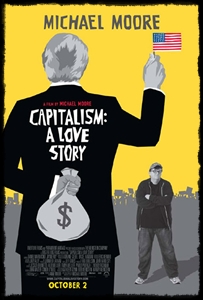 Filmmaker Michael Moore’s critique of capitalism is filled with respectful images and ideals from the Catholic Church, writes Tony Stevens-Arroyo in The Washington Post‘s column On Faith.
 Sunday’s Washington Post had an interesting article by David Gibson on Pope Benedict’s radical regressive reforms. For the Pope who predicted he’d only have the papacy for a few short years, he’s certainly getting a lot of mileage out of it. It appears that this pope is outgrowing the Fisherman’s shoes with all the changes he wants to make.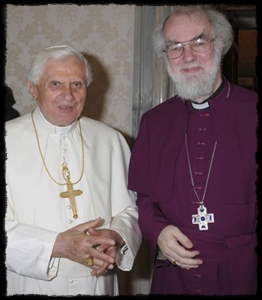
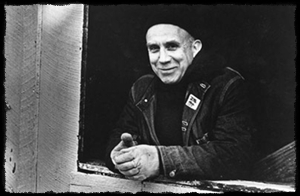 Catholic monk Thomas Merton had a very human and real understanding of “faith” and the rigors of trying to live as a human being in an inhumane society.
 “When We Decided to Build the Wall”
 On October 24 people around the world will be observing the First International Day of Climate Action, hosted by Bill McKibben’s 350.org.
 I’m giving a shout out to Susan Toepfer over at Truth/Slant for her post Nuns on the Run: Why Is the Pope Targeting Women? Even though Toepfer’s not Catholic herself, like many Americans she’s benefited from the amazing gift and wisdom of American Catholic sisters.
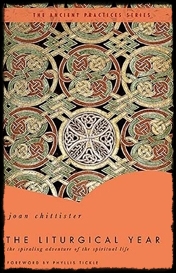 Benedictine Catholic Sr. Joan Chittister has a new book out on the liturgical year in everyday life. I think this book describes daily sacramental living in a wonderful, down-to-earth way and doesn’t limit liturgical understanding to only those who come from “high church” traditions.
