-
Michael Moore: ‘If You Fail to Feed the Hungry, You’ll Have a Hard Time Finding the Pin Code to the Pearly Gates’
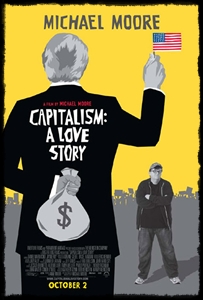 Who knew that shock-doc film producer Michael Moore was Catholic?
The maker of Roger and Me, Bowling for Columbine, and Sicko, sent a letter this morning promoting his new movie Capitalism: A Love Story that hit theaters last week. Moore’s e-mail is about as much of a “faith testimony” as you’ll get from most Catholics. (We tend to keep our faith on the inside and wear our “works” on the outside. Show, rather than tell.)
Capitalism: A Love Story is Moore’s version of the Pope’s latest encyclical Charity and Truth (read my cliff notes A Love Letter from the Pope), but alot more fun. Both deal with the most critical question of our day: Is capitalism a sin?
In Bruce Headlam’s New York Times profile of Moore last month, Headlam teased out an interesting take on Moore’s faith-inspired prophetic vision, including Moore’s claim that he got his street-theater sensibilities from radical Catholic prophetic priests Dan and Phil Berrigan.
Headlam wrote:
As much as Mr. Moore sometimes plays a comic-book version of class warrior—Left-Thing vs. the Republic of Fear!—his politics are not grounded in class as much as in Roman Catholicism. Growing up in Michigan, he attended parochial school and intended to go into the seminary, inspired by the priests and nuns who, at least until Pope John Paul II, inherited a long tradition of social justice and activism in the American church. … Along with a moral imperative, Catholicism also gave a method. Mr. Moore idolized the Berrigan brothers, the radical priests who introduced street theater into their activism, for example, mixing their own napalm to burn government draft records. Their actions were a form of political spectacle that, conceptually, is Marxist—workers seizing means of production and all that—and it influenced some of Mr. Moore’s best-remembered stunts.
So, if you weren’t on the list that got a letter from Michael Moore this morning, read on:
Friends,
I’d like to have a word with those of you who call yourselves Christians (Muslims, Jews, Buddhists, Bill Maherists, etc. can read along, too, as much of what I have to say, I’m sure, can be applied to your own spiritual/ethical values).
In my new film I speak for the first time in one of my movies about my own spiritual beliefs. I have always believed that one’s religious leanings are deeply personal and should be kept private. After all, we’ve heard enough yammerin’ in the past three decades about how one should “behave,” and I have to say I’m pretty burned out on pieties and platitudes considering we are a violent nation who invades other countries and punishes our own for having the audacity to fall on hard times.
I’m also against any proselytizing; I certainly don’t want you to join anything I belong to. Also, as a Catholic, I have much to say about the Church as an institution, but I’ll leave that for another day (or movie).
Amidst all the Wall Street bad guys and corrupt members of Congress exposed in “Capitalism: A Love Story,” I pose a simple question in the movie: “Is capitalism a sin?” I go on to ask, “Would Jesus be a capitalist?” Would he belong to a hedge fund? Would he sell short? Would he approve of a system that has allowed the richest 1% to have more financial wealth than the 95% under them combined?
I have come to believe that there is no getting around the fact that capitalism is opposite everything that Jesus (and Moses and Mohammed and Buddha) taught. All the great religions are clear about one thing: It is evil to take the majority of the pie and leave what’s left for everyone to fight over. Jesus said that the rich man would have a very hard time getting into heaven. He told us that we had to be our brother’s and sister’s keepers and that the riches that did exist were to be divided fairly. He said that if you failed to house the homeless and feed the hungry, you’d have a hard time finding the pin code to the pearly gates.
I guess that’s bad news for us Americans. Here’s how we define “Blessed Are the Poor”: We now have the highest unemployment rate since 1983. There’s a foreclosure filing once every 7.5 seconds. 14,000 people every day lose their health insurance.
At the same time, Wall Street bankers (“Blessed Are the Wealthy”?) are amassing more and more loot — and they do their best to pay little or no income tax (last year Goldman Sachs’ tax rate was a mere 1%!). Would Jesus approve of this? If not, why do we let such an evil system continue? It doesn’t seem you can call yourself a Capitalist AND a Christian — because you cannot love your money AND love your neighbor when you are denying your neighbor the ability to see a doctor just so you can have a better bottom line. That’s called “immoral” — and you are committing a sin when you benefit at the expense of others.
When you are in church this morning, please think about this. I am asking you to allow your “better angels” to come forward. And if you are among the millions of Americans who are struggling to make it from week to week, please know that I promise to do what I can to stop this evil — and I hope you’ll join me in not giving up until everyone has a seat at the table.
Thanks for listening. I’m off to Mass in a few hours. I’ll be sure to ask the priest if he thinks J.C. deals in derivatives or credit default swaps. I mean, after all, he must’ve been good at math. How else did he divide up two loaves of bread and five pieces of fish equally amongst 5,000 people? Either he was the first socialist or his disciples were really bad at packing lunch. Or both.
Yours,
Michael Moore -
Ched Myers: Getting Egypt Out of the People (Exodus 16)
Watch this great 10-minute video of activist-theologian Ched Myers discussing sabbath economics versus empire economics (Exodus 16) and instructions for “getting Egypt out of the people.”
-
Riane Eisler’s Look at Empire Economics
 Riane Eisler, best known for her international bestseller The Chalice and The Blade, just published The Real Wealth of Nations. In a Sept 16, 2009, address at the United Nations she laid out the difference between Partnership economics and Domination economics and the continuum between them. She concludes that the real wealth of nation is in people and nature, not Wall Street gamblers.
As American Christians, we must read the Bible from our own social location–which is the heart of Empire. Empires are built on Domination economics, so it is useful for us to understand Riesler’s analysis. Domination economics are predicated on death of humans, communities, and the natural world. (For example, some corporations allow “acceptable human losses” in order to justify profit.)
However, healthy nations and communities thrive when they practice Partnership economics–where investment is in human resources and real work, not capital for its own sake (like including the work that is done in the home as part of the GNP or fairly compensating childcare workers, etc, and paying women a fair wage).
Reiser argues that our emerging global community needs a “new economic story” for what human communities and economies can be. The message of Jesus in the gospels is one such “new story.” Gospel economics teach us that the purpose of an economy is to serve and protect human life, relationships, and the natural world–more on the model of partnership economics. (See all the resources at the Sabbath Economics Collaborative for more on this topic.)
The Manna Story in Exodus 16 and Numbers 11 teaches us about organic wealth–wealth that serves life, rather than promoting affluence or poverty.
Here’s an excerpt from Eisler’s talk:
We need to move beyond the tired old argument about capitalism vs socialism and vice versa. We need to retain and strengthen the partnership elements in both the market and government economies and leave the domination elements behind — and we need to go further: to a new economic system that recognizes what old systems did not: that the real wealth of nations, the real wealth of our world, is not financial (as we just saw when the derivatives, the credit swaps, melted into thin air) that the real wealth of nations consists of the contributions of people and of nature, and that therefore need what we have not had, economic systems that give visibility and real value to most important human work–the work of caring for people, starting in early childhood, and caring for our Mother Earth.
We urgently need this new economic system if are to effectively address global warming, and if we are to prevent further catastrophic problems. We urgently need it if are to more effectively address seemingly intractable problems like chronic poverty and hunger.
Read Riane Eisler’s whole speech here.
I’d recommend reading The Real Wealth of Nations. Eisler’s analysis of the value placed on human work and caring for children, elders, and families across global economic trends is not something you’ll find in most U.S. media.
-
Catholics Should Refuse to Pay for Vatican Investigation of American Nuns
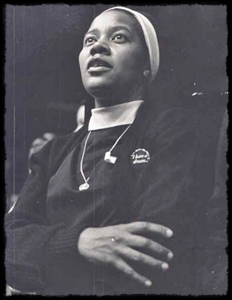
Sr. Dolorosa Bundy Thanks to Whispers in the Loggia for this nice summary of the most recent news on the Vatican investigation into American Catholic nuns. Apparently, not only are the nuns supposed to be honored by a Vatican investigation (usually reserved for pedophile priest scandals), but now they are encouraged to pay for it out of their own meager funds and with the help of Catholic bishops through local congregations.
Uhhhmmmm. How about we just say “no.” There’s just no good reason to participate in your own oppression, much less pay for it.
Here’s an excerpt from Whispers:
As the Apostolic Visitation of the nation’s womens’ communities enters its second phase, the Holy See has asked the US bishops to foot the controversial inquest‘s proposed budget of $1.1 million.
Broken yesterday by the National Catholic Reporter, news of the funding pitch — made to the bishops in a July letter from the Vatican’s lead overseer of religious, Slovenian Cardinal Franc Rodé CM — has provoked a fierce outcry from critics of the three-year study:
Since the Vatican announced the study last December, it has never publicly stated how much it estimates the comprehensive inquiry will cost or who will pay for it. A Vatican document sent to the heads of U.S. women’s congregations last summer suggested that those chosen for on-site visitations defray costs by paying for and hosting visitation teams, “and, if at all possible, transportation costs related to the visit.”…
Rodé’s July letter came in the form of a general appeal to U.S. bishops. It was addressed: “Your Eminence/Your Excellency” and began with an explanation: “My dear brother bishops in the United States, as you are aware, His Holiness Pope Benedict XVI, in an audience on Nov. 17, 2008, authorized an apostolic visitation of the principal institutes of apostolic women religious in the United States.”
His letter went on to say, “We count on your support in this effort to:
- “look into the quality of the life of apostolic women religious in the United States
- “learn more about the varied and unique ways in which apostolic women religious contribute to the welfare of the church and society
- “assist the church to strengthen, enhance and support the growth of the apostolic congregations to which approximately 59,000 women religious in the United States belong.”
-
Putting Our Planet Back in the Safety Zone
 The great gospel quintet The Fairfield Four do an old song titled “Standing in the Safety Zone.” The lyrics are roughly, “If you want to get to heaven, oh, you better stand in the safety zone.” A similar sentiment could be said about our planet. If we want to continue to live with the world as God intended, then we’d better learn to live in the safety zone. There are a thousand different factors that are contributing to global climate change, but basically we are fouling our own nest and we need to stop.
(Graphic Above: The inner green shading represents the proposed safe operating space for nine planetary systems. The red wedges represent an estimate of the current position for each variable. The boundaries in three systems (rate of biodiversity loss, climate change and human interference with the nitrogen cycle), have already been exceeded.)
In the days ahead you will be hearing a lot of shouting about climate change. Congress will begin taking on a host of environmental legislation in the late fall. The international climate convention will be held in Copenhagen in December to address the end of the Kyoto agreements (that the U.S. never signed). The coal industry, along with other energy companies, is currently paying and training people to be part of America’s Power Army as a fake grassroots lobbying effort to promote “clean coal” and “safe nuclear energy” and “balanced energy choices.” They also aim to create “reasonable doubt” in the minds of Americans about the veracity of climate change or the need for industry regulation.
In the middle of all the shouting, it’s important to remember that we need the strongest possible climate change legislation if we are going to protect the world’s vulnerable from starving to death, being driven off their land, or swallowed by rising oceans. The poor of the world are the canary in the global coal mine and they are choking on the waste generated by the U.S. and Europe (but the Europeans are doing something about it).
Here’s an excerpt from a recent Science Daily article titled Scientists Outline ‘Safe Operating Space’ For Humanity.
New approaches are needed to help humanity deal with climate change and other global environmental threats that lie ahead in the 21st century, according to a group of 28 internationally renowned scientists.
The scientists propose that global biophysical boundaries, identified on the basis of the scientific understanding of the earth system, can define a “safe planetary operating space” that will allow humanity to continue to develop and thrive for generations to come. This new approach to sustainable development is conveyed in the current issue of the scientific journal Nature. The authors have made a first attempt to identify and quantify a set of nine planetary boundaries, including climate change, freshwater use, biological diversity, and aerosol loading.
Read the whole article here.
-
The Danger of 20/20 Foresight
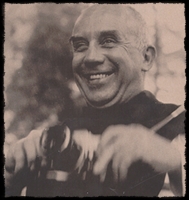 I think we can replace “Catholics” with “American Christians” in this quote from Thomas Merton’s “Cold War Letters” — especially in times like these when what is required of us is higher-level thinking and complex compassion in order to address the pressing needs of the poor today.
 In what other ways does the “illusion of clarity” prevent us from loving one another or draw us into a web of power over others?
Many Catholics make the mistake of thinking that the problems of our time are very clear-cut, that there is no difficulty in seeing the truth, and that since the just cause is very evident, we need only to apply force to achieve justice. But precisely this illusion that everything is “clear” is what is blinding us all. It is a serious temptation, and it is a subtle form of pride and worldly love of power and revenge.—Thomas Merton
Witness to Freedom: Letters in Times of Crisis, edited by William H. Shannon (Farrar, Straus & Giroux, 1994, p. 79).
-
Just When You Thought It Was Safe to Go Back to High School: “Jennifer’s Body”
 Jennifer’s Body (“She’s evil … and not just high school evil.”) is a new horror/slasher flick written by Diablo Cody (Juno and The United States of Tara — who also happens to be Catholic). It’s got all the blood, gore, cannibalism, revenge on teenage hormones, that we’ve come to expect from the genre. But don’t take that as a recommendation.
If you are a closet fan of American horror/thriller films and what they uncover about our social psyche, I suggest reading Jennifer’s Body and Why I Like Buffy’s Body Better by W. Scott Poole. He’s an associate professor in history at the College of Charleston and has written several books dealing with American religion, race, and popular culture. His latest is Satan in America: The Devil We Know.
According to to Poole, the dialogue in Jennifer’s Body is slick and ironic, but falls short of overturning the tables of misogyny in the genre. Even though writer Cody says she wanted to subvert the genre by inserting a sort of feminist “Trojan Horse” into the script. (See NYT‘s review by Michelle Orange.) However, J’s B is nothing compared to Joss Whedon’s 7-season TV hit Buffy the Vampire Slayer. (I’m a huge fan. See my article Damnation Will Not Be Televised.)
I’m always glad to find smart interpretations of Buffy’s mythic themes, feminism, and deep religious narrative. Here’s an excerpt from Poole’s review comparing Buffy with Jennifer’s Body:
Religion often goes to the horror movies, taking with it a raft of cultural baggage. In 1968, Rosemary’s Baby incorporated the Devil, anxieties over feminism, and the controversy over birth control. A few years later, The Exorcist served up an unsettling combination of religious conservatism, the perceived dangers of single-parent families, and the power of adolescent sexuality. Jennifer’s Body is the latest offering in this genre. …
I prefer to see powerful religious and cultural paradigms more thoroughly subverted than this. Joss Whedon’s Buffy the Vampire Slayer—in which another high school cheerleader is revealed as “the Chosen One” who slays monsters rather than becoming one—provides a good example.
Buffy’s seven seasons did more than simply reverse the formula that makes women the predators rather than the prey. Whedon and his writers and directors created a truly nuanced and complex hero, an archetypal figure in the same sense that Beowulf and Achilles represents the heroic. Rather than perform a parody of female identity (or simple revenge fantasy), Buffy instead embodied both the limitations of human ability and the struggles against darkness that are the price of transcendence.
-
How Did We Lose the Language of “We”?

Sept. 12, 2009, D.C. Tea Baggers protest Henry Giroux, cultural critic, author, and professor of English and Cultural Studies at McMaster University in Ontario, posted a fantastic article today titled The New Illiteracy in American Life: Democracy and Politics in the Age of the Spectacle.
After Joe Wilson’s outburst at President Obama last week and the Tea Baggers march on Washington on Saturday (see my photo above of a truck parked downtown during the march), civil discourse is all the rage. When did we lose the ability to speak to each other? everyone bemoans. How do we restore civic literacy?
Giroux lays out a cogent analysis of why and how we lost the language of “we.” And the role emotionalism now plays in legitimating a political perspective (as in “I feel this true, therefore it is.”). Here’s an excerpt from his article, but read the whole thing.
Authoritarianism is often abetted by an inability of the public to grasp how questions of power, politics and history and public consciousness are mediated at the interface of private issues and public concerns. The ability to translate private problems into social considerations is fundamental to what it means to reactivate political sensibilities and conceive of ourselves as critical citizens, engaged public intellectuals and social agents. Just as an obsession with the private is at odds with a politics informed by public consciousness, it also burdens politics by stripping it of the kind of political imagination and collective hope necessary for a viable notion of meaning, hope and political agency. Civic literacy is about more than enlarging the realm of critique and affirming the social; it is also about public responsibility, the struggle over democratic public life and the importance of critical education in a Democratic society.
-
Do You Say to a Sister “Goodbye. Be Healthy”?
 Here’s a shout out to Patrick Mahon for sending me his current post on Health Care and Gospel Values.
Pat blogs for Pax Christi South, a web site for two Pax Christi groups—the Berrigan Peace and Justice Community at St. William Church in Murphy, NC, and its mission, Immaculate Heart of Mary in Hayesville, NC. Pat is a leading nonviolence teacher and retreat leader. He and his wife Joan live in Georgia.
I really like his paraphrase from the epistle of James. Check it out:
The readings for this Sunday offer further thoughts for reflection. Let’s paraphrase James 2:15-16:
If a brother or sister is unable to secure affordable and adequate health care and one of you says to him/her, “Goodbye. Be healthy!” without giving him/her access to health care, what good does that do?
As Christians we always face the struggle of discerning, espousing and working for Christian values. Pope John XXIII made the Christian value explicit when it comes to health care. It is the right of every American. Period! End the debate! Now let’s find out how to make it a reality.
Read Pat Mahon’s whole post here.
-
‘A Hungry Man Is An Angry Man’: Christians and Muslims Together in Overcoming Poverty

Christians and Muslims attend Mass in Baghdad as a celebration for Muslims rebuilding the church. The Vatican’s inter-religious dialogue council sent a “Happy Id al-Fitr” message to Muslims around the world as they come to the end of Ramadan on Sept 19-20 by inviting them into common cause on ending poverty.
Ramadan is a time when Muslims reflect more deeply on the real meaning of life by being close to God and their neighbors. As part of this, they heighten their awareness of the needs of others, especially the poor, though fasting and practices of charity.
Christians and Muslims: Together in overcoming poverty looks at poverty that is the result of human sin and the loss of human dignity but also at poverty that is chosen and embraced as an example of one’s humility before God.
Indonesian priest Markus Solo serves in the middle of enormous tensions and violence between Muslims and Christians and between people of genuine faith and extremists. Around the world, Solo says, poverty “is getting worse after the recent economic and financial crisis. Everybody knows that poverty is a real and bitter challenge for people living in the developing countries, which also happen to be religious ones.”
The Vatican message noted a link between poverty and extremism or violence, a theme Father Solo echoed. He quoted the English proverb: “A hungry man is an angry man.”
Here’s an excerpt from the Vatican’s invitation:
On the occasion of your feast which concludes the month of Ramadan, I would like to extend my best wishes for peace and joy to you and, through this Message, propose this theme for our reflection: Christians and Muslims: Together in overcoming poverty. …
In his talk on the occasion of the World Day for Peace, 1st January 2009, His Holiness Pope Benedict XVI distinguished two types of poverty: a poverty to be combated and a poverty to be embraced.
The poverty to be combated is before the eyes of everyone: hunger, lack of clean water, limited medical care and inadequate shelter, insufficient educational and cultural systems, illiteracy, not to mention also the existence of new forms of poverty “…in advanced wealthy societies, there is evidence of marginalization, as well as affective, moral and spiritual poverty…” (Message for the World Day of Peace, 2009, n. 2).
The poverty to be embraced is that of a style of life which is simple and essential, avoiding waste and respecting the environment and the goodness of creation. This poverty can also be, at least at certain times during the year, that of frugality and fasting. It is the poverty which we choose which predisposes us to go beyond ourselves, expanding the heart.
As believers, the desire to work together for a just and durable solution to the scourge of poverty certainly also implies reflecting on the grave problems of our time and, when possible, sharing a common commitment to eradicate them. In this regard, the reference to the aspects of poverty linked to the phenomena of globalization of our societies has a spiritual and moral meaning, because all share the vocation to build one human family in which all – individuals, peoples and nations – conduct themselves according to the principles of fraternity and responsibility. …
The poor question us, they challenge us, but above all they invite us to cooperate in a noble cause: overcoming poverty!
Read the whole message here. (As an aside, this message also references JPII’s 2001 address on establishing a “common ethical code,” particularly in the financial industry. It’s worth a read.)
-
Subscribe
Subscribed
Have a WordPress.com account? Log in now.

