I heard Theo Dorgan read in Dublin last year from his then as yet unpublished manuscript. NowGreek, his newest collection of poems is available – and I’m savoring every page. Even today I took my copy down to the cafe beneath my office and read while the ladies fixed my sandwich. (I noticed I was sharing the table with a young woman who was reading off her Kindle. While casting no aspersions her way – I know she’s saving trees – I was highly satisfied holding my book in my hands. Ahhh, the pleasure.)
Below find Dorgan’s poem that appeared on Poetry Daily. I recently read this one aloud to a friend while she was cooking dinner.
Bread Dipped in Olive Oil and Salt
by Theo Dorgan
Bread dipped in olive oil and salt,
a glass of rough dry white.
A table beside the evening sea
where you sit shelling pistachios,
flicking the next open with the half-
shell of the last, story opening story,
on down to the sandy end of time.
The stars coming out on the life that I call mine
Dorgan is a poet, prose writer, editor, scriptwriter, translator, and sailor. His other books include What This Earth Cost Us(Dedalus, 2008); Sailing for Home, his prose account of a transatlantic voyage under sail; and, in 2007, A Book of Uncommon Prayer, which he compiled and edited. He is the editor of Irish Poetry Since Kavanagh, and co-editor of Leabhar Mór na hÉireann / The Great Book of Ireland, An Leabhar Mór / The Great Book of Gaelic, the anthology Watching the River Flow, and the acclaimed collection of historical essays Revising the Rising.
While Stephen “I-Don’t-See-Race” Colbert pointedly jokes about being “colorblind,” Michelle Alexander asks – What in the world do we think we’re doing dragging ugly “Jim Crow” into the Obama Era?
Obama’s mere presence in the Oval Office is offered as proof that “the land of the free” has finally made good on its promise of equality. There’s an implicit yet undeniable message embedded in his appearance on the world stage: this is what freedom looks like; this is what democracy can do for you. If you are poor, marginalized, or relegated to an inferior caste, there is hope for you. Trust us. Trust our rules, laws, customs, and wars. You, too, can get to the promised land.
Perhaps greater lies have been told in the past century, but they can be counted on one hand. Racial caste is alive and well in America.
Most people don’t like it when I say this. It makes them angry. In the “era of colorblindness” there’s a nearly fanatical desire to cling to the myth that we as a nation have “moved beyond” race. Here are a few facts that run counter to that triumphant racial narrative:
*There are more African Americans under correctional control today — in prison or jail, on probation or parole — than were enslaved in 1850, a decade before the Civil War began.
*As of 2004, more African American men were disenfranchised (due to felon disenfranchisement laws) than in 1870, the year the Fifteenth Amendment was ratified, prohibiting laws that explicitly deny the right to vote on the basis of race.
* A black child born today is less likely to be raised by both parents than a black child born during slavery. The recent disintegration of the African American family is due in large part to the mass imprisonment of black fathers.
*If you take into account prisoners, a large majority of African American men in some urban areas have been labeled felons for life. (In the Chicago area, the figure is nearly 80%.) These men are part of a growing undercaste — not class, caste — permanently relegated, by law, to a second-class status. They can be denied the right to vote, automatically excluded from juries, and legally discriminated against in employment, housing, access to education, and public benefits, much as their grandparents and great-grandparents were during the Jim Crow era. …
When we pull back the curtain and take a look at what our “colorblind” society creates without affirmative action, we see a familiar social, political, and economic structure — the structure of racial caste. The entrance into this new caste system can be found at the prison gate.
This is not Martin Luther King, Jr.’s dream. This is not the promised land. The cyclical rebirth of caste in America is a recurring racial nightmare.
You can read her whole article here. Alexander’s incriminating claim reminds me of this haunting poem by Carl Wendell Himes Jr. written about Martin Luther King. We have so far to go to reach the Beloved Community.
Now That He Is Safely Dead
by Carl Wendell Himes Jr.
Now that he is safely dead,
Let us Praise him.
Now that he is safely dead,
Let us Praise him.
Build monuments to his glory.
Sing Hosannas to his name.
Dead men make such convenient Heroes.
They cannot rise to challenge the images
We would fashion from their Lives.
It is easier to build monuments
Than to make a better world.
So now that he is safely dead,
We, with eased consciences, will
Teach our children that he was a great man,
Knowing that the cause for which he
Lived is still a cause
And the dream for which he died
Is still a dream.
“Now That He Is Safely Dead,” by Carl Wendell Hines Jr. in “Beyond Amnesia: Martin Luther King and the Future of America,” by Vincent G. Harding, Journal of American History, 74 (September 1987, p. 468).
I was in a “webinar” (live online presentation thingy) recently with Erica Chenoweth from Wesleyan University. She was discussing her statistical work tracking contemporary nonviolent campaigns. Her data backs up what nonviolent strategists already know: it’s better than violence and more effective.
One factoid I found particularly interesting: “Foreign states are more likely to support violent campaigns against their common enemies than nonviolent campaigns. This can increase violent campaigns success to 41%, but is still less successful than nonviolent campaigns. But nonviolent campaigns seem to be better off without foreign support.”
I recommend checking out her slide show presentation and (if you are deep into this stuff) reading her excellent study. Watch for more of her work to come. Here’s an excerpt below:
Why Civil Resistance Works: The Strategic Logic of Nonviolent Conflict, by Maria J. Stephan and Erica Chenoweth
From 2000 to 2006 organized civilian populations successfully employed nonviolent methods including boycotts, strikes, protests, and organized noncooperation to challenge entrenched power and exact political concessions in Serbia (2000), Madagascar (2002), Georgia (2003) and Ukraine (2004–05), Lebanon (2005), and Nepal (2006). The success of these nonviolent campaigns—especially in light of the enduring violent insurgencies occurring in some of the same countries—begs systematic investigation.
Our findings show that major nonviolent campaigns have achieved success 53 percent of the time, compared with 26 percent for violent resistance campaigns. There are two reasons for this success. First, a campaign’s commitment to nonviolent methods enhances its domestic and international legitimacy and encourages more broad-based participation in the resistance, which translates into increased pressure being brought to bear on the target. Recognition of the challenge group’s grievances can translate into greater internal and external support for that group and alienation of the target regime, undermining the regime’s main sources of political, economic, and even military power.
Second, whereas governments easily justify violent counterattacks against armed insurgents, regime violence against nonviolent movements is more likely to back fire against the regime. Potentially sympathetic publics perceive violent militants as having maximalist or extremist goals beyond accommodation, but they perceive nonviolent resistance groups as less extreme, thereby enhancing their appeal and facilitating the extraction of concessions through bargaining.
Our findings challenge the conventional wisdom that violent resistance against conventionally superior adversaries is the most effective way for resistance groups to achieve policy goals. Instead, we assert that nonviolent resistance is a forceful alternative to political violence that can pose effective challenges to democratic and nondemocratic opponents, and at times can do so more effectively than violent resistance.
The woods along Rock Creek
are a wall of chartreuse green
shot through with redbud seams;
white dogwood blossoms stacked
in crystalline piles. In the middle,
a woodpecker.
Top-notch ablaze, back in black,
red-streaked along the cheek,
blue-beaked and pecking,
dadada dadada dadada – then flight
rending the woods,
ascreech in delight.
Rose Marie Berger, an associate editor at Sojourners, blogs at www.rosemarieberger.com. She’s the author of the forthcoming book Who Killed Donte Manning?: The Story of an American Neighborhood (Apprentice House, April 2010).
From 1865 until 2007. From Pope Pius IX to Benedict XVI. There will no doubt be much scholarly debate on this new online content once these 142 years of monthly Vatican reports get translated out of Latin (!) into something the contemporary world understands.
The initial point of interest seems to be the unofficial texts relating to the period around the Second World War. These documents are separated out in files of their own.
The Catholic Church’s role in WWII has long been a tension between Jewish leaders and the Vatican. One the one hand Pope Pius XII signed the Reichskonkordat between Germany and the Vatican in 1933 to support Hitler’s moves against Communism; and many Catholics at every level of the society aligned with the Nazis in their “purity” campaign, including assisting in exposing and killing Jews. On the other hand, there was a strong underground Catholic popular movement to resist Hitler and to protect Jews from harassment, imprisonment, and execution.
The newly accessible Vatican files should offer greater understanding of the dynamics of the time and hopefully bring greater honesty and authenticity to Catholic-Jewish relations. When Pope Benedict XVI visited the Great Synagogue of Rome in 2009, some Jewish leaders asked him to open “all Vatican archives” regarding the pontificate of Pius XII, from 1939 to 1958, and to thoroughly investigate his policy regarding Jews. Now, that has been done.
The Vatican has proved itself capable of transparency on the very difficult issue of WWII and the Holocaust. Will it be so bold to act with transparency on the pedophilia scandal?
The documents show that during the pontificate of Paul VI, from 1963 to 1978, there was concerted discussion on accusations of “silence” by Pius XII during the Second World War on the Holocaust.
Accusations were that Pius XII never openly and unequivocally protested against the Holocaust and some historians have accused him of accepting actions of Nazi Germany under its dictator Adolf Hitler.
The Vatican has often rebutted this accusation by saying that while it did not condemn the Holocaust, Pius XII strongly encouraged a wide network of Roman Catholics – in parishes, families and monasteries – throughout Europe to help thousands of Jews escape death.
Documents show that Pope Paul VI entrusted a group of four Jesuit historians, headed by the Rev. Pierre Blet, to edit the Acts and documents of Holy See regarding the Second World War.
From 1965 to 1981 the group published 12 volumes. They contain not only official documents, but also letters of the secretary of state, of papal nuncios, and private letters of bishops to the pope. On the whole, according to the Vatican, these documents show that the Holy See did a lot to help Jews during the period.
Chris Keane/ReutersThere was a lovely reflection in today’s NYT by novelist Denise Giardina about the Upper Big Branch mine explosion in West Virginia. Denise spent some time with Sojourners community in the late ’70s and early ’80s when she was working on her first book Storming Heaven. Since then she’s gone on to write Unquiet Earth, Saints and Villains, and Emily’s Ghost. Currently, Denise is the writer-in-residence at West Virginia State University. Below is an excerpt from her column:
Halfway through Saturday night’s semifinal against Duke, our star forward, Da’Sean Butler, tore a ligament in his knee, and the Mountaineers crumbled. And on Monday evening, while Duke and Butler played in what for us was now merely a game, West Virginians gathered around televisions to watch news of a coal mine disaster.
Despite the sunny skies and unseasonably warm weather, the mood here in southern West Virginia is subdued. As of Tuesday afternoon, 25 men have been confirmed dead, two are critically injured, and four are missing and presumed dead. Their fellow West Virginians work round the clock and risk their own lives to retrieve the bodies.
Already outrage is focused on Massey Energy, owner of the Upper Big Branch mine. Massey has a history of negligence, and Upper Big Branch has often been cited in recent years for problems, including failure to properly vent methane gas, which officials say might have been the cause of Monday’s explosion.
It seems we can’t escape our heritage. I grew up in a coal camp in the southern part of the state. Every day my school bus drove past a sign posted by the local coal company keeping tally, like a basketball scoreboard, of “man hours” lost to accidents. From time to time classmates whose fathers had been killed or maimed would disappear, their families gone elsewhere to seek work.
We knew then, and know now, that we are a national sacrifice area. We mine coal despite the danger to miners, the damage to the environment and the monomaniacal control of an industry that keeps economic diversity from flourishing here. We do it because America says it needs the coal we provide.
I’m reading the new collection of poems by Irish poet Theo Dorgan. It’s titled Greek (Daedelus Press, 2010). I heard Theo read some of his Greek pieces when I was in Ireland in 2008. Stunning! Here’s a video of Theo reading “Visitors.” I’m not sure where this is shot, but it probably somewhere outside Dublin. This collection is a great one for reading aloud around the dinner table or while doing the dishes.
I’m a practicing Catholic. I practice and practice and practice. I hope when I get to the pearly gates, Saints Peter and Mary Magdalene will tell me that all my practicing made me perfectly eligible for heaven. God willing. Until then, we muddle along here in the earthly realm that, while shot through with light-bent beauty, is also riddled with sin-punched hearts.
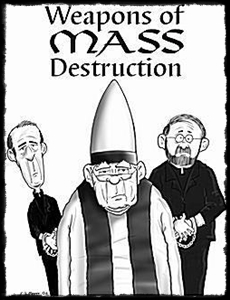
The Catholic hierarchy is on trial right now in the world court of public scrutiny for aiding and abetting child abusers. If the Catholic church indeed represents “organized religion,” then – given the multiple jurisdictions crossed transnationally moving priests to avoid being caught and punished – this is certainly an example of organized crime. In this context Jesus’ words in Luke come to mind:
“Watch yourselves carefully,” said Jesus, “so you don’t get contaminated with Pharisee yeast, Pharisee phoniness. You can’t keep your true self hidden forever; before long you’ll be exposed. You can’t hide behind a religious mask forever; sooner or later the mask will slip and your true face will be known. You can’t whisper one thing in private and preach the opposite in public; the day’s coming when those whispers will be repeated all over town” (Luke 12:1-3, The Message).
Structural sin has long been a concept in Catholic theology. Structural sin, said Pope John Paul II, (see Sollicitudo rei socialis) proceeds from the accumulation of personal sins. It is, said the Pope, “a question of a moral evil, the fruit of many which lead to ‘structures of sin.’”
This is a time for the lens of such scrutiny to be turned on the Catholic church hierarchy itself. But the church leaders can not heal themselves from the inside out. They must humble themselves before the laity and ask for forgiveness and help in shaping the Catholic church more into a body that is less occluded with secrecy, silence, dominance, and clericalism, and that with greater transparency allows for the light of Christ the shine through.
Below are excerpts from a few commentaries I’ve found particularly insightful on the “scandal.”
They kept women far from any power, then and since. It’s a male-run church, now steaming ahead full throttle in legalistic mode. Shocking headlines pop up daily about what one or another Catholic bishop knew or didn’t know about pederasty in his diocese. From Munich to Milwaukee, across Ireland and into nearly every country in the world, the tales multiply.
What’s not been heard so loudly is the story of diversionary strikes emanating from the Vatican, perhaps aimed at discrediting U.S. nuns who built the charitable and educational infrastructure of the church.
Two separate investigations — one led by the Vatican department charged with overseeing religious institutes worldwide, another led by Pope Benedict’s successor at the Congregation for the Doctrine of the Faith — are burrowing into the lives and work of U.S. Catholic sisters.
The Vatican appointed an American sister to lead the larger investigation, but didn’t fund the effort. She’s asking the convents her teams are visiting to pay for the intrusion. Some say that is typical of how bishops treat nuns: ask them to do something, as well as the money to do it.
The other investigation focuses on the Leadership Conference of Women Religious, an umbrella group for heads of most women’s religious orders and institutes. American Cardinal William J. Levada is directing a paper chase looking for doctrinal errors. He is the same man who called the (female) process server “a disgrace to the Catholic Church” when he was subpoenaed to testify about priestly pederasty.
Hello? What is going on? In the United States, not one bishop who oversaw pederasty or who used church money to break the minds and hearts of complaining victims has suffered any consequence. As Duquesne law professor Nicholas Cafardi points out in the lay Catholic magazine Commonweal, the only bishop to resign — Cardinal Bernard F. Law of Boston — got promoted to a cushy job in Rome. Law also belongs to the Vatican congregation that nominates bishops.
That’s right. The U.S. bishop who presided over the biggest pederasty scandal in history helps choose new bishops, and can even vote for another pope (at least until he turns 80 in November 2011).
The capital of trust between the people of the church and their leaders is dangerously close to empty. The bishops cannot take the people for granted any longer. We were raised to love the gospel, to seek the truth, to serve justice, to grow in the bosom of the sacraments. But we will not do it under their leadership unless they change.
What’s needed is a conversion of the bishops and the pope himself. That’s right: It’s time for the pope and the bishops to convert their culture to one that is centered on loving God from the depths of their souls and to leading a church that is as much mother as father, as much pastoral as theological, as much spiritual as doctrinal. It is time for them to listen to the deep and authentic witness of the people of faith, to trust the spirit that blows where it will, to abandon their defensiveness of their positions and trust only the gospel, and not their edifice of control. Conversion is a total experience — letting go of the old and putting on the new.
The conversion we seek for them is the same conversion they invite for us: Put on a contrite heart and fall in love with God, recklessly, totally and passionately. Let the love of God be the only measure of their actions.
For American Catholics there is no consolation in the confirmation of what we have known all along: namely, the sexual abuse crisis is not uniquely American. Our season of Lent is long and protracted, and the heartbreaking discussions, discouragement and dismay are as fresh these weeks as they were in 2002. There are multiple opinions– constructive, emotional, factually inaccurate, prejudicial, insightful and heartbreaking. Whether one’s objective is to exonerate or excoriate the pope, surely what matters most for those who belong to and care about the Church is that the outcome be a genuine commitment to penitence and penance, stronger accountability, deeper humility, exemplary managerial and governance oversight practices, openness, restored trust and credibility.
Archbishop Robert Zollitsch of Freiburg, president of the German bishops’ conference, likened the spreading sex abuse scandal to other recent causes of “suffering in our lives,” including earthquakes in Haiti and Chile, and this week’s attack by terrorists on the Moscow subway.
“In many cases the victims could not put their injuries into words,” Zollitsch wrote, in a statement posted on his archdiocese’s Web site. “The wounds inflicted on them can scarcely be cured … This is a painful reality that we have to face.” Writing on the day when Christians commemorate the death of Jesus, the archbishop likened children and young people molested by priests to the crucified Christ, as fellow victims of “injustice and violence.”
The church needs to cast aside the lawyers, the PR specialists and its own worst instincts, which are human instincts. Benedict could go down as one of the greatest popes in history if he were willing to risk all in the name of institutional self-examination, painful but liberating public honesty, and true contrition.
And then comes something even harder: Especially during Lent, the church teaches that forgiveness requires Catholics to have “a firm purpose of amendment.” The church will have to show not only that it has learned from this scandal, but also that it’s truly willing to transform itself.
MARK SHIELDS: I think — I say this as a practicing Catholic. I think that the church has handled the child abuse scandal from the very beginning in the worst possible manner, that their first inclination seemed to be to protect the priests, and then to protect the bishops who were protecting the priests. And there seemed to be minimal concern, in too many instances, for the child, especially the most vulnerable and the least powerful, and, in some cases, handicapped children who were abused. Are there people who are delighting in seeing the church embarrassed and humiliated and exposed? Sure. But that — that is not — the facts are the facts. That was the first charge that was leveled against The Boston Globe when they revealed the stories about Cardinal Law, that this was part of an anti-Catholic — maybe there was a concern, but the facts stand for themselves.
JIM LEHRER: What about — what about this — the anti-Semitism angle?
DAVID BROOKS: Well, you know, as a semi-practicing Jew, the comparison between a child molestation scandal and the victims of the Holocaust is an offensive comparison. And I think Jews and most people are offended by that comparison. And I think — but what it speaks to is not — is an insularity in the response and a tone-deafness to the response. At least a small coterie of people who are making statements — and this was not reflective of church policy — but who are making statements who have been inside the corridors of a world and have difficulty perceiving how things are understood and interpreted outside.
MARK SHIELDS: The archbishop of Dublin, archbishop of Dublin, Archbishop Martin, made a compelling statement echoing — really taking great issue with the Vatican and its handling of this whole crisis and scandal.
JIM LEHRER: As a semi-practicing Protestant, who is going to win the Final Four?
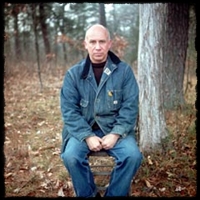
…the true contemplative is not the one who prepares [her] mind for a particular message that [s]he wants or expects to hear, but who remains empty because [s]he knows that [s]he can never expect or anticipate the word that will transform [her] darkness into light. …
[S]he waits on the Word of God in silence, and when [s]he is “answered,” it is not so much by a word that bursts into [her] silence. It is by [her] silence itself suddenly, inexplicably revealing itself to [her] as a word of great power, full of the voice of God.–Thomas Merton
Thank you to Abayea for sending me the Paschal homily of St. John Chrysostom (“the golden tongue”) that is read aloud in every Orthodox church on the morning of Pascha or Easter. It is a beautiful litany to call forth an Easter people!
If anyone is devout and a lover of God, let them enjoy this beautiful and radiant festival. If anyone is a grateful servant, let them, rejoicing, enter into the joy of his Lord. If anyone has wearied themselves in fasting, let them now receive recompense. If anyone has labored from the first hour, let them today receive the just reward. If anyone has come at the third hour, with thanksgiving let them feast. If anyone has arrived at the sixth hour, let them have no misgivings; for they shall suffer no loss. If anyone has delayed until the ninth hour, let them draw near without hesitation. If anyone has arrived even at the eleventh hour, let them not fear on account of tardiness.
For the Master is gracious and receives the last even as the first; he gives rest to him that comes at the eleventh hour, just as to him who has labored from the first. He has mercy upon the last and cares for the first; to the one he gives, and to the other he is gracious. He both honors the work and praises the intention. Enter all of you, therefore, into the joy of our Lord, and, whether first or last, receive your reward.
O rich and poor, one with another, dance for joy! O you ascetics and you negligent, celebrate the day! You that have fasted and you that have disregarded the fast, rejoice today! The table is rich-laden; feast royally, all of you! The calf is fatted; let no one go forth hungry! Let all partake of the feast of faith. Let all receive the riches of goodness. Let no one lament their poverty, for the universal kingdom has been revealed. Let no one mourn their transgressions, for pardon has dawned from the grave. Let no one fear death, for the Saviour’s death has set us free.
He that was taken by death has annihilated it! He descended into Hades and took Hades captive! He embittered it when it tasted his flesh! And anticipating this Isaiah exclaimed: “Hades was embittered when it encountered thee in the lower regions”.
It was embittered, for it was abolished!
It was embittered, for it was mocked!
It was embittered, for it was purged!
It was embittered, for it was despoiled!
It was embittered, for it was bound in chains!
It took a body and met God face to face!
It took earth and encountered heaven!
It took what it saw but crumbled before what it had not seen!
O death, where is thy sting? O Hades, where is thy victory?
Christ is risen, and you are overthrown!
Christ is risen, and the demons are fallen!
Christ is risen, and the angels rejoice!
Christ is risen, and life reigns!
Christ is risen, and not one dead remains in a tomb!
For Christ, being raised from the dead, has become the first-fruits of them that slept. To him be glory and might unto ages of ages. Amen.
My friends, drink deeply the unfathomable, profligate grace of God who has called you from the dead.
 I heard Theo Dorgan read in Dublin last year from his then as yet unpublished manuscript. Now Greek, his newest collection of poems is available – and I’m savoring every page. Even today I took my copy down to the cafe beneath my office and read while the ladies fixed my sandwich. (I noticed I was sharing the table with a young woman who was reading off her Kindle. While casting no aspersions her way – I know she’s saving trees – I was highly satisfied holding my book in my hands. Ahhh, the pleasure.)
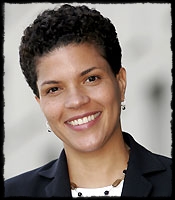 While Stephen “I-Don’t-See-Race” Colbert pointedly jokes about being “colorblind,” Michelle Alexander asks – What in the world do we think we’re doing dragging ugly “Jim Crow” into the Obama Era?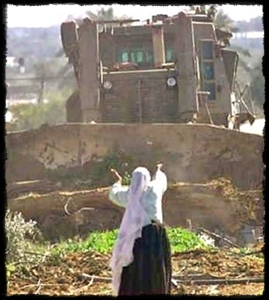

 From 1865 until 2007. From Pope Pius IX to Benedict XVI. There will no doubt be much scholarly debate on this new online content once these 142 years of monthly Vatican reports get translated out of Latin (!) into something the contemporary world understands.
 …the true contemplative is not the one who prepares [her] mind for a particular message that [s]he wants or expects to hear, but who remains empty because [s]he knows that [s]he can never expect or anticipate the word that will transform [her] darkness into light. …
 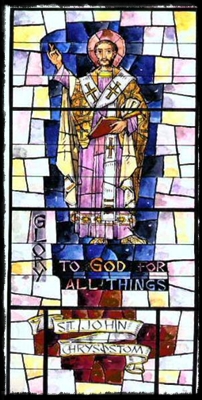 Thank you to Abayea for sending me the Paschal homily of St. John Chrysostom (“the golden tongue”) that is read aloud in every Orthodox church on the morning of Pascha or Easter. It is a beautiful litany to call forth an Easter people!
