-
Interview with Jennifer Sleeman, Catalyst for Sept 26: “A Sunday Without Women”

Jennifer Sleeman, Cork, Ireland Jennifer Sleeman’s call for Sept. 26 to be “A Sunday Without Women” on behalf of justice for women in the Catholic church, is picking up steam around the world. Sleeman, an 80-year-old Catholic convert from Clonakilty in Cork, Ireland, is an active member of her Catholic church. She is also the person mainly responsible for Clonakilty becoming the first Fair Trade town in Ireland and has received an award from the Cork Environmental Forum, in recognition of her “outstanding contribution to sustainability in Cork city and county through partnership and participation in the promotion of environmental care.” I interviewed her last week over email.
Rose: What was the context for you suggesting the Mass-boycott day? What prompted you and why did the media pick it up?
Jennifer: Rose, I’m delighted to answer your questions. It is so exciting seeing the idea traveling world wide! I was aware that a lot of individuals and groups have been campaigning for equal rights in the Catholic Church and the idea of Boycott was to pull it all together. I was greatly encouraged and helped by friend who had a mailing list. It never crossed my mind that Sept. 26th is just after the Pope’s visit to England. I have been wondering a lot why I decided to risk it and why now — is there a spirit at work?
Rose: Other than the media, who has responded to your call?
Jennifer: I have had the most fantastic support from both women and men. Letters (proper ones on paper!), cards, emails, phone calls. 99.9% positive.
Rose: What are your plans for Sept. 26? Will you gather with others?
Jennifer: I don’t know what I will do on the 26th.
Rose: Is there any message you’d like to send to Catholic women around the world?
Jennifer: We are the majority. Together we have strength and our absence, the empty pews will be noticed. I would love the focus to go away from me and onto all women and men who see the great need for change in the Church. If people have ideas to gently reinforce the message, go for it.
The movement to “boycott Mass” for justice for women in the Catholic church may not be the perfect instrument. But in the language of social movements it would be considered a “weapon of the weak” — a nonviolent way that a subordinate class wields power over a a dominant power structure that purports absolute control (See James Scott and Karl Gaspar). Sleeman’s call is not only for justice for women but fits in a stream of actions and speeches that are geared to confronting the “restorationist” movement happening within the institutional hierarchy of the Catholic Church.
South African Catholic bishop Kevin Dowling described it this way:
“Restorationism: the carefully planned dismantling of the theology, ecclesiology, pastoral vision, indeed the ‘opening of the windows’ of Vatican II — in order to ‘restore’ a previous, or more controllable model of church through an increasingly centralized power structure; a structure which now controls everything in the life of the church through a network of Vatican congregations led by cardinals who ensure strict compliance with what is deemed by them to be ‘orthodox.’ Those who do not comply face censure and punishment, e.g. theologians who are forbidden to teach in Catholic faculties.
Lest we do not highlight sufficiently this important fact. Vatican II was an ecumenical council, i.e., a solemn exercise of the magisterium of the church, i.e. the college of bishops gathered together with the bishop of Rome and exercising a teaching function for the whole church. In other words, its vision, its principles and the direction it gave are to be followed and implemented by all, from the pope to the peasant farmer in the fields of Honduras.”
Read Bishop Dowling’s entire talk here. And let me know if you are taking action for women on Sept. 26. I’ll add you to the map.
-
‘U.S. Catholic’ Blog Post on Sept 26: A Sunday Without Women
Here’s a shout out to Megan Sweas over at U.S. Catholic for posting about the Sept 26: Sunday Without Women. There are some good comments in response to her post. Below see the comment that I left.
Boycotting the Mass
U.S. Catholic magazine
Rose Marie Berger of Sojourners has created a map of places where women are boycotting the Mass for her personal blog. Questions abound with such an idea. …Hi Megan– Thanks so very much for posting on the Sept 26: Sunday Without Women. I’m getting more and more comments at my blog everyday from women around the world who are standing up for women’s justice in the Catholic church.
I had a brief email interview with Jennifer Sleeman this week. She’s seeing lots of support bubbling up. The great thing is that women are coming up with all kinds of creative ideas. Many have decided to go to Mass on Saturday night in order to participate fully in the weekly liturgy. But will join with other women (and men) on Sunday morning during regular Mass time to pray together for the Holy Spirit and Mary and the women saints to intercede for the male Catholic hierarchy to receive new wisdom on an egalitarian model of Catholicism.
In Europe and the UK, men and some women decided to attend Mass but are wearing green armbands to signify their protest. In Portland, Oregon, several churches are banding together for a public prayer witness.
Jennifer Sleeman’s call was to “boycott Mass,” in part because she wanted to avoid any protest that would disrupt the liturgy. And I think she has a valid point there.
Keep the conversation going. Peace and All Good–
Rose Berger -
What’s an Evangelical Feminist?

Anne Eggebrotten Anne Eggebrotten, who teaches on women and religion at California State University, Northridge, recently published her article The Persistence of Patriarchy in Sojourners (July 2010). Anne is one of the founding member of the Evangelical and Ecumenical Women’s Caucus.
The EEWC grew out of the 1973 Chicago gathering of young evangelicals who eventually launched the Chicago Declaration of Evangelical Social Concern. Some of these folks went on to lead Evangelicals for Social Action. Among the participants were women concerned about the inferior status of women in Church and society and who called on the group to consider issues related to sexism from a Christian perspective.
At ESA’s second consultation in 1974 the women’s caucus was one of six task forces formed by participants to study such concerns as racism, sexism, peace, and simpler lifestyles. Thus our group was born as the Evangelical Women’s Caucus. EWC presented proposals to Evangelicals for Social Action on a variety of topics including endorsement of the Equal Rights Amendment, support for inclusive language in Bible translation and Christian publications, affirmation of the ordination of women, and criticism of discriminatory hiring policies in Christian institutions.
The first national EWC conference, held in 1975 in Washington, D.C., addressed “Women in Transition: A Biblical Approach to Feminism.” The conference attracted more than 360 women from 36 of the 50 United States and from Canada. Many of the speakers at this conference were also writing on this topic for The Post American, the predecessor of Sojourners magazine.
Since many people may not be familiar with the EECW’s work, I thought I’d post their mission statement below:
Mission: We support, educate, and celebrate Christian feminists from many traditions.
Purpose:
* to encourage and advocate the use of women’s gifts in all forms of Christian vocation.
* to provide educational opportunities for Christian feminists to grow in their belief and understanding.
* to promote networking and mutual encouragement within the Christian community.Statement of Faith:
We believe God is the Creator, Redeemer, and Sustainer of all. We believe God created all people in the divine image for relationship with God and one another. We further believe our relationship with God was shattered by sin with a consequent disruption of all other relationships. We believe God in love has made possible a new beginning through the incarnation in the life, death, and resurrection of Jesus Christ, who was and is truly divine and truly human. We believe the Bible is the Word of God, inspired by the Holy Spirit, and is a central guide and authority for Christian faith and life. We believe the church is a community of people who have been divinely called to do God’s will, exercising their gifts responsibly in church, home, and society, and looking forward to God’s new creation.We Are Christian Feminists:
* EEWC affirms that the Bible supports the equality of the sexes.
* We believe that our society and churches have irresponsibly encouraged men to domination and women to passivity.
*We proclaim God’s redemptive word on mutuality and active discipleship.
* We value inclusive images and language for God.
*We advocate ordination of women and full expression of women’s leadership and spiritual gifts.We Are Inclusive:
* EEWC is evangelical because our formation was rooted in the belief that the Gospel is good news for all persons.
* EEWC is ecumenical because we recognize that faith is expressed through a rich diversity of traditions and forms of spirituality.
* We offer a community of safety for all who have experienced abuse, marginalization, or exclusion by Christian churches.
*We have discovered that the expansiveness of God calls us to be an inclusive community.We Welcome You: EEWC welcomes members of any gender, race, ethnicity, color, creed, marital status, sexual orientation, religious affiliation, age, political party, parental status, economic class, or disability. Our biennial conferences sustain our spiritual connectedness and foster our learning about critical Christian feminist issues.
EEWC has a quarterly newsletter, Christian Feminism Today magazine that provides Christian feminist news, articles, book reviews, and inspiration. For more information, see www.eewc.com.
-
“A Sunday Without Women”: 5 States and 3 Countries
Coming September 26: A Sunday Without Women. A prayerful public witness inspired by 80-year-old Jennifer Sleeman of Ireland, to raise awareness of the injustices against women in the Catholic Church.
Do you want to be “put on the map”? This week I’ve received emails from Sacramento, Portland (OR), North Carolina, Northern Ireland, El Salvador, Arizona, and Cork, Ireland, all telling me to “put them on the map” as registering that they will not be attending their local Catholic church on Sept. 26 and instead will pray for justice for women in the church.
The folks in Portland, Oregon, have joined several churches together and will have an outdoor prayer witness. See the flyer here.
-
Thomas Merton: ‘God’s Creative, Dynamic Intervention’

Contemplation is the awareness and realization, even in some sense experience, of what each Christian obscurely believes: “It is now no longer that I live, but Christ lives in me.”
… It is awakening, enlightenment and the amazing intuitive grasp by which love gains certitude of God’s creative and dynamic intervention in our daily life.–Thomas Merton
From New Seeds of Contemplation by Thomas Merton (New Directions Books 1961, p. 5)
-
Ruby N. Sales: Reflections on Mrs. Armstrong–A Race Woman
This summer I spent a week in Charleston, SC, vacationing and learning about the civil rights movement in the Low Country. While visiting the Avery Research Center for African American History and Culture, I picked up Katherine Mellen Charron’s biography Freedom’s Teacher: The Life of Septima P. Clark. Charron does an exceptional job covering the Southern women’s movement of the civil rights struggle — especially as it relates to the activist educators, club leaders, and “race women” — those women who laid the groundwork for upstarts like the students in SNCC. (I keep shaking my head in admiration and amazement that Mrs. Clark joined the NAACP in 1919!)
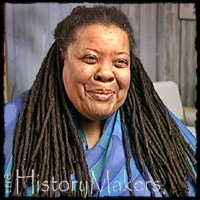
Ruby N. Sales One of those SNCC upstarts was Ruby Nell Sales, a veteran organizer/activist rooted in the Southern civil rights struggle and founder of the SpiritHouse Project. (I’ve had the honor of working with Ruby a few times and interviewed her for Sojourners magazine in 2002.)
Ruby wrote a piece this weekend honoring her teacher, Mrs. Armstrong. Ruby’s portrait highlights the strength, humanity, and deep-seated wisdom of Mrs. Armstrong and thousands of women like her who were the backbone of the most significant social change movement this country has ever seen. So while white supremacists like Glenn Beck are parading around shouting about how important they are, Ruby reminds us that “the Glenn Becks come and go.” It’s the Mrs. Clarks, Mrs. Armstrongs, and, I’ll add, the Ms. Sales who abide. Here’s Ruby’s article, which was posted today:
From the early days of my childhood, race women inhabited my life. I knew them like I knew the lifelines in my hands. Race women raised me in the church, community, school and on the playground. In many ways, they were my other mamas and I was their “omanish” child whom they loved even as they shook their heads at my fast mouth and unorthodox ways.
Everywhere I went as a young person there was a race woman beckoning me to “come here” or “speak louder. “ They sat in the deaconess corners or on front porches or presided over classrooms, honor societies, cheering squads, Majestic Ladies, Tri-Hi- Y and Sunday school classes. They taught me how to carry myself well and dignified. Even when I grew up and left them to go my way, they continued to exist in and with me. I heard their voices like a steady drumbeat that helped establish the rhythm of my life.
Mrs. Armstrong was an unapologetic race woman who loved her students across our differences. We called her “big red” behind her back. Everyone in Columbus knew that “you did not mess with Marian’s children.” At Carver High school, she was a force. She took students in her home room class whom the world dismissed as thugs and problems. They both loved and feared her. When she spoke, they listened because they knew that she would knock door doors to give them a chance in life. Many of her male students were actually too old to be in school. But, that did not stop her. She changed their ages and dared anyone to question her. They repaid her with a fierce loyalty and a high school diploma. Her determination to educate her students and advance their lives was the defining aspect of her life as a teacher and race woman. (more…)
-
Joan Chittister: Silence and Art in the Work of Brother Thomas Bezanson
Brother Thomas Bezanson was a Benedictine monk and ceramics artist who died in 2007. He accepted the rules of monastic solitude, and followed the advice of St. Benedict who said: “If there be craftsmen in the Monastery, [then] let them practice their crafts with all humility.” Brother Thomas spent the final years of his life at Mount St. Benedict Priory in Erie, PA, with the community of Sr. Joan Chittister. Below Sr. Joan reflects on art and the contemplative life in light of Brother Thomas’ work:
 If, indeed, truth is beauty and beauty truth, then the monastic and the artist are one. Monasticism, in fact, cultivates the artistic spirit. Basic to monasticism are the very qualities art demands of the artist: silence, contemplation, discernment of spirits, community and humility.
Basic to art are the very qualities demanded of the monastic: single-mindedness, beauty, immersion, praise and creativity. The merger of one with the other makes for great art; the meaning of one for the other makes for great soul.
It is in silence that the artist hears the call to raise to the heights of human consciousness those qualities no definitions ever capture. Ecstasies, pain, fluid truth, pass us by so quickly or surround us so constantly that the eyes fail to see and the heart ceases to respond.
It is in the awful grip of ineffable form or radiant color that we see into a world that is infinitely beyond our natural grasp, yet only just beyond our artist’s soul. It is contemplation that leads an artist to preserve for us forever, the essence of a thing that takes us far beyond its accidents.
Only by seeing the unseen within can the artist dredge it out of nothingness so that we can touch it, too. It is a capacity for the discernment of spirits that enables an artist to recognize real beauty from plastic pretentions to it, from cheap copies or even cheaper attempts at it.
The artist details for the world to see the one idea, the fresh form, the stunning grandeur of moments which the world has begun to take for granted or has failed even to notice, or worse, has now reduced to the mundane.
It is love for human community that puts the eye of the artist in the service of truth. Knowing the spiritual squalor to which the pursuit of less than beauty can lead us, the artist lives to stretch our senses beyond the tendency to settle for lesser things: sleazy stories instead of great literature; superficial caricatures of bland characters rather than great portraits of great souls; flowerpots instead of pottery.
Finally, it is humility that enables an artist to risk rejection and failure, disdain and derogation to bring to the heart of the world what the world too easily, too randomly, too callously overlooks.
Charles Peguy wrote, “We must always tell what we see. Above all, and this is more difficult, we must always see what we see.”–Sr. Joan Chittister, OSB
From “The Monastic Spirit and the Pursuit of Everlasting Beauty” by Joan Chittister in The Journey and the Gift: The Ceramic Art of Brother Thomas.
-
Cartoonist Ward Sutton Reviews Lewis Hyde’s New Book “Common as Air”
Lewis Hyde’s seminal work The Gift argues against the historical oddity of privatized property and the idea of subjecting creativity to the market economy. He asserts that artists and church folks are two communities that still practice a “gift economy” in the U.S.
More than 25 years later, Hyde’s newest book Common as Air revives the principles of a “public commons,” especially as it applies to the ideas of “intellectual property,” digital rights management, and open source software.
In his inimitable graphic style, Ward Sutton reviews Hyde’s new book. See the first panel below and click though to see the whole graphic review.

-
Emma Beerman: Women’s Faces
I met artist Emma Beerman in Krinidi, Greece, this summer. Here’s one of her pastels. She and her husband Erwin have a wonderful gallery on the Peloponnesus.

-
Democratic Flash Mob at Target (“TarJAY”)
 The retail company Target just gave more than $150,000 to buy ads supporting Rep. Tom Emmer, a far-right Republican candidate for governor of Minnesota. This makes Target one of the very first companies to take advantage of the Supreme Court’s Citizens United decision allowing unlimited corporate cash in elections. Now it’s up to the citizens to clean corporate cash out of our democratic machinery. Send a message to Target’s CEO, Greg Steinhafel, that we won’t shop there if Target continues spending money on elections. Here’s what some folks did to register their dissent with Target. (Warning: Involves radical tuba playing.)
-
Subscribe
Subscribed
Have a WordPress.com account? Log in now.

