The video below of an Egyptian poet spewing verse over Tahir Square in the middle of the “18 Days of Revolution” is a great example of poetry as a living art. Thanks to Hany and Omar Soliman for their work on this.
The Justice in You
by Kamal Abdel Halim (nickname is Sayed Karwata)
Justice in our country has its ministry
But you can’t find justice in the streets or neighborhoods
While you, Oppression, are in every street and neighborhood
Even though here there is no ministry for you
O Egypt, it seems like everything in you is being passed down in generations
from prostitution to slavery, even presidency comes with its heirs.
O Country, enough sin!
What do the great prophets—Amos, Hosea, Isaiah, Micah, Ezekiel and Jesus—have in common with us? asks Joan Chittister. And she answers: All of them were simple souls like you and me. Here’s an excerpt from Chittister’s book Cry of the Prophet that helps me understand how faith keeps us flexible in eras of great social change.
It is so easy to make God to our own image and likeness. It is so easy to see only the images we make of the Unimaginable, to the exclusion of all others. It is so easy to make God small and call that faith.
The evidence in every sector of human life makes the point all too well: open-mindedness, breadth of vision, the universal mind rise all too rarely in the human heart.
Fundamentalism, biblical literalism, reactionism and ideological extremism — all dispositions designed to freeze spiritual and social development to a given period — ride high now. The condition is not uncommon during periods of great social change and deep social stress. The situation begs for it, in fact. Given the loss of past absolutes and the shift in the social consensus on national values that come with technological development, major cultural transformations and new social realities, people cling to old certainties like shipwreck survivors to lifeboats.
It is precisely in times like those a world in flux needs a prophetic commitment to principle in the face of practices long since gone awry or begging to be reviewed again. What the world needs then is openness to the Holy Spirit and a commitment to basic tenets of truth and justice and goodness and to the Will of God for all humankind. We need a faith than can function in the present, not a religion that mirrors the past.
It is not an easy task, this openness to the Spirit. It demands that we let go of our own ideas to make way for new manifestations of the presence of God in time. It is not a comfortable call, this invitation of God to a dark walk toward a distant future, but it is the ultimate manifestation of response to the Spirit.
It takes vision…to see good will where we do not see a similarity of ideas. It takes courage…to admit the weaknesses within us that corrupt our strength and erode our hearts. It takes openness of heart to see God everywhere and in everyone when we assume that godliness is common only to us, to our groups and our nation and our church and our ideas.
Vision and courage and openness to the Spirit call us to breadth of vision, to softness of heart, to the expansion of our souls beyond our parochial worlds and chauvinistic politics and segregated social lives and intellectual blandness that mask as faith and parade as religion.–Joan Chittister, OSB
“Tawakkol Karman sat in front of her laptop, her Facebook page open, planning the next youth demonstration. Nearby were framed photos of her idols: the Rev. Martin Luther King Jr., Mahatma Gandhi and Nelson Mandela. These days, though, Karman is most inspired by her peers. ‘Look at Egypt,’ she said with pride. ‘We will win.’”
When I read this in Sudarsan Raghavan‘s Washington Post article yesterday on Yemen’s women activists, I was reminded that America’s very best export is the civil rights movement.
There is an intellectual and spiritual lineage from the 20th century that is being played out on the streets of Cairo, Sanaa, Riyad, and elsewhere today.
In the 1850s, Russian aristocrat Leo Tolstoy became disgusted with violence after doing tours of duty in Chechnya and after seeing a public execution in Paris. His conversion toward nonviolence and Christianity led him to write The Kingdom of God Is Within You (published in 1894).
In 1908, Tolstoy wrote A Letter to the Hindoo laying out a plan for a massive nonviolent civil resistance campaign to free India from British imperialism. The letter fell into the hands of Mohandas Gandhi who was working as a lawyer in South Africa at the time and in the beginnings of becoming an activist. This prompted an exchange of letter between the two that was foundational for Gandhi’s nonviolent strategy. Gandhi listed Tolstoy’s seminal work The Kingdom of God is Within You as one of the top three influences on his life. He called Tolstoy “the greatest apostle of non-violence that the present age has produced.”
Less than 10 years after Gandhi was assassinated, a young American conscientious objector named James Lawson went as a Methodist missionary to Nagpur, India, where he studied satyagraha, the principles of nonviolence resistance that Mohandas Gandhi and his followers had developed.
In 1955, Lawson returned to the United States and was introduced to Martin Luther King Jr., who had also studied Gandhi’s principles of nonviolent resistance. King told Lawson to come South, telling him “Come now. We don’t have anyone like you down there.” Lawson began implementing large-scale strategic nonviolent civil resistance training that was deeply rooted in Christian faith and spiritual principles. The Civil Rights Movement in the United States became one the most massive civil resistance movements in U.S. history.
When Martin Luther King Jr. was assassinated on April 4, 1968, South African freedom leader Nelson Mandela was entering his fourth year of his life-sentence for “sabotage.” It took awhile for the news of King’s murder to reach Mandela in prison. Over the course of his 27 years in prison, Mandela studied deeply the work of Gandhi and King. Mandela was uncertain that the tactics of either would work in the South African context.
But the church leaders leading South African freedom movement outside of prison – particularly Archbishop Desmond Tutu – were highly motivated by both Gandhi and King. South Africa’s freedom struggle became known for taking the power of song to the streets. It became an image iconic of the freedom movement to hear South African children singing “We Shall Overcome” – an anthem of the American civil rights movement – and dancing the Toyi-toyi.
Thirty-one years after being imprisoned, Mandela was elected president of a free South Africa. Coretta Scott King was in the audience for Mandela’s acceptance speech as the new president. He looked at her and said: “This is one of the most important moments in the history of our country. I stand here before you filled with deep pride and joy–pride in the ordinary humble people of this country. You have shown such a calm patient determination to reclaim this country as your own, and now with joy we can loudly proclaim from the rooftops–Free at last! Free at last!” Mandela quoted the famous lines from Martin Luther King’s I Have A Dream speech.
Somewhere in Yemen today, Tawakkol Karman is sitting in front of her laptop. She’s received death threats. She fears for the life of her three children. And she is determined to shatter perceptions of women in Yemen’s conservative society (and around the world), while emboldening a new generation of Yemenis to demand an end to President Ali Abdullah Saleh’s 30-year grip on his country.
Inspired by civil resistance in Tunisia and Egypt, Karman said upon her release from detention, “We will continue this struggle and the Jasmine Revolution until the removal of this corrupt system that looted the wealth of the Yemenis” Karman spoke these words to hundreds of protesters who were demanding the release of other detainees.
Standing shoulder to shoulder with her are Martin Luther King Jr, Mohandas K. Gandhi, and Nelson Mandela. They’ve all been where she is now. They are cheering her on. And so are we.
I chose this photo of Egypt’s nonviolent civil resistance movement because a) it shows a Muslim woman leading the charge and women were at the core of this revolutions leadership, b) it shows the helmets of the riot police up close and personal, and c) she is holding the “iron fist in a velvet glove” symbol adopted by the Serbian civil resistance movement that deposed Slobodan Milosevic in 2000. Serb student leaders helped train the Egyptian youth leaders in nonviolent tactics and philosophy.
The roots of preparation and planning for the “18 days of revolution” that we’ve watched on Al Jazeera were noted in a 2010 article by Sarah El Deeb. She says:
Inside a small apartment tucked away in a middle class Cairo neighborhood, a trainer teaches a dozen volunteers of a budding opposition movement the basics of political organization — communication, recruiting, gathering signatures.
The instructors draw inspiration from Mahatma Gandhi and Martin Luther King and download books from American scholar Gene Sharp, whose tactics of civil disobedience influenced public uprisings against authoritarian regimes in Serbia, Ukraine, Georgia, Iran and elsewhere. (From Egypt’s Youth Build A New Opposition Movement, Call for Democratic Reform)
Laura Norton Amico walk through an alley in Columbia Heights where a 17-year-old girl was found dead in a garbage container. (Washington Post)
I’ve been doing what I can to support Laura Amico Norton and her work as founder of the blog Homicide Watch D.C. Its mission: Mark every death. Remember every victim. Follow every case. As Laura says, “Their deaths needs to be marked if we are living consciously in this city.”
She’s a 28-year-old former newspaper reporter whose web site chronicles every murder in Washington D.C. Laura supports her work out of her own pocket and is hoping to get grant funding.
Recently, BBC reporter Jane O’Brien met Laura at a Bloomingdale neighborhood prayer vigil for Billy Mitchell. Mitchell was murdered when he, allegedly, tried to intervene in a street altercation between a man and a woman. You can listen to O’Brien’s excellent interview with Laura on BBC Outlook (starts at minute 16).
“I think those people who don’t even get a funeral announcement are just as important as the ones who do get the coverage,” says Laura. “Who they were and how they died say as much about our city as the one’s who do get a news write up.”
By being online, the web site provides a place to form community for the family and friends of murder victims. It becomes a place of solace; a place that meets the need for the victim’s community to get concrete information about the legal aspects of the case and as a place to meet others who knew their loved one, but whom the family might not have met.
As one neighbor put it, “She’s putting a face on every victim who is murdered in DC.”
In a remarkable move at the close of a Sudan’s national referendum on secession, Salva Kiir, the political leader of Southern Sudan, called on his people – from inside a Catholic Church no less – to forgive the national government of Sudan for its decades of violence again Southerners. “May we, like Jesus Christ on the cross, forgive those who have forcefully caused their deaths,” Kiir reportedly said.
David Berrian with the international Nonviolent Peaceforce put together a great slide show celebrating the elections in Sudan.
The oil-producing south, now called South Sudan, seceded after 99 percent of the people voted for independence in hopes of ending the bitter cycle of civil war, as well as the horrendous genocide in Darfur. Read more about Sudan’s election here.
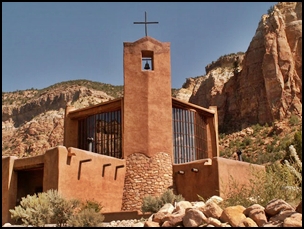
It’s been years since I visited Christ in the Desert monastery outside Abiquiu, New Mexico. But the experience has never left my heart. It’s an amazing place: off the grid, home of the original “electronic scriptorium,” deeply rooted in desert hospitality, prayer, and eucharistic work. I’m grateful that Abbot Philip’s weekly homilies are available online. Last week’s was particularly insightful. (I’ve included the scripture readings at the bottom.):
My sisters and brothers in the Lord: One of the great tragedies of our Christian life is that very few of us live it so strongly that our lives give testimony without words. Surely we could say, playing on the words of Gandhi, that if we Christians lived what we preach, the whole world would be Christian.
Today’s readings encourage us to look at our lives and to ask ourselves about the way we live, not about the way others live. We are called to love others, especially the poor and the oppressed, those who have no rights in society, those do not have the means to live, etc. The Gospel does not give us an easy road in this. We cannot say to ourselves: Well, those people don’t work, those people want welfare, those people don’t think right, etc. Instead, it is only the condition of being poor and oppressed, the condition of having no rights, the condition of not have the means to live – which is supposed to draw our attention and love.
We need to think of our Lord Jesus and the woman at the well. She had been married many times and he does not reject her. We need to think of Simon the tax-collector who had wealth but no belief and was not rejected by Jesus. We need to think of the many lepers who came to Jesus and found acceptance in him. We need to think of the immense crowds fed by Jesus, not even asking if they had food. Jesus delights in proclaiming God’s love for all. Jesus delights in helping everyone. Jesus turns no one away. Those who leave Jesus leave Him because of their own decisions or because they see that what He asks of them will part them from things or people that they value more than Jesus.
Jesus calls us to radical conversion. Perhaps we cannot make that decision yet, to give our lives to Him totally and without reserve. We can begin to walk with Him, however, knowing that at some point He will invite us to give everything for Him. Walking with Him now can be a preparation for total self-giving.
Remember the parable of the workmen invited to work in the vineyard. Some came early and some came late and some in between. Jesus accepted them all and gave them the same wages. What is important is to strive to stay with Jesus, trying to give our lives over to Him, no matter how imperfectly we do that now. Then, with His grace and love, we may be invited to give all and have the courage and strength to do so. Our God is compassion and love.–Abbot Philip, OSB (The Monastery of Christ in the Desert Homily for February 2, 2011)
Readings for the 5th Sunday of Ordinary Time
Thus says the LORD: Share your bread with the hungry, shelter the oppressed and the homeless; clothe the naked when you see them, and do not turn your back on your own. Then your light shall break forth like the dawn, and your wound shall quickly be healed; your vindication shall go before you, and the glory of the LORD shall be your rear guard. Then you shall call, and the LORD will answer, you shall cry for help, and he will say: Here I am! If you remove from your midst oppression, false accusation and malicious speech; if you bestow your bread on the hungry and satisfy the afflicted; then light shall rise for you in the darkness, and the gloom shall become for you like midday.–Isaiah 58:7-10
When I came to you, brothers and sisters, proclaiming the mystery of God, I did not come with sublimity of words or of wisdom. For I resolved to know nothing while I was with you except Jesus Christ, and him crucified. I came to you in weakness and fear and much trembling, and my message and my proclamation were not with persuasive words of wisdom, but with a demonstration of Spirit and power, so that your faith might rest not on human wisdom but on the power of God.–1 Corinthians 2:1-5
Jesus said to his disciples: “You are the salt of the earth. But if salt loses its taste, with what can it be seasoned? It is no longer good for anything but to be thrown out and trampled underfoot. You are the light of the world. A city set on a mountain cannot be hidden. Nor do they light a lamp and then put it under a bushel basket; it is set on a lampstand, where it gives light to all in the house. Just so, your light must shine before others, that they may see your good deeds and glorify your heavenly Father.”–Matthew 5:13-16
This week UnitedHealthcare told a young stroke victim that her health insurance with them does not include the rehabilitation necessary for her to walk, eat, or speak again.
This “hip, young, vibrant and beautiful woman,” as her sister described her to us, entered the hospital in December. After more than a month in recovery from a highly unusual massive cerebral stroke, her sister said that UnitedHealthcare has now “pulled the plug on her rehab and is sending her home with me.”
The victim’s sister, who prefers to remain anonymous, does not live in the same state; nor is she equipped to provide the care needed. “My sister cannot walk, stand, wash, toilet herself, count or read, and speaks only garbled phrases.” The hospital insists that it will discharge her, or start to bill her sister daily, even though she has told them repeatedly that her “only current option is to take her to a handicapped-accessible motel room.”
When insurance representatives were questioned on the wisdom – or basic human decency – of sending her incapacitated sister home with her to a motel, she was told “this is a ‘social problem’ not a ‘medical problem’ and thus, the insurer has no duty to continue rehab.”
Whoa, United Healthcare! You think that’s a “social problem”?
Denial of coverage for this young American woman who worked for and earned her health coverage is not a social problem. It’s a “criminal problem.” It’s called stealing from the sick to feed the greed of the rich. Sadly, this is not an isolated case. In 2009, UnitedHealthcare in New York was investigated and found seriously wanting. Rather than go to court, UHC coughed up$350 million to settle the class-action suit. In 2007, UHC agreed to pay the largest settlement in the Nebraska Dept. of Insurance’s history when UHC was found to have violated 18 Nebraska laws more than 800 times in a one-year period. My conclusion is that UHC has a “criminal problem.” But we’ll let the lawyers and courts sort that one out.
However, we can tell you what definitely is a social problem: the fact that across America today there are thousands of people who have insurance, yet are denied care.
Another social problem is that our elected officials appear impotent in the face of health insurance companies’ power and swagger. While we are glad for the tiny baby steps forward with the health care reform legislation that we Americans achieved last year, this sad story shows how far we have yet to go.
For-profit health insurance companies, no matter what reforms or regulations we put in place, are not the answer. By their very definition, health insurance companies profit by denying sick people medical care.
That’s the way insurance works. You pay the insurer, betting that at some point you will get sick and you will need care. The insurer takes your money but doesn’t take care of you when you do get sick, at least if the insurer is UnitedHealthcare. As health care advocate Donna Smith said in a recent column, “Americans know that health insurance is not health care.” In this case, UnitedHealthcare has once again made the point.
“Writing a check to Blue Cross or Humana or Aetna or Cigna or UnitedHealthcare,” says Smith, “is not any guarantee at all of anything except that we’ve sent money to an insurance company. That’s it. Armies of administrative people make sure they guard the gates to the actual delivery of health care. The generals who make sure those administrative soldiers hold the line are far behind the scenes in white coats and locked offices to make sure no insurgent patients without payment in place actually get near them. In the health care delivery world, the disconnect between those who would give us care and those of us who need it is systemic and growing worse.”
But back to our original point. Why does this make Jesus cry? Unquestionably one of Jesus’ hallmark characteristics was his concern for and ministry with the sick. From healing the lepers and the woman with an issue of blood to healing Jairus’ daughter and the Roman soldier, Jesus publically called to account the levitical “health care” system of his time.
The religious purity laws of the day — what we might call “pre-existing conditions” — created “a system of social boundaries,” writes biblical scholar Richard Ascough, which served “to remove socioeconomically burdensome populations, and especially the chronically ill, from society.” What the system said was just not possible to heal, Jesus showed was very possible with few resources and a little compassion. It wasn’t that the system didn’t have the ability or finances to heal the sick; it was that the system didn’t care.
“I am enraged, bewildered, and powerless to take on the U.S. health ‘care’ system,” this young woman’s sister told us. She has left phone messages with her UHC “inpatient Care Manager” faxed letters requesting a written explanation for why coverage has been denied. To date, she has not heard back. “I want people to know what it means in basic human terms to watch a loved one sent home when medical help might give her back some minimum quality of life.”
Somewhere tonight we’re sure a UnitedHealthcare insurance representative is praying for forgiveness for what he or she has done to this young woman who is sick and needs support. We’re equally sure that Jesus will offer that forgiveness — but not without shedding a tear.
by RimaThere was a special prison In Uruguay for political prisoners. Here they were not allowed to talk without permission or whistle, smile, sing, walk fast, or greet other prisoners; nor could they make or receive drawings of pregnant women, couples, butterflies, stars or birds. One Sunday afternoon, Didako Perez, a school teacher who was tortured and jailed “for having ideological ideas,” is visited by his five-year-old daughter Milay. She brings him a drawing of birds. The guards destroy it at the entrance of the jail.
On the following Sunday, Milay brings him a drawing of trees. Trees are not forbidden, and the drawing gets through.
Her father praises her work and asks about the colored circles scattered in the treetops, many small circles half-hidden among the branches: “Are they oranges? What fruit is it?”
The child puts her finger to her mouth, “Shh.” And she whispers in her father’s ear, “Don’t you see they are eyes? They’re the eyes of the birds that I’ve smuggled in for you.” – Eduardo Galeano
Beauty, we’re told, is a basic human instinct, the kind of thing that separates us from the animals, a kind of intrinsic quality of the human soul, the irrepressible expression of contemplative insight. It has something to do with what it means to be alive. But is this true? And how do we know that?
I remember being shocked into a new sense of what it means to be human in an inhuman environment in the worst slum in Haiti. Here people live in one room hovels made of corrugated steel over mud floors. They bear and raise one child after another here. They eat the leftovers of society. They scrounge for wood to cook with. They sleep in filth and live in rags and barely smile and cannot read. But in the middle of such human degradation they paint bright colors and brilliant scenes of a laughing, loving, wholesome community. They carve faces. They paint strident colors on bowls made out of coconuts. They play singing drums across the bare mountains that raise the cry of the human heart. They manufacture beauty in defiance of what it means to live an ugly, forgotten life on the fringe of the United States, the wealthiest nation the world has ever known. They are a sign that a society that can make such beauty is capable of endless human potential, however much struggle it takes to come to fullness. They are a sign of possibility and aspiration and humanity that no amount of huts or guns or poverty or starvation can ever squelch. –Sr. Joan Chittister
This morning NPR Weekend Edition Sunday host Liane Hansen interviewed Barbara Mikulski, the longest serving female senator in U.S. history. Mikulski talked inspirationally about her Catholic faith.
HANSEN: What of your personality and political savvy can be traced back to your Baltimore roots?
MIKULSKI: …. I went to Catholic schools and was educated by the nuns. Their emphasis on leadership, service, and also the values of our faith contained in the Beatitudes, Matthew 5, the Sermon on the Mount. To hunger and thirst after justice.
HANSEN: It is true that you almost became a nun, but the discipline might have been too much.
MIKULSKI: Well, you know … every one of my age who saw these wonderful women who taught us and dedicated their lives we all wanted to emulate them. But you know the nuns take these vows of poverty, chastity, and obedience.The one for me: obedience. I think I would have had a hard time with that one. But so would Harry Reid or George Bush!
 What do the great prophets—Amos, Hosea, Isaiah, Micah, Ezekiel and Jesus—have in common with us? asks Joan Chittister. And she answers: All of them were simple souls like you and me. Here’s an excerpt from Chittister’s book Cry of the Prophet that helps me understand how faith keeps us flexible in eras of great social change.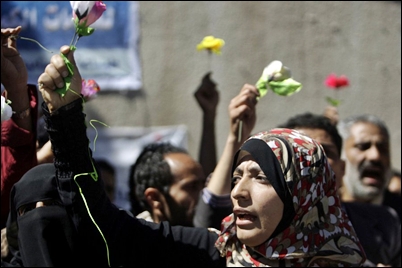


 It’s been years since I visited Christ in the Desert monastery outside Abiquiu, New Mexico. But the experience has never left my heart. It’s an amazing place: off the grid, home of the original “electronic scriptorium,” deeply rooted in desert hospitality, prayer, and eucharistic work. I’m grateful that Abbot Philip’s weekly homilies are available online. Last week’s was particularly insightful. (I’ve included the scripture readings at the bottom.):
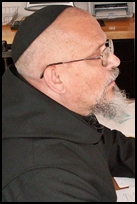 My sisters and brothers in the Lord: One of the great tragedies of our Christian life is that very few of us live it so strongly that our lives give testimony without words. Surely we could say, playing on the words of Gandhi, that if we Christians lived what we preach, the whole world would be Christian.
  By Rose Berger and Heidi Thompson
 This morning NPR Weekend Edition Sunday host Liane Hansen interviewed Barbara Mikulski, the longest serving female senator in U.S. history. Mikulski talked inspirationally about her Catholic faith.