Lent is when Christians step away from the world root to ourselves more firmly in the heart of God. Reading poetry is a practice that helps me shift to a quieter, deeper source. Here’s a poem by Emily Dickinson that touches on Lenten themes with her reference to “sabachthani” (“Why have you abandoned me?”) and Christ’s crucifixion. One early critic of Dickinson said that if she exhibits toward God “an Emersonian self-possession,” it is because of her unflinching and radically egalitarian candor.
XXIV
Too Much
by Emily Dickinson
I should have been too glad, I see,
Too lifted for the scant degree
Of life’s penurious round;
My little circuit would have shamed
This new circumference, have blamed
The homelier time behind.
I should have been too saved, I see,
Too rescued; fear too dim to me
That I could spell the prayer
I knew so perfect yesterday, —
That scalding one, “Sabachthani,”
Recited fluent here.
Earth would have been too much, I see,
And heaven not enough for me;
I should have had the joy
Without the fear to justify, —
The palm without the Calvary;
So, Saviour, crucify.
Defeat whets victory, they say;
The reefs in old Gethsemane
Endear the shore beyond.
‘Tis beggars banquets best define;
‘Tis thirsting vitalizes wine, —
Faith faints to understand.
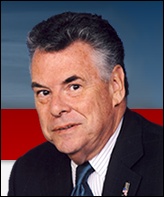
Pete King is on the wrong track. In America, we don’t segregate people by where they go to church.
Faith leaders in New York, organized by Pax Christi/Long Island, sent a public letter this week to Rep. Peter King (R-NY) asking him to call off his hearing on Capitol Hill that promote Islamophobia. (Additionally, 50 Members of Congress did the same.) More than 80 religious and peace leaders signed the statement saying:
Protecting our nation requires allegiance to the fundamental values that give life to our democracy. A commitment to pluralism and respect for diversity are strengths in the fight against terrorism. We agree that law enforcement must find practical solutions to stop terrorism, whether these threats come from religious or non-religious extremists. Muslim-Americans have consistently denounced terrorism and worked closely with law enforcement to prevent violence. Building and maintaining trust with the Muslim community is crucial to furthering this cooperation, and we fear your hearings will only sow greater distrust and division at a time when unity and moral courage are needed. …
Let us remember the lessons of history. Entire communities should never be targeted for suspicion of disloyalty. During World War II, Japanese Americans were deprived of their rights and forced into internment camps because of blanket distrust of their commitment to our country. The McCarthy hearings became a shameful national spectacle that falsely impugned the loyalty and destroyed the lives of many Americans. Catholics were once demonized as threats to democracy beholden to a foreign power. Jews and African Americans have faced centuries of suspicion and prejudice. Today, Muslim-Americans in many communities face fierce opposition when they propose to build mosques and worship peacefully. A growing number of Muslims are victims of hate crimes. This bigotry and discrimination, rooted in fear and ignorance, diminishes us all and unfairly maligns Americans who teach our children, serve our country, live peacefully and believe in the American dream.
“I am disappointed that these religious leaders and peace advocates wish to obstruct my search for the truth,” King responded. “Obviously, I am going forward with my hearings into Muslim radicalization.”
Sr. Jeanne Clark, a member of Pax Christi/Long Island, has spoken eloquently about why Catholics should be very clear in condemning religious intolerance and should instead hold up examples of interreligious partnerships.
Over 80 religious leaders, social justice advocates and people of faith on Long Island sent the congressman a letter urging him to cancel these misguided hearings. Many of us recently gathered in prayerful protest in front of his office.
Although Congressman King has insisted that his hearings will focus on Islamic extremism, his own rhetoric suggests that he will cast a cloud of suspicion over the entire Muslim community. He told a radio host that radicals lead 80 percent of mosques and once described Muslims as “an enemy living amongst us.”
Leaders across the political spectrum agree that we must work together to prevent terrorist attacks. My opposition to King’s hearings isn’t motivated by “political correctness” or a naïve belief that evil does not exist in the world.
Rather, we need a different approach because I fear these hearings will undermine practical approaches to confronting violent extremism in all its forms and threaten our most inspiring ideals as a nation. –Sr. Jeanne Clark
No person who has sworn to uphold the U.S. Constitution should be allowed to targeting a single religious group. It threatens democratic values and let’s the terrorists win.
As Christians we can read King’s approach through the biblical lens of empire. King’s rhetoric and actions are part and parcel of imperial projects bent on a strategy of “divide and conquer.” As Christians we hold an alternative vision, we practice a “divine counterstrategy” that elevates rich cultural diversity as part of what strengthens the human family.
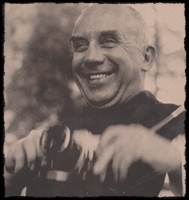
“Love has its own wisdom, its own science, its own way of exploring the inner depths of life in the mystery of the loved person. Love knows, understands, and meets the demands of life insofar as it responds with warmth, abandon, and surrender.”–Thomas Merton
The Christian season of Lent begins today (Ash Wednesday). Lent is a penitential time to prepare our lives and souls for remembering Jesus’ death on Good Friday and claiming Jesus’ resurrection from the dead on Easter (April 12). Benedictine Joan Chittister writes that “Lent is a time of growth, not of discipline for its own sake.”
In preparation for Lent, here’s a quote from Trappist monk Thomas Merton where he encourages the embracing of what is Profoundly Real as the path to God.
The basic and most fundamental problem of the spiritual life is this acceptance of our hidden and dark self, with which we tend to identify all the evil that is in us. We must learn by discernment to separate the evil growth of our actions from the good ground of the soul. And we must prepare that ground so that a new life can grow up from it within us, beyond our knowledge and beyond our conscious control. The sacred attitude is, then, one of reverence, awe and silence before the mystery that begins to take place within us when we become aware of our innermost self. In silence, hope, expectation, and unknowing, the [person] of faith abandons [herself or] himself to the divine will: not as an arbitrary and magic power whose decrees must be spelled out from cryptic ciphers, but as to the stream of reality and life itself. The sacred attitude is, then, one of deep and fundamental respect for the real in whatever new form it may present itself.–Thomas Merton
The Inner Experience: Notes on Contemplation, William H. Shannon, editor (HarperSanFrancisco, 2003)
Wherever organized government has existed, so has political satire. On Monday, Stephen Colbert took on the “startling disparity in America’s wealth.” Rather than using a pie chart to illustrate the issue, Colbert portrayed a disgusting pie eating contest where the obscene rich gobble up the best and spit out the rest.
“Sometimes income brackets just drift apart,” said Colbert. He recommended — in a way that only excruciatingly honest political satire can do — that the rich start their own county, called “America Plus.” The newly formed America Plus will still maintain normal diplomatic relations with poor America and hire us as “cheap foreign labor.” Watch the video below and enjoy Colbert at his best!
The good monks at at Christ in the Desert monastery in Abiquiu, New Mexico, emails Abbot Philip’s weekly sermon. I especially appreciated his thoughts from Sunday, Feb 27. If you ever have a chance to visit them, please do. And donate to their life and ministry.
“Moses told the people: “Take these words of mine into your heart and soul.” – from Deuteronomy 11:18,26-28,32
“Not everyone who says to me, ‘Lord, Lord,’ will enter the kingdom of heaven” … – from Matthew 7:21-27
There is a contrast given to us today between the person who takes the word of God into his or her heart and soul and acts on it and the person who simply speaks the word of God but does not live it. In our hearts there is the struggle to do God’s word faithfully. The first reading today, from the Book of Deuteronomy, puts so eloquently what God wants of us: Take these words of mine into your heart and soul.
The author of this book goes on to give us some tips about how to remember these words so that we can take them into our heart and soul. He tells us to bind them on our wrists and put them on our foreheads. In our present day secular culture, people often put notes on their computers or on their doors or on their mirrors. This reading raises in us the question of how we try to remember the word of God and bring it fully into our hearts and our souls.
The Letter to the Romans, from which comes our second reading (Romans 3:21-25, 28), puts its focus on faith: we consider that a person is justified by faith apart from works of the law. We could ask a question very similar to one that Jesus poses elsewhere: who has faith? The one who does the works of faith or the one who only speaks about it? The Gospel of Matthew today also poses this same question about belief.
The Gospel tells us that doing mighty works is not enough. Even doing mighty works in the name of the Lord is not enough. We must believe from our heart and soul. So today we are invited to become followers of Christ in a totally committed way, both believing and doing. Doing, by itself, is no good.
Believing without acting on the belief is not belief. Let us believe and do! —Abbot Philip, OSB
I heard Francisco Alarcón at the Associated Writing Programs conference in D.C. in February. He’s working on a great Facebook project called Poets Respond to SB 1070 (that’s Arizona’s terrible new immigration law). For me, his poetry is like drinking living water.
Prayer
by Francisco X. Alarcón
I want a god
as my accomplice
who spends nights
in houses
of ill repute
and gets up late
on Saturdays
a god
who whistles
through the streets
and trembles
before the lips
of his lover
a god
who waits in line
at the entrance
of movie houses
and likes to drink
café au lait
a god
who spits
blood from
tuberculosis and
doesn’t even have
enough for bus fare
a god
knocked
unconscious
by the billy club
of a policeman
at a demonstration
a god
who pisses
out of fear
before the flaring
electrodes
of torture
a god
who hurts
to the last
bone and
bites the air
in pain
a jobless god
a striking god
a hungry god
a fugitive god
an exiled god
an enraged god
a god
who longs
from jail
for a change
in the order
of things
Sr. Joan's recent lecture in Boston was cut short due to a false fire alarm. I like Joan Chittister’s understanding of “the good life” and the wages of sin. Personal piety is important because it keeps us grounded in God. But we are grounded in God only so we can spread the good news to the world in which we live. Spreading that “good news” means consorting with those who society deems as “sinners.”
In American society, it is socially unacceptable to be poor. To be poor calls into question the great American “bootstrap myths” and the myth that market capitalism can advance humanity, and that myth that a system of American democracy that allows for an unfettered market will create a stable economy. What’s “good news for the poor” in this context is, indeed, revolutionary.
When Pope John XXIII talked about “the signs of the times,”–poverty, nuclearism, sexism–I began to read these new signs with a new conscience and with a new sense of religious life in mind. Most of all, I began to read the scriptures through another lens. Who was this Jesus who “consorted with sinners” and cured on the Sabbath? Most of all, who was I who purported to be following him while police dogs snarled at black children and I made sure not to be late for prayer or leave my monastery after dark? What was “the prophetic dimension” of the Church supposed to be about if not the concerns of the prophets–the widows, the orphans, the foreigners and the broken, vulnerable, of every society?
We prayed the psalms five times a day for years, but I had failed to hear them. What I heard in those early years of religious life was the need to pray. I forgot to hear what I was praying. Then, one day I realized just how secular the psalmist was in comparison to the religious standards in which I had been raised: “You, O God, do see trouble and grief…. You are the helper of the weak,” the psalmist argues (Psalm 104). No talk of fuzzy, warm religion here. This was life raw and hard. This was what God called to account. This was sin.
When the Latin American bishops talked about a “fundamental option for the poor,” I began to see the poor in our inner-city neighborhood for the first time. When Rosa Parks and Martin Luther King Jr. finally stood up in Birmingham, Alabama, I stood up, too. I was ready now. Like the blind man of Mark’s gospel, I could finally see. The old question had been answered. The sin to be repented, amended, eradicated was the great systemic sin against God’s little ones. For that kind of sin, in my silence, I had become deeply guilty.
I had new questions then but they were far more energizing than the ones before them. I began to look more closely at what “living a good life” could possibly mean in a world that was so full of suffering, so full of greed.
I began to realize that “a good life” had something do with making life good for other people. Slowly, slowly I began to arrive at the oldest Catholic truth of them all: all of life is good and that sanctity does not consist in denying that. Sanctity consists in making life good for everyone whose life we touch.–Joan Chittister, OSB
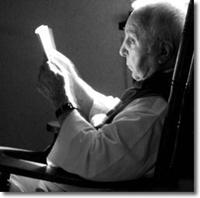
Writer and Trappist monk Matthew Kelty died last week at age 95. His is an example of a good life and a good death. The Louisville Courier-Journal carried a wonderful tribute.
TRAPPIST, Ky. — As the abbey bell tolled slowly and as stiff gusts scattered the first drops of an incoming rainstorm, the Rev. Matthew Kelty was lowered into his grave in a twilight ceremony whose simple dignity matched his monastic calling. Kelty, perhaps the most public face of the Abbey of Gethsemani since the death of renowned author Thomas Merton, died Friday and was buried Monday afternoon following a funeral attended by dozens of fellow monks and priests and more than 100 visitors.
Kelty, a longtime chaplain to the monastery’s retreat guests, was 95 — the abbey’s oldest monk. He was “lucid and interested up to the last” before dying during a midday nap following a brief illness, said the monastery obituary. Kelty, a one-time typist for Merton, published several books on spirituality himself. For many years, he spent hours each day counseling people who had come on retreat to the remote Roman Catholic monastery in Nelson County, Ky.
The Trappist approach to death is very simple. Death is welcomed as a sister and greeted with hospitality. The dying brothers are cared for in the monastery, at home. It is considered a high honor to be allowed to care for a brother as he meets death.
When a man dies, his body is washed and oiled, and he is wrapped in his clean cowl, the loose white garment that he has worn every day of his monastic life. The long sleeves are bound tightly to become his shroud. He is carried to the church where a vigil is kept over night and his brothers come and sing the psalms. A funeral Mass is celebrated and alleluias ring from the rafters for the one among them who has now raced on ahead through the gate of heaven.
The brothers have hand dug a grave in the community’s grave yard. They nestle their brother’s body into the womb of the earth and pull his hood over his face. “Earth to earth,” the abbot prays, “ashes to ashes, dust to dust.” The brothers grab shovels and fill in the grave. Eventually, a very simple marker will be placed there.
When I visited Fr. Kelty’s monastery back in 2004, I went to see the place where Thomas Merton, America’s most famous monk, was buried.
“His grave is out past the cedar tree,” says the woman in the abbey gift shop. It is an icy Monday morning on the back roads of Kentucky’s bluegrass country. We’ve come out past the Jim Beam bottling plant on Route 248 in Clermont. Out past Stephen Foster’s “old Kentucky home” in Bardstown. Out past the tiny sign on Route 31 that says simply “Trappist.” Past Monk’s Creek and Monk’s Pond. And past a gate that says “God Alone.” Now, near a snow-laden cedar tree, there is a white metal cross. On it is written: Fr. Louis Merton, died December 10, 1968.
There is a palpable quiet that wraps a Trappist grave. Not the absent sound of isolation, but rather the beauty of held breath between choruses of alleluia. Go with God, brother Matthew.
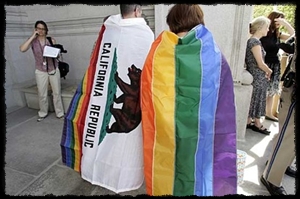
The Obama administration is bowing out of the fight to maintain a constitutional definition of marriage as one man and one woman. It will no longer defend DOMA, a law the administration thinks is unjust.
The Justice Department announced this afternoon that it will drop all its legal involvements with Public Law No. 104-199, 110 Stat. 2419 (aka the falsely named “Defense of Marriage Act”) passed in 1996 that prevented the federal government from recognizing same-sex marriages.
This is the law that was signed under Clinton (along with “Don’t Ask Don’t Tell” in the military) that mandated the federal government to define marriage as a legal union between one man and one woman (DOMA, Section 3). Attorney General Eric Holder said this afternoon:
Much of the legal landscape has changed in the 15 years since Congress passed DOMA [Defense of Marriage Act]. The Supreme Court has ruled that laws criminalizing homosexual conduct are unconstitutional. Congress has repealed the military’s Don’t Ask, Don’t Tell policy. Several lower courts have ruled DOMA itself to be unconstitutional. Section 3 of DOMA will continue to remain in effect unless Congress repeals it or there is a final judicial finding that strikes it down, and the President has informed me that the Executive Branch will continue to enforce the law. But while both the wisdom and the legality of Section 3 of DOMA will continue to be the subject of both extensive litigation and public debate, this Administration will no longer assert its constitutionality in court.” Read the whole statement here.
The Obama administration has been strongly in favor of civil and equal rights for gays and lesbians, but was forced to act as “the government” in many lawsuits aimed at proving DOMA unconstitutional.
With today’s declaration, the administration is bowing out of the fight. It will no longer defend a law it thinks is unjust. It’ll let the states and lower courts work it out.
And, for a powerful video on a similar issue in the Iowa House of Representatives, watch The Hawkeye Kid defend his moms.
 Lent is when Christians step away from the world root to ourselves more firmly in the heart of God. Reading poetry is a practice that helps me shift to a quieter, deeper source. Here’s a poem by Emily Dickinson that touches on Lenten themes with her reference to “sabachthani” (“Why have you abandoned me?”) and Christ’s crucifixion. One early critic of Dickinson said that if she exhibits toward God “an Emersonian self-possession,” it is because of her unflinching and radically egalitarian candor.
 Pete King is on the wrong track. In America, we don’t segregate people by where they go to church.


 The Obama administration is bowing out of the fight to maintain a constitutional definition of marriage as one man and one woman. It will no longer defend DOMA, a law the administration thinks is unjust.

