John XXIII speaks during Second Vatican Council.Between 2012 and 2015, Catholic worldwide will celebrate the 50th anniversary of the Second Vatican Council. (For a quick catch-up on Vatican II read Critical Mass by Karen Sue Smith (Sojourners magazine, Jan. 2012).
In a recent review in UK-based The Tablet, history professor Hilmar Pabel puts a challenge to all Catholics to read three Vatican II-related books over the next three years — and he lists his suggestions:
It’s a tricky assignment – but you’ve got three years! It’s a lovely bit of leadership for book groups or prayer groups or Catholic activists or JustFaith groups or anyone who wants to ground themselves in the invigorating vision of the Second Vatican Council and its profound effect around the world. Here’s a short excerpt from Hilmar Pabel’s review:
“I shall go beyond the reviewer’s usual brief of assessment by beginning with a challenge. You have celebrated the holy Triduum of salvation. Now embark on a solemn triennium in celebration of the fiftieth anniversary of the renaissance of faith instigated by the Second Vatican Council (1962-65).
Celebrate the anniversary of what Blessed John Paul II called “a great grace bestowed on the Church in the twentieth century” (Novo Millennio Ineunte, 57) with a triple reading assignment, but not necessarily in the order that I give. Take three years if you need them. First, read the 16 documents of the council. If you have already read them, read them again, reflecting on the way in which they affect you today. Secondly, read a history of the council. I recommend the fascinating account, now in paperback, by John O’Malley: What Happened at Vatican II. Thirdly, read about the reception of the council or, in other words, the ongoing and disputed history of the council after it formally closed. This is what Massimo Faggioli calls “what happened after Vatican II”. His book serves as a comprehensive and accessible guide through the complex debates about the meaning of the council that will whet your appetite for more. Use the bibliography to find what else you can read… –from Hilmar Pabel‘s review of Vatican II: The Battle for Meaning by Massimo Faggioli
After three days and nights of rich food
and late talk in overheated rooms,
of walks between mounds of garbage
and human forms bedded down for the night
under rags, I come back to my dooryard,
to my own wooden step.
The last red leaves fall to the ground
and frost has blackened the herbs and asters
that grew beside the porch. The air
is still and cool, and the withered grass
lies flat in the field. A nuthatch spirals
down the rough trunk of the tree.
At the Cloisters I indulged in piety
while gazing at a painted lindenwood Pieta
Mary holding her pierced and dessicated son
across her knees; but when a man stepped close
under the tasseled awning of the hotel,
asking for “a quarter for someone
down on his luck,” I quickly turned my back.
Now I hear tiny bits of bark and moss
break off under the bird’s beak and claw,
and fall onto already-fallen leaves.
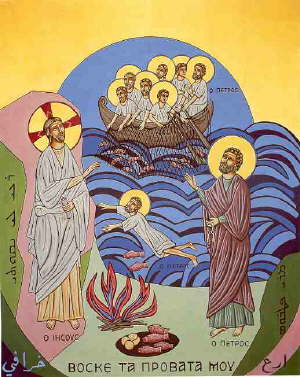
“Do you love me?” said Christ to his disciple.
“Lord, you know that I love you.”
“Then feed my sheep.”
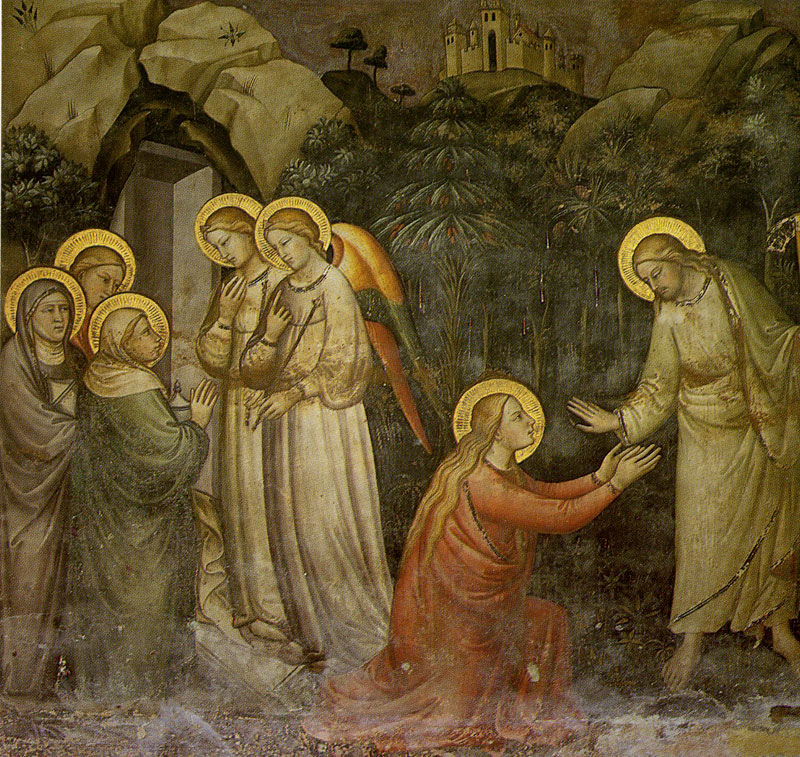
“Noli me Tangere” (Don’t Cling To Me)
Mary Magdalene and Resurrected Jesus
(In the Sacristy of the chapel of San Nicolò in Florence, Italy, Fresco attributed to Mariotto di Nardo)
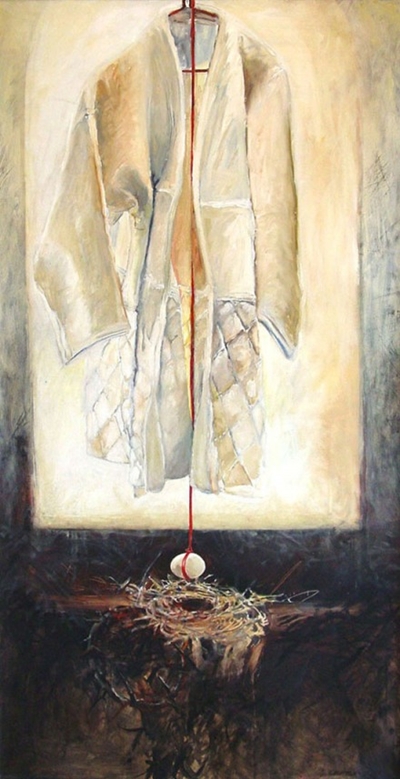
Grace Carol Bomer’s work seeks to evoke both image and impression, the tangible world and the spiritual world. Her work has been called “a silent form of poetry.” She views her work as “a form of play rejoicing before the face of God” (Rookmaaker). This is reflected in the name of her studio in Asheville, North Carolina, SOLI DEO GLORIA STUDIO.
Why no! I never thought other than
That God is that great absence
In our lives, the empty silence
Within, the place where we go
Seeking, not in hope to
Arrive or find. He keeps the interstices
In our knowledge, the darkness
Between stars. His are the echoes
We follow, the footprints he has just
Left. We put our hands in
His side hoping to find
It warm.
We look at people
And places as though he had looked
At them, too; but miss the reflection.
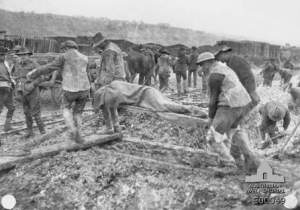
At a Calvary Near the Ancre (For Good Friday)
by WILFRED OWEN (1917)
One ever hangs where shelled roads part.
In this war He too lost a limb,
But His disciples hide apart;
And now the Soldiers bear with Him.
Near Golgotha strolls many a priest,
And in their faces there is pride
That they were flesh-marked by the Beast
By whom the gentle Christ’s denied.
The scribes on all the people shove
And bawl allegiance to the state,
But they who love the greater love
Lay down their life; they do not hate.
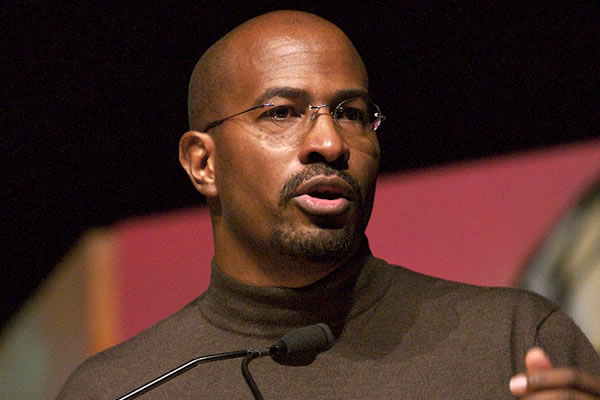
Van Jones is cofounder of the Ella Baker Center for Human Rights, Color of Change, and Green for All and a former adviser to President Obama on “green economy.” His new book, Rebuild the Dream, examines what the movement for social transformation needs to learn from the Obama campaign and his presidency.
Jones lays out the issues with the complexity that they deserve but also makes it clear why it is important for “the movement” to not confuse itself with “the State.” It’s a lesson the Jesus Movement also needs to continually reckon with. Here’s an excerpt:
In America, change comes when we have two kinds of leaders, not just one. We need a president who is willing to be pushed into doing the right thing, and we need independent leaders and movements that are willing to do the pushing. For a few years, Obama’s supporters expected the president to act like a movement leader, rather than a head of state.
The confusion was understandable: As a candidate, Obama performed many of the functions of a movement leader. He gave inspiring speeches, held massive rallies, and stirred our hearts. But when he became president, he could no longer play that role.
The expectation that he would or could arose from a fundamental misreading of U.S. history. After all, as head of state, President Lyndon Johnson did not lead the civil rights movement. That was the job of independent movement leaders, such as Martin Luther King Jr., Ella Baker, Bayard Rustin, and Fannie Lou Hamer. There were moments of conflict and cooperation between Johnson and leaders in the freedom struggle, but the alchemy of political power and people power is what resulted in the Civil Rights Acts of 1964 and the Voting Rights Act of 1965.
As head of state, Franklin Delano Roosevelt did not lead the labor movement. That was the job of independent union leaders. Again, the alchemy of political power and people power resulted in the New Deal. As head of state, Woodrow Wilson did not lead the fight to enfranchise women. That was the role of independent movement leaders, such as suffragettes Susan B. Anthony and Ida B. Wells. The alchemy of political power and people power resulted in women’s right to vote. As head of state, Abraham Lincoln did not lead the abolitionists. That was the job of independent movement leaders Frederick Douglass, John Brown, and Harriet Tubman. The alchemy of political power and people power resulted in the emancipation of enslaved Africans. As head of state, Richard Nixon did not lead the environmental movement. That was the job of various environmental organizations, such as the Sierra Club, and other leaders, like those whom writer Rachel Carson inspired. Once again it was the alchemy of political power and people power that resulted in the Clean Air Act, the Clean Water Act, and the Environmental Protection Agency.
The biggest reason for our frustrations and failures is that we have not yet understood that both of these are necessary-and they are distinct. We already have our head of state who arguably is willing to be pushed. We do not yet have a strong enough independent movement to do the pushing.–Van Jones, excerpted from Rebuild the Dream
Benedict the Moro, also known as Benedict the Black or Benedict the African, was born near Messina, Italy in 1526. He was the son of Christopher and Diana Manasseri, Africans who were taken to Italy as slaves and later became Christians. Benedict worked as a field hand until he reached the age of 18, when he was given his freedom. For the next 10 years, he earned his living as a day laborer, sharing his meager wages with the poor and devoting much of his leisure time to the care of the sick.
Although his race and his parents’ servitude made Benedict the object of frequent ridicule, he bore each humiliation with great dignity. One day, the gentleness of Benedict’s replies to his tormentors attracted the attention of Jerome Lanzi, a young man who had withdrawn from the world to imitate the life of St. Francis of Assisi. “You make fun of him now,” Jerome Lanzi said of those who were jeering at Benedict, “but I can tell you that ere long you will hear great things about him”.
Shortly after that incident, Benedict disposed of his few possessions and joined Jerome’s small group of hermits. The solitaires, who originally lived in the hills near Messina, later moved to a new location outside Palermo. After Jerome died, Benedict reluctantly became the group’s superior, and the community prospered under his leadership. When Pope Pius IV directed all independent groups of hermits to become affiliated with established religious orders, Benedict entered the Order of the Friars Minor of the Observance. As a Franciscan lay brother, he worked for a number of years as a cook at the Friary of St. Mary of Jesus in Palermo, and it is said that food multiplied miraculously in his hands. Domestic duties, which gave Benedict many opportunities to perform small acts of charity, were well suited to his quiet personality. In 1578, however, he was appointed guardian of the Palermo Friary. The illiterate lay brother did not welcome this recognition, but he was obliged, under obedience, to accept his new responsibilities and soon proved to be an ideal superior.
His reputation for sanctity spread throughout the country, and wherever he went, large groups of lay people and members of the clergy met him, kissed his hand, and obtained pieces of his habit. To avoid such attention, Benedict traveled at night whenever he could. When daytime journeys were unavoidable, he covered his face with his hood(ie). Benedict later became vicar of the convent and master of novices. His ability to expound Sacred Scriptures impressed both priests and novices, and his intuitive understanding of complex theological questions astonished religious scholars. Benedict was said to have the power to read the mind of others, and because of his extraordinary compassion, people from every part of Italy sought his counsel. Benedict never abandoned the austere practices acquired during the days as a hermit. Although he ate sparingly, he often said that it was proper, as a gesture of gratitude, to partake of foods given as alms. Toward the end of his life Benedict asked to be relieved of all his offices and was permitted to return to his work in the kitchen. He resumed his duties as cook, but his days were punctuated by audiences with poor men and women seeking alms, distinguished people seeking advice and prayers, and the sick who sought cures for their illness. At the age of 63, Benedict contracted a severe illness. He died at Palermo, at the very hour he had predicted, on April 4, 1589.–Adapted from information at St. Benedict the Moor Catholic Church
All this hoopla from the Catholic Bishops Conference on birth control, and from the Vatican on religious liberty, and from everybody on “Obamacare” can leave one wanting to ignore the papers, radio, and TV and just bury one’s head in the sand. But, in the end, all that really gets you is a sandy head and grit in your lashes.
Kmiec, a constitutional law professor at Pepperdine, carefully thinks through the forces surrounding the contraceptive debate, health care, religious liberty, the Supreme Court deliberations, Obama and the Catholic bishops, and frames them with American jurisprudence and Catholic moral teaching. It’s worth reading the whole thing. But here’s an excerpt to get you started:
When the president chose to not grant an exemption from the mandate that employer-provided insurance should include contraceptive coverage, some bishops called the decision an act of war on the church and religious freedom.
With due respect, I believe this overstated matters considerably. This is especially so, since the president responded promptly to begin discussions on how the ethical concerns of the church might be met more satisfactorily. In particular, the president proposed that no Catholic employer would be directly asked to supply contraceptive coverage; instead, that coverage would be provided by the employer’s insurance company.
To a good many theologians, this worked well enough to avoid formal cooperation with evil, but left unanswered how the problem could be avoided where a Catholic employer did not use a third-party insurer, but was self-insured. Discussions continue, with some now suggesting that it might be possible to create a public entity by implementing regulation to offer the contraceptive benefit in this self-insured context in a way that similarly separates a Catholic employer. (more…)


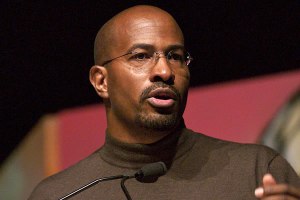 Van Jones is cofounder of the Ella Baker Center for Human Rights, Color of Change, and Green for All and a former adviser to President Obama on “green economy.” His new book, Rebuild the Dream, examines what the movement for social transformation needs to learn from the Obama campaign and his presidency.
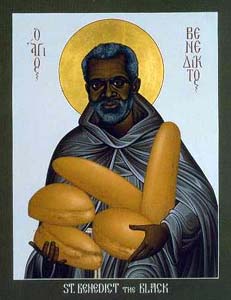 Benedict the Moro, also known as Benedict the Black or Benedict the African, was born near Messina, Italy in 1526. He was the son of Christopher and Diana Manasseri, Africans who were taken to Italy as slaves and later became Christians. Benedict worked as a field hand until he reached the age of 18, when he was given his freedom. For the next 10 years, he earned his living as a day laborer, sharing his meager wages with the poor and devoting much of his leisure time to the care of the sick.
 All this hoopla from the Catholic Bishops Conference on birth control, and from the Vatican on religious liberty, and from everybody on “Obamacare” can leave one wanting to ignore the papers, radio, and TV and just bury one’s head in the sand. But, in the end, all that really gets you is a sandy head and grit in your lashes.