Richard Rohr reminds me that no matter how hard I fight with my brothers and sisters (of late, it’s been the U.S. Catholic bishops) that it should never be in such a way that I wouldn’t sit down to dinner with them when Jesus issues the invitation.
“When we start making the Eucharistic meal something to define membership instead of to proclaim grace and gift, we always get in trouble; that’s been the temptation of every denomination that has the Eucharist. Too often we use Eucharist to separate who’s in from who’s out, who’s worthy from who’s unworthy, instead of to declare that all of us are radically unworthy, and that worthiness is not even the issue. If worthiness is the issue, who can stand before God? Are those who receive actually saying they are “worthy”? I hope not. It is an ego statement to begin with.
The issue is not worthiness; the issue is trust and surrender or, as Thérèse of Lisieux said, “It all comes down to confidence and gratitude.” I think that explains the joyous character with which we so often celebrate the Eucharist. We are pulled into immense gratitude and joy for such constant and unearned grace. It doesn’t get any better than this! All we can do at Eucharist is kneel in gratitude and then stand in confidence. (Actually, St. Augustine said that the proper Christian posture for prayer was standing, because we no longer had to grovel before such a God or fear any God that is like Jesus.)”–Richard Rohr, ofm
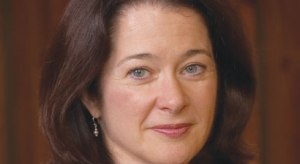
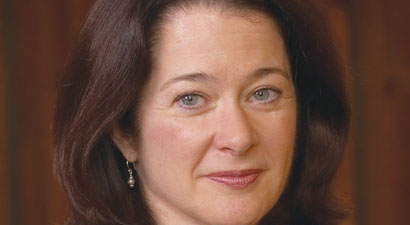
Dr. CooperDr. Brittney Cooper, assistant professor in the Department of Gender and Race Studies at the University of Alabama, has written an excellent column in response to prosperity gospel preacher Creflo Dollar’s recent arrest for assaulting his 15-year-old daughter.
Dr. Cooper is co-founder, along with Dr. Susana Morris, of the Crunk Feminist Collective, a feminists of color scholar-activist group that runs a highly successful blog. Professor Cooper blogs for the CFC as “Crunktastic.”
For the record, we never know the whole story about anything, if it didn’t happen to us. That doesn’t prevent us from making reasonable judgments based on the evidence. Christians use the same type of reason to profess our faith in a God-man, who was born from a virgin, crucified on a cross and Resurrected on the 3rd day. And we believe in his Resurrection, primarily on the basis of the initial testimony of some women who Jesus’ male followers weren’t trying to hear (Mark 16: 1-11). So in my view, if we refuse to believe Black girls when they testify about their experiences, we call the basis of our own witness and our own faith into question. Jesus prioritized listening to women, even when his disciples said they were being a nuisance.
Why I wonder are Black women so willing, so ready to co-sign theologies that literally support us getting our asses kicked in our own homes?
Why have we bought into the primary premise of white supremacy, that the most effective way to establish authority is through violence? Surely, this situation teaches us that the only thing that kind of parenting does is breed the kind of resentment and contempt that will have your children calling the cops on you at 1 in the morning.
Why is it so hard for us to take a stand against Black men and tell them that there is never a reason to put their hands on us in a violent fashion? Not when homicide is the top killer (after accidental death) of Black women and girls ages 15-24.
Frankly, we need to “radically rethink” our understandings of authority, love, violence, and respect in the Black Church. …
The Crunk Feminist Collective writes about race, feminism, and popular culture from a Hip Hop Generation perspective. The blog, which aims to make feminist scholarship accessible to a wide range of publics, has been acknowledged by writers at the L.A. Times, TheRoot.Com, Clutch Magazine, and New York Magazine, and it is routinely cross-posted on sites like Feministing.com and TheRoot.com. The Collective also does speaking tours, conducts workshops, and engages in a range of activist causes related to women’s issues.
The Library of Congress is to announce Thursday that the next poet laureate is Natasha Trethewey, the Pulitzer Prize-winning author of three collections and a professor of creative writing at Emory University in Atlanta. Ms. Trethewey, 46, was born in Gulfport, Miss., and is the first Southerner to hold the post since Robert Penn Warren, the original laureate, and the first African-American since Rita Dove in 1993. “I’m still a little in disbelief,” Ms. Trethewey said on Monday.
Unlike the recent laureates W. S. Merwin and her immediate predecessor, Philip Levine, both in their 80s when appointed, Ms. Trethewey, who will officially take up her duties in September, is still in midcareer and not well-known outside poetry circles. Her work combines free verse with more traditional forms like the sonnet and the villanelle to explore memory and the racial legacy of America. Her fourth collection, “Thrall,” is scheduled to appear in the fall. She is also the author of a 2010 nonfiction book, “Beyond Katrina: A Meditation on the Mississippi Gulf Coast.”
The Vatican and U.S. Catholic Bishops have kicked the hornet’s nest of American Catholicism with their constant harping on the specks in the eyes of Catholic women, Sisters, Girl Scouts, justice-minded theologians, or universal healthcare etc, while blatantly ignoring the tremendous, Sequoia-sized timber protruding from their own eyes, namely the sexual abuse scandal and their criminal conspiracy to cover it up.
As the bishops launch the old “bait-and-switch” trying to by focus attention on their “Fortnight of Religious Freedom” (which in my humble opinion is naught much more than the public burning right-wing money in an era of skyrocketing joblessness and poverty), a group of Catholic lay leaders in Washington, D.C., have begun to call out the Vatican and the U.S. bishops’ “overreach” on issues of religious liberty.
They write:
We are deeply concerned that, under cover of a campaign for religious liberty, the provision of universal health care–a priority of Catholic social teaching from the early years of the last century–is being turned into a wedge issue in a highly-charged political environment and that our parish, and indeed the wider church, is in danger of being rent asunder by partisan politics. We, as a group, may have differing views as to the wisdom of the details of the Health and Human Services mandate, against which our archdiocese has now announced a lawsuit in federal court, but we are united in our concern that the bishops’ alarmist call to defend religious freedom has had the effect of shutting down discussion.
It is a step too far. We, the faithful, are in danger of becoming pawns and collateral damage in a standoff between our church and our government.
Eileen Zogby, one of the group members and a parishioner at Blessed Sacrament Catholic Parish in Washington, D.C., wrote this reflection and distributed it through Catholics United:
I have been an active member of Blessed Sacrament Parish in Washington, D.C., for more than 31 years. My faith is my bedrock; my parish is my home.That is why I am worried and deeply saddened to see partisan politics increasingly creeping into our faith community. A few months ago, I attended a meeting at our church when a fellow parishioner publicly expressed outrage that there were cars in the church parking lot that had “Obama bumper stickers.” The intensity of his tone and the fact that I had such a decal made me so uncomfortable that I left the meeting.
In this highly charged election season, the political attacks will only intensify. The “Fortnight for Freedom” being organized by the Bishops because of their disagreements with the Obama administration should not be brought into our sacred space. They are asking pastors to preach about “religious liberty” and to distribute political statements inside our bulletins.
But there’s hope. A group of parishioners at my church recently spoke to our pastor about our concerns and he is listening.
We wrote our pastor a letter and asked him to reconsider our parish’s participation in the “Fortnight for Freedom”. We met with him and expressed our concern that this type of political activity was inappropriate and would cause divisiveness in our community. Our parish had always been a welcoming place where people of all different opinions joined together in worship, heard the Gospel message of Christ and found a source of spiritual strength. We are grateful that our pastor listened and feel that he has taken our concerns seriously.
As the mother of five, and the grandmother of nine, I worry whether these future generations will see the Church as a place that proclaims the expansive message of the Gospel of Jesus Christ, a place where they will find the abundance of God that will inspire them to go out and serve others in God’s name. —Eileen Zogby
Read the full letter to the Blessed Sacrament’s pastor here. Here’s a snippet:
There is, however, another, very serious, threat to the well-being of millions of our fellow citizens. We are concerned that, under cover of a campaign for religious liberty, the bishops are jeopardizing the universal health insurance coverage that has long been a prime objective of Catholic social teaching.
We are also concerned that the “fortnight for freedom” and related efforts will be seen, in an election year, as acts of political partisanship and as such have the potential to divide our parish and the wider church.
American Baptist minister Paul Brandeis Raushenbush, senior religion editor for the Huffington Post and former associate dean of religious life at Princeton, interviewed Sr. Joan Chittister about recent Vatican moves against American Catholic women religious. Here’s a snippet from In Praise Of Courageous Nuns Facing The Vatican Crackdown:
So what is this all about Sister Joan?
“Well it is a hostile take over, there’s no doubt about that. They’re ‘cleaning up the church’ — everything but themselves.”
One of the speculations is that the crackdown has its roots in the nun’s support for President Obama’s health care bill.
I don’t know about that for sure, but it seems like it may have been a turning point. It [the nun’s position] was a model of thinking Catholic, thinking through this thing and coming up with another approach. There are other ways to impact the issue you care about.
Part of it, whether they know it or not, is a strong demonstration of the whole male/female aspect of every question. Sit down and shut up. Daddy knows best. We will tell you what to think, we will tell you what to do — what would a woman know?
How are the Sisters are holding up?
There is prayer and fasting going on for the sake of the LCWA officers. We want to give them all the support we can. The sisters are mightily concerned, but they know there is no substance to these accusations. For instance, to talk about radical feminism when you don’t have a clue as to what it is — it is very embarrassing. Because the people who do know what it is sit back and say What?. It’s bizarre.
There is a serious power play going on. It seems like they could take over.
Yes. Theoretically they can do it. If you were ranking the departments of the Curia, the CDF would be the ultimate department — from which there is no official appeal.
No doubt that it is serious, but it’s also putting people in a corner that nobody should. And not these people [in CDF]. And the lay people know that. If there is integrity left in this church it is in the people who are ministry on the streets.
Which are the nuns.
Yes.
Say this plays out — do you ever think about leaving the church?
I don’t seek to do that, I’m a Catholic, born and bred, I have learned that the tradition and the institution have often been at odds in the history of the Catholic Church.
The church has always converted slowly. The last time their sins were pointed out it took them 400 years to say that Martin Luther was right and that they shouldn’t have been selling relics and that maybe people could read the scriptures in their own language and read the word of Jesus themselves.
It was the same thing. ‘We tell you what to think about scriptures, because you will destroy the sacred word. You won’t understand it. You’ll destroy it.’ We got through that. God willing we will get through this.
My fear is not the people who organize to leave the church, it is the amount of disillusionment and depression that is out there because of the church itself.
Everybody talks about how the Pope wants a smaller, purer church. Well, they talked about that in the 16th century. And they got it — they lost half of Europe. Now they are losing Ireland, Austria, the American church is teetering. You have people who love their faith but cannot support these acts by the institution.
What happened to Vatican II?
Good question, somebody hijacked it when we weren’t looking. Maybe this is the moment that we all decide what happened to Vatican II. Clearly there is an element of the institution that wants Vatican II destroyed, eliminated. That’s because it makes the whole church, the church. For the very first time in history, Vatican II made being laity a vocation, and the laity have taken that seriously. So they are standing up in the streets to say what the church needs to study and make a decision
It’s tricky, I’m a Protestant writing about this because I feel so strongly about supporting my mentors, but many will criticize me because I am not Catholic.
We are all Christians in this together, what happens to this church does affect you as a Christian. It will affect the way others see Christians around the world. We are not in this alone The laity are being very clear about that, not just because they have loved Sisters or see the work they are doing, because they know that this is damaging the church.
The whole notion that you would suppress thought and call that Catholic, call that Christian, call that a witness to adult ministry in an adult world is impossible to compute. Write this as a Christian. Don’t absent yourself here, I need you.
Well, a lot of us are concerned and not sure what to do when someone holds all the trump cards.
Oh, there is no doubt about it; people may be destroyed here. And there may be people who want them destroyed. They either want thinking adults in the church who bring their own experience of the Holy Spirit to every question — with great respect for the institution, ironically, or they don’t.
I assume you saw the critique on Sister Margaret Fawley’s book?
Oh, I can’t tell you what that did to me. But that woman is so bright, and so precise. Her responses are superb; she said: “I never said I was producing Catholic doctrine. I’m a theologian, thinking through these issues. ”
When you want to make all your thinkers parrots, puppets, don’t talk to me about your respect for the Holy Spirit.
President Obama’s drone policy and his assassination “kill list” not only infringe on the sovereignty of other countries but the assassinations violate laws put in place in the 1970s after scandals enveloped an earlier era of CIA criminality. What’s more, by allowing the executive branch to circumvent judicial review, the kill list makes a mockery of due process for terror suspects, even U.S. citizens—in clear violation of the Constitution.
Here’s an excerpt from the column I wrote for the May issue of Sojourners related to this topic:
AS THE HUMAN soul matures, we are confronted with moments that force us to let go of yet another thin veil of self-delusion. The “right road,” the moral high ground, sinks into a thicket of gray.
Two examples from this Lent: An American Army staff sergeant, with four deployments in Iraq and Afghanistan and probable concussive brain trauma, allegedly pulls 16 unarmed Afghan civilians, including nine children, out of their beds in the middle of the night and shoots them. The thin cloth of protection that allows us to believe “if we weren’t there things would be worse” slips to the ground.
The U.S. attorney general explains in a logical manner why it is legal and lawful in some circumstances for a U.S. president to order the “targeted killing” of an American citizen. These deaths shouldn’t be called “assassinations,” the attorney general says, because assassinations are “unlawful killing” and, if the president approves it, then it’s not “unlawful.” More veils fall—“a person is innocent until proven guilty”; “intelligent people will make morally right decisions.” Our soul runs terror-stricken into the dark woods; our complicity with evil simply too much to bear.
THOMAS MERTON describes these moments as encounters with the Unspeakable. “It is the emptiness of ‘the end,’” Merton writes. “Not necessarily the end of the world, but a theological point of no return, a climax of absolute finality in refusal, in equivocation, in disorder, in absurdity …” In the face of the Unspeakable, our nakedness is complete. All meaning is stripped away. Our carefully collected coverings lie in a heap. We are running into a silent, disorienting night. …–Rose Marie Berger, read more here
Here’s an excerpt from my column from Sojourners (July 2012) honoring mujerista theologian Ada Maria Isasi-Diaz who died suddenly in May. I’m firmly convinced that her work will, in the not too distant future as demographics in the U.S. continue to shift, be seen as critically important to understanding the future of American Christian feminism. I’m grateful for the generous comments I received from Rosemary Radford Reuther, Fernando Segovia, Gabriel Salguero, and others remembering Ada Maria:
… Ada was “a pioneer,” Catholic theologian Rosemary Radford Ruether told Sojourners. “She gave us a vision of justice and integrity for Latina women in the U.S. and the world that was inspiring”; her work is “an integral part of feminist theological thought.”
Ada María Isasi-Díaz was born in Cuba in 1943, the third of six sisters and two brothers. Her father worked in the sugar cane mills, and her mother nourished in Ada a love of Catholic religious practices and the importance of staying in the struggle (la lucha) for what one believes. Her family fled Cuba after years of civil war, and in 1960, at age 17, Ada arrived in the U.S. as a political refugee. Soon she joined the Ursuline sisters and, in 1967, was sent to Lima, Peru, as a missionary.
“I lived there for three years,” Ada wrote. “This experience marked me for life … It was there that the poor taught me the gospel message of justice. It was there that I learned to respect and admire the religious understandings and practices of the poor and the oppressed and the importance of their everyday struggles, of lo cotidiano.”
Her research on lo cotidiano—the dynamic daily lives of Latino/as—argued that theology didn’t have to be only about God in the abstract, but should include what people know about God and how they acquire that knowledge. In this way she identified Latinas and their community, traditions, habits, moral judgments, and self-definition as the primary source material for learning about their God experience. By relocating her primary theological sources out of the academy and to the kitchens, laundromats, home altars, and familias of Latina women, Ada flipped the locus of power, authority, and agency. …–Rose Marie Berger
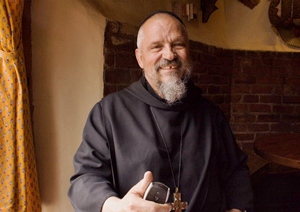
In April, our brothers at Christ in the Desert Monastery released a new disc of music titled “Blessings, Peace and Harmony: Monks of the Desert.” I urge you to practice mutual aid by purchasing this music. You will receive much more than you give!
Abbot Philip writes this week about developing the habit of prayer:
“Within the community we have all of the challenges of any group of people living together. The relationships are supposed to be formed by the following of Christ and that is not always easy. Each brother has to dedicate himself each day to living the Gospel, not just talking about it.
Although I have been a monk almost 48 years already, I still have days when it is an incredible challenge to live by the Gospel and not just settle for a basic human response. If I were totally converted, of course, my basic human response would be the Gospel. Always I remind myself: the struggle goes on to the very end of life. One of the necessary virtues for a spiritual life is perseverance. We have to keep trying to be faithful each day. We have to pray every day and as much as we can, even when it does not feel good or even seems awful.
Whether we are married, single or consecrated celibates, we are all called to follow Jesus Christ and to try to be faithful to that call every day. What does perseverance mean in a normal life? For me, if I have any normal life, it means that I must take time each day to be quiet in prayer for a significant amount of time, not just a minute here and there, but 15 minutes here and there, a half hour here and there, even an hour here and there. Our Rule of Benedict sort of presumes that the monk will spend several hours a day in holy reading and in prayer.
It is much easier to talk about prayer than to actually pray. It is much easier for me to write this letter than to take the time to pray. Why? Because real prayer is just taking time to be with God without any expectations, without hoping for some religious feeling, without anything except the commitment to be with HIM for a period of time. There is no emotional feedback to speak of and that is why other things are easier to do: they at least help me feel like I have done something.Lots of the time I would prefer to take a nap rather than to pray. If I am really tired, I should take a nap!
On the other hand, I realize that without a commitment to prayer every day, to a significant time of prayer every day, I am just speaking about God and not giving myself to God. Commitment is not talking, it is doing. No matter how tired I am, I take the time to pray. No matter how boring the time of prayer is, I stay there, seeking to be quietly in the presence of the Lord. No matter if I must fight thousands of distractions, I keep letting the distractions go so that I am simply there with the Lord. Even when pray might seem repulsive to me, I stay with it.
Do I do that every day? No, I am not yet that good. Do I try it every day? Mostly but I am not entirely faithful even yet. My personal life has changed so much over the years because of my commitment to trying to pray. Without reservations I recommend to any and to all: pray every day! Pray as much as you can every day. Make a commitment to praying, to sitting quietly with God, each day.”–Abbot Philip
Finally (!) The New York Times has run an obituary for Ada Maria Isasi-Diaz. My memorial for Ada will run in the July issue of Sojourners (at the printer now). Here’s a portion of Paul Vitello’s NYT article:
In part, Dr. Isasi-Díaz conceived of Mujerista, or “womanist” theology (from the Spanish word mujer, for woman), to distinguish her ideas from those of feminism — a term “rejected by many in the Hispanic community,” she wrote in 1989, “because they consider feminism a preoccupation of white, Anglo women.” She hoped that “Mujerism,” which she considered a spiritual branch of the reform movement known as liberation theology, would help delineate the special community of need and identity shared by poor, Hispanic, Catholic women.
“Hispanic women widely agree that, though we make up the vast majority of those who participate in the work of the churches, we do not participate in deciding what work is to be done,” she wrote in a 1989 article in Christian Century, titled “Mujeristas: A Name of Our Own!”
“We do the praying, but our understanding of the God to whom we pray is ignored.” Dr. Isasi-Díaz argued that poor women, by the nature of their roles in their families and communities, “exercised their moral agency in the world” more profoundly than any other group of the faithful. They did that in the small daily choices they made, she said: between bus fare and a 40-block walk to work, for instance; or between breakfast for oneself or one’s child. Those choices embodied immense moral power, and deserved to be honored in the form of greater roles for those women in their church.
On May 29, Frances Taylor Gench, scripture scholar from Union Presbyterian Seminary in Richmond, VA, read an open letter to Catholic women religious at a prayer vigil held outside the Vatican Embassy in Washington, D.C. The letter was signed by 34 organizations representing Protestant women from New York to Austin, Texas.
Cynthia Rigby, one supporter who helped gather signatures, said it was meant not as a petition, but as a theological letter. “It was so important to us that this reflect a collective voice,” said Rigby, a theology professor at Austin Presbyterian Theological Seminary, “because, theologically, we believe that communities of Christian believers, in this case communities of sisters in Christ, stand together.”
Dr. Gench, a noted biblical scholar, is an ordained minister of the Presbyterian Church (U.S.A.). Gench was on the faculty of Lutheran Theological Seminary at Gettysburg from 1986 to 1999. She served as a member of the PC (USA) General Assembly’s Theological Task Force on Peace, Unity, and Purity of the Church. Recent publications include Back to the Well: Women’s Encounters with Jesus in the Gospels and Encounters with Jesus: Studies in the Gospel of John.
This letter, along with Sr. Sandra Schneiders’ excellent analysis of the Vatican’s investigation of U.S. orders of women religious, begins to form a cogent analysis of two very different definitions and exercises of power and mission.
An Open Letter to Catholic Religious Women
May 1, 2012
Dear Sisters,
We write to you as sisters in faith who may not express our vocation in the same particular community of faith, but who share much in common—as believers, as advocates, and as peacemakers. We write in a spirit of solidarity and as witnesses to the authenticity of your ministries, particularly the Leadership Conference of Women Religious, in a time when the integrity of your witness has been questioned by Catholic leadership.
 Richard Rohr reminds me that no matter how hard I fight with my brothers and sisters (of late, it’s been the U.S. Catholic bishops) that it should never be in such a way that I wouldn’t sit down to dinner with them when Jesus issues the invitation.
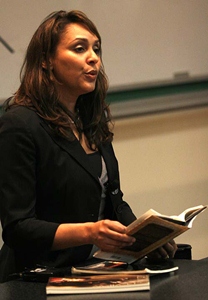 It always lifts my spirits when we announce a new national poet laureate. My sense is that Ms. Trethewey will take to the position like Robert Pinsky did when he launched the Favorite Poem Project. I love Trethewey’s line from “Kitchen Maid with Supper at Emmaus, or The Mulata“:
 The Vatican and U.S. Catholic Bishops have kicked the hornet’s nest of American Catholicism with their constant harping on the specks in the eyes of Catholic women, Sisters, Girl Scouts, justice-minded theologians, or universal healthcare etc, while blatantly ignoring the tremendous, Sequoia-sized timber protruding from their own eyes, namely the sexual abuse scandal and their criminal conspiracy to cover it up.
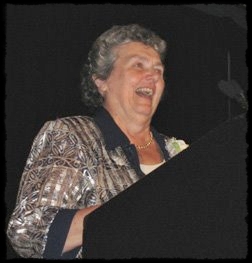 American Baptist minister Paul Brandeis Raushenbush, senior religion editor for the Huffington Post and former associate dean of religious life at Princeton, interviewed Sr. Joan Chittister about recent Vatican moves against American Catholic women religious. Here’s a snippet from In Praise Of Courageous Nuns Facing The Vatican Crackdown:
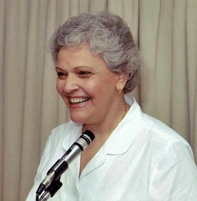 Here’s an excerpt from my column from Sojourners (July 2012) honoring mujerista theologian Ada Maria Isasi-Diaz who died suddenly in May. I’m firmly convinced that her work will, in the not too distant future as demographics in the U.S. continue to shift, be seen as critically important to understanding the future of American Christian feminism. I’m grateful for the generous comments I received from Rosemary Radford Reuther, Fernando Segovia, Gabriel Salguero, and others remembering Ada Maria:
 In April, our brothers at Christ in the Desert Monastery released a new disc of music titled “Blessings, Peace and Harmony: Monks of the Desert.” I urge you to practice mutual aid by purchasing this music. You will receive much more than you give!
 Finally (!) The New York Times has run an obituary for Ada Maria Isasi-Diaz. My memorial for Ada will run in the July issue of Sojourners (at the printer now). Here’s a portion of Paul Vitello’s NYT article: