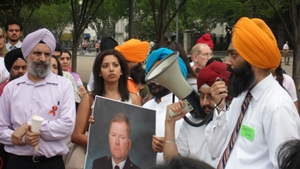
Four hundred people gathered across from the White House last night with a single message: “We are all Oak Creek.”
Responding to the murder of six Sikh worshippers, the wounding of four others, including police officer Lt. Brian Murphy, and the suicide of perpetrator Wade M. Page, hundreds gathered to stand with the Sikh community as they invited prayers for the victims, the murderer, and his family. “Tonight, we are not Jain, Muslim, Hindu,” announced one speaker, “we are all Sikh tonight. We are all Oak Creek. We will not allow fear to overcome us.” (See more photos.)
In a response reminiscent of the Amish during the Nickel Mines, Pa., massacre in 2006, the Sikh community, the fifth largest religion in the world, is not used to the national spotlight in the U.S. But neither do they shy away from an opportunity to introduce their faith to a wider audience and to practice what they preach.
“We are a people of peace. We dedicate our whole lives to this,” said another vigil leader. “When you see this turban, you know that this is our uniform that declares us as one who defends peace, honesty, generosity, humility, devotion, and compassion.”
A 12-year-old Sikh girl spoke to the vigilers to remind them that Wade Page was not their enemy and neither was his family.
“He had a sickness, a disease. One caused by hate,” she said. “I don’t think of the seven who died on Sunday as victims. They are martyrs who will teach us to live as one human family.” Remarkably, she included Page among the victims of hate.
On Sunday, Sikh communities around the country will be gathering again for prayer vigils. They invite all people to pray together, share a meal (a central component to Sikh belief), and discuss what it means to be part of the moral fabric of America.–Rose Marie Berger
“To forget the dead would be akin to killing them a second time.”–Elie Wiesel, Night
War is a depredation of the human spirit that is sold as the loftiest of livelihoods. To hide the rape and pillage, the degradation and disaster, the training of human beings to become animals in ways we would allow no animals to be, we have concocted a language of mystification.
We could casualties now in terms of “collateral damage,” the number of millions of civilians we are prepared to lose in nuclear war and still call ourselves winners. We call the deadliest weapons in the history of humankind, the most benign of names: Little Boy, Bambi, Peacemakers. The nuclear submarine used to launch Cruise missiles that can target and destroy 250 first-class cities at one time, for instance, we name “Corpus Christi,” Body of Christ, a blasphemy used to describe the weapon that will break the Body of Christ beyond repair.
We take smooth-faced young men out of their mother’s kitchens to teach them how to march blindly into death, how to destroy what they do not know, how to hate what they have not seen. We make victims of the victors themselves. We call the psychological maiming, the physical squandering, the spiritual distortion of the nation’s most vulnerable defenders “defense.” We turn their parents and sweethearts and children into the aged, the widowed, and the orphaned before their time. “We make a wasteland and call it peace,” the Roman poet Seneca wrote with miserable insight.–Joan Chittister, OSB
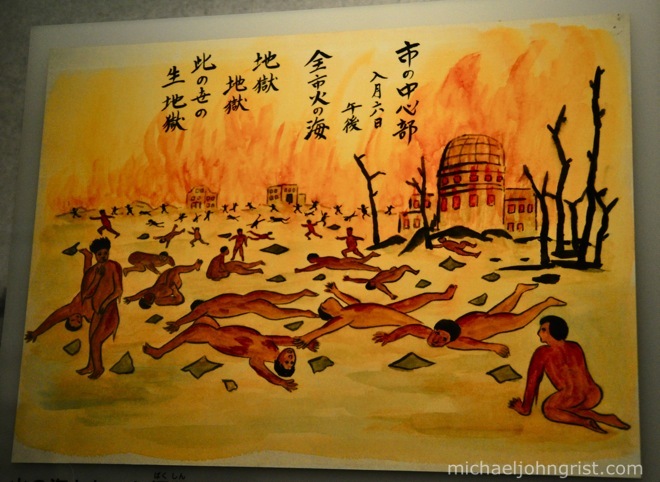
Mitsuyoshi Toge, born in Hiroshima in 1917, was a Catholic and a poet. He was in Hiroshima when the atomic bomb was dropped on the city on August 6, 1945, when he was 28 years old. After the war, Toge became a leader in the peace movement. He published a number of books opposing the atomic bombing and advocating peace. While hospitalized with tuberculosis at the National Hiroshima Sanatorium, he published the book A-bomb Poetry. When it was sent to the 1951 World Youth Peace Festival in Berlin as one of Japan’s representative works, A-bomb Poetry gained international acclaim. On March 10, 1953, Toge died at the National Hiroshima Sanatorium. He was 36 years old. This poem is from Hiroshima-Nagasaki: A Pictorial Record of the Atomic Destruction (1978).
HOW COULD I EVER FORGET THAT FLASH OF LIGHT
How could I ever forget that flash of light!
In a moment, thirty thousand people ceased to be,
The cries of fifty thousand killed
At the bottom of crushing darkness;
Through yellow smoke whirling into light,
Buildings split, bridges collapsed,
Crowded trams burnt as they rolled about
Hiroshima, all full of boundless heaps of embers.
Soon after, skin dangling like rags;
With hands on breasts;
Treading upon the broken brains;
Wearing shreds of burn cloth round their loins;
There came numberless lines of the naked,
all crying.
Bodies on the parade ground, scattered like
jumbled stone images of Jizo;
Crowds in piles by the river banks,
loaded upon rafts fastened to the shore,
Turned by and by into corpses
under the scorching sun;
in the midst of flame
tossing against the evening sky,
Round about the street where mother and
brother were trapped alive under the fallen house
The fire-flood shifted on.
On beds of filth along the Armory floor,
Heaps, and God knew who they were?
Heaps of schoolgirls lying in refuse
Pot-bellied, one-eyed, with half their skin peeled
off bald.
The sun shone, and nothing moved
But the buzzing flies in the metal basins
Reeking with stagnant ordure.
How can I forget that stillness
Prevailing over the city of three hundred thousands?
Amidst that calm,
How can I forget the entreaties
Of departed wife and child
Through their orbs of eyes,
Cutting through our minds and souls?
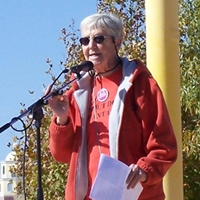
When the Leadership Conference of Women Religious gather for their annual meeting, they are usually about 600. This year, under threat of hostile takeover from the Vatican, more than 900 gathered.
Among those guests are a number of representatives of national and international Catholic institutes, including a number of heads of international federations of religious orders, a representative from the Latin American Confederation of Religious, head of the Conference of Major Superiors of Men, and more.
On Sunday, after the official ending of the assembly, LCWR’s national board will meet privately. Part of that session, according to LCWR president Pat Farrell, will include a meeting with Archbishop Peter Sartain, one of the “guides” assigned to LCWR, “for the very first conversation that really he’s had with us in any official way” so that “we can communicate with him something of a direction that comes from this group,” said Farrell. Here’s an excerpt from a recent National Catholic Reporter article by Joshua J. McElwee.
The much-anticipated gathering of 900 U.S. Catholic sisters who make up the Leadership Conference of Women Religious (LCWR) opened here Tuesday night with song, prayer, and references big, small, and in-between to the Vatican’s attempted take-over of the group.
References to the Vatican’s critique of the group, which came in an April 18 announcement from the Congregation for the Doctrine of the Faith, came early in the two-hour event, with LCWR president Franciscan Sr. Pat Farrell telling the assembled that “we don’t have to remind you that our gathering this week is an historic time in the life of this organization.”
The opening of the annual assembly of LCWR, which represents some 80 percent of U.S. women religious, also included a welcome by St. Louis Archbishop Robert Carlson and details about how the group’s members would discern steps forward during the gathering, which continues through Friday night. … — Joshua J. McElwee, National Catholic Reporter
At Hiroshima there’s a museum
and outside that museum there’s a rock,
and on that rock there’s a shadow.
That shadow is all that remains
of the human being who stood there on August 6, 1945
when the nuclear age began.
In the most real sense of the word,
that is the choice before us.
We shall either end war and the nuclear arms race now in this generation,
or we will become Shadows 0n the rock.
Today, the Leadership Conference of Women Religious in the U.S. begins a week of contemplative discernment in St. Louis, MO, to “reason together” about how they will respond to the Vatican’s crackdown on their organization and their work.
We have an opportunity to watch two starkly different modes of leadership at work. The Vatican uses a command-control model aimed at maintaining homogeneity and the status quo. The Catholic Sisters communities draw on a more ancient model that develops shared leadership, communal shaping of vision, and is agile enough to address the “signs of the times,” as well as remain resilient amid diversity.
Not only are U.S. Catholic laity watching and praying for the LCWR this week, but so are Catholic orders and laity around the world. Your prayer this week will be greatly appreciated (LCWR prayer)
Below is an excerpt of my latest column in Sojourners magazine, addressing these issues:
The Presumption of Equality by Rose Marie Berger
…These Catholic sisters represent an unbroken, cohesive expression of faith in the history of American Catholicism and in women’s presumption of equality, completeness, and active moral agency both under law and under God—a presumption that is a shining light for women around the world. The sisters might have once shared accolades for faithful servant leadership with their brother priests, bishops, and cardinals, but over the course of nearly 30 years of unfolding pedophilia scandal and blasphemous mob-like cover-up, the laity has learned to look to the sisters alone for examples of Catholic gospel witness and Christian maturity, strength, and just plain grit.
But let’s not sideline this issue as “a Catholic thing.” We don’t get off that easy. The struggle over women’s authority runs right through the denominational diaspora of the body of Christ.
“Christian churches have long been ambivalent about us,” wrote Protestant female theologians in a letter of support to the women of LCWR. “Women’s roles have been embraced in private, not public forums. Women leaders are affirmed as long as they are seen, but not heard (at least too much).” And as long as what the women say doesn’t contradict male authorities.
Even in Christian denominations that ordain women to leadership, too often they are forced to operate as second-class citizens. Women pastors don’t get called to prominent congregations; they’re not allowed to prioritize the most urgent needs in their parishes; and they face constant friction. Time and again, we see the ideas of men described (and funded) as “entrepreneurial,” “innovative,” and “bold,” while women’s initiatives are “unorthodox,” “suspect,” and “back-burner, support-staff kind of thinking.”
“The plight of the powerless is familiar to the women of the church,” continue the Protestant scholars. “We, however, do not believe that authorities in any church should take away women’s power to determine for ourselves a vision for our ministries and vocations.” Many women—and men—have raised questions similar to those asked by Catholic women religious. Did God plan for an exclusively male priesthood or did it form as a result of the sin of misogyny? Do our baptismal vows anoint girls into the fullness of ministry as “priest, prophet, and king” in Christ or do they not? Is providing for the poor, the outcast, the sick, the prisoner, and the foreigner at the core of the gospel message or is it not?
“What we see in this struggle is not a lack of our sisters’ integrity and authentic witness to Christian faith,” the open letter continues, “but a struggle that has been too familiar for all women of faith—a struggle over authority and who should have the power to define true faith.”…
Rose Marie Berger, author of Who Killed Donte Manning? is a Catholic peace activist and a Sojourners associate editor. Read the whole article here, the September-October 2012 issue of Sojourners magazine.
Statues in front of the Catholic Urakami Cathedral in Nagasaki after nuclear attack.
Frida Berrigan wrote a moving article a few years ago on the nuclear attacks on Hiroshima and Nagasaki in 1945. Here’s an excerpt from her longer essay:
In Hiroshima, Little Boy’s huge fireball and explosion killed 70,000 to 80,000 people instantly. Another 70,000 were seriously injured. As Joseph Siracusa, author of Nuclear Weapons: A Very Short Introduction, writes: “In one terrible moment, 60% of Hiroshima… was destroyed. The blast temperature was estimated to reach over a million degrees Celsius, which ignited the surrounding air, forming a fireball some 840 feet in diameter.”
Three days later, Fat Man exploded 1,840 feet above Nagasaki, with the force of 22,000 tons of TNT. According to “Hiroshima and Nagasaki Remembered,” a web resource on the bombings developed for young people and educators, 286,000 people lived in Nagasaki before the bomb was dropped; 74,000 of them were killed instantly and another 75,000 were seriously injured.
In addition to those who died immediately, or soon after the bombings, tens of thousands more would succumb to radiation sickness and other radiation-induced maladies in the months, and then years, that followed.
In an article written while he was teaching math at Tufts University in 1983, Tadatoshi Akiba calculated that, by 1950, another 200,000 people had died as a result of the Hiroshima bomb, and 140,000 more were dead in Nagasaki. Dr. Akiba was later elected mayor of Hiroshima and became an outspoken proponent of nuclear disarmament.–Frida Berrigan, Tom Dispatches 2009
Officials at the Y-12 nuclear facility show off “state-of-the-art security technology” (NNSA, 2010)
Joe Newman, director of communciations for the Project On Government Oversight, follows up on the most recent Plowshares action of religious civil disobedience held at the Oakridge nuclear facility in Tennessee. The Y-12 facility “enriched” the uranium used in the nuclear attack by the U.S. on Hiroshima on August 6, 1945. (Read more about the Transform Now Plowshares.)
As officials at the Y-12 nuclear weapons facility sort through their recent security breakdown, they’ve decided it might be best to move all of their nuclear materials, including highly-enriched uranium, into their on-site vaults.
The Knoxville News Sentinel’s Frank Munger reported that the “security stand-down” is expected to last into next week. The federal contractor that runs the Oakridge, Tenn., facility made the decision with the support of the National Nuclear Security Administration. Munger writes:
According to the federal NNSA, “This is being done to address additional security training and execution deficiencies identified by the contractor after Saturday’s incident. However, all nuclear materials at Y-12 are in safe, secure storage and we remain entirely confident in the security of Y-12’s facilities.”
Sr. Megan RiceThe Saturday “incident” involved three peace activists, including an 82-year-old nun, Sr. Megan Rice, who cut through three fences surrounding the facility, posted a banner on one of the buildings and poured human blood on the premises, according to the News Sentinel’s orginal story about the break in.The activists were arrested under federal trespassing charges and are expected to appear in court Thursday.
The Project On Government Oversight’s Peter Stockton, an expert in nuclear security, told Munger that the security breach could be a sign of a much bigger problem.
“The DOE’s unprecedented response to last weekend’s break-in, alarming as that incident initially appeared, suggests that it has revealed even more drastic flaws in the security at the Y-12 facility,” Stockton said via email. “At this point we can only guess what those flaws might be.”
The LORD will mediate between nations and will settle international disputes. They will hammer their swords into plowshares and their spears into pruning hooks. Nation will no longer fight against nation, nor train for war anymore.–Isaiah 2:4

 “To forget the dead would be akin to killing them a second time.”–Elie Wiesel, Night
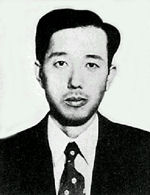 Mitsuyoshi Toge, born in Hiroshima in 1917, was a Catholic and a poet. He was in Hiroshima when the atomic bomb was dropped on the city on August 6, 1945, when he was 28 years old. After the war, Toge became a leader in the peace movement. He published a number of books opposing the atomic bombing and advocating peace. While hospitalized with tuberculosis at the National Hiroshima Sanatorium, he published the book A-bomb Poetry. When it was sent to the 1951 World Youth Peace Festival in Berlin as one of Japan’s representative works, A-bomb Poetry gained international acclaim. On March 10, 1953, Toge died at the National Hiroshima Sanatorium. He was 36 years old. This poem is from Hiroshima-Nagasaki: A Pictorial Record of the Atomic Destruction (1978).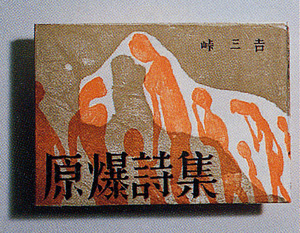
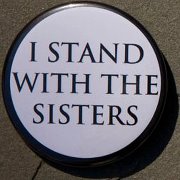 When the Leadership Conference of Women Religious gather for their annual meeting, they are usually about 600. This year, under threat of hostile takeover from the Vatican, more than 900 gathered.
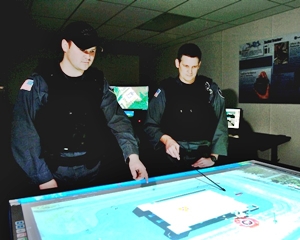 Officials at the Y-12 nuclear facility show off “state-of-the-art security technology” (NNSA, 2010)