-
Largest Protestant Denomination in Canada Rejects Tar Sands Pipeline
 The United Church of Canada voted on Tuesday to “categorically reject” the tar sands pipeline project that would carry highly toxic, climate-killing unconventional tar sands petroleum through pristine First Nation’s land in Alberta to British Columbia where it would be shipped on supertankers to China for processing. The so-called Northern Gateway pipeline is the Canadian end of the controversial Keystone XL pipeline proposed in the U.S.
In the U.S., some have argued that we should accept the tar sands Keystone XL pipeline because if we don’t the toxic petroleum from Alberta will just get shipped to China through a East-West pipeline. But the First Nations people and Canadian Churches are continuing to fight to make sure that pipeline never gets built. There may also be a strategic church divestment strategy to make sure that the United Church of Canada does not have any stockholdings in companies related to TransCanada, Enbridge, or affiliates.
In the U.S., we must do the same. In fact, ranchers and others in Texas are training this summer to nonviolently block with their bodies the pipeline construction bulldozers scheduled to begin clearing land soon.
Again, if we are to have any hope of reversing global warming, we must do these three things:
1. Divest or get active regarding all stockholdings in these six corporations: ExxonMobil, ConocoPhillips, Chevron, Peabody, Arch, and BP. These are the primary oil, natural gas, and coal companies operating in or through the United States that top the charts as carbon polluters. If Americans focus on U.S. companies, then we can be the tipping point for a transnational shift. If you — or the portfolio you influence — own stock, then get rid of it and tell the company why. If you don’t want to divest, then you need to decide now to become a shareholder activist. If you’re not a stockholder, then pressure your faith institutions, universities, and local governments to get out of “planet-killing” profits. This is the economic part of the plan.
2. Push for carbon “fee-and-dividend” laws on corporate carbon emitters at the local, state, and federal level. No more free rides for oil, gas, and coal companies. You pay taxes to have your garbage hauled away. Why shouldn’t they? The fee is charged at the point of origin or point of import on greenhouse gas emitting energy (oil, gas, and coal). The fee is progressive (increases gradually) over time. The fee is returned directly to the public in monthly dividends to individual taxpayers, with limited-to-no government involvement. Australia initiated this legislation in June. We can learn from them. This is the legislative part of the plan.
3. Take personal responsibility. Everyone can continue to limit energy consumption, use renewable energy sources, and build out a sustainable footprint for our homes and churches. But we also need people to step up and put their bodies on the line to stop the mining of tar sands in Alberta, Canada, and prevent the construction of the Keystone XL and Northern Gateway pipelines that are being built to transport Alberta’s unconventional “tar sands” oil. Scientists around the world say that opening the Alberta tar sands and pumping this non-traditional oil through these pipelines will put the planet on a one-way road to climate disaster. That’s why fighting the Keystone XL Pipeline in the U.S. and the Northern Gateway Pipeline in Canada is critical. This is the direct action and personal responsibility part of the plan.
Read the United Church of Canada’s statement on Enbridge Corporation’s tars sands pipeline. Here’s an excerpt:
The 41st General Council has instructed Nora Sanders, the United Church’s General Secretary, to make a public statement “categorically” rejecting construction of the Enbridge Northern Gateway Pipeline, which has a proposed route stretching from northern Alberta to Kitimat, British Columbia.
Due to the timely nature of the pipeline review hearings, commissioners asked that this be accomplished soon. In addition, Sanders has been asked to communicate this decision to all courts of the church, the governments of Canada, Alberta, and British Columbia, Enbridge, and all Canadians through media outlets. …
Read whole article here.
-
Joseph Ross: The Necessary Truth of Deserts
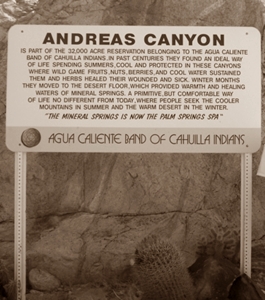 “The Necessary Truth of Deserts” is a lovely short essay by Joseph Ross about Palm Canyon and Andreas Canyon in Southern California, which the Agua Caliente Band of California’s Cahuilla Indians offer as a place for hiking.
Joe, author of the amazing collection of poems Meeting Bone Man, has a clarion-clear voice for human mystery.
Here’s an excerpt from his essay:
While in the desert, you can see and feel the distinction between necessities and extras. You see your place in the world, our wonderful human smallness. The perspective the desert offers is brutal but real. We are small. We control very little. We are only part of a larger, sometimes cruelly connected web of life. In these things, the desert teaches us lessons nearly impossible to learn elsewhere. The desert’s lessons are inescapable while you are in it.
Interestingly, in the early years of Christianity, when the Roman Empire adopted Christianity as its official religion, many Christians, certain that official acceptance would dilute the radicality of their faith, fled to the deserts around the Mediterranean where they sought to maintain a more pure form of Christianity. Because the desert allows for few flourishes and extras, the Desert Tradition kept Christianity’s basics alive in its monks and nuns: silence, simplicity, prayer, hospitality, love of neighbor.
There is an inevitability in deserts as well. In Joshua Tree National Park, huge and curious rock formations, which I loved to climb and explore, shot out from the desert floor. These wild rock formations jutted up out of the sand at angles that amazed me as a young boy. You could see too that the desert’s sand, was just a broken version of these huge rock formations. This was not the fine and drifting sand of an ancient desert. These huge rocks were always and slowly becoming the desert’s sand. One could say every stone’s future is a desert. Everything breaks down, including us, into a sort of desert.
I remember also, as a boy, my parents’ book called The Living Desert. I loved the photographs and drawings of terrifying rattlesnakes, elaborate cactus blossoms, the odd plants like yucca and jumping cactus. Clearly this place called the desert is not an easy place to be, but it is a fascinating one. When we see life at its most basic levels, what we truly need becomes far more clear.–Joseph Ross
Read Joe’s lovely essay The Necessary Truth of Deserts.
-
Maira Kalman: Walking Wakes Your Mind
“Wonderful things happen when your brain is empty,” says artist and author Maira Kalman as she shares her thoughts on the difference between thinking and feeling, the inspiring power of walking in the city … any city. Bright and energizing. Taste and see how good it is!
-
Dorothy Day: ‘Even With A Crust’
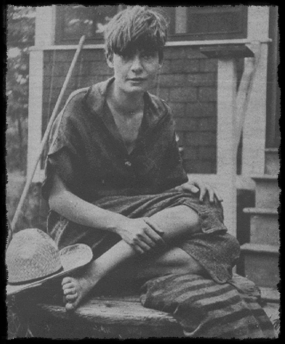
Dorothy Day, 1929 “We cannot love God unless we love each other. And to love each other we must know each other in the breaking of bread and we are not alone anymore. Heaven is a banquet and life is a banquet, too, even with a crust, where there is companionship. Love comes with community.” —Dorothy Day, The Long Loneliness
-
Thomas Merton: Solitude

“Is it true to say that one goes into solitude to “Get at the root of existence”? It would be better simply to say that in solitude one is at the root. He who is alone and is conscious of what his solitude means, finds himself simply in the ground of life.”–Thomas MertonLove and Living by Thomas Merton (Harcourt, p 22)
-
Archbishop Sartain on LCWR: ‘Deeply proud of the historic and continuing contribution of women religious’
 Archbishop Peter Sartain of Seattle issued a statement on Saturday, August 11, coinciding with the close of historic gathering of Leadership Conference of Women Religious. Archbishop Sartain has been assigned by the Vatican to “reform” the organization that represents 80 percent of Catholic sisters in the U.S.
I am very pleased to see Archbishop Sartain respond in like manner and tone to that which was offered by the LCWR at the close of their meeting–one of solidarity, intense respect, and a shared desire to move forward in faith.
“The Holy See and the Bishops of the United States are deeply proud of the historic and continuing contribution of women religious to our country through social, pastoral and spiritual ministries; Catholic health care; Catholic education; and many other areas where they reach out to those on the margins of society.
As an association of women religious, the LCWR brings unique gifts to its members and to the Church at large. This uniqueness includes sensitivity to suffering, whether in Latin America or the inner-city; whether in the life of an unborn child or the victim of human trafficking.
Religious women have made a lasting contribution to the wellbeing of our country and continue to do so today. For that they deserve our respect, our support, our thanks and our prayers.
Along with the members of the LCWR, I remain committed to working to address the issues raised by the Doctrinal Assessment in an atmosphere of prayer and respectful dialogue. We must also work toward clearing up any misunderstandings, and I remain truly hopeful that we will work together without compromising Church teaching or the important role of the LCWR. I look forward to our continued discussions as we collaborate in promoting consecrated life in the United States.”
-
Richard Rohr: ‘Imagining the Second Half of Life’
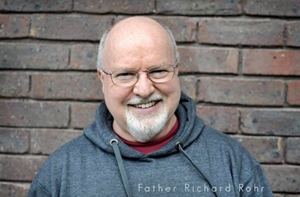
“The task of the first half of life is to create a proper container for one’s life and to answer the first essential questions: “What makes me significant?”, “How can I support myself?”, and “Who will go with me?” As Mary Oliver puts it, “. . . what is it you plan to do with your one wild and precious life?” (“The Summer Day”). The container is not an end in itself, but exists for the sake of your deeper and fullest life, which you largely do not know about yourself! Far too many people just keep doing repair work on the container itself and never “throw their nets into the deep” (John 21:6) to bring in the huge catch that awaits them.
Problematically, the first task invests so much of our blood, sweat, eggs and sperm, tears and years that we often cannot imagine there is a second task, or that anything more could be expected of us. “The old wineskins are good enough” (Luke 5:39), we say, even though according to Jesus they often cannot hold the new wine. According to Jesus, if we do not get some new wineskins, “the wine and the wineskins will both be lost” (Luke 5:37).”–Richard Rohr, ofm
Adapted from Falling Upward: A Spirituality for the Two Halves of Life (pp. 1-2)
-
Rose Marie Berger: Why Bill McKibben Is The New Noah

Noah and friends Bill McKibben is a good guy.
He’s a Sunday school teacher. He’s funny and a little shy. But he’s got a big problem.
He just got a job from God — and it’s not an easy one. It seems to me that Bill’s been tapped to be the new Noah to our faithless generation. It’s his job to warn us that we have “grieved the Lord in his heart” and that the flood waters will rise again if we don’t get back to working within our “original contract” and reverse climate change.
Remember the Bill Cosby skit about Noah and the Ark? Noah’s neighbors didn’t think much of him, and Noah himself didn’t know what he was doing half the time. But he had a job to do, and cubit by cubit, two by two, he did it.
Bill’s like that.
Last month, Rolling Stone magazine featured his latest plea for climate sanity on its cover. And despite every pundit’s whining proclamation that climate change is such a buzz-kill, Bill’s article got forwarded, commented, tweeted, and otherwise pushed around the Internet more than anything else RS has put out lately.
So somebody out there is paying attention to climate change — even if the elites can’t seem to grow a spine about it.
 What I liked about Bill’s article was that he lays out a clear, 3-pronged strategy for really doing something about climate change while there’s still time.
If we do these three things, there’s a possibility that we can reverse climate change, restore health to our skies, earth, and oceans, and move forward into a future where our grandkids can not just survive, but thrive.
Here’s the plan:
1. Divest or get active regarding all stockholdings in these six corporations: ExxonMobil, ConocoPhillips, Chevron, Peabody, Arch, and BP. These are the primary oil, natural gas, and coal companies operating in or through the United States that top the charts as carbon polluters. If Americans focus on U.S. companies, then we can be the tipping point for a transnational shift. If you — or the portfolio you influence — own stock, then get rid of it and tell the company why. If you don’t want to divest, then you need to decide now to become a shareholder activist. If you’re not a stockholder, then pressure your faith institutions, universities, and local governments to get out of “planet-killing” profits. This is the economic part of the plan.
2. Push for carbon “fee-and-dividend” laws on corporate carbon emitters at the local, state, and federal level. No more free rides for oil, gas, and coal companies. You pay taxes to have your garbage hauled away. Why shouldn’t they? The fee is charged at the point of origin or point of import on greenhouse gas emitting energy (oil, gas, and coal). The fee is progressive (increases gradually) over time. The fee is returned directly to the public in monthly dividends to individual taxpayers, with limited-to-no government involvement. Australia initiated this legislation in June. We can learn from them. This is the legislative part of the plan.
3. Take personal responsibility. Everyone can continue to limit energy consumption, use renewable energy sources, and build out a sustainable footprint for our homes and churches. But we also need people to step up and put their bodies on the line to stop the mining of tar sands in Alberta, Canada, and prevent the construction of the Keystone XL and Northern Gateway pipelines that are being built to transport Alberta’s unconventional “tar sands” oil. Scientists around the world say that opening the Alberta tar sands and pumping this non-traditional oil through these pipelines will put the planet on a one-way road to climate disaster. That’s why fighting the Keystone XL Pipeline in the U.S. and the Northern Gateway Pipeline in Canada is critical. This is the direct action and personal responsibility part of the plan.
The threat of climate change is overwhelming. It’s been hard to sort out what to do. But Bill McKibben has given us a plan — one that everyone can join in, one where everyone can take part.
And even though he presents it in a folksy manner, this stuff has been vetted from the farmers on the ground to the economists in the think tanks to the scientists running the algorithms. When governments fail, people stand up.
This plan may not work to completely reverse climate change. But if anything is going to succeed, we’ve got to listen to Noah this time. Or rather, Bill.
Welcome to the fight of your lifetime.
Rose Marie Berger, author of Who Killed Donte Manning? is a Catholic peace activist and a Sojourners associate editor. She blogs at rosemarieberger.com.
Resources and Further Reading
Global Warming’s Terrifying New Math by Bill McKibben
1. ECONOMIC
- 350.org will be covering all these issues. Dirty Energy Money tracks energy companies’ political donations.
- Investor Network on Climate Risk: Ask question about where your church’s pension fund resides and what “environmental screens” are placed on investments.
- Interfaith Center on Corporate Responsibility 2012 Proxy Resolutions
- Divestment Listening Tour Connects Students and Anti-Coal Activists
- Swarthmore College and several other campuses have launched a campaign to divest from fossil fuels
2. LEGISLATIVE
- Australia passed carbon fee and dividend legislation in summer 2012
- What is Fee-and-Dividend?
- Proposed Fee-and-Dividend Legislation
- Carbon Fee and Dividend Act of 2010 – Issues About Carbon Fee and Dividend legislation
3. PERSONAL RESPONSIBILITY/DIRECT ACTION
-
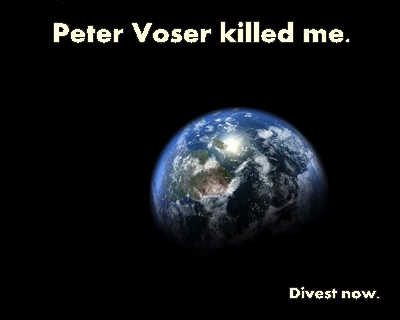
6. The New Divestment Movement
-
LCWR: ‘Can’t Hold Back The Spring’
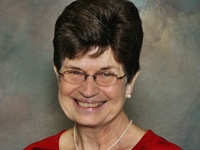
Sr. Pat Farrell The historic meeting of the Leadership Conference of Women Religious in St. Louis, MO, is drawing to a close.
Sr. Pat Farrell gave her concluding address as she ends her time of service as LCWR’s president. As the body that represents 80 percent of Catholic sisters in the United States reckons with how to respond to a harsh rebuke by the Vatican, Sr. Pat offered this perspective. This is what religious wisdom looks like:
Taking the stage to a standing ovation, Farrell said that “some larger movement in the church … has landed on LCWR.”
A key question facing LCWR, she said, is “What would a prophetic response to the doctrinal assessment look like?”
“I think it would be humble, but not submissive,” she continued. “Rooted in a solid sense of ourselves, but not self-righteous; truthful, but gentle and absolutely fearless.
“It would ask probing questions. Are we being invited to some appropriate pruning and are we open to it? Is this doctrinal process an expression of concern or an attempt to control?
“Concern is based in love and invites unity. Control through fear and intimidation would be an abuse of power.
“Does the institutional legitimacy of canonical recognition empower us to live prophetically? Does it allow us the freedom to question with informed consciences? Does it really welcome feedback in a church that claims to honor the sensus fildeum?”
Farrell also said that it would be a “mistake” to make “too much” of the mandate.“We cannot allow it to consume us,” she said. “It is not the first time that a form of religious life has collided with the church, nor will it be the last.”
“The doctrinal assessment suggests that we are not currently living in an ideal ecclesial world,” Farrell continued.
Yet, she said, the sisters also “cannot make too little” of the Vatican’s move. It’s “historical impact,” she said, is “apparent to all of us.”
Ending her remarks with a reflection on the Gospel parable of the mustard seed, Farrell showed an image of mustard plants growing in a field, saying the seed is “uncontainable” and “crops up anywhere without permission.”
Comparing the seed to the spirit of God, she continued: “We can indeed live in joyful hope because there is no political or ecclesiastical herbicide that can wipe out the newness of God’s spirit.”
Ending with a Spanish phrase she said she learned while ministering in Chile during the military dictatorship there, Farrell said: “They can crush a few flowers, but they cannot hold back the springtime.”
As Farrell left the stage, the audience of about 900 stood slowly, clapping for some three minutes and shouting in affirmation. …
Read the whole National Catholic Reporter article.
Also, in St. Louis Beacon: With prayer and iPads, Women Religious consider response to Vatican
Also, in St. Louis Review: LCWR Sisters discuss complexity of dialogue (really nice photos here)
-
Subscribe
Subscribed
Have a WordPress.com account? Log in now.

