The Catholic Church has very strong teachings against war. The U.S. bishops have not yet called on Catholic soldiers not to fight – but only because they are afraid of the chaos it would cause, not because it’s inconsistent with Catholic teaching. Catholics are not permitted to participate in pre-emptive war or any war that does not meet just war principles (which attacks on Syria do not).
As Americans, the question we face is not whether we condone chemical weapons use — of course we do not. The question is how should the international community responds when someone commits a war crime (ie uses chemical weapons).
The pope invites all people of good will to set aside a day for prayer, meditation, and fasting — or any discipline that leads one deeper into an experience of personal peace and peace for the world. Below is Pope Francis’ appeal:
“Today, dear brothers and sisters, I wish to make add my voice to the cry which rises up with increasing anguish from every part of the world, from every people, from the heart of each person, from the one great family which is humanity: it is the cry for peace! It is a cry which declares with force: we want a peaceful world, we want to be men and women of peace, and we want in our society, torn apart by divisions and conflict, that peace break out! War never again! Never again war! Peace is a precious gift, which must be promoted and protected.
“There are so many conflicts in this world which cause me great suffering and worry, but in these days my heart is deeply wounded in particular by what is happening in Syria and anguished by the dramatic developments which are looming.
“I appeal strongly for peace, an appeal which arises from the deep within me. How much suffering, how much devastation, how much pain has the use of arms carried in its wake in that martyred country, especially among civilians and the unarmed! I think of many children who will not see the light of the future! With utmost firmness I condemn the use of chemical weapons: I tell you that those terrible images from recent days are burned into my mind and heart. There is a judgement of God and of history upon our actions which is inescapable! Never has the use of violence brought peace in its wake. War begets war, violence begets violence.
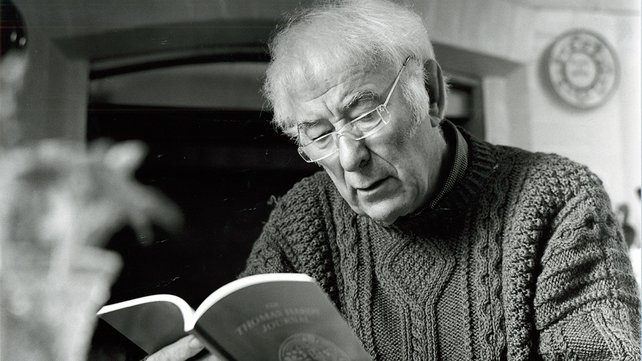
Poet and literature teacher Joseph Ross (Gospel of Dust and Meeting Bone Man) has written a lovely, graceful tribute to Seamus Heaney. He holds before us the broken bread of a broken heart in a world in which the word is breaking. But, as Heaney would remind, from which the phoenix rises.
It is hard to know what to write today. Yesterday morning, at school, getting ready to discuss two of Anne Bradstreet’s poems with my American Literature students, I learned that Seamus Heaney had died. What I know today is this: my poetry heart is breaking.
And I am not alone. Irish Prime Minister, their Taoiseach, Enda Kenny, said: “For us, Seamus Heaney was the keeper of language, our codes, our essence as a people.” His death brings “…a great sorrow to Ireland.” Indeed. And not just to Ireland but to people who love poetry everywhere. Seamus Heaney was widely regarded as one of the finest poets of our time. No question. He was also considered a most humble and decent man. He was married, a father and a grandfather. His personal life was stable and not flashy.
He wrote of the Irish people who worked the land, the Irish people who suffered British oppression. He did this in such a way that honored the people, the land, and at times shamed the British. But he did not fall into a polemic. He refused to glorify the Irish Republican Army. He might have supported their goals but he opposed many of their methods. He resisted labeling sides as simply good vs. evil. He knew more complexity than that.
Poet Annie Deppe (Wren Cantata), who lives in County Galway with her husband poet Ted Deppe, sent this note on the death of Seamus Heaney:
We may be heading to Bellaghy on Monday for his burial. Take a look at the Irish Times. Fintan O’Toole’s article is worth checking out. There is a lot of coverage. The tears continue.
The entire country of Ireland is in mourning. The video clip interviews of ordinary people praising and remembering Seamus Heaney are stunning. Below is an excerpt from Fintan O’Toole’s beautiful essay in The Irish Times. Fintan O’Toole writes:
Like all great poets, Seamus Heaney was an alchemist.
He turned our disgrace into grace, our petty hatreds into epic generosity, our dull clichés into questioning eloquence, the leaden metal of brutal inevitability into the gold of pure possibility.
He lacked the arrogance to tell us who we are – much more importantly, he told us what we are. He reminded us that Ireland is a culture before it is an economy. And in the extraordinary way he bore himself, the dignity and decency and the mellow delight that shone from him, he gave us self-respect.
In The Tempest, Miranda exclaims “O brave new world, / That has such people in it.”
Seamus Heaney made us gasp in wonder that, for all its follies and terrors, Irish culture had such a person in it.
Seamus Heaney (1939-2013)Upon hearing the news yesterday of Irish poet Seamus Heaney’s death, I sent a note of condolence to poets Annie and Ted Deppe who live in Ireland. The Deppes invited me to a writing workshop near Dublin a few years ago.
“My first reaction,” I wrote, “on hearing the news of Seamus Heaney’s death was ‘how quickly can I get to Ireland.’ Something very old in me wailed at the news. Something salmonish needed to come home for the keening, the wake, the whiskey, the Mass, the sod. Thank you for all you’ve done to share the riches of Ireland and poetry with so many — especially with me.”
Kevin Cullen, a friend of Heaney’s, recalls a night with Heaney in Daedalus in Boston. A wonderful recollection and tribute. Here’s an excerpt from Kevin Cullen’s essay Walking on Air Against His Better Judgement, printed today in The Boston Globe:
When Seamus returned to his hometown after winning the Nobel Prize, Sean Brown presented him with a painting of Lough Beg, and the celebration, organized by Brown, was noteworthy because everybody, Protestant and Catholic alike, turned out to greet a local boy made good.
“He represented something better than we have grown used to, something not quite covered by the word ‘reconciliation’, because that word has become a policy word,” Seamus Heaney wrote in a tribute to his friend Sean Brown. “This was more like a purification, a release from what the Greeks called the miasma, the stain of spilled blood. It is a terrible irony that the man who organized such an event should die at the hands of a sectarian killer.”
I think of Seamus Heaney the same way. He represented something better than we have grown used to. He was, without doubt, as Robert Lowell said, the greatest Irish poet since Yeats. But it’s only partially accurate to describe Heaney as an Irish poet, because while his Irishness informed his work and certainly his identity, he was a citizen and a poet of the world. For all his nationalism, he loved English poets. He loved Keats as much as Yeats. He believed that if countries were run by poets instead of politicians, we’d be much better off. He loved Vaclav Havel, the poet who led the Czechs to freedom, and he really loved Michael Higgins, Ireland’s current president and a poet of some regard himself.
And, it goes without saying, he loved above all his Marie, his wife. Marie and the land were the twin loves of his life, and his ode to Marie managed to evoke both of those loves:
Love, I shall perfect for you the child
Who diligently potters in my brain
Digging with heavy spade till sods were piled
Or puddling through muck in a deep drain.
“Real service to the poor means understanding global poverty,” said Partners In Health co-founder Dr. Paul Farmer at a 2011 event with Dominican priest Gustavo Gutierrez, hosted by the Kellogg Institute for International Studies at Notre Dame.
Gutierrez is known around the world as the articulator of a liberation theology that links the gospel with social empowerment and the struggles of the poor from unjust economic, political, or social conditions that shackle them. “Fr. Gustavo is one of my heroes and has inspired much of my own work in global health with a preferential option for the poor,” said Farmer.
“Poverty is not fate, it is a condition; it is not a misfortune, it is an injustice,” Gutierrez is known for saying. “It is the result of social structures and mental and cultural categories, it is linked to the way in which society has been built, in its various manifestations.”
“Poverty is not an act of nature … but a historically driven by social and economic factors,” added Farmer. “Real service to the poor … requires listening to those most affected by poverty.”
The Beautiful Irish Woman, 1866, by Gustave Courbet
Seamus Heaney,74, one of the greatest living poets writing in the “English” language, died today at a clinic in Ireland.
Robert Lowell called Heaney “the most important Irish poet since Yeats.” Lowell didn’t live to see the full grandeur of Heaney’s accomplishments.
I’m in a bit of shock at the news.
The night I heard Seamus Heaney read his poetry at the Kennedy Center was one of the highlights of my literary life.
Most memorably he read from his own translation of Brian Merriman’s “The Midnight Court,” in which the women of Ireland put the men on trial:
‘Get up,’ she said, ‘and on your feet!’
What do you think gives you the right
To shun the crowds and the sitting court?
A court of justice, truly founded,
And not the usual, rigged charade,
But a fair and clement court of women
of the gentlest stock and regimen.
The Irish race should be grateful always
For such a bench, agreed and wise,
In session now two days and a night,
In the spacious fort on Graney Heights …
… Blame arrogant kings, blame emigration,
But it’s you and your spunkless generation–
Your a source blocked off that won’t refill.
You have failed your women, one and all.
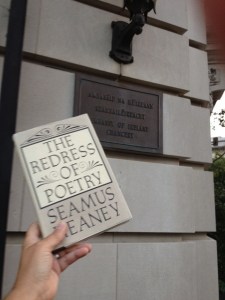
I’ve taught Heaney’s poem “Station Island” as part of prayer and poetry retreats. I’ve written essays comparing “Station Island” with Neruda’s “The Heights of Macchu Piccu.” I’ve listened to audio of Heaney reading and lecturing simply to luxuriate in his language.
How can that singular voice be stilled? Who will answer now when I call out in the “republic of conscience”? There will be quite a céilí tonight in the celestial courts!
Taoiseach Enda Kenny has said the death of Nobel laureate Seamus Heaney today has brought a “great sorrow to Ireland” and only the poet himself could describe the depth of his loss to the nation.
Mr Kenny said: “For us, Seamus Heaney was the keeper of language, our codes, our essence as a people”.
Heaney died this morning at the Blackrock Clinic aged 74 after a short illness.
He was admitted to the clinic for a procedure but died prior to the operation.
President Michael D Higgins said Heaney’s contribution “to the republics of letters, conscience, and humanity was immense”.
“As tributes flow in from around the world, as people recall the extraordinary occasions of the readings and the lectures, we in Ireland will once again get a sense of the depth and range of the contribution of Seamus Heaney to our contemporary world, but what those of us who have had the privilege of his friendship and presence will miss is the extraordinary depth and warmth of his personality,” he said.
Mr Higgins, himself a published poet, described Heaney as warm, humourous, caring and courteous.
“A courtesy that enabled him to carry with such wry Northern Irish dignity so many well-deserved honours from all over the world,” he said.
“Generations of Irish people will have been familiar with Seamus’ poems. Scholars all over the world will have gained from the depth of the critical essays, and so many rights organisations will want to thank him for all the solidarity he gave to the struggles within the republic of conscience.” …
Poet Theo Dorgan, whom I had the pleasure of meeting in Ireland at a poetry workshop several years ago, said:
Seamus Heaney would react in “half embarrassment” at being compared to the great Irish writers such as W.B Yeats, James Joyce and Oscar Wilde, but “he deserved it. He is there.” He was also a very loved poet and people “just beamed” in his presence. He had, more than any other poet he met, “genuine humility. He knew his gift was just that, a gift”. He was a supportive writer who offered “solidarity and companionship” to others aspiring to be poets, Dorgan said.
War is hell. The war in Syria is as hellish as most. Families are torn apart. Children are maimed and killed. People who never wanted to pick up a weapon end up committing horrible atrocities. Whole generations are traumatized for life.
But adding more fuel to the fire in the form of “limited strikes” or “force-protected forward actions” or any other state-sponsored violence doesn’t stop war’s hell. At best, it shifts it a little bit. At worst, it spins it in unpredictable directions with more civilians paying the ultimate price.
Des Moines’ Bishop Richard E. Pates, chair of the U.S. Catholic Bishops’ Committee on International Justice and Peace issued this statement on Aug. 29. It’s not an earth-shattering statement – but it’s definitely in the right direction:
Dear Secretary Kerry:
Today Pope Francis met with King Abdullah II of Jordan. Regarding their meeting, the Holy
See reported: “Special attention was reserved for the tragic situation in which Syria finds itself.
In this regard, it was reaffirmed that the path of dialogue and negotiation between all
components of Syrian society, with the support of the international community, is the only option
to put an end to the conflict and to the violence that every day causes the loss of so many human
lives, especially amongst the helpless civilian population.”
With the Holy Father, we abhor the “acts of atrocity” that he decried in the wake of the attack
with chemical weapons. We make our own his admonition: May the “clash of weapons … be
silenced. It is not conflict that offers prospects of hope for solving problems, but rather the
capacity for encounter and dialogue.”
The longstanding position of our Conference of Bishops is that the Syrian people urgently need a
political solution that ends the fighting and creates a future for all Syrians, one that respects
human rights and religious freedom. We ask the United States to work with other governments
to obtain a ceasefire, initiate serious negotiations, provide impartial and neutral humanitarian
assistance, and encourage building an inclusive society in Syria that protects the rights of all its
citizens, including Christians and other minorities.
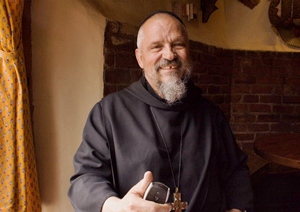
“As I reflect on the monastic life that is a gift in all of these houses, I see the mercy of God at the center of all that happens. I can’t always manage to live that mercy, even if I try my best. It is as though I stand on the shore and see another land in the distance at times and know that I must get there even when it seems impossible.
Following Jesus Christ and seeking to be faithful to Him and to His Church has been the beacon in my life for many, many years. For all of us who want to follow Christ and to deepen the spiritual life within us, it is necessary to have this perseverance of continuing to follow Christ no matter how many times we fail or set out in a wrong direction or simply are not aware of what He is asking of us. The only good that monastic life has to offer or that any Christian spiritual life has to offer is to point ourselves and others to Jesus Christ. In Him we find life and joy and all that is worth wanting. As many times as I have wandered away from this path, just as many times He has recalled me and pardoned me and told me of His love. It is humbling to know that He is always there, so faithful and so constant.
When I am at my best, I am happy simply to be in His presence, giving thanks. When I am at my worst, He is there trying to find a way to attract me back to Him and to His way.When I was young I wanted to be a saint and a mystic. Now I pray that I may persevere and always respond to His love. There is no desire to be anything or anyone, simply to try to persevere to the end.”–Abbot Philip, Christ in the Desert monastery, New Mexico
A new analysis of oil and gas pipeline safety in the United States reveals a troubling history of spills, contamination, injuries and deaths.
The Tower of Babel, Bruegel the Elder
This time-lapse video shows pipeline incidents from 1986 to 2013, relying on publicly available data from the federal Pipeline and Hazardous Materials Safety Administration. Only incidents classified as “significant” by the agency are shown in the video. “Significant” incidents include those in which someone was hospitalized or killed, damages amounted to more than $50,000, more than 5 barrels of highly volatile substances or 50 barrels of other liquid were released, or where the liquid exploded or burned.
According to the data, since 1986 there have been nearly 8,000 incidents (nearly 300 per year on average), resulting in more than 500 deaths (red dots on the video), more than 2,300 injuries (yellow dots on the video), and nearly $7 billion in damage.
Since 1986 pipeline accidents have spilled an average of 76,000 barrels per year or more than 3 million gallons. This is equivalent to 200 barrels every day.
 Pope Francis rose up in all his moral grandeur on Sunday to make a global appeal for peace in Syria–calling Sept. 7 as a global day of prayer and fasting for peace in Syria and the Middle East. (You can send a note to Congress urging nonviolent action in Syria.)
 Poet and literature teacher Joseph Ross (Gospel of Dust and Meeting Bone Man) has written a lovely, graceful tribute to Seamus Heaney. He holds before us the broken bread of a broken heart in a world in which the word is breaking. But, as Heaney would remind, from which the phoenix rises.

 “As I reflect on the monastic life that is a gift in all of these houses, I see the mercy of God at the center of all that happens. I can’t always manage to live that mercy, even if I try my best. It is as though I stand on the shore and see another land in the distance at times and know that I must get there even when it seems impossible.