-
A Prayer for All Saints’ Day

Naomi the llama at Jonah House. The Jonah House Catholic Worker community lives in inner-city Baltimore on the property of a 150-year old Irish Catholic cemetery. The llamas and goats keep the weeds trimmed back. The Catholic Workers in residence honor the dead — and tend to the living.
I’ve always wanted to spend All Saints’ Day on retreat at this location, practicing a walking meditation in the circuit through the old cemetery, amid the pawpaw trees, looking through the fence at the Section 8 housing that borders one edge and the tire reclamation center that rides the other side. I want to walk and remember the dead. I want to rejoice with them. I want to linger in their presence. I want to meet them in holy communion.
A few years ago, I spent a quiet day at Jonah House–healing the soul. Below is a litany that I used. It’s also especially suited to Ember Days in November, All Saints’ Day or Reformation Day, or Day of the Dead memorial at the end of October.
Liturgical Notes. This litany works best when read responsively. It can be divided in to multiple parts. Each part can begin with the leader saying, “We call to mind the great cloud of witnesses who have gone before us in faith…” and concluding the section with the “Grant us…” triplet.
This is not an exhaustive list. It’s made to be adapted. It contains some saints recognized by the church and many holy men and women of God who have served the cause of the gospel or the spirit of liberation through the ages. Not all of them are Christian, though all are Christ-like. We encourage each community to add the names of those known locally who have inspired us to live a Godly life in the service of others.
Many of the names listed here will not be familiar to the congregation. We invite you to use the month of November to tell the stories of those who are part of our Great Cloud of Witnesses, including remembering those who have died who personally have influenced us. This litany can also easily be set to a plain chant or other simple musical refrain. Find an easily printable version here.—Rose Marie Berger
All Saints Day: A Litany of the Great Cloud of Witnesses
by Rose Marie Berger
We call to mind the great cloud of witnesses who have gone before us in faith…
Our parents of earth and life, Adam and Eve…Pray for us.
Mothers Sarah and Hagar, and Father Abraham…Pray for us.
Isaac and Rebecca, Jacob, Leah, and Rachel…Pray for us.
Puah and Shiprah…Pray for us.
Miriam, Moses, and Aaron…Pray for us.
Ruth, Naomi, and Boaz…Pray for us.
Daughters of Jeptha…Pray for us.
Daughters of Lot…Pray for us.
Dinah and Tamar…Pray for us.
Bathsheba, Uriah, and David…Pray for us.
Women of Midian…Pray for us.
Isaiah, Jeremiah, Hosea and all Hebrew prophets…Pray for us.
Judith, Deborah, and Jael…Pray for us. -
Bill McKibben: Will Obama Block the KXL or Keep Bending?
 Bill McKibben, recent winner of the Gandhi Peace Award, posted an update on the Keystone XL fight. It’s a good overview of where we are now in this massive movement to prevent the oil industry from taking down the planet. Here’s McKibben’s recent article in Grist:
… [Obama’s] administration has OKed oil drilling in the dangerous waters of the Arctic and has emerged as the biggest backer of fracking. Even though he boasts about marginal U.S. cuts in carbon emissions, his green light to fracking means that he’s probably given more of a boost to releases of methane — another dangerous greenhouse gas — than any man in history. And it’s not just the environment. At this point, given what we know about everything from drone warfare to NSA surveillance, the dream of a progressive Obama has, like so many dreams, faded away.
The president has a handy excuse, of course: a truly terrible Congress. And too often — with the noble exception of those who have been fighting for gay rights and immigration reform — he’s had little challenge from progressives. But in the case of Keystone, neither of those caveats apply: He gets to make the decision all by himself with no need to ask John Boehner for a thing, and people across the country have made a sustained din about it. Americans have sent record numbers of emails to senators and a record number of comments to the State Department officials who oversee a “review” of the pipeline’s environmental feasibility; more have gone to jail over this issue than any in decades. Yet month after month, there’s no presidential decision.
There are days, in fact, when it’s hard to muster much fire for the fight (though whenever I find my enthusiasm flagging, I think of the indigenous communities that have to live amid the Mordor that is now northern Alberta). The president, after all, has already allowed the construction of the southern half of the Keystone pipeline, letting Transcanada take land across Texas and Oklahoma for its project, and setting up the beleaguered communities of Port Arthur, Texas, for yet more fumes from refineries.
-
Pope Francis: In the Silence …

Pax Christi co-president Marie Dennis and Pope Francis “In the silence of the Cross, the uproar of weapons ceases and the language of reconciliation, forgiveness, dialogue, and peace is spoken.”–Pope Francis
-
Abbot Philip: ‘The Inner Peace of the Soul Is Not Always Easy to Reclaim’
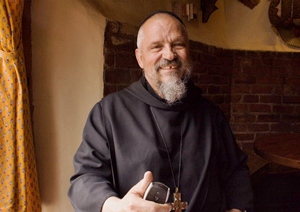 “Spirituality is about living with reality and always living in the connection with God. Spirituality is not exactly about praying, especially not about reciting prayers. It is about maintaining a living relationship with God at all times. It surely includes praying and includes reciting prayers. As a monk, I am always reciting prayers. The challenge is not just to recite them, but to pray them. Here in the monastery we have classes on the Psalms, for instance, and we can learn a lot about Psalms and about other Scriptures and even about hymns and prayers. The challenge is always to pray the Psalms, pray the Scriptures, and pray all the hymns and prayers.
Central to this challenge is to come to known my own heart and to be able to focus my heart on the presence of God. If I can manage that, then I can also begin to add to that the knowledge of what I am saying if I am involved in spoken prayer or spoken community prayer. The basic element, however, is always to have my heart set on the Lord, seeking His face. Most of us are able to be still and to pray, as long as that is all that we have to do and as long as nothing else very important is on our minds. The challenge is to keep that basic focus of our souls in the Lord when we have to pray with others, when we must live with others, when we have challenges, when we meet conflict, when we meet complex life situations. Only practice allows us to maintain this inner life of prayer at all times.
-
#FaithfulFilibuster: Bible Thumping on Capitol Hill
While the House Republicans “fiddle” on their ideological violins, garbage piles up in “Rome,” oil spills and massive numbers of cattle are killed in North Dakota with no government agency open to help respond to the crisis, thousands are out of work.
Sojourners and friends launched the “Faithful Filibuster” last Wednesday, promising to read all 2,000 verses in the Bible that deal with justice and the poor for as long as the House Republicans continue to hold our citizens hostage.
On Saturday afternoon we got to Revelation. This morning we are starting over again in Genesis. (You can join on Twitter at #FaithfulFilibuster and send your own Bible verses.)
The video above is a clip of me taking my turn and reading from Jeremiah 22 on Saturday on Capitol Hill.
-
Joan Chittister: The Courage to Try a Second Time
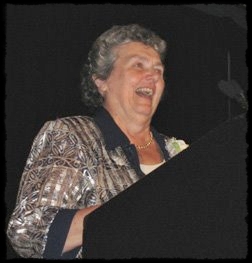 “The problem with life is that it never really gets resolved. What’s more, the same issue that tested our mettle the first time we attempted it leaves us in doubt that we should ever attempt it again. The things that confuse us the first time we deal with them are just as likely to make us wonder about them the second time around as well. Certainty is a chimera. All we know for sure is that what we did last time in dealing with a problem either did or didn’t work. Will the same thing happen again? Who knows?
Faced with something that bested us the last time we met it, the whole thought of dealing with it again can make the heart grow weak. How can we ever dare to think of getting up and going on again? In fact, why even bother to try?
It is doubt that brings us to wrestle with the very foundations upon which our life is built. Can we do this thing? Should we do this thing? Why is this thing even worth trying to do? Why even try to do the impossible—to stretch ourselves beyond the normal, the average, the clearly possible?
And if we try it again and we fail, then what?
The second effort makes or breaks the average person. The second effort either deadens the soul to the rest of life or redefines us to ourselves. The second effort becomes the “I can’t” trap, the point after which we never try again, or it becomes the “I can” truth that lifts us to a new level of courage forever.
The call to live our lives to the pinnacle of truth within us, however impossible it may seem along the way, is a clarion one. We are each here to give our best and give our all in the service of the will of God for us. There is no going back. There is no staying down when we fall down. We bother to get up and try again because we said we would. There is only the answer of Isaiah, “Here I am, Lord. Send me” (Isaiah 6:8).
The very act of throwing ourselves into the wrestling match of the soul makes us a beacon of hope for those who come behind us. There is no such thing as weakness for those who are strong enough to keep on trying. “–Joan Chittister, OSB
Excerpted from The Way of the Cross: The Path to New Life by Joan Chittister (Orbis)
-
Video: James Lee Burke on His Murder Mystery Morality Plays
After Hurricane Katrina, I sent a note off to James Lee Burke asking him to write a short reflection for Sojourners on the tragedy along the Gulf Coast. He responded immediately with a yes and then sent in an appropriately abrasive, truthful indictment of what — and who — some people are willing to sacrifice for their own comfort. (See How Much Are We Willing to Sacrifice To Have Cheap Gasoline?)
This week Religion & Ethics Newsweekly interviewed Burke and let him talk freely about his vast knowledge of history, theology, literature, guns, horses, and Catholicism.
“A Franciscan told me once, ‘Don’t keep track of the score. The score will take care of itself,’” says one of my very favorite writer James Lee Burke.
His best-selling crime novels are full of “biblical imagery, messianic language, the influences of his Roman Catholic boyhood, and a longing for redemption,” according to Religion & Ethics Newsweekly.
(Interview transcript here.)
-
Abbot Philip: The Importance of Mind Control
“The early desert monks and nuns realized that there is a huge importance in learning about how thoughts work in our lives. Only by beginning to deal with our thoughts can we begin to deal with all of our lives. I hate to say that we must control our thoughts because that really does not describe the challenge. The challenge is to learn to live with our thoughts in such a way that we can direct them in some sense. If we try to control them, then there is usually a rebellion!
Learning to live with our thoughts is one of the reasons for learning how to be silent and still with the Lord. We focus on being silent and still, not on stopping thoughts. When thoughts do come, we simply let them pass by because our attention is on being silent and still. We have to practice this before we can truly understand it. And it takes continual practice to enable us to turn aside from thoughts that really attract us and focus on other thoughts.
Another way of learning to live with our thoughts is to develop interests in many things. For some people, a good book can draw and attract their thoughts in a very positive way. For others, a hobby can do the same trick. For still others, a long walk or a vigorous period of exercise can help. Still other persons can relax and let go of attachments by listening to beautiful music and being drawn out of themselves into the music. Others can play a musical instrument and get totally caught up into that. Others can do works of charity, such as feeding the hungry, clothing the naked, etc.
 There are countless ways to learn how to live with our thoughts. Why would be want to do that? Because our decisions in our lives come from our thoughts. We want to be able to see our own thought process and to be able to direct our thoughts. In that we, we can build the Kingdom of God together. What often happens in present culture is that our thoughts possess us instead of us possessing our thoughts. This is why it is so important to begin now to know how to live with my thoughts and how to direct my thoughts.
 So often I have heard people tell me to go where my thoughts lead me. To some extent, I can understand that and even honor it. On the other hand, I have to know that not everywhere my thoughts might take me is a good place for me to be. There is always a matter of discernment: I have to choose if the direction of my thoughts really is in agreement with the deepest choices of my life.
Each of us is invited to live life to its fullness. In order to do that, we need to listen attentively to those who have gone before. When we find ourselves wanting to set out on our own, we need to be strong enough to hear what we may not want to hear. We may even try to run away from the things that we do not want to hear. Deep within us we remember that it is God calling us and it is God to whom we want to respond. …”–Abbot Philip, OSB
Read Abbot Philip’s whole essay (Abbot’s Notebook, Oct. 9, 2013).
-
Paulo Freire: On The Politics of Neutrality

“Washing one’s hands of the conflict between the powerful and powerless means to side with the powerful, not to remain neutral.
Alongside the neutral attitude, there are more subtle and more attractive means of serving the interests of the powerful while appearing to favor the oppressed. Here again we find the naive and the shrewd walking hand in hand… [via] the illusion that the hearts of men and women can be transformed while the social structures that make those hearts ‘sick’ are left intact and unchanged.
The illusion that suggests it is possible, by means of sermons, humanitarian works, and the encouragement of otherworldly values, to change men’s consciousness and thereby transform the world exists only in those we term naive (or moralistic as Niebuhr would have said. The shrewd are well aware that such action can slow down the basic process of radical change in social structures. This radical change is a precondition for the awakening of consciousness, and the process is neither automatic nor mechanical.”
—Paulo Regulus Neves Freire (1921-1997), Brazilian philosopher and educator. From The Politics of Education: Culture, Power, and Liberation (1985) -
St. Francis of Assisi: ‘In What Then Can We Boast?’

October 4 is the feast day of St. Francis of Assisi “Consider, O human being, in what great excellence the Lord God has placed you, for He created and formed you to the image of His beloved Son according to the body and to His likeness according to the Spirit.
And all creatures under heaven serve, know, and obey their Creator, each according to its own nature, better than you. And even the demons did not crucify Him, but you, together with them, have crucified Him and are still crucifying Him by delighting in vices and sins.
In what, then, can you boast? Even if you were so skillful and wise that you possessed all knowledge, knew how to interpret every kind of language, and to scrutinize heavenly matters with skill: you could not boast in these things. For, even though someone may have received from the Lord a special knowledge of the highest wisdom, one demon knew about heavenly matters and now knows more about those of earth than all human beings.
In the same way, even if you were more handsome and richer than everyone else, and even if you worked miracles so that you put demons to flight: all these things are contrary to you; nothing belongs to you; you can boast in none of these things.
But we can boast in our weaknesses and in carrying each day the holy cross of our Lord Jesus Christ.”–Francis of Assisi (Admonition V)


-
Subscribe
Subscribed
Have a WordPress.com account? Log in now.

