-
2014: Our Advent Wreath
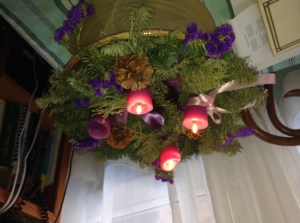
Advent wreath, 2014 It’s been delightful to start each morning with the wreath lighting and singing “O Come, O Come Emmanuel.” We’ve been reading from The Little Blue Book (given to me by Gary Myrick). The time draws nigh ….
Peace and peace and again I say to you, peace.
-
The “O” Antiphons
 An ancient and beautiful practice of the Christian church in preparation for Christmas is the singing of the “O” antiphons. Below, Benedictine Joan Chitister invites us to join in the singing:
In anticipation of Christmas, the monastic community begins to review its vision of Jesus by chanting ancient prayers known now as “The O Antiphons.” Each of these chants recalls a different aspect of the Christ-life to which we are called.
December 17
“O Wisdom” the community prays today in its anticipation of new grace in life. It’s important to realize that wisdom and education are not the same thing. Education provides the experiences we need in order to manage our lives. Wisdom, on the other hand, is what we learn as a result of the experiences we have.December 18
“O Adonai,” the community sings today. “O God of All,” we chant. When we build a vision of life it is necessary to realize that Jesus must be the center of it–not our institutions, good as they may be, not our plans or personal talents, necessary as they are.December 19
“O Root of Jesse,” the community remembers today. It takes generations to build the Christ-vision in the world, just as it took generations after Jesse to prepare for the coming of the Christ. It is our task to root ideas now that will bring the next generation to wholeness.December 20
“O Key of David,” we say at Vespers today. We’re all looking for the keys to life– the key to success, the key to happiness, the key to serenity. And we’re always looking for it somewhere else. The problem is that we already have it and don’t recognize it. What key in your present life are you avoiding, resisting, overlooking, rejecting?December 21
“O Radiant Dawn,” we chant today. We look for light everywhere. But it was night when Benedict saw the vision of his life. That’s what usually happens to us, too. Just when we think that light will never come into our lives again, we begin to see a whole new world around us.December 22
“O God of All the Earth,” we pray today. We get a chance today to realize that we are not the beginning and the end of the universe. We are part of a vision of humankind, seen in Jesus, but yet to be achieved in us–a vision of global sharing, universal peace and individual security. If we all want it so much, what is delaying its coming? I’m serious. What is it?December 23
“O Emmanuel,” we sing tonight, not so much in hope as in recognition. After all, Jesus—Emmanuel—has already come. It is not a matter now of Christ’s being where we are; it is a matter of our being in the consciousness of where Christ is in life. And where He is not as well. Where is Christ for you this Christmas? And is there a place in your life that you know down deep is not in the spirit of Christ at all?Join the Benedictine Sisters of Erie HERE in praying the O Antiphons during the seven days before Christmas. The melodies were composed by the late Erie Benedictine Sister Mary David Callahan.
From The Radical Christian Life: A Year with Saint Benedict by Joan Chittister (Liturgical Press).
-
Francis’ Feminine Genius? – Vatican Report on U.S. Catholic Sisters
 The highly controversial Vatican Visitation of U.S. Catholic women’s orders seems to have roared in like a lion and out like a lamb. What a perfect display of Christian metanoia!
For this transformation, it required heroic acts of highly skilled “participatory patience” on the part of U.S. Catholic sisters and a change of papal regimes.
What started out as a retaliatory act by a few right-wing American bishops who were tired of Catholic sisters messing up their political machinations (read Obamacare), was transformed by U.S. Catholic sisters’ deep faith, perseverance, wisdom, and integrity into what may be a reconciling opportunity to move what Pope Francis calls the “feminine genius” more centrally into the Vatican. (I won’t say into the heart of the church, because the feminine genius has never left the heart of the people or congregations, it’s only been pushed to the periphery by the Vatican and some intransigent bishops’ conferences, such as that in the U.S.)
It’s important to remember that the report released today addresses “quality of life” issues in Catholic women’s communities in the U.S.
There is an ongoing theological investigation of the Leadership Conference of Women Religious that still awaits resolution. No doubt Pope Francis wants both of these issues resolved and reconciled before his visit in October 2015. He’s using his own political genius to soothe wounds, calm fears, lift dignity, and also discern who the women are with sound spirits, deep faith, and sharp minds.
The fact that Sr. Sharon Holland, executive director of the Leadership Conference of Women Religious, was part of this press conference sent a positive message about LCWR. She gave an excellent, authentic, and realistic response, which you can read here. (She’s a canon lawyer, spiritual director, and action figure. Watch out!)
“The Visitation was met by some religious with “apprehension and suspicion” (n. 11). The expressed purpose, ‘to look into the quality of life of religious women in the United States,’ was troubling. Some congregations reported that their elder sisters felt that their whole lives had been judged and found wanting. Despite the apprehension however, today we are looking at an affirmative and realistic report which, we know, is based on the study of written responses and on countless hours of attentive listening,” said Sr. Holland.
“In a particular way, it is the realism of the text which appealed to me first. For example, in the section on vocation promotion and formation, there is the common concern for the dramatic decline in vocations. However, the Report goes on to recognize that the vocational peak of the 1960’s was unusual, and not a norm to which we can return. Rather, the focus is on providing the formation needed for today’s candidates who often are highly qualified professionally, but lacking in theological formation.”
“The section concerning Financial Stewardship likewise shows our complex current realities. Religious are praised for wise stewardship, socially responsible investing and strategic planning for the needs of members and ministries. Simultaneously, there is a very concrete acknowledgment of many causes contributing to our financial problems: years of undercompensated ministry, a diminished number of earners, volunteer ministries of elder religious, work with the poor and disenfranchised and the fact that sisters serving in ecclesiastical structures receive relatively low salaries and have sometimes lost their positions due to downsizing.
I mention these factors simply to emphasize again how much has been heard and understood.There is an encouraging and realistic tone in this Report. Challenges are understood, but it is not a document of blame, or of simplistic solutions. One can read the text and feel appreciated and trusted to carry on.”
And I want to give a shout out to Canadian Broadcasting Corporation’s Rome correspondent Megan Williams for saying to the panel of distinguished presenters, “The Catholic Church, of course, is a male-dominated institution that continues to exclude women’s voices from key decision making. Does this report in any way move women to a greater role within the church?” [For some entertaining theo-political gymnastics, you can watch the responses here at minute 1:05:16, including Cardinal Braz de Aviz jumping in to talk rather bumblingly about equal and complementary roles for women and men.]
For a good refresher on the history of the Vatican investigation of U.S. Catholic women’s communities, see Jesuit priest James Martin’s excellent refresher A High Quality of Life at America.
For a good understanding of the context of this report, see Rocco Palmo’s Up Next: Nuns at Whispers in the Loggia.
For the primary source material, read the Final Report on the Apostolic Visitation of Institutes of Catholic Women Religious in the U.S. (12/16/2014).
For transcripts from the press conference this morning in Rome presenting the report: Press Conference for the presentation of the Final Report on the Apostolic Visitation of Institutes of Women Religious in the U.S. (12/16/2014)
For some context on Catholic women millennials and future vocations, read Sister Mary Johnson’s article Vatican report gives sisters and whole church reason to hope in America.
And a last note. When the Spanish press asked for a response to a question in Spanish for Spanish-language radio, there appeared to be only one U.S. sister who understood the Spanish: Sr. Sharon Holland. That’s what preparing for the future looks like!
“Where there is Jesus, there is joy.”–Pope Francis
-
Berger and Ross: ‘We Thought the Word was Gone’

“We thought the word was gone. We thought we healed it out of our national vocabulary. We thought ‘torture’ belonged to a foreign language, spoken only by dictators, who ruled anywhere but here. We were wrong.”–Introduction to Cut Loose the Body, edited by Rose Marie Berger and Joseph Ross (2007)
-
Michael Broek: ‘You are an escarpment, not a destination’
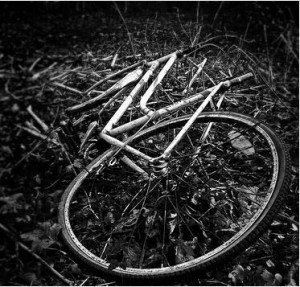 “… If intent equals goal, as Yoo said it does, then
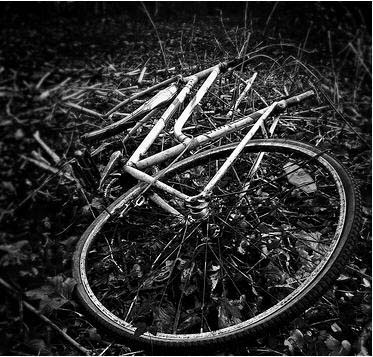
I am never your torturer.My intent is to get to work, not to run you down
on your bicycle.My intent is to pay the rent, not
participate in your magic tricks.You who had the misfortune to stand between me
& my intent, you arean escarpment to me, not a destination.
Though I may drive many miles
hearing this screaming
under the belly of my car–
just the muffler, a piece of sheet metal–some wire will fix it,
bound tight against the chassis, this chest. …”–Michael Broek (an excerpt from The Logic of Yoo)
-
Jeanie Wylie-Kellermann: ‘As We Light Candles’
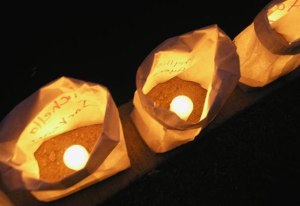 Thanks go out to my beloveds at Radical Discipleship for calling on our sister Jeanie Wylie-Kellermann this Advent:
“This Advent, as we light the candles in the dark and sing for Emmanuel, let’s be even more intentional than usual in clearing the commercial Christmas assault from our minds and hearts. Whatever God is calling us to has little to do with shopping and driving ourselves into a frenzy creating the “perfect” holiday. We need to honor the silence and the dark, to remember our stories, to teach the youth in our lives what we believe matters. We need to recall, to intuit, to dream the life we’re called to and then make a plan that allows us to strip down enough to have it. In the course of that, of course, we need to give thanks for all that we are and for those traveling in our circles and beyond.”–Jeanie Wylie-Kellermann (The Witness, 1998)
-
Ched Myers: What Prophetic Tradition Will You Apprentice To?
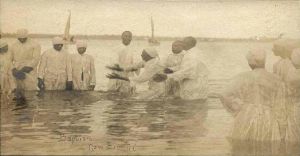
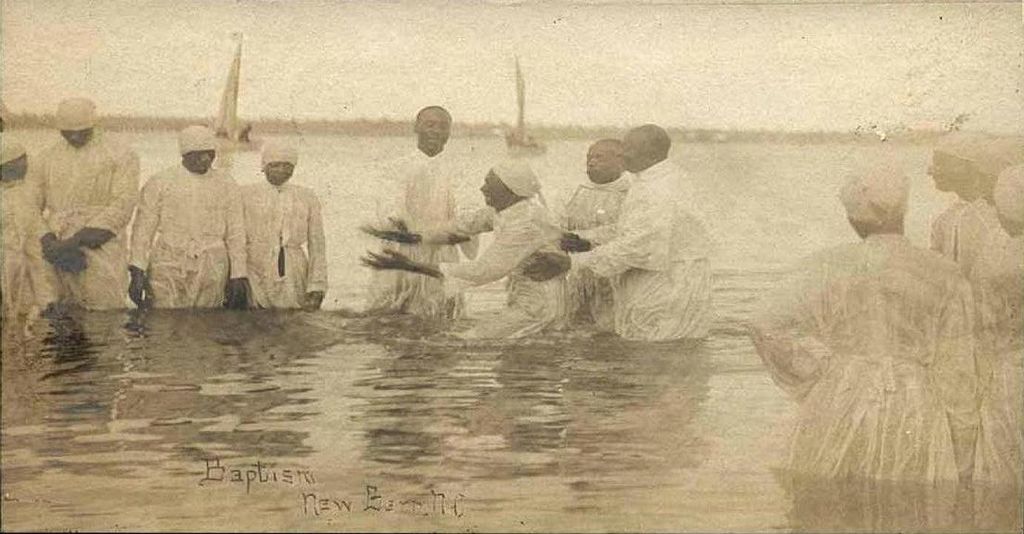
“Wade in the Water.” Postcard of a river baptism in New Bern, N.C., around 1900. “Mark’s prologue portrays the world of Roman-occupied Palestine in political, social, economic and religious crisis. Historically we know that in this context, tensions stemming from imperial forces of domination and “globalization” gave rise to prophets who called their people to radical change. John took his cue from the wilderness tradition, and Jesus from John. If we are to be followers of that Jesus, we must also make choices in the conflicted terrain of our world about what prophetic traditions we apprentice to and what social movements of liberation we help build as individuals and as church. However controversial or consequential such choices may be, such is what it means to be a disciple of the Great Disciple of God’s Kingdom.”–Ched Myers
-
Vatican to Release Report on U.S. Nuns Investigation
 After 5 years, the Vatican has announced it will make public the investigation of U.S. Catholic sisters that has so disturbed American Catholics and others around the world.
In 2013, I wrote in Sojourners:
“Even as Pope Francis washed the feet of women on Holy Thursday—a papal first—he reaffirmed in April the highly controversial interrogation and hostile takeover, initiated under his predecessor, of the Leadership Conference of Women Religious (LCWR), an organization representing the majority of U.S. Catholic sisters. On Holy Thursday in the juvenile detention center in Rome, Pope Francis explained the important symbolism of the foot washing. ‘It means, “I am at your service,”‘ he said to the youth. What an opportunity the pope has to extend this same gesture to Catholic nuns in the U.S.”
Some say Pope Francis was not properly informed about the unfolding process with U.S. Catholic sisters. Others say his inclination was not to overturn what was started by his predecessor. But all of his public acts indicated that open, positive, respectful conversation with women religious is something he deeply desires and knows that he needs.
Perhaps, in advance of Pope Francis’ visit to the U.S. next autumn, this tide too is turning. Here’s an excerpt from the Detroit Free Press:
On at least one front, the Vatican’s perceived war against America’s Catholic nuns may have reached a peace settlement.
On Dec. 16 at the Vatican, top Catholic church officials and three American nuns, including one from Michigan, will hold a press conference to publicly reveal the final report of a five-year investigation of congregations of Catholic sisters in the U.S., the Rev. Thomas Rosica, a Vatican spokesman told the Free Press.
The inquiry of nuns, known as an Apostolic Visitation, sparked a vast outcry by many American Catholics, who viewed it as an attack on the workhorses of the Catholic church, the women who taught and ministered to generations of Catholics and help run parishes and social outreach programs to society’s poor and marginalized.
Rosica, president of Windsor’s Assumption University, said he could not divulge contents of the report, but said it should allay the fears of many Catholic sisters about the investigation.
“It will hopefully be a very positive message for women religious in the United States,” Rosica said Tuesday, after he spoke at Detroit’s Catholic Cristo Rey High School, where he received hundreds of letters from students inviting Pope Francis to visit Detroit in 2015. …
Read the rest of the article here.
-
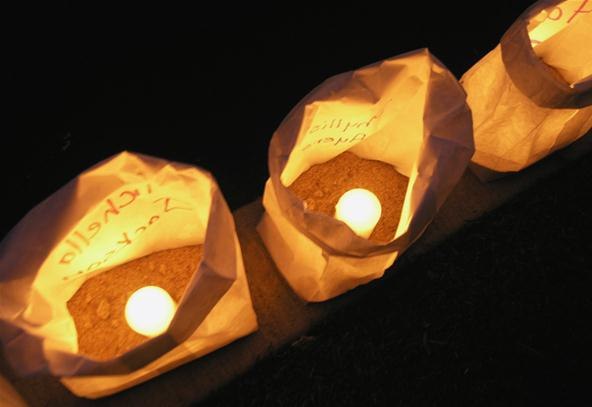
Iron City, PA: Found Prayers

I shot this photo from the car during our drive through Pittsburgh on Saturday as we went in search of Andy Warhol’s childhood home.
-
Joseph Ross: ‘Ferguson, Mo. Looking Like Money, Miss.’
 Not sure what to think about the Ferguson grand jury decision? Want to trust the justice system to work? Don’t understand why folks won’t just “let this go”?
Please read Joe Ross’ short excellent essay “Ferguson, Missouri Looking Like Money, Mississippi” excerpted below:
Yes, Ferguson, Missouri is looking a whole lot like Money, Mississippi. In 1955, two white men were charged, tried, and found not guilty in the murder of Emmett Till. Then they bragged about it to national magazines. Nothing could be done. The Mississippi “justice” system was built entirely in their favor. That’s how it’s looking in Ferguson today. The Washington Post reported this morning that Officer Darren Wilson was allowed to drive himself alone from the crime scene, wash blood off his hands at the police station, and enter his own gun into evidence. None of this should happen in a professional police department. But that’s the problem. Ferguson is not a professional police department. Apparently Officer Wilson and none of the other officers and detectives who arrived at the scene thought they were at a crime scene. They assumed. They knew. This is the picture of white privilege. And it’s an ugly picture.
With the report of this unprofessional and unethical behavior, no matter what one thought of the case, the very things we call “evidence” cannot be trusted. …
Read Joseph Ross’ whole essay here.


-
Subscribe
Subscribed
Have a WordPress.com account? Log in now.

