Vincent Medina (left) and Andy Galvan, Ohlone at Old Mission Dolores.
Franciscan priest Ken Lavarone is the current pastor of my home church in Sacramento, California. He is also the official “vice postulator” for the canonization of Spanish Franciscan priest Junipero Serra.
A “vice postulator” is the one that presents the case at the canonization Mass about the person’s life and what makes them worthy of sainthood. Fr. Ken has been intimately involved in the canonization process. One point of contention about Junipero Serra, who founded many of the California missions, has been the detrimental effect that the mission system has on many indigenous communities and the terrible legacies that some aspects of colonialism brought to the native people’s of the West.
So I noted with particular interest that two Ohlone men will be participating in the Mass and that the first scripture reading will be in Chocheyo, the Ohlone language. Both Ohlone men, Andy Gavan and Vincent Medina, are active in maintaining their native traditions and telling the story of Ohlone experiences at the Missions. Both are currently engaged in reclaiming the native experience at Old Mission Dolores (aka Mision San Francisco de Asis) in San Francisco.
Below is an excerpt from Fr. Ken Lavarone’s note in the bulletin to St. Francis Parish in Sacramento describing his role in the canonization and in the liturgy, which will take place about a mile from my house in Washington, D.C., next week.
by Ken Lavarone, OFM
The Holy Father will arrive in Washington D.C. from Cuba on Tuesday afternoon, September 22. On Wednesday morning he will meet with President Obama and greet the people of the USA in front of the Capitol. There will be a motorcade following this audience. The liturgy [for the canonization of Fr. Junipero Serra] will take place that afternoon at 1:15 pm PST outdoors on the east portico of the Shrine of the Immaculate
Conception against the backdrop of the buildings of the Catholic University of America. At Pope Francis’ request, the entire liturgy will be in Spanish with simulcast translation into English. …
At the beginning of the liturgy, as Vice-Postulator for the Cause of the Canonization of Junipero Serra, I will be proclaiming the biography of Junipero Serra in Spanish. Following this will be prayers and litanies, and the relic of Fray Junipero will be presented in the reliquary that was designed and crafted by a neighbor on F Street [in Sacramento], MariRose Jelicich, with her collaborator, Fr. Ron Schmidt, of the Oakland Diocese.
Andy Galvan, an Ohlone Native American who has promoted the canonization of Fr. Serra for over 25 years, will make the presentation of the reliquary to the Holy Father. This will be a great honor and privilege for Andy. Following the canonization, the reliquary will be presented to the Diocese of Monterey to be situated in a place of honor near the burial site of St. Junipero Serra at Mission San Carlos de Carmelo in Carmel, CA.
During the liturgy, another Ohlone man, Vincent Medina, will proclaim the first reading in Chocheyo (the Ohlone language). This is almost a lost language, but is being revived by the young Ohlone people. (more…)
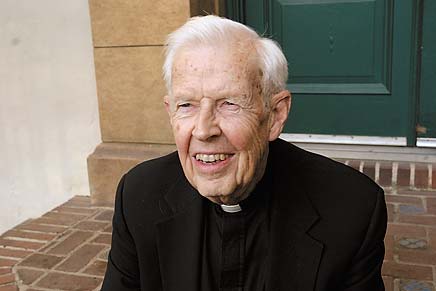
If anyone wants to understand my “Catholic DNA,” it will help to know that Bishop Francis A. Quinn (see below) confirmed me at St. Ignatius Catholic School in Sacramento when I was in 8th grade. God bless him!
A retired Catholic bishop in California is speaking publicly for the first time about his support for the ordination of women, saying he found “liberation” when Pope Francis encouraged bishops at the extraordinary synod last October to “speak boldly and listen humbly” about issues facing the church.
Bishop Emeritus Francis A. Quinn, who served as the bishop of Sacramento from 1980 to 1994 and gained a reputation for his pastoral nature, outreach to the poor and empowerment of lay leadership in the church, said in an interview with America on Sept. 16 that Pope Francis made it clear that bishops should not censor their opinions based on what they think the pope wants to hear.
“So I figured: Well, O.K.,” he explained.
On Saturday, just days before Pope Francis arrives in the United States for a three-city apostolic visit, Bishop Quinn said in an op-ed in the New York Times that the Catholic Church should consider optional celibacy for priests, the ordination of women, and allowing Catholics who are divorced and remarried (without an annulment) to receive Communion.
In the interview with America, Bishop Quinn said, “I personally think the Spirit is calling women to be deacons and priests, but the Spirit hasn’t yet communicated it to the teaching church. — Luke Hansen, S.J. (Read the whole article here.)
The World Meeting of Families in Philadelphia in September (and all the other related gatherings that have been pushed to the periphery, such as the global Women’s Ordination Conference)and the Synod on the Family in Rome in October (participants in which 99.75 percent are men) present opportunities for a more diverse image of what it means to be a Catholic family (large C or small).
Megan McKenna, Catholic spiritual writer and peace and justice advocate, has a great reflection based on John 21 (the “breakfast with Jesus” scene on the banks of the Galilee) on how important it is for the global Catholic family to come first to the table of Christ–as sisters and brothers, husbands and wives, children and parents, partners and singles–in a spirit of kinship and communion before launching into any conversations about “the definition of family,” who is in and who is out in marriage, and the education and raising of children. Jesus was notoriously non-conformist in who he identified as “family.”
Read an excerpt here:
This is how Eucharist is to be celebrated—drawing everyone back into intimacy, all forgiven with a shared meal, awkward though it might be among them. Jesus’ words—Children, come and have your breakfast—welcome back into my company—welcome home to my heart. We are one; we are in communion because of My love, My life, death and resurrection. Come and eat. …
This is how the Synod on the Family should begin—with a proclamation of the Good News to the Poor—with God’s simple invitation repeated again to everyone—come and eat; break bread with me; let me feed you. The opening prayer should be a greeting of welcome—a place to stand after Resurrection, as Jesus’ stands with all of us, no matter how we have behaved. Did the disciples deserve Eucharist and being drawn back into intimacy with Jesus?
…What if we admitted that we need a theology of marriage based on the mystery of the Trinity, where the third party is God, marrying the two persons. [even now the sacrament can be celebrated without a priest—the couple marrying one another in the presence of God, and having it witnessed later by a representative of the Church]. What if this sacrament—of two married in the presence of and with the Trinity speaks of communion and universal family and incorporation as one for all people, revealing the mystery of our God as community? …–Megan McKenna (Read more here.)
Download the whole article and read more about Megan McKenna here.
“Bienvenidos al Laudato Z’ine,” say the Vati-Cats. Welcome!
If you are here, then you are one of a select group to have heard about the Laudato Z’ine project, a kitchen-table experiment to spread the word about Pope Francis’ circular letter to the world (or encyclical) about climate change and integral ecology.
This started as a fun weekend project and has continued to grow. (And thanks to the good folks at Geez for a shout-out in their awesome Spring 2016 issue on watershed discipleship!)
Here are the pdfs for you to make your own Laudato Z’ine at home (page 1 and page 2 on 11 x 17 inch paper). LaudatoZine_page 1 and LaudatoZine_page2 (do not print these back to back. You will make two separate booklets, then glue them together.)
And here’s instructions on how to fold a book. Laudato Z’ine is actually two booklets pasted together, back to back. (more…)
Cipriana Juarez Diaz, mother of Gilberto Francisco Ramos Juarez, a Guatemalan boy whose decomposed body was found in the Rio Grande Valley of South Texas, cries during an interview at thier home in San Jose Las Flores, northern Cuchumatanes mountains, Guatemala, on Tuesday. (Luis Soto/The Associated Press)Rabbi Arthur Waskow of The Shalom Center in Philadelphia writes about our repentance, God’s renewal, and the earth’s regeneration, based on Genesis 21, a traditional scripture reading for the Jewish New Year:
On the first day of Rosh Hashanah, the traditional Jewish Bible-reading is Genesis 21. In it, Abraham’s second wife Hagar and his first son Ishmael are sent forth from Abraham’s family, with a leather-skin of water that is not enough to meet their needs in the dry wilderness.
In extremis, Hagar gently lays Ishmael beneath a tree and begins to weep as she fears his death. (The Torah uses the word Tashlich for this laying-down, teaching us that in the Rosh Hashanah ceremony of Tashlich we are not casting our misdeeds “away” into the flowing water, but seeking to transform their energies for the sake of Life, as Hagar did.)
Then, says the Torah, Hagar’s eyes are opened, and she sees the wellspring that she names “Beer Lachai Roi, The Wellspring of the Living One Who Sees Me.” It saves their lives. As I try to see this story, it seems to me that when Hagar’s eyes were opened, her tears poured forth so fully that she herself created the wellspring.
Today, all around the world we face the death of trees and the dearth of water, the deaths of many other life-forms and millions of our own Ishmaels. Many parts of Earth are becoming as scarce of water as was the ancient Middle East. As our planet heats and scorches, our Mother Earth is parched. She can no longer pour forth from her breasts the pure water that nurtures and sustains us. …–Rabbi Arthur Waskow (Read the rest here.)
“… modern ecology is absolutely central to the future of religion… Christianity specifically will gradually cease to exist if the natural world continues to be devastated at the present rate. There is a deep and dependent interrelationship between the development of religious attitudes and the sustainment of the natural world… human beings, living in a feedlot world where all wilderness has been destroyed… will slowly lose touch with the possibility of the development of culture, art, religion, and spirituality… we human beings will simply shrivel up spiritually and lose our ability to perceive and experience the deeper issues that give meaning to our lives and the transcendent reality that stands behind the natural world and all that is… ”–Paul Collins (God’s Earth: Religion as If Matter Really Mattered)
“In the companionship model, rather than the main action being prayers of petition from client to patron, the chief practice is attending to the memory of the dead in a way that energizes hope. Johannes Baptist Metz’s theology of the dangerous memory reveals the power of this practice, for such remembering disrupts the tyranny of the present status quo, summons up a future worth struggling for and sets our feet on the path of their unfinished business. Commemorations of the martyrs of El Salvador that inspire us to action on behalf of justice for the poor and celebrations of Mary Magdalene, first witness of the resurrection, that encourage us to promote women’s participation in ministry are good contemporary examples. This is not to say that we no longer call upon saints to pray for us; but this prayer occurs in a context of mutual sharing in the project of the reign of God. Remembering their dangerous witness, we become partners in hope.”–Elizabeth A. Johnson, CSJ
The earth is the Lord’s, and everything in it.
The world and all its people belong to him.
For he laid the earth’s foundation on the seas
and built it on the ocean depths….
Open up, ancient gates! Open up, ancient doors,
and let the King of glory enter.
Who is the King of glory? The Lord of Heaven’s armies—
he is the King of glory.
–Psalm 24:1-2, 9-10
From John Elwood, our friend and co-conSPIRITor over at Beloved Planet:
Virtually the entire global Christian Church has embraced Tuesday, September 1, as a Global Day of Prayer for Care of the Creation. Patriarch Bartholomew of the Orthodox Communion has long recognized the prayer day; recently, Pope Francis did so for the world’s Roman Catholics; and now, the Protestant World Evangelical Alliance, representing more than 600 million Christians worldwide, and the World Council of Churches have both endorsed the Day of Prayer.
You are invited you to participate in this first truly global response by Christians to our many environmental crises by joining in a Telephonic Prayer Meeting organized by Evangelical Christians engaged in various Creation Care ministries.
When? Tuesday, September 1, 8:00-8:50 PM Eastern, 5:00-5:50 Pacific
Call in instructions: Dial 1-302-202-1106 – Conference code: 381142 (Kindly mute your line upon connecting.)
Who’s involved? Representatives of the World Evangelical Alliance, the Lausanne evangelistic movement’s Creation Care Network, Care of Creation, Climate Caretakers, Sojourners, Young Evangelicals for Climate Action, the A Rocha Christian conservation ministry, the Christian Reformed Church, the Presbyterian Church and Christians for the Mountains, among many others.
How can I participate? Download the attached PDF prayer guide and join numerous speakers in scripture readings, devotions and prayer for our world, for repentance, for those in power, and for the church. And forward this email to your friends, small group members, pastors, family members and the like. There’s room for everyone to join in prayer!
Must read: Essence interview with Bree Newsome, who took down South Carolina’s Confederate flag. Like King’s “Letter from a Birmingham Jail,” Newsome’s sacramental action incarnates an energy of creative change far beyond itself.
On June 27, ten days after alleged White supremacist Dylann Roof massacred nine Black parishioners at Emanuel AME Church in Charleston, Brittany “Bree” Newsome, a filmmaker, hoisted herself up a 30-foot-high steel pole outside the South Carolina statehouse, unhooked the Confederate flag and carried it down. Newsome’s defiant act in the face of terrorism and racist hatred was part of an organized effort among a small group of protestors called The Tribe. ESSENCE spoke to Newsome about what’s next for her in the movement.
ESSENCE: First, how did you learn how to scale a pole?
BREE NEWSOME: An activist named Heather flew down from New York to train me. We went to a park and practiced on lampposts, basketball hoops, and then I got to practice on one flagpole. The very first attempt I made…I was just completely winded, thinking, I don’t know how I can climb 30 feet. Once I got the rhythm of it, it was fine. It’s actually more leg strength than arm strength.
ESSENCE: What was going through your mind as you were ascending to the flag?
NEWSOME: I was just so focused, because otherwise it would have been really easy to psyche myself out. When we were training, we practiced popping out of the car and climbing up…and just really focusing on the task at hand.
ESSENCE: Why was it so important for a Black woman to be the one to take down the flag?

 The World Meeting of Families in Philadelphia in September (and all the other related gatherings that have been pushed to the periphery, such as the global Women’s Ordination Conference)and the Synod on the Family in Rome in October (participants in which 99.75 percent are men) present opportunities for a more diverse image of what it means to be a Catholic family (large C or small).
 “Bienvenidos al Laudato Z’ine,” say the Vati-Cats. Welcome!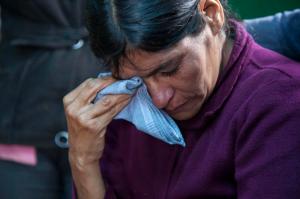



 Must read: Essence interview with Bree Newsome, who took down South Carolina’s Confederate flag. Like King’s “Letter from a Birmingham Jail,” Newsome’s sacramental action incarnates an energy of creative change far beyond itself.


