-
Fourth Wednesday in Advent
 When the time arrived for Elizabeth to have her child she gave birth to a son. Her neighbors and relatives heard that the Lord had shown his great mercy toward her, and they rejoiced with her. When they came on the eighth day to circumcise the child, they were going to call him Zechariah after his father, but his mother said in reply, “No. He will be called John.”–Luke 1:57-60
Mary is a variant of Miriam. Miriam was one of the three primary leaders of the exodus, along with Aaron and her brother Moses. She was a prophet. Both Mary and Miriam’s names carry the echoes of the word “bitter” (see Ruth 1:20) for the bitterness that was pressed down on the people in the time of Pharaoh and in the time of the Roman occupation of Israel and destruction of the Temple. In some translations Mary or Maryam’s name is “sea of bitterness.”
The story of Maryam, in Luke’s narrative, mirrors the crisis that caused Moses to flee Egypt. In Exodus 2:12, Moses murders an Egyptian soldier. It’s premeditated, and it’s an act of treason against Pharaoh. He “flees” (2:15) from his death sentence to the land of Midian.
Maryam also “flees” (Luke 1:39). Not because she has committed murder but because she is “untimely pregnant,” as Richard W. Swanson notes in his excellent article “Magnificat and Crucifixion.” Not only is she pregnant outside the clan arrangement, but it’s very possible that she belongs to a priestly family. This pregnancy, an affront to the social and religious order, is a crime that may be punished by death—either by stoning, strangling, or burning (according to the ancient legal tractates).
Maryam doesn’t wait to be dragged into the streets as part of an honor killing, as Swanson frames it. Instead, she heads for the hills of Judah—perhaps to the “castles and towers” (2 Chronicles 27:4) built there by King Jotham—where her kinswoman Elizabeth (or “Elisheva”) would offer her protection. Elisheva was a descendant of Aaron (Luke 1:5) and thus a powerful priestly leader in her own right, as well as with her husband, Zechariah.
What happens when Maryam approaches Elisheva’s gates? The baby in Elisheva’s womb leaps and dances in response to Maryam’s greeting—as David did before the Ark of the Covenant (2 Samuel 6:16). And Elisheva leads the gathered community in a loud song of rejoicing. She pours out her blessing on Maryam and on her baby—a sign of Maryam’s bravery and radical prophetic hope. Who am I, asks Elisheva—she of the priestly lineage whose family business it was to study the prophecies of God and believe they would be fulfilled—that I should welcome the one who truly believed that the promises of God would be kept?
What promises of God do you believe will be kept?
Ad……vent. A d v e n t (slowly breathe in on the “Ad” part and out on the “vent” part)…There! You prayed today. Keep it up!
With gratitude to Sojourners where this reflection first appeared in print.
-
Fourth Tuesday in Advent

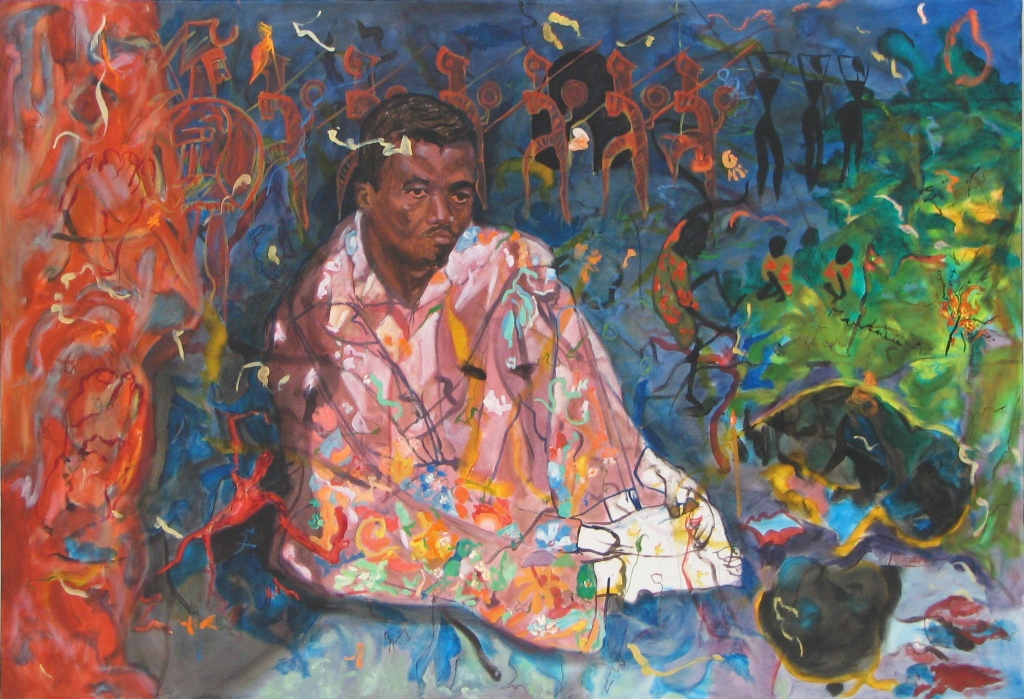
“The Story Teller: I Could Not Save Them” by Joel Klepac http://www.joelklepac.com “Zechariah asked for a tablet and wrote, ‘John is his name,’ and all were amazed. Immediately his mouth was opened, his tongue freed, and he spoke blessing God.”—Luke 1: 63-64
Zechariah’s muteness may not have been a punishment doubting the angel Gabriel’s rather outlandish promise that Elizabeth was pregnant. Rather, Zechariah’s muteness could have been a psychosomatic response to trauma. Sometimes it’s called “hysterical muteness.”
In the 1980s in Los Angeles, there was an epidemic of blindness among Cambodian women in their 40s. “Each of these recent immigrants had been a victim of the Khmer Rouge revolution and the violent regime that followed. The women struck with blindness,” scientists reported, “had all lived amidst the horrors of genocide. More specifically, each woman had witnessed the murder of a family member. Four years later, 200 such refugees went blind.”
“The blind are often unable to visualize images in their Mind’s Eye. Hence, they can no longer be plagued by images from traumatic memories,” said a neuroopthalmologist.
Zechariah had dedicated his entire life to God and to the temple. There is no evidence that he had ever had a mystical experience of the presence of God. What a shock it must have been! First, an angel appears to him. Second, the angel in effect tells him that the Messiah is coming. Third, that Zechariah will be the father of the “forerunner,” the reappearance of Elijah. (The fact that Elizabeth is well beyond childbearing years hardly seems to matter.) The fourth and final trauma is that Zechariah is confronted with his own words of doubt after a lifetime of outspoken faithfulness.
He fell silent.
“So now here we stand,” writes theologian Karl Barth, “simultaneously deaf and mute like Zechariah…. In spite of his unbelief, he was still a herald of Advent, one who waited for God.”
“O King of the Gentiles, yea, and desire thereof! O Cornerstone, that makest of two one, come to save us mortals, whom Thou hast made out of the dust of the earth!”
Breathe in. Breathe out. Ad…..vent.
-
Video: Will We Go Fast Alone or Far Together? by Nontando Hadebe
Catholic African theologian (and former Sojourners intern) Nontando Hadebe gives a 6-minute sermon on the fourth Sunday of Advent at Catholic Women Preach. She examines the readings through the lens of the African proverb “If you will go fast, go alone. If you will go far, go with others.”
-
Fourth Monday in Advent
 “That virginal quality, which for want of a better term, I call emptiness is the beginning of contemplation. … It is emptiness like the hollow in the cup, shaped to receive water or wine.”—Caryll Houselander, woodcarver and mystic
“Arise, my beloved, my beautiful one, and come! O my dove in the clefts of the rock, in the secret recesses of the cliff, Let me see you, let me hear your voice, for your voice is sweet, and you are lovely.”—Song of Songs 2: 13b-14
Christmas Eve is almost here. The Advent pilgrimage has been arduous or easy. We will arrive either “shipwrecked at the stable door” or on bended knee to “carol all most joyously.” But, we will arrive. Now is the time to open our hearts to the honey of that Holy Night.
How will Christmas Eve and Christmas day be spent? The Ukranian Orthodox have a wonderful tradition for Christmas dinner. Before Christmas Eve meal, the family fasts all day. Housecleaning is completed ahead of time. Everyone dresses in their finest. Music, resting, and receiving visitors are the order of the day. As evening approaches, the children are sent outside to spot the rising of the evening star. With its sighting, the meal officially begins. The host takes a bowl of custard and invites all the departed family members to share the Christmas meal and asks God that the household may have food enough to share throughout the coming year.
Another Orthodox table tradition is the communal sharing of bread and honey. The host takes a plate with small pieces of Christmas bread and a dish containing honey and salt. Dipping each piece of bread lightly into the honey, the host approaches each dinner guest, starting with the eldest, and says, “Christ is born.” The guest responds, “Let us adore Him.” If there are two hosts, then the ritual is repeated.
“O Key of David, and Sceptre of the house of Israel, that openeth and no mortal shutteth, and shutteth and no mortal openeth, come to liberate the prisoner from the prison, and them that sit in darkness, and in the shadow of death.”
Breathe in. Breathe out. Ad…..vent.
With gratitude to Pax Christi USA where some of these reflections first appeared in print.
-
Video: Prophet Isaiah Speaks at Standing Rock
Todd Wynward, author of Rewilding the Way, speaks a Christian interpretation of what has happened in Standing Rock in the last weeks.
Using Isaiah 62:1-4, Todd interprets the good news that came with the government’s overturning of the Dakota Access Pipeline, and joins in the Lord’s delight of the people, energy, and all who have opposed the DAPL.
Let the people say: Amen!
-
Pope Calls For Nonviolence in 2017 World Day of Peace Message
Pope calls for nonviolence in 2017 World Day of Peace message
U.S. religious leaders respondToday in his message “Nonviolence: A style of politics for peace,” for the 50th World Day of Peace, celebrated each year on 1 January, Pope Francis urges people everywhere to practice active nonviolence and notes that the “decisive and consistent practice of nonviolence has produced impressive results.”
Pope Francis writes: “The decisive and consistent practice of nonviolence has produced impressive results. The achievements of Mahatma Gandhi and Khan Abdul Ghaffar Khan in the liberation of India, and of Dr. Martin Luther King Jr in combating racial discrimination will never be forgotten. Women in particular are often leaders of nonviolence, as for example, was Leymah Gbowee and the thousands of Liberian women, who organized pray-ins and nonviolent protest that resulted in high-level peace talks to end the second civil war in Liberia.
“Nor can we forget the eventful decade that ended with the fall of Communist regimes in Europe. The Christian communities made their own contribution by their insistent prayer and courageous action. Particularly influential were the ministry and teaching of Saint John Paul II. Reflecting on the events of 1989 in his 1991 Encyclical Centesimus Annus, my predecessor highlighted the fact that momentous change in the lives of people, nations and states had come about “by means of peaceful protest, using only the weapons of truth and justice”. This peaceful political transition was made possible in part “by the non-violent commitment of people who, while always refusing to yield to the force of power, succeeded time after time in finding effective ways of bearing witness to the truth”. Pope John Paul went on to say: “May people learn to fight for justice without violence, renouncing class struggle in their internal disputes and war in international ones”.
“The Church has been involved in nonviolent peacebuilding strategies in many countries, engaging even the most violent parties in efforts to build a just and lasting peace. Such efforts on behalf of the victims of injustice and violence are not the legacy of the Catholic Church alone, but are typical of many religious traditions, for which “compassion and nonviolence are essential elements pointing to the way of life”. I emphatically reaffirm that “no religion is terrorist”. Violence profanes the name of God. Let us never tire of repeating: “The name of God cannot be used to justify violence. Peace alone is holy. Peace alone is holy, not war!”
U.S. religious leaders and nonviolence scholars and strategists are beginning to respond to Pope Francis’ message:
“There is no place for violence in a heart at peace and in a world that is just. As Pope Francis said, “Everyone can be an artisan of peace. ” We all can cultivate peace by looking within, committing to a spirituality of active nonviolence, by moving beyond our comfort zones to embrace the suffering of the world, and collaborating with others for a sustained just peace.”—Sister Patty Chappell, SNDdeN, executive director of Pax Christi USA
“In this advent time of waiting for the coming of the one who is peace eternal, we are grateful for the challenge of Pope Francis to commit ourselves to peacebuilding through active Gospel nonviolence. Let us join in solidarity with all who know the injustice of violence, oppression, and poverty to build God’s beloved community.”—Ann Scholz, SSND, Associate Director for Social Mission, Leadership Conference of Women Religious
“With his breathtaking World Day of Peace Message, Pope Francis has broken new ground by calling on people everywhere to unleash the power of active nonviolence as a way of life and as an effective alternative to the scourge of violence. This first official papal document on active nonviolence offers a way forward to build a more just, peaceful and sustainable world.”—Ken Butigan, senior lecturer, DePaul University, Chicago and Pace e Bene Nonviolence Service staff
(more…)Ann Scholz, Bishop Thomas J. Gumbleton, Boston College, Catholic Nonviolence Initiative, Center for Peacemaking, Conference of Major Superiors of Men, DePaul University, Detroit, Eli McCarthy, Franciscan Action Network, Gerald W. Schlabach, Global Catholic Climate Movement, Jean Stokan, John Dear, Ken Butigan, LCWR, Lisa Sowle Cahill, Marie Dennis, Marquette University, Mel Duncan, Missionary Society of St. Columban, nonviolence, Nonviolent Peaceforce, Pace e Bene, Patrick Carolan, Patty Chappell, Pax Christi, Pope Francis, Scott Wright, Sisters of Mercy, SNDdeN, SSND, Terrence Rynne, University of St. Thomas, WDP17 -
Video: Live Chat with Rose Berger & Betsy Shirley on Catholic Nonviolence Initiative
Here’s a 30 minute chat with Sojourners editors Rose Berger and Betsy Shirley on the “Game Changer?” cover article in Sojourners’ December 2016 issue. (Link to this video.)
It was great to have live questions from the Facebook audience!
Find out more about the Catholic Nonviolence Initiative and sign an Appeal to the Catholic Church to Recommit to the Centrality of Gospel Nonviolence.
Get ready for the 50th anniversary of the World Day of Peace on the theme of Nonviolence.
-
Second Tuesday in Advent
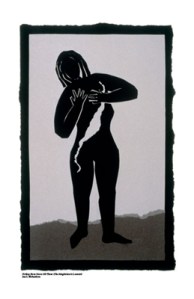
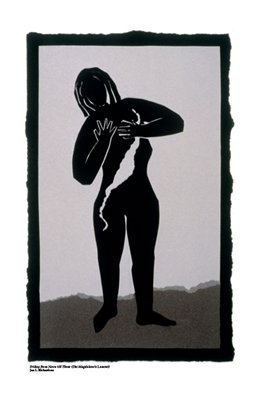
Magdalene Lament by Jan Richardson Artist and pastor Jan Richardson has a blog called The Advent Door that’s packed full of wonderful stuff. Take a peek at what can happen when the artist encounters the scripture without benefit of overly-proscriptive legalisms. Richardson also works a small press, Wanton Gospeller Press, where she designs and hand-binds books. Her caravansarai in the virtual desert is a welcome one.
Here’s an excerpt from Richardson:
Hearing what others notice in my artwork has provided a good reminder of what a multivalent and revelatory process art is. As an artist, I live with an awareness that each image I create reveals something about who I am, including some things that I may not necessarily intend for my work to reveal. The ways that I see, the experiences and stories that I carry, my skills as well as my shortcomings, my creative vision as well as my blind spots: all these aspects and more enter into the artistic process, entwining themselves with my work and giving form to it. I’ve found that it’s best not to fixate too much on what might become revealed in the process, otherwise I would never be able to send any of my work into the world.
-
Advent Poem: The Rim by Rose Marie Berger

The Rim
The meaning is in the waiting. —R.S. ThomasLike a silver goblet, Advent
slips round again passing through heatand the End of Days a darkness
too searing for the lip. Smithsengrave the old year beneath
the rim. Tradition keeps memorygradual. The pedestal base round
as the new year full of what liesahead. Is it hope? Or simply
the exodus of this generation
into the flames of the one coming.–Rose Marie Berger (for Lydia Wylie Kellermann, 2016)
Thank you to Radical Discipleship where this poem first appeared.
-
First Friday in Advent – A Meditation

Grace Foretold by Makoto Fujimura An Advent Meditation
by Rose Marie BergerThis is to all who serve on the human front, wearing any mask that will get you home. A word: While we are all dying to get out, there is one who died to get in. Disguised as one of us, this one came creeping over enemy lines, across the DMZ, relying on our infatuation with innocence just long enough to secure the passage. An instant later the yapping jaws snapped shut in a slaughter of all innocents—cutting the tongues off all to silence the one.
This is to you who wake up daily on the front lines of life, in the dystopia of the modern world where each one ticks like a clock or bomb; where young ones cut themselves on the fractured edge of a post-modern morning; where Gens X, Y, and Z trade their parents’ headlong linear flight into oblivion for the virtual rush of binary bungee jumping. Just how deep does this rabbit hole go?
And to you broken ones who wander the front lines picking rags and plastic bags; who hoard IRAs and modest portfolios and chances at the Daily Double. And it’s to you in the second wave up all night stringing together code to bind up the mainframe, twisting it into a safety net to keep us from breaking our necks in the fall. (Or is it a trip wire and we’ll all go together when we go?)
Homo sapiens have evolved. Now we are Homo sapiens sapiens. We are two-headed like Eng and Chang the Siamese Twins—but our heads are from different countries with no common tongue. Our symbols flash like broken traffic lights, or fall through our teeth like abandoned cars, condoms, a passed-up penny, only to the level of the collarbone. They lodge there, useless, against the lump in our separate throats.
Busted. It’s all busted. “The repairman,” repeats the recorded message, “is out of cell phone range.”
WE WEREN’T CONSCRIPTS to civilization. We volunteered. Certain that God was on our side, we wielded sword and scythe for the greater good, for the less fortunate. We fought the good fight. We picked up the hitchhiker, sheltered the homeless, and visited the prisoner. We tried to love neighbor, love God, stay within the speed limit, and pay our parking tickets. And yet the Tin Man—who holds high his award for good deeds, a ticking clock in the shape of a heart—is still a golem; only now something keeps him up at night.
Even you nihilist Nephilim riding shotgun on the “civilizing” project with your Glock .40s, AK-47s, or trigger-rigged lap tops; you who let your eyes be plucked out so as not to see a human soul, how’s that lifestyle working out? You still spew black spit, rotting from the inside out? Remember when mornings came like a stay from the governor? Now they are another practice mark on the tender flesh of the wrist—foreshadowing death by a thousand cuts. This letter is addressed even to you.
And to you little ones, anawim, refugees from our shifting architectures of moral adjustment; you with a leg or arm or child trapped under the collapsed facade of Christendom; you who are relegated to roll-your-own welfare lines who wake every morning in this bloody horror. (Can’t someone make that child stop screaming?)
“THE ADVENT OF CHRIST in history is not essentially bound up with the development and progress of Christian ‘civilization,’” writes Thomas Merton.
A heartbeat. A breath.
In the dark someone is brooding over us. Someone from home has smuggled a word across enemy lines, over the burning barricades, under the iron grate. It says only this: You are not alone.
That light in the east is a signal flare, flashing “Follow me. Follow me. Follow me.” On the smoke-laden horizon there is a tiny string of lights, barely perceptible, bobbing. Tapers perhaps, hand-held, and a faint erratic melody. Flesh of my flesh.
Rose Marie Berger, an associate editor at Sojourners, is a Catholic peace activist and poet. This first appeared in the November-December 2001 issue of Sojourners.

-
Subscribe
Subscribed
Have a WordPress.com account? Log in now.

