-
Peace Prayers at St. Nicholas Church in Leipzig (and not Ronald Reagan) Brought Down the Berlin Wall in 1989

"Monday demonstration" in Leipzig on October 23, 1989, five days after the forced resignation of Erich Honecker. As the world marks the 20th anniversary of the crumbling of the Berlin Wall, I want to highlight a story that you won’t see in the mainstream news: how Christian nonviolent action was the lynch pin that set the stage for the wall to come tumbling down.
I remember exactly where I was and who I was with on the day the wall got a hole punched through it. It was the beginning of the collapse of Communism. The Soviet empire imploded. The Cold War that had left millions dead through starvation, poverty, nuclear brinkmanship, and “Red tide” skirmishes began its slow decline. Yesterday’s Wall Street Journal notes, what Friedrich von Hayek so aptly called the fatal conceit was in retreat.
Several months ago I came across a remarkable story by Lutheran peace activist Bonnie Block on faith-based peace action in East Germany in the 1980s that set the stage for the crumbling of the Berlin Wall. I asked Bonnie if I could reprint it here. She replied, “Yes, I wrote this article in 2001 and would be delighted to have it distributed. We so often do not hear the stories of nonviolent action and thus it’s easier for the culture to convince us that violence works.”
Amidst a global economic recession and the potential end to U.S. imperial hegemony, I’ll posit that market capitalism is also a fatal conceit that is now in retreat. And the acts of faithful Christians who act out of Jesus’ ethic of nonviolence on behalf of human dignity are and will be the leaders of this revolution too. As the president of the German Democratic Republic said at that time, “We had planned everything. We were prepared for everything. But not for candles and prayers.”
Read Bonnie Block’s article below:

Protests during the Church Congress in Leipzig (July 9, 1989) In early November 2001, I was one of eighteen members of two Lutheran congregations in the Madison, WI area who visited the former East Germany as part of a 13-day “heritage tour.” I knew that the churches of East Germany had been vital to the nonviolent revolutions which brought down the Communist governments of eastern Europe in 1989. But hearing and reading the stories of people who were involved in this historic time, actually sitting in the pews of one of those churches and lightening a peace candle there, has strengthened my resolve to practice nonviolence.
The place we visited is the Nicolaikirche (St Nicholas Church) built in 1165 in the center of a cobblestone square in the inner city of Leipzig. The story actually begins in the late 1970s or early 1980s when there were huge demonstrations all over Europe to protest the arms race. But in East Germany there was no neutral space to discuss and reflect on public issues except for the churches. It was in this context that a youth group from a congregation in eastern Leipzig started “peace prayers” every Monday at 5 pm at the Nicolaikirche. Soon “Bausoldaten” (people who rendered their compulsory military service by serving in special, unarmed units) came, followed by environmental activists and people interested in third world issues. Together they tried to stir the public’s conscience and encourage action.
That made the Stasi (State Security Police) and SED (the ruling Communist Party) officials come to see what was going on. Soon applicants for emigration and other regime critics came — along with Christian and non-Christian citizens of Leipiz and other parts of East Germany. The government reacted. From the May 8 1989, the access roads to the Nicolaikirche were checked and blocked by the police. Later the autobahn exits to Leipzig were subject to large-scale checks or even closed during the time of the prayers for peace. Monday after Monday there were arrests or “temporary detentions.” Yet the people continued to gather.
By September, the 2000 seats in the church were filled and people coming out of the church were joined by tens of thousands waiting in the Square outside. All held lighted candles in their hands and slowly they began to move toward the ring road that surrounds the city center. Helmut Junghans, a retired professor at the University of Leipzig said: “It started with 5 or 6 but each week there were more of us praying for peace. Eventually we filled the church and then the square around the church and then we spilled onto the ring road surrounding the old part of Leipzig. Eventually there were 300,000 of us marching past the Stasi headquarters. Chants of ‘We are the people’ began and then soon changed to ‘We are one people.’ But there was not one broken shop window and there was no violence.”
October 7, 1989 was the 40th anniversary of the GDR. The authorities cracked down and for ten long hours uniformed police battered defenseless people who made no attempt to fight back and took them away in trucks. Hundreds were locked up in stables in Markkleeberg. The press published an article saying it was high time to put an end to the “counter-revolution,” if need be, by force.
On Monday, October 9, 1989 “everything was at stake” because the order to shoot the protesters had been given. Rev. C. Fuhrer, describes the day as follows:
1,000 SED party members had been ordered to go to the Nicholaikirche. Some 600 of them had already filled up the church nave by 2 pm. They had a job to perform like the Stasi personnel who were on hand regularly and in great numbers at the peace prayers. And so it was that these people, including SED party members, heard from Jesus who said: “Blessed are the poor”! And not: “Anyone with money is happy.”
Jesus said: “Love your enemies”! Instead of: “Down with your opponent.” Jesus said: “Many who are first will be last”! And not: “Everything stays the same.” Jesus said: “For whosoever will save his life shall lose it and whosoever will lose his life for my sake shall find it”! And not: “Take great care.” Jesus said: “You are the salt”! And not: “You are the cream.”
The prayers for peace took place in unbelievable calm and concentration. Shortly before the end, before the bishop gave his blessing, appeals by Professor Masur, chief conductor of the Gewandhaus Orchestra, and others who supported our call for non-violence, were read out. This mutuality in such a threatening situation is also important, this solidarity between church and art, music and gospel.
And so these prayers for peace ended with the bishop’s blessing and the urgent call for non-violence. And as we–more than 2,000 persons–came out of the church–I’ll never forget the sight–tens of thousands were waiting outside in the Square. They all had candles in their hands. If you carry a candle, you need two hands. You have to prevent the candle from going out. You cannot hold a stone or a club in your hand. And the miracle came to pass. Jesus’ spirit of nonviolence seized the masses and became a material, peaceful power. Troops, industrial militia groups, and the police were drawn in, became engaged in conversations, then withdrew. It was an evening in the spirit of our Lord Jesus for there were no victors or vanquished, no one triumphed over the other, and no one lost face.
Not a shot was fired. On Monday, October 16, the peace prayers continued (as they do to this day) and 120,000 people were in the streets of Leipzig demanding democracy and free elections. On October 18, Erich Honecker, the leader of the ruling SED party resigned. Nonviolent protests were held all over Germany, including one with one half million people in East Berlin on November 4th. On November 7, 1989 the entire government of the GDR resigned. On November 9th the crossing points of the Wall in East Berlin opened. Seven months later the entire border regime of the GDR (symbolized by Checkpoint Charlie) came to an end. On October 3, 1990 Germany was reunified.
Sindermann, who was a member of the Central Committee of the GDR, said before his death: “We had planned everything. We were prepared for everything. But not for candles and prayers.”
Block lives in Madison, WI, and was the national coordinator of Lutheran Peace Fellowship during the early 1990s and chair of the National Council of the Fellowship of Reconciliation in 1995. She would like to thank Herb Brokering for his reflections on the pilgrimages he made to the Eastern Germany before the fall of the Wall and which were available for reading on the bus during our journey in 2001.
1989, anniversary, art, Berlin Wall, Bonnie Block, candles, Christian, Cold War, Eastern Europe, empire, Fellowship of Reconciliation, Friedrich von Hayek, German Democratic Republic, Helmut Junghans, Leipzig, Lutheran, Lutheran Peace Fellowship, Nicolaikirche, nonviolence, November, peace, protest, Reagan, Rev. C. Fuhrer, Sindermann, Soviet, Wall Street Journal -
Burnham: The Absence of a Gender Justice Framework in Social Justice Organizing
 Two things are happening with this post. First, I’m playing with a new program – Embedit – that lets me embed marked up files. (See below. It’s ugly but it works.)
Second, I’d really like to generate some interaction on this topic of Gender Justice in Social Justice Organizing.
With a few decades logged now in the faith-based social justice scene, I’ve noticed that gender justice has fallen by the wayside as a core component of faith-based social justice work. There’s been a resurgence of misogyny – especially in conservative Christian rhetoric (which has seeped into popular cutlure). There’s been a resurgence of the teaching called “complementarianism” (as opposed to egalitarianism) among many mainstream evangelical churches. (As one blogger puts it: “Complementarianism is a complicated series of intellectual gymnastics justifying the assignment of authority to men on the grounds that authority is but one among many roles played by human beings.”) And my beloved Catholic church still can’t accept that Mary Magdelene was the first apostle and should be the model for women in the priesthood.
Many of the younger folks I meet really have little-to-no gender justice analysis – and find no need for any. But as the young women get a little older and begin to encounter patriarchal power resistance, then they are totally confused about what they are experiencing.
I found Linda Burnham’s paper – while inadequate on the faith perspective – to be insightful and challenging. What do you think? (See some of her key quotes at bottom.)
http://embedit.in/csS727OMPI.swf
QUOTES THAT I FOUND SIGNIFICANT:
“I have observed, over many decades of activism, that it is possible today to consider oneself a committed social justice organizer or human rights advocate yet have no functional understanding of how sexism operates.”
“I have witnessed the frustrations of women who are working in the context of mixed-gender organizations, networks or coalitions. Too often their efforts to introduce gender issues are resisted or undermined, or, despite their interest in incorporating a gender lens, they can’t figure out where to begin.”
“Staff and leadership development are rarely conceptualized or implemented in gender sensitive ways.”
“The presence of women in leadership is no guarantee that a gender justice framework will be in play.”
“For the purpose of this project, my working definition of a social justice organization is one whose social change work is based on the presumptions that:
(1) Problems of inequality, injustice and discrimination are not primarily individual and attitudinal but are based, more fundamentally, on structural, systemic and institutional inequities.
(2) Visions and strategies for change have to target the structures, systems and institutions that sustain and reproduce these inequities.
(3) This means directly challenging the power(s) that is vested in the status quo.
(4) A core strategy for doing so is to empower, mobilize and organize grassroots constituencies, implementing a bottom-up theory of change.”“Several of those interviewed felt either that gender was rarely, if ever, incorporated in their organization’s work; or that it was incorporated in unsophisticated, unskillful ways; or that it was only brought up for consideration in relation to potential sources of funding.”
Interviewee: Gender is generally not incorporated. We have a highly developed race analysis and training for members and staff in race analysis. It’s constantly integrated into our framework and analysis of issues, not just a matter of strategy and tactics. But this level of analysis doesn’t exist in terms of gender.
“Two respondents mentioned that gender had come up in terms of funding strategy. When organizations approached women’s foundation they would emphasize the inclusion of women in a particular programmatic initiative, while having no functional analysis of gender, no gender-specific programming, and no gender-specific measures of evaluation. In other words, gender was used as a “funding hook” without any organizational commitment to developing consistent gender politics.
Interviewee: When women operate in an arena where there are women and men, women don’t control the discourse; we’re the add-on. At the same time, women-only spaces are marginalized. Gender is still regarded as a special interest; it’s dismissed into the gender ghetto.
Interviewee: We’ve made it to the first stage: There’s more women’s leadership and a rhetorical commitment to gender equality and against patriarchy. But, we haven’t figured out how to navigate the second stage. How do we lead on gender issues in multi-gender, multi-racial formations?
Interviewee: In the older generation, there was a lot more identification with feminism, along with a critique of mainstream feminism. No one really identifies as a feminist anymore. Some people think there’s already a level of equity and there’s no need to struggle over it anymore.
Interviewee: My generation has a set of cultural politics with no structural analysis, either on race or gender.There’s nowhere for folks 20-35ish to get that. It’s all about culture and identity and the oppression Olympics. Cultural and representational issues become a stand-in for structural analysis. We have to identify interventions that match the scale and nature of the problems.
“Male dominance was expressed by men calling the shots,bypassing the process and speaking on behalf of everybody. When women raised objections to this behavior they were in turn criticized for being out of touch with their own ethnic culture.”
Interviewee: When people don’t handle it [bad gender dynamics and practices], it backfires into the organization and we have no analytical handle or tools to figure out how to deal with it. As with race, if you don’t handle it, it will handle you.
“The absence of a gender justice lens means that the leadership of women and women of color is not identified as an explicit goal; those organizations that are using a gender lens are marginalized; and the case for gender sensitive organizing has to be made over and over again, with little momentum gained.”
“Two of those interviewed spoke to age as a complicating factor in addressing gender dynamics. Specifically, as young women they had encountered situations in which older men used their extended experience and status as quasi elders as a cover for undermining the work of younger women or shielding themselves from criticisms of sexism. One activist tagged this as “patriarchy 2.0,” i.e., not a blatant violation of gender practice, but a way to maintain their status and take up space while undermining the women who were doing the work. In this dynamic, younger men were paralyzed. They saw it, raised it to the women, but said nothing to the group or to the older men. They were complicit in sexism because they valued their strategic relationships with the older men and didn’t want to be on their shit list. It was confusing and silencing.”
Wow! Let me know what you think by sending me your comments.
-
Scott Cairns’ Poem ‘This The Morning’
 I can’t remember when I first met Scott Cairns, but we’ve held (for my part) an affectionate regard over many years. I love Scott’s poetry and his imbued sense of liturgy from his Christian Orthodox perspective.
I was really honored that he responded to my request for a poem from him for Sojourners magazine. (It’s in the December 2009 issue.) I especially love listening to the audio of Scott reading the poem and then responding to a few questions by Sojo assistant editor Jeannie Choi.
Listen to Scott read his poem.
This the Morning
by Scott CairnsThis is the Month, and this the happy morn
Wherein the Son of Heav’ns eternal King,
Of wedded Maid, and Virgin Mother born,
Our great redemption from above did bring …
—“On the Morning of Christ’s Nativity” by John MiltonThe issue is, of course, to apprehend
how time’s allegéd passing fails to hold
sufficient grip on what does not depend
upon our moment. The timeless will not fold
quite so neatly into now and then,
but spans a space, vertiginous, and we
may of an instant become likewise drawn
into a mode of being where we see.Which is to say, His coming now, this day
is likely to be figured best as prime
occasion to observe the truth that we
dwell likewise in a realm outside of time.
As we lean into prayer this year, let’s say
as one: Come Christ God, come this very day.Scott Cairns is the director of the creative writing program at the University of Missouri. His newest book is The End of Suffering (Paraclete Press, 2009).
-
Sunni, Shia, and Me: Marie Dennis on Traveling in Iraq
 My friend – and hero in the faith – Marie Dennis recently returned from a trip to Iraq. She was a member of a religious peace delegation meeting with Iraqi leaders to hear first-hand “facts on the ground” for civilians in the war-shattered country.
If, as people of faith, we want to be about “the things that make for peace” then we need to spend time with the voices and perspectives of those in situations of violence. This often involves personal risk – but what else are these lives for unless for living them joyfully and laying them down in the service of others. Marie is someone who lives this in a daily way. Whether she’s meeting with world leaders, sitting with women in a village in Sudan, making bread for her Christian community, or “mothering” her 6 grown children, Marie Dennis is “my kinda Christian.”
Here’s a portion of her story:
Thanks to repeated kidnappings and numerous killings, fear palpably gripped many communities we met in Iraq. Msgr. Louis Sako, Catholic archbishop of Kirkuk, who welcomed our small Pax Christi International delegation in mid-September 2009 with warm and generous hospitality, moved deliberately into the fear: “Christians are a target of violence,” he said publicly, following the recent kidnapping of a Christian nurse. “Everybody knows that Christians are citizens of this country and this city and no one has any doubts about their devotion to their country or their sincerity.” He spoke of “a culture of humiliation that we reject with force” and called on “government authorities, the decent people of Iraq and Kirkuk, to do everything to protect all citizens, whoever they are.”
A prophetic figure who has exemplified his own call for “dialogue and sincere cooperation,” Msgr. Sako insists that the cooperation he regularly facilitates with both Sunni and Shiite religious leaders in Kirkuk is an essential element of peace-building in Iraq. Like many other Iraqis, he asserts that there is no military solution to the present violent chaos in Iraq, but that the United States, having started a dreadfully destructive war there, has to be held accountable for healing and reconstruction.
The challenge to overcome fear and plant seeds of peace in Iraq is a huge one; fear is pervasive – and with good reason. We did not see many U.S. troops while we were there, but one Iraqi priest described to us a typical encounter with the U.S. military, which previously happened frequently. Iraqis were required to stay at least one kilometer from any U.S. vehicle. If they wandered any closer than that, they could be shot. He told us about one family he knew that apparently crossed the invisible one kilometer line; mother, father and children were all killed. He described his own fright when he realized, as he was driving along, that he was “marked” on his forehead with an infrared beam and could be killed if he didn’t immediately stop or when he suddenly came upon U.S. soldiers with weapons pointed at
his heart. He was terrified; so were the U.S. soldiers on the other end of the gun.Fear, fear of the “other.” Anyone could be a suicide bomber intent on attacking foreign troops. Anyone could be a kidnapper intent on abducting a well-known Christian. Anyone could be an assassin. Fear in all directions. Yet, Msgr. Sako, like so many others we met as we travelled across the north of Iraq from Kirkuk to Erbil to Mosul and Dohuk, was fully engaged in creating a new Iraq in spite of deep and tragic damage from the most recent U.S. war there. Cooperation and friendship among religious leaders in Kirkuk; coeducational, interreligious schools and an open university that bring together Sunni and Shiite Muslims, Christians, Yezidie and Turkmen to provide a base of human values and an introduction to human rights; the commitment of the Dominican sisters of Mosul to peace education at a primary level; dedicated health care professionals in Kirkuk who serve Muslims and Christians alike; and LaOnf, the Iraqi nonviolence network, left a lasting impression on our delegation.
Fear always sees “the other” as a potential enemy. Fear demands control and often turns us into enemies ourselves. Fear, even well grounded fear, can be paralyzing. Excessive fear can keep whole societies from avoiding or moving beyond violent conflict. War itself always deepens fear, yet war too often finds its roots and rationale in fear. Instead of calming fears about potential terrorist attacks, U.S. political leaders orchestrated fear to garner support for war in Afghanistan and Iraq.
What I saw in the early days of the U.S. war in Afghanistan and what I saw in Iraq a few weeks ago was fear exacerbating fear. Genuine security cannot be built on a foundation of fear. Many wise Iraqis, including Bishop Sako and his Muslim friends in Kirkuk, know that well. They are witnesses to the power of cooperation, even across vast cultural, religious, political and social differences. The Obama administration claims to understand that international cooperation and dialogue toward inclusive global security would be a more fruitful route to peace than unilateralism and war. We will continue to pray and work to ensure that the administration will demonstrate that belief in U.S. policy toward Afghanistan, Iraq and Iran.— Marie Dennis
Marie Dennis is director of the Maryknoll Office for Global Concerns and co-president of Pax Christi International.
-
Italy Convicts CIA on ‘Extraordinary Renditions’ but Citizen Planespotters Were Way Ahead of the Story

Canadian Maher Arar was "rendered" by CIA to Syria and tortured though courts "could find no crime against him," as Pilate said (John 18:38). An Italian judge convicted 23 former agents of the U.S. Central Intelligence Agency in the first trial testing the legality of so-called “extraordinary rendition” or government-sponsored kidnapping in which terror suspects were picked up by U.S. agents operating secretly on foreign soil and transported to interrogation sites. The Americans were tried in absentia. The CIA’s Milan station chief Robert Seldon was sentenced to an eight-year prison term, and the other 22 defendants received five-year terms. The U.S. refuses to extradite the former agents.
Abu Omar, under surveillance by Italian police at the time of his abduction on suspicion of recruiting militants for Iraq, was secretly flown from Aviano airbase in northeast Italy via Ramstein base in Germany to Egypt, where he says he was tortured and held until 2007 without charge.
In a December 2007 interview, Abu Omar told Human Rights Watch that he was violently abused upon his arrival in Egypt. “You cannot imagine,” he said. “I was hung up like a slaughtered sheep and given electrical shocks.”
“I was brutally tortured,” he continued, “and I could hear the screams of others who were tortured too.” While in one prison in Egypt, Abu Omar wrote an 11-page letter that described his torture in graphic detail. He was finally released from prison without charge in February 2007.
It is the first case to contest the practice of “extraordinary rendition” under the administration of former U.S. President George W. Bush, in which terrorism suspects were captured in one country and taken for questioning in another, where interrogation techniques were tougher.
 One of the “secret” rendition air strips is at the Johnston County airport in Smithfield, North Carolina. The renditions were subcontracted from the CIA to Aero Contractors. An innovative group of citizen PlaneSpotters has tracked rendition flights.
On November 18, 2005, forty members of Stop Torture Now delivered a “peoples’ indictment” to Aero Contractors’ headquarters in Smithfield. Fourteen members of the group were arrested for second degree, misdemeanor trespass, and the event was widely covered by the media, including the Raleigh News & Observer (see here).
Citizens’ Indictments, written by The Center for Theology and Social Analysis in St. Louis, were delivered to Johnston County officials.
Currently, the faith-based and citizens’ group Stop Torture Now is attempting to ban Aero Contractors from use of their county airport.
Maybe if the Italian courts and the U.S. citizens’ groups upholding the law against torture join forces, we can wrestle our national soul back toward righteousness.
-
Dorothy Day: Previously Unpublished 1933 Essay ‘Our Brothers, The Jews’ Published for First Time

Dorothy Day, 1925 Fr. Charles Gallagher has discovered a previously unpublished essay by Catholic Worker co-founder Dorothy Day, which lay in a correspondence file in the Dorothy Day-Catholic Worker Collection at Marquette University. I’m stunned!
Dorothy Day was a lay Catholic woman with radical politics, a deeply rooted faith, and a phenomenal amount of courage. She co-founded the Catholic Worker movement with Peter Maurin in the 1930s.
The manuscript titled Our Brothers, The Jews was written in autumn 1933. It is published for the first time in the November 2009 issue of America magazine.
Five years before Adolph Hitler became “The Fuhrer,” when he was still chancellor of a coalition government and head of the Nazi party with the Nazis holding a third of the seats in the Reichstag, Dorothy Day called to account Catholics who supported and fostered Hitler’s hate-based political agenda in the U.S.
Her point of view was very unpopular at the time. So unpopular in fact that she had a hard time getting her essay published anywhere. (America magazine rejected it when she submitted it to them in 1933.) But race-baiting and Jew-hating was on the rise in the U.S. and Catholic speakers in Brooklyn, near where the Catholic Worker was based, were drawing cheering crowds when they excoriated Jews.
“She keenly foresaw the dynamic that five years later would lead to the rise of Brooklyn’s powerful Christian Front movement and its quasi-terrorist anti-Semitic plot, which was scuppered only by a spectacular set of arrests in early 1940 by J. Edgar Hoover’s Federal Bureau of Investigation.
Day’s warning about how Catholics ought to deal with Hitler rested on two of the main pillars of her faith—scriptural reflection and concern for social justice. Her deep beliefs rested on an apostolic zeal that held out the possibility for all men and women to be fully integrated into the mystical body of Christ,” the editor’s note concludes.
Here’s an excerpt from Day’s essay:
For Catholics—or for anyone—to stand up in the public squares and center their hatred against Jews is to sidestep the issue before the public today. It is easier to fight the Jew than it is to fight for social justice—that is what it comes down to. One can be sure of applause. One can find a bright glow of superiority very warming on a cold night. If those same men were to fight for Catholic principles of social justice they would be shied away from by Catholics as radicals; they would be heckled by Communists as authors of confusion; they would be hurt by the uncomprehending indifference of the mass of people.
God made us all. We are all members or potential members of the mystical body of Christ. We don’t want to extirpate people; we want to go after ideas. As St. Paul said, “we are not fighting flesh and blood but principalities and powers.”
Read the whole essay here.
The discovery of this Day manuscript is astonishing–for its historical resonance and insight into social activism. Day’s examination of hate politics from the perspective of her deeply rooted Catholicism provides us with clues for today. It forces the question: How do we bring scriptural reflection and the concerns of social justice to bear on the Tea-Partyers, Rush Limbaugh, Glenn Beck, Lou Dobbs, and others who use hate as a political strategy to gain power?
I was particularly touched by the comments of one contemporary reader of Day’s article who wrote, “I am an 80 -year- old Jew who lived thru the 30s in New York, and my hard heart is melted at seeing for the first time that we had such a beloved advocate. Is that what makes a saint?”
Indeed, Dorothy Day is on the path to official canonization in the Catholic Church (read my article on that here), but papal process is not what makes her a saint. Her prophetic stance rooted in faith and the response of an 80-year-old Jewish woman are.
-
Do I Prefer Analysis to Silence?

Contradictions have always existed in the soul of [individuals]. But it is only when we prefer analysis to silence that they become a constant and insoluble problem. We are not meant to resolve all contradictions but to live with them and rise above them and see them in the light of exterior and objective values which make them trivial by comparison. –Thomas Merton
Thoughts in Solitude by Thomas Merton (FS&G, 1956, p. 80-81)
-
‘It is Love that Moves the Sun and Stars’
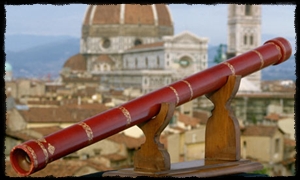 This year marks the 400th anniversary of Galileo’s first use of the telescope. This week, at an international gathering of astronomers, Pope Benedict gave an address titled: True Knowledge Is Always Directed to Wisdom. Here’s an excerpt:
Knowledge, in a word, must be understood and pursued in all its liberating breadth. It can certainly be reduced to calculation and experiment, yet if it aspires to be wisdom, capable of directing man in the light of his first beginnings and his final ends, it must be committed to the pursuit of that ultimate truth which, while ever beyond our complete grasp, is nonetheless the key to our authentic happiness and freedom (cf. Jn 8:32), the measure of our true humanity, and the criterion for a just relationship with the physical world and with our brothers and sisters in the great human family.
Dear friends, modern cosmology has shown us that neither we, nor the earth we stand on, is the centre of our universe, composed of billions of galaxies, each of them with myriads of stars and planets. Yet, as we seek to respond to the challenge of this Year — to lift up our eyes to the heavens in order to rediscover our place in the universe — how can we not be caught up in the marvel expressed by the Psalmist so long ago? Contemplating the starry sky, he cried out with wonder to the Lord: “When I see your heavens, the work of your fingers, the moon and the stars which you set in place, what is man that you should be mindful of him, or the son of man, that you should care for him?” (Ps 8:4-5). It is my hope that the wonder and exaltation which are meant to be the fruits of this International Year of Astronomy will lead beyond the contemplation of the marvels of creation to the contemplation of the Creator, and of that Love which is the underlying motive of his creation — the Love which, in the words of Dante Alighieri, “moves the sun and the other stars” (Paradiso XXXIII, 145). Revelation tells us that, in the fullness of time, the Word through whom all things were made came to dwell among us. In Christ, the new Adam, we acknowledge the true centre of the universe and all history, and in him, the incarnate Logos, we see the fullest measure of our grandeur as human beings, endowed with reason and called to an eternal destiny.–Pope Benedict XVI
Read the entire speech here.
-
Video: Bartimaeus Institutes and that Really Old Time Religion
 There is no better Bible-buster/activist teaching today than Ched Myers and the good folks at Bartimaeus Cooperative Ministries. Here are two up-coming residential week-long intensives–the Bartimaeus Institutes–in lovely Ventura County, CA, for you to check out. And watch the fantastic video! It’s visually rich and theologically exciting.
January 18-22: “A N.T. Theology and Diverse Practices of Restorative Justice and Peacemaking.” We are pleased to announce that Revs. Murphy Davis (right) and Eduard Loring of the Open Door Community in Atlanta will be joining Rev. Nelson and Joyce Johnson of the Beloved Community Center and Rev. Geoff Broughton from Sydney, Australia as special guests. Murphy and Nelson were interviewees for the second volume of Elaine & Ched’s Ambassadors of
Reconciliation project.February 22-26: “Ecojustice, Sabbath Economics and Luke’s Gospel.” This Institute is co-sponsored by the Sisters of Notre Dame de Namur, whose missionary Dorothy Stang (right) was martyred in Brazil five years ago. We’ll hear her story and Ched will look at Year C lections from the third gospel as they relate to our economic and environmental crisis.
Watch the video!
-
Who Owns the ‘N’ Word?
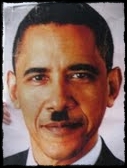 I was on Capitol Hill last month to go to a poetry reading at the Library of Congress. As I entered those auspicious halls I passed a group of women gathered on the public sidewalk holding signs. One read: Obama = Hitler. It showed Barack Obama with a Hitler-like mustache. The spectacle made me so sick to my stomach. I couldn’t even speak.
With the Nazi accusations painfully present in the public discourse, I found this commentary by Michael Berenbaum, director of the Sigi Ziering Center for the Study of the Holocaust and Ethics at American Jewish University, very insightful. Here’s an excerpt:
Over the past decades the Holocaust has taken its place as the “negative absolute” of the Western world.
In a world of relativism, when we do not know what is good and what is bad, what is right and what is wrong, we have near universal agreement — except for the lunatic fringe — that Nazism was the embodiment of evil. It was bad — absolutely and indisputably bad.
As criticism of President Obama mounted, his enemies — not his opponents — went on the attack: They called the president a socialist and a Marxist. But in the post-Cold War world, such terms no longer sting the way they once did. Out of frustration, out of sheer pique, Obama’s critics resorted to the nuclear bombs of moral epithets: Nazis, Hitler, the Holocaust. Those terms seem to be understood. “Nazi” still carries moral weight in contemporary culture, and is reinforced by the many films that have brought the story of the Holocaust to the foreground or used it as a back story that seem to dominate cinema and television. The Holocaust occupies center stage in museums and memorials, in conferences and in scholarship, but also in the public sphere.
Beyond our success at spreading awareness of the Holocaust, I have a deeply uncomfortable feeling that Jews, committed and serious Jews concerned with the survival of the Jewish people, are often themselves increasingly responsible for trivializing the Holocaust by using it as a rhetorical political tool with little regard to its appropriateness or the consequences of its misuse.
Read the whole article here.
-
Subscribe
Subscribed
Have a WordPress.com account? Log in now.

