-
Sr. Sandra Schneiders: What’s A Prophet? (Part 2 of 5 with Discussion Questions)
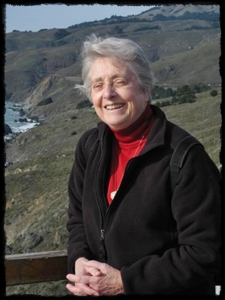 This is part two of a five-part essay by Immaculate Heart of Mary Sr. Sandra Schneiders on the meaning of religious life today. The series is published in the U.S-based National Catholic Reporter. In this part Schneiders, professor of New Testament Studies and Christian Spirituality at the Jesuit School of Theology at Berkeley, sets the context for “Religious Life as Prophetic Life Form.” (See my earlier post on Tom Fox’s interview with Schneiders here and the part one of this series here.) The quotes that I highlighted and my set of questions are at the bottom of the post.
In this essay, Schneiders goes beyond the description of the itinerant ministerial religious lifestyle into the theological nature of the prophetic life form that this lifestyle embodies. Meanwhile, we need always to keep in mind that all believers, whatever their particular Christian vocations, are equally called to discipleship and to holiness.
Call, Response, and Task of Prophetic Action (Part 2 of 5)
In an article published by NCR last October I described ministerial religious life as it emerged in the [Catholic] Church in the 1600’s, was officially approved in 1900, and has finally become distinct, in the wake of Vatican II, from the semi-cloistered monastic-apostolic hybrid lifeform of the early 1900’s. I described it as a lifeform closely modeled on that of Jesus’ original itinerant band of disciples, those women and men like Peter, Mary Magdalene, and others whom Jesus called to go about with him on a full-time basis in Palestine during his earthly ministry and, after his resurrection, to the ends of the earth. Like Jesus himself they were called to leave home, family, employment, personal belongings, life projects and to devote themselves full-time to the ministry of proclaiming the Reign of God in word and deed.
In this essay I want to go beyond the description of the itinerant lifestyle of these disciples into the theological nature of the prophetic lifeform that this lifestyle embodies. In such an investigation we need always to keep in mind that all believers, whatever their particular Christian vocation, are equally called to discipleship and to holiness. However, not all disciples are called to this particular lifeform which, as we will see, consists in a particular assimilation to Jesus’ prophetic identity and mission.
John Paul II insisted at considerable length in Vita Consecrata (the post-synodal Apostolic Exhortation published in 1996, Part II, 84 ff.), following the lead of the Council, that Religious Life is a prophetic lifeform in the Church. Prophecy is not all there is to Religious Life, just as it did not exhaust the mission and ministry of Jesus. But our question here is: what does it mean to say that ministerial Religious Life is essentially a prophetic lifeform? Only from this basis can we address some of the questions about the life, and particularly about the role of obedience in this life, that are being raised by the current Vatican investigations [into American Catholic women’s religious communities].
The Pre-Paschal Jesus as Prophet: Model of Religious Life
The fact
Throughout his public ministry Jesus functioned as a prophet recognizably in the tradition of the Old Testament prophets, especially Moses, Elijah, Isaiah, Jeremiah, Ezekiel, and Hosea who are evoked explicitly and implicitly in the narrative of Jesus’ life, death, and resurrection. People clearly regarded Jesus as a prophet (see Mt.14:5; 21:11, 46; Lk. 7:16; 7:39; Jn. 6:14) and he did not reject or refuse this identification as he did that of king. On the contrary, Jesus spoke of himself as a prophet by comparing himself to the prophet Jonah (see Mt.12:39), identifying himself as the prophet not accepted in his own town or among his own people (see Lk.4:24), and predicting that he would suffer the fate of the prophets, namely, persecution by the religious authorities and finally execution in the Holy City (see Lk. 13:33).
In John’s Gospel there are two extraordinary scenes in which the pre-Easter Jesus’ prophetic identity is progressively discerned by his textual interlocutors and clearly revealed to the readers. In John 4 the Samaritan Woman starts by seeing Jesus as a “man” and a “Jew,” and then recognizes that he is a “patriarch” greater than Jacob, and finally exclaims, “I perceive that you are a prophet” (Jn. 4:19). In John 9 the healed man-born-blind starts by referring to his healer as “the man called Jesus,” and goes on to solemnly testify before the Jewish authorities (at the cost of excommunication) that Jesus “is a prophet” (Jn. 9:17) come from God.
After the Resurrection, when the risen Jesus, unrecognized, joins the two disciples on the way to Emmaus and asks them what they are discussing as they walk, they reply that they are talking about “Jesus of Nazareth, a prophet mighty in word and work before God and all the people” (Lk. 24:19) and whom their leaders had executed. Obviously, they were voicing the perception of Jesus’ identity common among his followers.
The itinerant band of followers who accompanied Jesus during his public life and were commissioned by him after his Resurrection to continue his mission were initiated into Jesus’ own prophetic ministry by Jesus himself. Many ministries of the Word, such as apostleship, evangelization, and teaching developed in the early Church and there was much overlapping among them. All of them had a prophetic dimension though each was specified by distinctive goals such as proclaiming the Gospel to people who had not yet heard it or catechizing converts. Religious Life, as the lifeform most closely modeled on that of Jesus’ original itinerant band, also involves participation in these various forms of ministry of the Word. But I want to suggest that one of those ministries, prophecy, is central to and defining of the Religious lifeform as it was of Jesus’ pre-Easter ministerial life.
-
Clericalism’s Malign Influence


Dominican Timothy Radcliffe The editors at UK’s independent Catholic paper The Tablet printed an exceptional editorial in their 6 Jan 2010 edition.
In response to the sex abuse scandal that brings such discredit to the Catholic church, some have claimed it was a result of laxity (a covert way of blaming Vatican II), some have said it was the result of homosexuality (overtly blaming gays), some have said it was the fault of Catholic women (sigh).
But Tablet editors make a credible case for it being – in part – a result of clericalism: excessive power in the hands of church clergy which creates an environment of exceptionalism.
Here’s an excerpt below:
Archbishop Diarmuid Martin of Dublin, a former papal diplomat, is emerging as one of the few heroes of this sorry affair. He chose Fr Timothy Radcliffe, former Master of the Dominicans, to grasp the real nettle behind the sex-abuse crisis, which is not about homosexuality but about the pervasive culture of clericalism in the Catholic Church. Invited by Archbishop Martin just before Christmas to address the clergy of Dublin Archdiocese, who were still stunned by the disclosures of the inquiry, Fr Radcliffe went straight to the point. Clericalism put priests on pedestals where they were untouchable (and bishops even more so), from which great height they proceeded to load the people with burdens they could not bear – often to do with sexual morality.
“Unlike the Pharisees,” he said, “the yoke of Jesus is light. If we think about our beloved Church in recent centuries, we do seem to have been more like Pharisees, laying heavy burdens on the shoulders of the people. Often this has been associated with sexual behaviour. We have told families with large numbers of children that no contraception is permitted, and young people who cannot afford to get married that their sexual behaviour must be strictly controlled, and gay people that nothing is permitted – and that they should be ashamed of their sexuality. Regardless of the rights or wrongs of church teaching, this has been experienced by our people as a heavy burden.” He added: “You can imagine the anger of a woman who has had child after child and can cope no more, or a young gay person, when they hear what even a few priests have been up to.”
Read the whole post here.
-
Protest Against Trains Carrying Depleted Uranium to Utah
 Marc Haddock had a brief news report in Deseret News on the protesters who came out against shipping depleted uranium into Utah. The trains are scheduled to start rolling across the country from Savannah to Utah sometime this week.
My favorite quote in the article is from Ed B. Firmage, emeritus law professor at the University of Utah, who says: “If you or I brought nuclear material into the state, we would be arrested as terrorists. So why can the state do it?”
It sounds like it’s time to relaunch the White Train resistance network. These were trains that transported the parts for nuclear weapons from the PanTex plant in Texas to various sites around the U.S. (read more here).
Catholic pacifists Jim and Shelley Douglass were lead organizers for those who protested the trains by holding vigils on the train tracks. Often they sat on the tracks to block the trains and risked arrest. (The February 1984 issue of Sojourners magazine details this whole resistance movement.)
Here’s Haddock’s article:
SALT LAKE CITY — Two dozen protesters braved the cold Saturday morning, December 19, to protest plans to ship more than 3,000 tons of depleted uranium through the state to Utah’s western desert.
The protest was organized by the Healthy Environment Alliance of Utah as a train carrying the first of three planned shipments of depleted uranium nears the state.
“We cannot allow this waste to be buried here, and we are asking Gov. Herbert to help us turn these trains around,” said Christopher Thomas, policy director for HEAL Utah.
Thomas said a compromise worked out between Gov. Gary Herbert and the U.S. Department of Energy Thursday is inadequate. Under the agreement, the state will allow the first of three trains loaded with the radioactive waste to enter the state, but not to bury the material at EnergySolutions disposal site near Clive until additional safety measures can be taken.
“This is no time to declare victory just because we’ve delayed the time of our defeat,” he said. “Gov. Herbert’s agreement has not stopped these shipments from coming, it’s only slowed them down.” Thomas was cheered on by a small but vocal group sporting signs that read “No DU” and “Nuclear waste is immoral.”
Political activist Claire Geddes also spoke to the small group. “This material needs to be placed in deep storage, not in a lake bed,” she said.
On the fringe of the gathering, Ed B. Firmage, emeritus law professor at the University of Utah, passed out a letter likening the decision to allow the nuclear material into the state as an act of terrorism.
“If you or I brought nuclear material into the state, we would be arrested as terrorists,” he said. “So why can the state do it?”
(more…) -
Remembering Radical Feminist Mary Daly (including Jon Stewart’s 1999 Riff on Her)
 I read Mary Daly’s Beyond God the Father when I was a sophmore at a Catholic girls high school in Sacramento, CA. Theologically and intellectually, it was way over my head at that time. But I learned one important thing: Theology can and should be shaped by one’s lived experience. If theology doesn’t touch your life anywhere then it’s the theology that’s wrong, not your life.
“Few major feminists, ” Daly wrote, “display great interest in institutional religion. Yet this disinterest can hardly be equated with lack of spiritual consciousness. Rather, in our present experience the woman-consciousness is being wrenched free to find its own religious expression.”
Daly, who died on Sunday at age 81, was extreme and funny, brilliant and uncompromising. She always contended that as long as you could swim then you might as well swim in the deep end. And she did. But she had that furious intuition of right and wrong that is peculiar to Irish Catholics, especially as it relates to women.
In lieu of a large memorial service, Daly asked that those who want to remember her gather together in their locales and read and discuss her work.
Below are a round-up of excerpts from her obituaries and a great 1999 bit by John Stewart on Daly’s forced retirement from Boston College:
“She was a great trained philosopher, theologian, and poet, and she used all of those tools to demolish patriarchy — or any idea that domination is natural — in its most defended place, which is religion. In the way that painters and artists become more valuable after they’re gone, I hope Mary will be kept alive by people going to her work.”–Gloria Steinem
“Her contributions to feminist theology, philosophy, and theory were many, unique, and if I may say so, world-changing. She created intellectual space; she set the bar high. Even those who disagreed with her are in her debt for the challenges she offered…She always advised women to throw our lives as far as they would go. I can say without fear of exaggeration that she lived that way herself.”–Mary E. Hunt, co-founder and co-director of the Women’s Alliance for Theology, Ethics and Ritual (WATER)
” ‘The Church and the Second Sex‘ was every bit as important in the Catholic world as Betty Friedan’s ‘The Feminine Mystique,’”–James Carroll, an author and columnist for the Globe’s opinion pages who formerly was a Catholic priest.
“She literally turned the standard theological concepts upside down. Mary played with language in such a way that you simply had to stop and think. … You couldn’t use old words in the old ways. Her legacy is a cloud of women witnesses and male theologians, too, who have now been released into whole new understandings of what the tradition really holds and really means for all of us, male and female. She was a great thinker, she was a great icon. She will be maligned by some, but history will see her very differently.”–Sister Joan Chittister, a feminist author and a member of the Benedictine Sisters of Erie, Pa., said
“I think she was a central figure for the feminist movement in the 20th century, and hopefully beyond. She had a fierce intellect and an uncompromising soul that sometimes gave even her most loving friends indigestion, but it was worth it. She redefined the parameters of philosophy. She called herself a feminist philosopher, and she really was — she was the first.”– Robin Morgan, who edited Sisterhood is Powerful: An Anthology of Writings From the Women’s Liberation Movement.
“She basically fairly clearly defined the outer limits of radical feminist theology.People around the world are generally grateful for her having done that.”– Robert Daly, who chaired the theology department during much of Dr. Daly’s tenure and was not related to her.
For a little something on the fun side, see a slim trim Jon Stewart skewering Daly when she was forced to leave Boston College in 1999 for not agreeing to teach men in her classroom.
Books by Mary Daly include:
*”Beyond God the Father: Toward a Philosophy of Women’s Liberation”
*”Gyn/Ecology: The Metaethics of Radical Feminism,” which defined categories of political theory and philosophy of religion.
*”The Church and the Second Sex”
*”Pure Lust: Elemental Feminist Philosophy,” an exploration of patriarchy and feminist vision.
*”Websters’ First New Intergalactic Wickedary of the English Language,” a humor-filled work of words aimed at “freeing the English language” from its patriarchal roots.
*”Outercourse: The Be-Dazzling Voyage,” a philosophical autobiography.
*”Quintessence… Realizing the Archiac Future: A Radical Elemental Feminist Manifesto,” another consideration of feminist thought.
*”Amazon Grace: Re-Calling the Courage to Sin Big”Mary Daly, radical feminist theologian, dead at 81 (National Catholic Reporter)
Mary Daly, Pioneering Feminist Who Tussled with BC, Dies at 81 (Boston Globe)
-
Sr. Sandra Schneiders: ‘The Pernicious Appeal for Blind Obedience’ (Part 1 of 5 With Discussion Questions)
This is part one of a five-part essay by Immaculate Heart of Mary Sr. Sandra Schneiders on the meaning of religious life today. The series is published in the U.S-based National Catholic Reporter. In this part Schneiders, professor of New Testament Studies and Christian Spirituality at the Jesuit School of Theology at Berkeley, sets the context for “Religious Life as Prophetic Life Form.” (See my earlier post on Tom Fox’s interview with Schneiders here.) The quotes that I highlighted and my set of questions are at the bottom of the post.The Pernicious Appeal for Blind Obedience (Part 1 of 5)
When the Vatican investigation of U.S. women religious was announced some months ago without any preparation, consultation, or even the courtesy of a notification to congregational leaders that it was about to happen, many people, religious and laity alike, were stunned at what seemed like a surprise attack aimed at a most unlikely target, given the massive and unaddressed problems besetting the clergy and hierarchy at the moment. Persistent efforts to learn the charges and the accusers hit a stone wall since virtually no one believed that a decline in numbers of entrants constituted a “crime” calling for such a massive response or that a judicial proceeding of such magnitude was instituted to ascertain (much less foster!) the “quality of life” of religious.
Little by little pressure from a variety of sources seems to have uncovered the answers to those two questions. The “charges” are that LCWR (Leadership Conference of Women Religious)-type Congregations (the vast majority of Religious in the country) have implemented in their lives and in their ministries changes called for by Vatican II to the detriment (manifested in the decline in numbers of vocations) of religious life itself. Cardinal Rodé (the highest officer in Rome on religious life) believes, in his own words, that the [Second Vatican] council precipitated the first “world-wide crisis” in the history of the church and women religious, in his view, are primary promoters of that crisis in the United States.
The “accusers” are a small group of extremely conservative women religious who, in September 2008, held a conference at Stonehill College in Massachusetts on consecrated life as they understand it, to which they invited Cardinal Rodé. At this conference, which included no presentation of positions at variance with their own, they put contemporary ministerial religious Life on trial in absentia, found it seriously wanting, and raised the cry, “Investigate them!”
Cardinal Rodé, having heard what he apparently thought was a widely held consensus that U.S. women’s apostolic religious life was in serious decline concluded, “We have no further need of witnesses.” Unfortunately, he failed to consult the many thousands of Catholic laity who have received from women religious their formation in the faith, ongoing spiritual support, pastoral care in times of need, and colleagueship in ministry and who are now expressing their solidarity with the sisters by petitions and personal letters of protest to the Cardinal, the Visitator, the Apostolic Delegate, and local ordinaries as well as by individual and collective testimonies to and about the sisters (see, e.g., U.S. Catholic, Entered into Evidence [75:1, Jan. 2010]).
He failed to consult moderate bishops, like those in California, who have publicly testified that without women religious their dioceses would not have become what they are and would not be functioning as well as they are today. He failed to consult significant groups of religious outside the United States, such as AMOR (conference of women Religious in Asia and Oceania) and UISG (International Union of Superiors General in Rome), which have expressed in public statements their appreciation of, support for, and solidarity with U.S. religious. He failed to consult the sisters themselves who could have enlightened him on the size and ideological commitments of the one small group of religious he did consult and the few rightist bishops, in this country and in Rome, to whom he listened.
-
Sr. Sandra Schneiders on the Prophetic Religious Life
A couple of months ago, New Testament scholar Sr. Sandra Scheiders published in the National Catholic Reporter her reflections (We’ve Given Birth To A New Form of Religious Life) on the Vatican investigation of American Catholic religious women. She hinted at a very important topic in the life of the American Catholic church (and, I would suggest, all dedicated Jesus-followers): How Christian ministry shapes the way one lives and engenders a prophetic stance within the society.Now NCR will publish a five-part essay by Sr. Sandra Schneiders, who teaches at the Jesuit School of Theology in Berkeley, on their site beginning Jan. 4 and running through Jan. 8. The essay, titled Religious Life as Prophetic Lifeform explores the meaning of religious life today. This is made more radical because it comes during a controversial three-year Vatican study of U.S. women religious congregations.
Below is NCR editor Tom Fox’s interview with Scheiders asking her about the purpose of her essay. Note: When she uses the word “religious” as a noun, she’s referring to Catholic nuns and sisters in “vowed religious life.”
I’ll try to publish excerpts from each of the five sections as they are released. I have a feeling that Schneiders’ essay will be a critical tool for conversation in Catholic communities in the days ahead. And her thinking serves not only Catholics, but beyond as well.
NCR: Why did you write this article, why now?
Schneiders: To begin with “why now,” because the Vatican investigation of U.S. women religious has created what the Chinese ideogram for “crisis” means, namely, a situation of danger and opportunity. Religious and their life are in danger from three directions.
* First, they do not know what the Vatican plans to do with whatever information it collects and, if those who suspect that the conclusions were reached before the investigation began are correct this danger is not illusory.
* Second, there is the danger that some religious will become so disgusted, discouraged, disheartened, even justifiably angered by this implied questioning of the integrity of their lives and the authenticity of their ministries, and by the clear signals that they are expected, if they want ecclesiastical approval, to get back “in the box” that defined their pre-conciliar lives, that they will simply give up, either on religious life itself or on their own vocations to it, or on a church which seems to be defined by a narrow, rigid, exclusively institutional ecclesiology.
* Third, there is the danger that generous younger women who are intelligent, courageous, motivated not by medieval romanticism or elitism but by love of the world for which Christ died, and who feel called to the following of Jesus in ministerial religious life will decide that they do not want to spend their lives and energy struggling with a patriarchal institution which denies their full human and Christian personhood.
I wrote this article in hopes of helping to counteract these dangers by helping religious seize the opportunity this situation offers to reflect deeply on the real meaning of religious life as a participation in the prophetic vocation and mission of Jesus and on our ministry as participation in his work of announcing Good News to the poor even unto the laying down of his life for those he loved. Part of seizing this opportunity is the deepening experience of solidarity among religious themselves within their congregations and across congregational lines, which fosters courage in the face of misunderstanding and persecution. I want to promote this sharing of experience and self-understanding.
NCR: What do you hope to achieve by the essay?
Schneiders: I want to do two things, to the extent that is possible in a short essay. First, I want to analyze the current situation of religious life under investigation as a “two level” event analogous to the “two level” opposition to Jesus that led to his rejection by the religious establishment of his day. Second, and on the basis of the understanding of our life as a reflection of Jesus’ own mission and ministry, I want to encourage the clear articulation and courageous claiming of our experience, which will encourage us to live the vocation to which we have been called, willingly living (not being passively overwhelmed by) whatever suffering that may involve.
The authorities of Jesus’ time thought they were protecting the religious establishment of Judaism by getting rid of a politically dangerous “messiah” figure who was upsetting the fragile religious status quo within which their power was guaranteed by Rome. But they “knew not what they were doing”, because their deeper opposition, of which they were undoubtedly unconscious, was to Jesus’ reinterpretation of the very meaning of God’s revelation, God’s work in the world. Jesus, God’s prophet whom the Spirit of God had anointed to proclaim “good news to the poor,” was announcing a “new world.” He was undoing the “old world” of salvation reserved for the pure and earned by scrupulous observance of law by the religious elites, and opening up the “new world” of God’s absolutely inclusive love and unconditional mercy to the unclean, the sinners and the outcasts. In that sense, he was announcing the end of their world to the religious authorities who had to get rid of him before what he announced became reality.
Religious are under investigation, at one level, for upsetting the ecclesiastical status quo of the Church understood as a divine right absolute monarchy. They are resisting patriarchal control of their own lives which is a threat to hierarchical absolutism in general. They are perceived, correctly, as promoting the ecclesiology of Vatican II. But the real and deeper issue is that religious are participating in the prophetic ministry of Jesus, announcing the Good News of salvation by their preferential ministry to the outcasts of society and church. By declining to serve as enforcers of dogmatic and moral absolutism they are proclaiming salvation that comes not through blind submission of mind and will to laws and office-holders or helpless dependence on religious mechanisms that are put out of their reach, but through humble acceptance of the power and desire of an all-loving God to save even those who are “hopeless” in their own eyes or the eyes of authority.
I also want to encourage religious (myself first of all) to look within, individually and in community, to reclaim and articulate the prophetic vocation to which we responded at profession, perhaps without realizing even vaguely where that could and would lead because of the times in which we were born. In reclaiming that vocation we must recognize and accept that tension with institutional authority — defined by the latter as “disobedience” — is part of our commitment to true obedience to God not men. Obedience is practiced in prayerful attention to all the “voices of reality” of our times, to the “signs of the times” in which we live. This attention, at every moment, leads to careful discernment that facilitates the three-way encounter among God, God’s people, and the concrete historical situations in which God’s reign must be incarnated in this world.
NCR: How is this essay connected to the one you wrote last October [2]in NCR on “Ministerial Religious Life?”
Schneiders: The connection is in the close following of Jesus that constitutes religious life. In the first article I was trying to show how what I called the “lifestyle” of ministerial religious was that of Jesus and his original band of itinerant disciples. Because ministry is intrinsic to the life of these religious, as it was to the life of Jesus and first disciples, their lifestyle (dress, dwelling, prayer life, activities, etc.) is determined by their itinerancy, their availability to and their solidarity with (rather than separation and distinction from) those whom they serve, their understanding of common life in terms of economic interdependence rather than sociological structure, and so on. Religious live the “mixed life” of deep contemplation grounding urgent public action, as did Jesus, and their lifestyle reflects that reality.
In this essay I am going beyond the “lifestyle” to the “prophetic nature of the life” itself. I am suggesting that the very heart of ministerial religious life is its participation in the prophetic mission of Jesus. That mission, of proclaiming the Good News of salvation to the poor, is enacted in their interpretation of the Gospel into concrete historical situations of suffering. And this will inevitably lead to tension between the status quo of Church as hierarchical power structure enforcing doctrinal uniformity and moral subordination, and the Church as the Body of Christ in this world caring by preference for those on the margins, those who do not and cannot measure up, those who can only say, “Lord, have mercy on me, a sinner” even when they cannot promise to meet the standards.
Schneiders is the author of several books, including Written That You May Believe, Selling All, and Women and the Word.
-
Vatican versus ‘Law of Unintended Consequences’
 Not long ago I wrote a post titled Make It Work For You: Why Accepting Conservative Anglicans Might Be Good For Progressive Catholics. In it I opined:
This latest show of welcoming conservative Anglicans may prove to be a boon however for progressive Catholics. Since, most of the Anglican priests joining the Catholic church are married with families, this move may push the Catholic church another step forward in accepting married priests. If the Vatican can find room for married Anglican priests, then surely it can find room for the 110,000 Catholic priests around the world who left active ministry in order to marry!
Now I see that Catholic commentator George Will is exploring the same “law of unintended consequences” much more eloquently than I did. Will has a column in today’s Washington Post titled Rome’s Call: ‘Come On Over’ in which he posits the same question to Jesuit priest Tom Reese.
Reese is the former editor-in-chief for America magazine who got unceremoniously bumped by Cardinal Ratzinger and now is at Georgetown University’s Woodstock Theological Institute. Now Reese writes his own blog for the Newsweek / Washington Post “On Faith” web site, and is also a regular contributor to the “Georgetown/On Faith” blog featuring Georgetown University scholars.
Will writes:
Reese disputes the assumption that the Vatican is accelerating a sorting out that will produce a more conservative Catholic Church. Some Catholics, he notes, will experience the fact, and many more will contemplate the idea, of married priests administering the sacraments. This, Reese thinks, may remind Catholics that for its first thousand or so years, the church had married priests and bishops. A celibate priesthood, he says, is a product of church law, which can be changed.
Reese thinks that would strengthen the church in the competition for souls. In parts of Latin America, he says, Catholic priests are so scarce that many villages see one only a few times a year. Evangelical Protestants, however, come to a village, identify a respected man, married or not, train him, build a church and the village becomes Protestant.
Reese, slight and bespectacled, laughs easily and infectiously but once caused a future pope to mutter, as Henry II did about Thomas a Beckett, “Who will rid me of this turbulent priest?” Reese was editor of the Jesuit magazine America until 2005, when he was reprimanded by Cardinal Joseph Ratzinger, whose defense of orthodoxy earned him the sobriquet “God’s Rottweiler.” Then he became Benedict XVI. Reese’s offense, conservative Catholics said, was latitudinarianism — lack of stringency regarding disputes about faith and morals.
But with the Latin Mass restored and Anglicans being courted with liturgical concessions, will the Catholic Church have three liturgies? Who are the latitudinarians now?
“Latitudinarianism” indeed! It’s only a problem if you still think the world is flat and we are going to fall off an edge. But God — in God’s infinite wisdom — has arranged things spherically, apparently to save us from ourselves!
-
‘Holding All Things Together’
A lovely Christmas greeting from the World Council of Churches.
This is available in many languages at the World Council of Churches web site.
He is the image of the invisible God,
the firstborn of all creation;
for in him all things in heaven and on earth were created,
things visible and invisible,
whether thrones or dominions or rulers or powers –
all things have been created through him and for him.
He himself is before all things,
and in him all things hold together.
–Colossians 1:15-17 (NRSV) -
Merton: ‘The Immense Mercy of God’

And this morning, coming down, seeing the multitude of stars above the bare branches of the wood, I was suddenly hit, as it were, with the whole package of meaning of everything: that the immense mercy of God was upon me, that the Lord in infinite kindness had looked down on me and given me this vocation out of love, and that he had always intended this, and how foolish and trivial had been all my fears and twistings and desperation.–Thomas Merton
-
Heidi Thompson: Love Song of the Mahoning Valley

Youngstown, Ohio My friend Heidi has a great blog post up over at Sojourners. My Hometown Makes The Front Page of The Washington Post is a poignant reflection on the “abandoned places of American Empire.” In this case it is Warren, Ohio, in the Mahoning Valley — the Steel Belt.
Heidi’s description and the Post article remind me of something that Russian poet Anna Akhamatova wrote when she spent months in the prison lines in Leningrad trying to visit her husband.
“Once, someone recognized me., ” wrote Akhamatova. “Then a woman with bluish lips standing behind me, who had of course, never heard me called by name before, woke up from the stupor to which everyone had succumber and whispered in my ear (everyone spoke in whispers there): ‘Can you describe this?’ And I answered, ‘Yes, I can.’ Then something that looked like a smile passed over what had once been her face.” (April 1, 1957, Leningrad)
Here’s an excerpt, but read Heidi’s whole post:
At a recent holiday party, I tried to describe my hometown of Warren, Ohio.
“Warren?” I said. “Well, it’s a lot like Detroit. With none of the perks.”
Now, I might not have to work so hard at the description. My Rust Belt roots made the front page of today’s Washington Post in Anne Hull’s article “Beyond Repair: In Ohio’s Fading Steel Towns, Workers Are Still Waiting for Economic Renewal.”
As usual with national news coverage about the Mahoning Valley, it’s a story of economic devastation and despair. It’s a story about the history of the steel industry collapse in the early ‘80s, the decades of under-employment, the decaying infrastructure and health effects of long-term industrial pollution.
The Washington Post listed the facts about unemployment, the recession, etc. All of which are true. There’s nothing in the piece that’s factually wrong. It’s just really painful to read about my hometown on the front page of a national newspaper.
Maybe what makes this news story sting is that Congress is – as I write – literally down the street debating healthcare reform that would make a huge difference in places like Warren.
Read the whole post here.
-
Subscribe
Subscribed
Have a WordPress.com account? Log in now.

