-
Haiti: What Happens When A Fault Line Runs Between the Rich and the Poor?
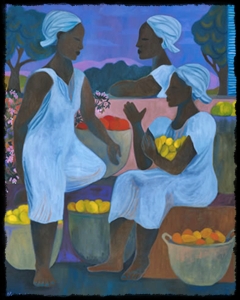
LES MARCHANDES by Mari Hall Earlier I excerpted a section of Simon Barrow’s nice commentary over at Ekklesia in the U.K., titled Why Poverty and Wealth Remain the Issue.
I also wanted to run this section on “class quakes” as it relates to the horror we are seeing unfold in Haiti. “The most vulnerable,” writes Barrow, “are always in danger of being asked to bear the heaviest burden proportionately – in the same way that those at the bottom of a ladder engulfed in water will always have the most to lose from ‘everyone needing to step down a rung’.”
Very nice analogy. Here’s another excerpt from Simon’ piece:
…The values of the dominant political party system remain deeply warped by non-recognition of the real distortions that massive gaps between the rich and the poor, those with much power and those with little power, make in the real, workaday world. There is an air of profound unreality about our prevailing ‘realisms’, as there was about the ones that got us into a massive economic and environmental hole in the first place.
The one thing that can be guaranteed is that the most vulnerable are always in danger of being asked to bear the heaviest burden proportionately – in the same way that those at the bottom of a ladder engulfed in water will always have the most to lose from ‘everyone needing to step down a rung’. The impact of an appeal for ‘the same sacrifice from everyone’ is not equivalent, fair or just when the starting points and levels of exposure are so at variance.
This is most starkly evident in the horrific scenes we are witnessing from the Haitian earthquake zone right now. For the unspeakable catastrophe unfolding in one of the poorest places on the planet is not, pace the headlines, “a natural disaster” alone, and certainly not “an act of God.” On the contrary, while many would die in a 7.3 scale ’quake anywhere in the world, it is in a city built for and by the poor that the most people are destined to suffer beyond all measure. So, long after the initial horror, people are languishing and dying needlessly in Port au Prince simply because there is no infrastructure (social or otherwise) to speak of, there are virtually no foundations (literally), there is no insurance, there are no ambulances, no emergency supplies and no reserve resources to fall back on. Just misery and dependence on outside charitable assistance, in the short term at least. It is scandalous as well as humanly (and spiritually) harrowing to behold.
Back in the 1970s, I recall, the radical charity War on Want got into hot water for describing the seismic impacts in the Ancash region (Peru), in North Pakistan and in other poor regions as “class quakes” compared to those in developed countries, because economic vulnerability made such a huge difference to the size and extent of the resultant human suffering and death. They were quite right, however.
This is why, in so many areas of life, the rich-poor divide matters deeply, unfashionable though it is to say this in a world where many politicians consider themselves ‘post ideological’ — and by that mean that they see such ‘divisive’ talk as ‘rabble rousing’. Which brings us, by a circumlocutory route, to the Bible.
The biblical texts of Christians and Jews have more to say about the iniquity of wealth and the oppression of poverty than they do on any other ethical issue. When liberation theologians like Gustavo Gutierrez first spoke of God’s corrective ‘bias to the poor’ and the corresponding ‘option for the poor’ required of the church, it was not Marx they were referencing but the deep wells of scripture.
Yet today, when it comes to the Bible, many Christians choose to argue about a handful of texts allegedly concerning sexuality (a concept that was actually unknown in the ancient world from which they derive), rather than focusing on a multitude of verses describing and condemning the lesions of those who suffer injustice and deprivation – sometimes on a scale, as in Haiti, which modern secular vernacular still ironically refers to as being “of biblical proportions.”
The American evangelical social activist, Jim Wallis, sometimes still tells the tale of how, upon realising the scale of biblical concern for the gap between rich and poor, he decided, as a student, to try removing with scissors every single scriptural phrase about wealth and poverty. What he ended up with was a ‘hole-y Bible’, one shredded of both content and meaning.
Faced with deprivation, marginalisation, inequality, injustice and the shrinking of life circumstances wherever they may occur (‘poverty’ is a word that points to a host of these symptoms of exclusion, all with a root in economic life), Christians today should recognise a clarion call to action, to the building of alternatives, to the holding of power to account, and to the development of different viewpoints and practices from ‘the norm’.
For as Leo Tolstoy once put it (and here again, I paraphrase): “food purely for my own contentment is a material concern; but food for my hungry neighbour – that’s a spiritual issue.” The same aphorism may be applied in many different situations, wherever deprivation and disadvantage reigns: in absolute poverty, and in the relative kind too. In Africa and Asia, and in an American ghetto or a European sink estate as well. Dividing the poor from one another is wrong. What we need to do instead is to share the wealth around.
Read the whole commentary here.
-
Gustavo Gutierrez: Who Are the Rich?
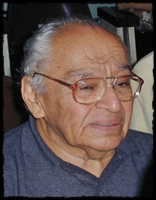
Gustavo Gutierrez Simon Barrow over at Ekklesia in the U.K. has a nice commentary Why Poverty and Wealth Remain the Issue.
Simon’s got a great anecdote about Gustavo Gutierrez, the “father of Liberation Theology” (or “really just the uncle,” as Gutierrez told me once).
In my experience, where you talk about wealth and poverty makes a huge difference in the conversation. A conversation that happens in a corporate board room at the World Bank will come to a radically different conclusion than the one had in a tin-roofed home in Sonsonate, El Salvador.
Here’s an excerpt:
Some years ago the Latin American theologian, Gustavo Gutierrez, was addressing a large international Christian audience on the subject of biblically-informed responses to poverty. Someone got up from the audience and asked pointedly, ‘But really, professor, who are the poor these days?’
This was a question he was often confronted with, Gutierrez noted. But it was invariably asked by a particular kind of person. Namely, someone who was not in any sense in danger of falling into poverty themselves!
Sit a group of wealthy people down and ask them to identify the poor, suggested the Peruvian “father of liberation theology” (who has spent a good deal of his own time and ministry working among the most vulnerable, oppressed and on-the-edge), and “they will argue about it until the cows come home, or until the kingdom of God comes, whichever is first.”
They will split opinions over ‘relative’ and ‘absolute’ poverty. They will earnestly ask whether someone living in a shack who has a small TV can really be classed as poor. They will debate measurements, guidelines, axes and thresholds for arriving at an adequate definition of ‘the poor’… before deciding, in all probability, that it is too complicated, that no-one really knows the solution, and perhaps that “poverty isn’t the only or even the most important issue” when confronting human need today.
Then they will most likely retire back to their own comfortable lives and put some money into a charity box dedicated to “those less fortunate” than themselves (ourselves).
By contrast, remarked Gutierrez, if you were to get together a group of people who know themselves to be poor – who struggle for daily survival, who are left out, who are made dependent because of their lack of resources – it will usually take them only a matter of seconds to answer the parallel question, “Who are the rich?” They will take one look at you, in comparison to themselves, and point their fingers of recognition.
Read the whole commentary here.
-
Elderly Raid Nuke Site (God, It’s Hell Getting Old.)
Mark Rahner at the Seattle Times produced a great satirical video interview with 81-year-old Jesuit priest Bill Bichsel after Bichsel and four others (Susan Crane, 65; Lynne Greenwald, 60; Steve Kelly, S.J., 60; Anne Montgomery RSCJ, 83) , using bolt and wire cutters, broke into Naval Base Kitsap-Bangor to protest its storehouse of nuclear weapons. It’s not quite up to the standards of Stephen Colbert – but worth the watch!
http://c.brightcove.com/services/viewer/federated_f8/1509319618
Bichsel and the others were caught and faced charges of misdemeanor trespass and destruction of government property. They were scheduled to be arraigned Jan. 6 in U.S. District Court in Tacoma. The government has since asked that the charges be dismissed. Prosecutors and investigators say they need more time to determine whether felony charges are more appropriate, said Emily Langlie, the spokeswoman for the U.S. Attorney’s Office in Seattle. Once that decision is made, then it’s likely charges will be refiled, she said.

Susan Crane, one of the Disarm Now activist, said “Bix was disappointed that everything he said about international law, about love of enemy, and the reasons for our action was left out. But, we did get a laugh from the video!”The Disarm Now Plowshares activists will continue to vigil at the gate of Naval Base Kitsap, and invite everyone to join them at the Martin Luther King celebration at the Ground Zero Center for Nonviolent Action, in Poulsbo, Washington, on Saturday, January 16, 2010. Find out more at http://www.gzcenter.org (That’s Ground Zero Center, not Geezer Central.)
-
A Prayer for Haiti by Rose Marie Berger

Port-au-Prince Cathedral before and after last night’s earthquake (Photo-Wiki/Screengrab-@Maddow).
A Prayer for Haiti (January 2010) by Rose Marie Berger
Most Holy Creator God, Lord of heaven and earth,
we bring before you today your people of Haiti.
It is you who set in motion the stars and seas, you who
raised up the mountains of the Massif de la Hotte and Pic La Selle.
It is you who made her people in your very image:
Their gregarious hearts, generous spirits,
their hunger and thirst for righteousness and liberty.
It is you, O Lord, who planted the rhythms of konpa, Twoubadou,
and zouk in the streets of Cite-Soleil. You who walk the paths
outside of Jacmel and Hinche. Your people, O Lord, cry out to you.Haiti, O Haiti: the world’s oldest black republic,
the second-oldest republic in the Western world.
You are a God who answers the cries of the suffering.
You are a God who sees, frees, and redeems your people.
“I too have heard the moaning of my people,” you spoke to Moses. Now, Lord, speak to Chanté, Agwe, Nadege, and Jean Joseph.
Speak now, O Lord, and comfort Antoine, Jean-Baptiste,
Toto, and Djakout. Raise up your people from the ash heap
of destruction and give them strong hearts and hands,
shore up their minds and spirits. Help them to bear this new burden.As for us, Lord, we who are far away from the rubble and the dust, the sobbing and the moans, but who hold them close in our hearts, imbue us with the strength of Simon the Cyrene.
Help us to carry the Haitian cross; show us how to lighten the yoke with our prayers, our aid, our resources. Teach us to work harder
for justice in our own country and dignity in Haiti,
so that we may stand with integrity when we hold our Haitian families in our arms once again. We ask this in the name of Jezikri, Jesus Christ. Amen.(c) Rose Marie Berger (Reprint freely. Downloadable version here.)
Please support the people of Haiti who have suffered a devastating earthquake with your prayers and donations. We owe them a debt of gratitude. I recommend Catholic Relief Services and the Mennonite Central Committee, both of whom have a long history in Haiti.
-
Haiti: ‘Until She Spoke, No Christian Nation Had Abolished Negro Slavery’
Please support the people of Haiti who have suffered a devastating earthquake with your prayers and donations. We owe them a debt of gratitude. I recommend Catholic Relief Services and the Mennonite Central Committee.

Douglass at his desk in Haiti “Until she spoke, no Christian nation had abolished Negro slavery. Until she spoke, no Christian nation had given to the world an organized effort to abolish slavery.
Until she spoke, the slave ship, followed by hungry sharks, greedy to devour the dead and dying slaves flung overboard to feed them, ploughed in peace the South Atlantic, painting the sea with the Negro’s blood.
Until she spoke, the slave trade was sanctioned by all the Christian nations of the world, and our land of liberty and light included. Men made fortunes by this infernal traffic, and were esteemed as good Christians, and the standing types and representations of the Savior of the World.
Until Haiti spoke, the church was silent, and the pulpit was dumb. Slave-traders lived and slave-traders died. Funeral sermons were preached over them, and of them it was said that they died in the triumphs of the Christian faith and went to heaven among the just.
…Aye, and Haiti not only gained her liberty and independence, but she has never surrendered what they gained to any power on earth. This precious inheritance they hold to-day, and I venture to say here in the ear of all the world that they never will surrender that inheritance.”–Frederick Douglass, Minister to Haiti, 1893
From Frederick Douglass’ address at the World’s Fair in Chicago, January 2, 1893.
-
Pope Bummed About Failure at Copenhagen
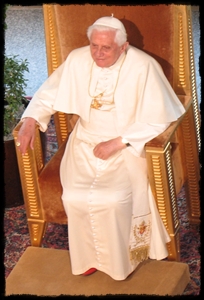 The Pope gave a talk on 11 January 2010 to the Vatican diplomatic corps in which he expressed how bummed out he was about the failure of the Copenhagen climate conference.
Of course, being the Pope, he says it all in a much more elevated language and puts it all in its broader moral framework. Below are some of the more significant pull quotes:
In my Encyclical Caritas in Veritate, I invited everyone to look to the deeper causes of this situation: in the last analysis, they are to be found in a current self-centred and materialistic way of thinking which fails to acknowledge the limitations inherent in every creature. Today I would like to stress that the same way of thinking also endangers creation. …
The denial of God distorts the freedom of the human person, yet it also devastates creation. It follows that the protection of creation is not principally a response to an aesthetic need, but much more to a moral need, in as much as nature expresses a plan of love and truth which is prior to us and which comes from God. …
If we wish to build true peace, how can we separate, or even set at odds, the protection of the environment and the protection of human life, including the life of the unborn? It is in man’s respect for himself that his sense of responsibility for creation is shown. As Saint Thomas Aquinas has taught, man represents all that is most noble in the universe (cf. Summa Theologiae, I, q. 29, a. 3). Furthermore, as I noted during the recent FAO World Summit on Food Security, “the world has enough food for all its inhabitants” (Address of 16 November 2009, No. 2) provided that selfishness does not lead some to hoard the goods which are intended for all. …
How can we forget, for that matter, that the struggle for access to natural resources is one of the causes of a number of conflicts, not least in Africa, as well as a continuing threat elsewhere? For this reason too, I forcefully repeat that to cultivate peace, one must protect creation! Furthermore, there are still large areas, for example in Afghanistan or in some countries of Latin America, where agriculture is unfortunately still linked to the production of narcotics, and is a not insignificant source of employment and income. If we want peace, we need to preserve creation by rechanneling these activities; I once more urge the international community not to become resigned to the drug trade and the grave moral and social problems which it creates. …
Among the many challenges which it presents, one of the most serious is increased military spending and the cost of maintaining and developing nuclear arsenals. Enormous resources are being consumed for these purposes, when they could be spent on the development of peoples, especially those who are poorest. …
On this solemn occasion, I would like to renew the appeal which I made during the Angelus prayer of 1 January last to all those belonging to armed groups, of whatever kind, to abandon the path of violence and to open their hearts to the joy of peace. …
The grave acts of violence to which I have just alluded, combined with the scourges of poverty, hunger, natural disasters and the destruction of the environment, have helped to swell the ranks of those who migrate from their native land. Given the extent of this exodus, I wish to exhort the various civil authorities to carry on their work with justice, solidarity and foresight. …
It is clear that if relativism is considered an essential element of democracy, one risks viewing secularity solely in the sense of excluding or, more precisely, denying the social importance of religion. But such an approach creates confrontation and division, disturbs peace, harms human ecology and, by rejecting in principle approaches other than its own, finishes in a dead end. There is thus an urgent need to delineate a positive and open secularity which, grounded in the just autonomy of the temporal order and the spiritual order, can foster healthy cooperation and a spirit of shared responsibility. …
Read the whole thing here.
-
Witness Against Torture: A Different Orange Revolution

Witness Against Torture, along with a number of other groups and individuals, launched a months of public demonstrations calling for the swift closing of the U.S. Guantanamo prison camp. Above, friend and Catholic Worker, Art Laffin stands in front of the White House. The orange jump suits are similar to what is worn by prisoners held at Guantanamo.
 One of the speakers at yesterday’s opening event was Mohammed Sulaymon Barre. Barre was released from Guantanamo on December 20, 2009, and returned to his family in Somaliland. Mr. Barre had fled Somalia during the civil war in the early 1990s. The United Nations High Commissioner for Refugees granted Mr. Barre refugee status in Pakistan where he lived and worked freely for many years prior to his detention. In November 2001, soon after the U.S. invasion of Afghanistan, Pakistani authorities came to Mr. Barre’s house in the middle of the night and arrested him. He is believed to have been sold to the United States for bounty at a time when the United States was offering sizable sums for the handover of purported enemies. Once in the custody of U.S. forces, Mr. Barre was sent to the U.S. military base at Bagram, where U.S. guards abused him and coercively interrogated him before transferring him to Guantánamo. He was never charged with any crime.
Mohammed Sulaymon Barre made this statement this morning:
“I say to the torturers of Guantanamo, their leaders, and the politicians and people of power who back them in Washington: is it not time that you should awaken from your slumber? Is it not time that you should realize what you are doing and acknowledge the mistakes you have made? Time has passed, and time passes quickly. Hurry up and close this prison that has become a blot of shame upon all of America. Do it fast. Do it quickly.
“Closing this place should not mean just the transfer of these men to other prisons. That would only make things worse. Closing it should mean the release of these men and transferring them to where they can be safe.
“And that is not enough. There should be an appropriate and reasonable apology. “To those who say that they fear that those men, when released, would join enemy groups and therefore we should keep them in prison indefinitely, I say: don’t you know that keeping these detainees in prison is the very thing that feeds the animus against the United States? I say to those who believe in these notions: the thing you fear is the very thing you cause by your wrongful actions. This is what constitutes the real threat to the national security of the United States, not the closing of the prison and the release of detainees. Peace be upon you.–Mohammed Sulaymon
Follow and support the Witness Against Torture events here.
-
1000 Words: The Wall Street Corkscrew

UrbanTrends out of Hong Kong is cashing in on global financial collapse with a fashionable kitchen gadget for wine connoisseurs.
Whenever you pop the cork – for supper or Sunday service – you can remember: “He who loves money will not be satisfied with money, nor he who loves wealth with his income; this also is vanity” (Ecclesiastes 5:10).
-
Merton: At Home With Oneself

“Life consists in learning to live on one’s own, spontaneous, freewheeling: to do this one must recognize what is one’s own – be familiar and at home with oneself. This means basically learning who one is, and learning what one has to offer to the contemporary world, and then learning how to make that offering valid.”–Thomas Merton
From Love and Living by Thomas Merton (New York: Harcourt, 1965, p.3)
-
It’s Time to Move Our Money
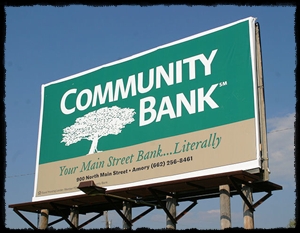 Let’s be honest. Most of us have what money we have in some big bank because of a) convenience or b) our little bank got eaten up by a big bank and we just didn’t have the time or energy to find some place new.
Last year I went through several hoops to get my accounts out of Bank of America only to find that, 2 months after I switched, my new bank had been taken over by Wells Fargo. Argh!
But now, I’m going to try for it again. I want to try to move most of my accounts to Self-help Credit Union in North Carolina and keep a small checking account here in DC with Lafayette Federal Credit Union that serves D.C. residents.
It’s time for Americans to reinvest in community banks. This movement has been building for a number of years. Churches in particular have made community economics a priority.
Ched Myers and the folks at the Sabbath Economics Cooperative have been educating on community investing as a faith act for 25 years. Now, what was once only practiced by a few is graduating into a mainstream movement of the many.
Eric Stoner over at Waging Nonviolence has a nice post on the movement to get Americans to shift their money out of big banks into community banks and credit unions. There’s also a great little video (below) out promoting the Move Your Money campaign.
Sojourners’ Jim Wallis also just put out a book called Rediscovering Values on what the Bible teaches us about our current economic debacle and had a good piece in the Washington Post called A Religious Response to the Financial Crisis.
Wallis says, “The market’s first commandment, “There is never enough,” must be replaced by the dictums of God’s economy — namely, there is enough, if we share it. … Already, pastors, lay leaders and innovative faith-based practitioners are suggesting creative answers: mutual aid; congregational and community credit unions; and new cooperative strategies for solving such problems as hunger, homelessness and joblessness. If these initiatives succeed, the economic crisis may offer congregations a rare opportunity to clarify their missions and reconnect with their communities. ”
Tell me your stories on where you store the green stuff and what it helps to grow!
-
Subscribe
Subscribed
Have a WordPress.com account? Log in now.

