-
Tevyn East: ‘A Lament for the Cedars of Lebanon’
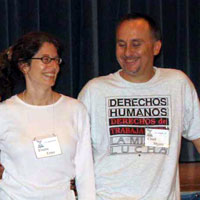 Friend and favorite theologian-artist Ched Myers (right) has been working with choreographer Tevyn East on collaborative projects around Ched’s work on Genesis and deep ecology.
 A Lament for the Cedars of Lebanon is rough cut of some of their work together. Brian Wimer, a filmmaker in Charlottesville, Virginia, donated his time to construct this video below.
More of Tevyn and Ched’s work together can be found at The Affording Hope Project.
Affording Hope Project from Brian Wimer on Vimeo.
-
Healing Prayer: Our Bodies’ Intricate Design

by Shawn Lovell I’ll be posting sporadically in February while I’m off work recuperating from surgery. (Nothing serious.) During my Sabbath recovery time at home, I hope to have daily prayer at 6 p.m. each evening in February.
I’ll be using the daily gospel reading and the prayer below and invite you to “join” me (through the Holy Spirit internet) each evening.
Healing Prayer
Blessed are You, God of All Creation,
who has made our bodies in wisdom.
It is You who created openings and arteries,
glands and organs, bone and blood,
marvelous in structure, intricate in design.
Should one part be blocked or fail to function
it is difficult for us to praise You properly,
difficult for us to serve Your people with humility.
Wondrous Fashioner and Sustainer of life,
Source of our health and our strength,
bring complete healing to all of our wounds.
You who blessed our ancestors and who
gave healing power to Jesus, send your angels
to accompany [insert names here] and all who are
sick. Let the healing river flow over and
through them. Let the leaves from the Tree
of Life—the tree with medicine for the healing
of nations—fall gently upon them.
May the occasion of their healing
be an opportunity for all of us to be healed,
so that we might more properly praise You.
In the name of Jesus, we pray. Amen.
by Rose Marie Berger (February 2010). Please reprint freely. -
Matt Maher’s “Alive Again”
Here’s a shout out to Kim Priore who pointed me to Matt Maher‘s beautiful song “Alive Again.” The lyrics are based on the Confessions of St. Augustine. Below is a video clip of Alive Again. Enjoy.
\
Matt’s also got a great song title Come Together Now that he did as part of a benefit for Haiti earthquake relief.
-
St. Augustine: ‘Late Have I Loved You’
 We had a lovely chapel service today at Sojourners. Kierra Jackson read this excerpt from St. Augustine as one of our prayers:
Late have I loved you, O Beauty ever ancient, ever new, late have I loved you! You were within me, but I was outside, and it was there that I searched for you. In my unloveliness I plunged into the lovely things which you created. You were with me, but I was not with you. Created things kept me from you; yet if they had not been in you they would not have been at all. You called, you shouted, and you broke through my deafness. You flashed, you shone, and you dispelled my blindness. You breathed your fragrance on me; I drew in breath and now I pant for you. I have tasted you, now I hunger and thirst for more. You touched me, and I burned for your peace.–The Confessions of St. Augustine
I love “O Beauty Ever Ancient, Ever New” as a name for God.
-
Remembering Zinn: ‘You Can’t Be Neutral on a Moving Train’
 I’m celebrating the life of Howard Zinn today. The New York Times obit is worth a read to recall his days with with the Student Nonviolent Coordinating Committee and, later, traveling to Vietnam with Daniel Berrigan.
Zinn was a wonderful example of the old adage that “teaching is just learning in public.” He put his considerable intellect and passion at the service of popular movements and generated a magical space for new life to come forth. The title of his memoir reflects his personal philosophy: You can’t be neutral on a moving train.
There’s a nice reflection on Zinn by Rabbi Art Waskow over at Sojourners. Waskow writes to Howard:
“If ever the memories, the teachings, of a tzaddik — a practitioner of tzedek, justice — could bring blessing to those who are still scrabbling for justice on this stricken earth, it’s the memories and teachings you left us.”
Below is an excerpt a lovely essay remembering Zinn by Henry A. Giroux, It’s titled Howard Zinn: A Public Intellectual Who Mattered:
Howard refused to separate what he taught in the university classroom, or any forum for that matter, from the most important problems and issues facing the larger society. But he never demanded that students follow his own actions; he simply provided a model of what a combination of knowledge, teaching and social commitment meant. Central to Howard’s pedagogy was the belief that teaching students how to critically understand a text or any other form of knowledge was not enough. They also had to engage such knowledge as part of a broader engagement with matters of civic agency and social responsibility. How they did that was up to them, but, most importantly, they had to link what they learned to a self-reflective understanding of their own responsibility as engaged individuals and social actors.
Read Giroux’s whole essay here.
-
Elizabeth Wilmshurst’s Testimony at the UK’s Iraq War Investigation Reads Like an Old Testament Prophet Battle
 The UK is currently holding public hearings on the legality of their invasion of Iraq with the U.S. coalition. Was it legal to invade a sovereign nation without a resolution from the United Nations Security Council? Since I doubt we will ever have such an opportunity in the United States, I find it important to see what the Brits learn and what’s revealed as documents about the decision-making process are declassified.
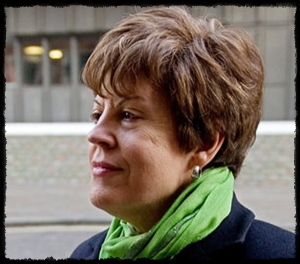
Recently, Elizabeth Wilmshurst testified before the Chilcot Inquiry. She was the deputy legal adviser at the Foreign Office in the run up to the Iraq invasion in 2003. She was the only U.K. public official to publicly resign in protest after both she and Sir Michael Wood, the senior legal advisor at the Foreign Office, told the Attorney General Lord Goldsmith, that invading Iraq without UN support would be a breach of international law and Goldsmith advised Defense Minister Jack Straw and Prime Minister Tony Blair that it would not.
Her resignation letter was simple, but clear: “I cannot in conscience go along with advice – within the Office or to the public or Parliament – which asserts the legitimacy of military action without such a resolution, particularly since an unlawful use of force on such a scale amounts to the crime of aggression; nor can I agree with such action in circumstances which are so detrimental to the international order and the rule of law.
Goldsmith had flip-flopped on the issue. At first he agreed with Wilmshurst and Wood, but then changed his mind. In Wilmhurst’s testimony to the Chilcot Inquiry this week she explains his decision-making process. Here’s an excerpt:
SIR RODERIC LYNE: But then, on 7 March, [former UK attorney general Lord Goldsmith] came out with a different view [on whether the UK could invade Iraq without the permission of the UN Security Council], in which he stated that — he accepted that there was a reasonable case that could be made in favour of the revival argument. How did you see that position that he had adopted?
MS ELIZABETH WILMSHURST: Well, of course, I was sorry because I then had to consider my own position. But there were — there were two things that struck me about it. First, that he had relied, and he said he had relied, on the views of the negotiators of the resolution to change the provisional view that he had previously had, and the issue really is: how do you interpret a resolution or a treaty in international law and is it sufficient to go to individual negotiators, but not all negotiators, and ask them for their perceptions of private conversations, or does an international resolution or treaty have to be accessible to everyone so that you can take an objective view from the wording itself and from published records of the preparatory work? I mean, it must be the second. The means of interpretation has to be accessible to all. But the Attorney had relied on private conversations of what the UK negotiators or the US had said that the French had said. Of course, he hadn’t asked the French of their perception of those conversations. That was one point that I thought actually was unfortunate in the way that he had reached his decision, and the other point that struck me was that he did say that the safest route was to ask for a second resolution. We were talking about the massive invasion of another country, changing the government and the occupation of that country, and, in those circumstances, it did seem to me that we ought to follow the safest route. But it was clear that the Attorney General was not going to stand in the way of the government going into conflict.
In Wilmhurst’s written statement before the Chilcot Inquiry, she wrote:
I regarded the invasion of Iraq as illegal, and I therefore did not feel able to continue in my post. I would have been required to support and maintain the Government’s position in international fora. The rules of international law on the use of force by States are at the heart of international law. Collective security, as opposed to unilateral military action, is a central purpose of the Charter of the United Nations. Acting contrary to the Charter, as I perceived the Government to be doing, would have the consequence of damaging the United Kingdom’s reputation as a State committed to the rule of law in international relations and to the United Nations.
These testimonies read like the best of the battles between the biblical prophets. I’d liken Elizabeth Wilmshurst to Micaiah in 1 Kings 22:
Then the king of Israel gathered the prophets together, about four hundred men, and said unto them, Shall I go against Ramothgilead to battle, or shall I forbear? And they said, Go up; for the LORD shall deliver it into the hand of the king. And Jehoshaphat said, Is there not here a prophet of the LORD besides, that we might enquire of him? And the king of Israel said unto Jehoshaphat, There is yet one, Micaiah the son of Imlah, by whom we may enquire of the LORD: but I hate him; for he doth not prophesy good concerning me, but evil. … So he came to the king. And the king said unto him, Micaiah, shall we go against Ramothgilead to battle, or shall we forbear? And he answered him, Go, and prosper: for the LORD shall deliver it into the hand of the king. And the king said unto him, How many times shall I adjure thee that thou tell me nothing but that which is true in the name of the LORD? And Macaiah said, I saw all Israel scattered upon the hills, as sheep that have not a shepherd: and the LORD said, These have no master: let them return every man to his house in peace. And the king of Israel said unto Jehoshaphat, Did I not tell thee that he would prophesy no good concerning me, but evil?
But read the whole story for yourself, it’s breathtakingly current.
-
Jurgen Moltmann: “No where else in Christianity does the terrible or heroic name of Armageddon play such role as in America.”
 Dr. Jurgen Moltmann spoke at Garrett-Evangelical Theological Seminary last September. His address was titled “A Theology of Life, A Life for Theology.” The 40-minute video can be watched here.
Here’s a little biographical information about Moltmann, who has been called the “foremost Protestant theologian in the world” today. Moltmann digs deep into the divine solidarity that undergirds all Christian hope. (Also, at minute 33, Moltmann describes where he was at Duke University in North Carolina when he heard from Harvey Cox that Martin King had been killed.)
Born on April 8, 1926, Moltmann was raised in a thoroughly secular home in Hamburg and grew up learning about poets and philosophers — Lessing, Goethe and Nietzsche — far from the church and Bible. He idolized Albert Einstein and planned to study mathematics at university. He was drafted into the German army at the end of 1944 and served for six month before surrendering in Belgium to the first British soldier he met in the woods. From 1945 to 1948, he was confined POW camps in Belgium, Scotland and England.
Overwhelmed with remorse in the camps and despairing over the horrors Germany had perpetuated throughout World War II, especially at concentration camps like Auschwitz and Buchenwald, he was given a copy of the New Testament and Psalms in a Belgium camp by an American military chaplain. He began reading mostly out of boredom and was surprised how the Scripture fed his imagination and met his emotional needs. He saw a God who was with the broken hearted and present behind barbed wire. He later said, “I didn’t find Christ; he found me.” The suffering and hope he saw as a prisoner left a lasting mark on him.
Moltmann was allowed to study theology at Norton Camp run by the YMCA under British army supervision near Nottingham, England. After his release from prison, he began studying theology at Gottingen University, where he received his doctorate in 1952. The next five years he served as pastor of the Evangelical Church of Bremen-Waserhorst. In 1958 he became a theology teacher at an academy operated by the Confessing Church in Wuppertal and in 1963 joined the theological faculty at Bonn University. He published “Theology of Hope” the following year and in 1967 was offered the prestigious position of professor of systematic theology at Tubingen University, where he taught until 1994.
Today, he continues his work as emeritus professor of theology at Tubingen and has been named the “foremost Protestant theologian in the world” by Church Times, a London-based international publication of the Anglican Church.
Moltmann married Elisabeth Wendel in 1952. Active in feminist theology, she is the author of many books, including “The Women Around Jesus,” “A Land Flowing with Milk and Honey,” and “I Am My Body.” He gives her credit for making him conscious of the psychological and social limitations of the male point of view and male judgment.
The “Boston Collaborative Encyclopedia of Western Theology: J?rgen Moltmann” notes that his development as a theologian has been marked by a “restless imagination.” In “Theology of Hope,” Moltmann presents Christianity as an active doctrine of hope with power over the future. Hope strengthens faith, helps believers move into a life of love and creates a “passion for the possible.” For him this hope acts as the motivating force behind liberation in the world.
Beyond this eschatology of hope found in the resurrected Christ, his other major theological contributions focus on creative restructuring of the doctrine of God to include suffering (“The Crucified God”) and social doctrine of the Trinity (“The Trinity and the Kingdom”).
Some quotes from Moltmann’s presentation at Garrett are below:
“Despair can be like an iron band constricting the heart.”–Jurgen Moltmann
“The turn from this end [despair] to a new beginning came from three things. A blooming cherry tree, the unexpected kindness of Scottish workers and their families, and the Bible.”–Jurgen Moltmann, the spark of life when he first left the prisoner of war camp after WWII
“Christ’s own ‘God-forsaken-ness’ on the cross showed me where God is present where God had been present in those nights of deaths in the fire storms in Hamburg and where God would be present in my future whatever may come.”–Jurgen Moltmann
“Imprisoned professors taught imprisoned students free theology.”–Jurgen Moltmann, on studying theology at the POW camp at the Norton Camp in Nottingham, England
“There are various names for this ‘Spirit of Life’ because there are various life experiences.”–Jurgen Moltmann, on the Holy Spirit
“God is not only a divine person who we can address in prayer, but also a wide living space … We human beings are giving each other space for living when we meet each other in love and friendship.”–Jurgen Moltmann
“With every righteous action, we prepare the way for the New Earth on which righteousness will dwell. And bringing justice to those who suffer violence means to bring the light of God’s future to them.”–Jurgen Moltmann, on the future of God
“Americans as no one else in the Old World are looking ahead and are future-minded without the limitations of traditions and can look ahead without the burdens of the past.”–Jurgen Moltmann, on America
“To reinvent your own country you need a great audacity of hope.”–Jurgen Moltmann, on the recurrent desire of American presidents to reinvent America
“[In 1967] The ‘Hope Movement’ replaced the ‘God is Dead’ movement.”–Jurgen Moltmann
“Christian hope does not promise successful days to the rich and the strong, but resurrection and life to those who must exist in the shadows of death. Success is no name of God. Righteousness is.”–Jurgen Moltmann
“There were two different expectations … in this land of the future. On the one hand the the optimistic belief in an unending progress with millenarianistic overtones and on the other hand the doomsday expectation of the final battle of Armageddon. Both are perspectives are uniquely American and both are inter-related.”–Jurgen Moltmann, on the messianic politics of the American founding fathers
“No where else in Christianity does the terrible or heroic name of Armageddon play such role as in America. Not even in the Revelation of John.”–Jurgen Moltmann, on the Left Behind series
There are more Moltmann videos and further details here, including “Conversation with Jurgen Moltmann,” featuring Dr. Moltmann discussing theology with three Garrett-Evangelical professors of theology, followed by a Q&A session with the audience in the Chapel of the Unnamed Faithful; one-on-one interviews about the life and theology of Dr. Moltmann with the professors who participated in the “Conversation” — Dr. Nancy Bedford, who studied under him at the University of Tubingen in Dr. Moltmann’s native Germany; Dr. Stephen Ray; and Dr. Anne Joh.
-
Mary Ward: A Prophet Honored in Her Own Country
 Jo Siedlecka wrote a nice piece on the Mary Ward celebration at Westminster Cathedral in Sunday’s U.K.-based Independent Catholic News. Ward, foundress of the Institute for the Blessed Virgin Mary (IBVM) community of Catholic nuns, was a leader in social justice in 17th-century Protestant England. Her community marks it’s 400th anniversary this month.
As a side note, I was taught by IBVM sisters and was given the Mary Ward social justice award as a senior in high school. (I’m still working up to actually earning it.)
Here’s an excerpt from Siedlecka’s article:
History was made on Saturday, when a woman who risked her life to practice her Catholic faith in 17th century Protestant England and was then imprisoned for being a heretic by the Catholic Church, was honored by Catholic Archbishop Vincent Nichols and the Anglican Archbishop of Canterbury, Dr Rowan Williams at a special Mass in Westminster Cathedral. …
During his homily, Archbishop Vincent Nichols said Mary Ward “was truly a woman of Europe” equally at home in Austria, Italy and France.
Mary Ward walked to Rome three times. “Picture her shoes” Archbishop Vincent said. “You can tell a good deal about a woman from her shoes. Hers were tough and durable, in soft leather which fitted her individuality,” Archbishop Vincent said. …
Dr Rowan Williams also paid tribute to Mary Ward. In his address, he said: “Mary Ward’s stubborn courage in following her calling through the most difficult of circumstances has, over the centuries, made a massive difference to the lives of countless people throughout the world, especially women.
“At a time when so many pressures combined to encourage the Church to retrench and to avoid risks, she kept a door open for a gospel-based vision for the renewal of religious life. Critical, loyal, brave and imaginative, she is a figure for all Christians to celebrate with gratitude.”
Read more here.
-
Thomas Merton: Grace Like an Acorn
 “Grace, which is charity, contains in itself all virtues in a hidden and potential manner, like the leaves and the branches of the oak hidden in the meat of an acorn. To be an acorn is to have a taste for being an oak tree. Habitual grace brings with it all the Christian virtues in their seed.”–Thomas Merton
Thoughts in Solitude by Thomas Merson (New York: Farrar, Strauss, Giroux, 1999, p 20.)
-
Rebecca Solnit: Is it ‘Looting’ or ‘Emergency Requisitioning of Resources’?
 Rebecca Solnit is one of my favorite essayists and writers. I first learned about her writing in her brilliant essay on Detroit and then went back to read her books. I spend a car vacation a few summers ago, reading Storming the Gates of Paradise: Landscapes for Politics aloud. Her most recent book is A Paradise Built on Hell: The Extraordinary Communities That Arise in Disaster.
This week Solnit published an insightful essay in Guernica titled Covering Haiti: When the Media is the Disaster, specifically looking at a series of photos of “looters” that ran in the LA Times. Very thought-provoking. Below is an excerpt, but read the whole essay here:
We need to banish the word “looting” from the English language. It incites madness and obscures realities.
“Loot,” the noun and the verb, is a word of Hindi origin meaning the spoils of war or other goods seized roughly. As historian Peter Linebaugh points out, “At one time loot was the soldier’s pay.” It entered the English language as a good deal of loot from India entered the English economy, both in soldiers’ pockets and as imperial seizures.
After years of interviewing survivors of disasters, and reading first-hand accounts and sociological studies from such disasters as the London Blitz and the Mexico City earthquake of 1985, I don’t believe in looting. Two things go on in disasters. The great majority of what happens you could call emergency requisitioning. Someone who could be you, someone in the kind of desperate circumstances I outlined above, takes necessary supplies to sustain human life in the absence of any alternative. Not only would I not call that looting, I wouldn’t even call that theft.
Necessity is a defense for breaking the law in the United States and other countries, though it’s usually applied more to, say, confiscating the car keys of a drunk driver than feeding hungry children. Taking things you don’t need is theft under any circumstances. It is, says the disaster sociologist Enrico Quarantelli, who has been studying the subject for more than half a century, vanishingly rare in most disasters.
Personal gain is the last thing most people are thinking about in the aftermath of a disaster. In that phase, the survivors are almost invariably more altruistic and less attached to their own property, less concerned with the long-term questions of acquisition, status, wealth, and security, than just about anyone not in such situations imagines possible. (The best accounts from Haiti of how people with next to nothing have patiently tried to share the little they have and support those in even worse shape than them only emphasize this disaster reality.) Crime often drops in the wake of a disaster.
The media are another matter. They tend to arrive obsessed with property (and the headlines that assaults on property can make). Media outlets often call everything looting and thereby incite hostility toward the sufferers as well as a hysterical overreaction on the part of the armed authorities. Or sometimes the journalists on the ground do a good job and the editors back in their safe offices cook up the crazy photo captions and the wrongheaded interpretations and emphases.
Read Solnit’s whole essay here.
-
Subscribe
Subscribed
Have a WordPress.com account? Log in now.

