-
Fr. Charles Curran: How U.S. Catholic Bishops’ Challenge of Abortion Laws is ‘Flawed’
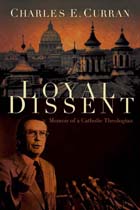 I’m still looking for a transcript of Fr. Curran’s Thursday address at Southern Methodist University, but Tom Roberts over at the National Catholic Reporter has done an excellent recap of Curran’s talk. Here are excerpts below:
The approach currently taken by the U.S. bishops to changing the law on abortion — giving it a preeminence above all other issues that Catholic voters might consider — is flawed on four counts. … Curran did not dispute church teaching about abortion in his talk. Instead he argued that various approaches to the law are acceptable under Catholic teaching.
“In my judgment, the U.S. bishops claim too great a certitude for their position on abortion law and fail to recognize that their own position logically entails prudential judgment so that they cannot logically distinguish it from most of the other issues such as the death penalty, health care, nuclear deterrence, housing,” Curran said.
[Curran] traced the narrowing of the bishops’ approach to abortion since the mid-1970s when, in the wake of Roe vs Wade, the Supreme Court decision legalizing abortion, the bishops resisted a single issue approach to political involvement. A document on political responsibility before the 1976 election, wrote Curran, “insisted the bishops did not want to form a voting bloc or tell Catholics how to vote. Voters should examine the candidates on a full range of issues, and with a consideration for the candidates’ integrity, philosophy and performance. The document lists eight issues in alphabetical order, beginning with abortion, but does not give priority to any of these issues.”
In contrast, today the bishops “now clearly state abortion is the primary issue.” Their rationale for doing so, he said, rests on their conviction that other issues of public policy and law “involve prudential judgments,” but that abortion laws “deal with something that is intrinsically evil and does not involve prudential judgments. Catholics have certitude on the abortion law issue.” However, Curran states, the bishops’ thesis is wrong for four reasons:
* “The speculative doubt about when human life begins;
* “the fact that possibility and feasibility are necessary aspects involved in discussions about abortion law;
* “the understanding and role of civil law;
* “and the weakness of the intrinsic evil argument.”
(more…) -
The Catholic Sisters Who Resisted Genocide
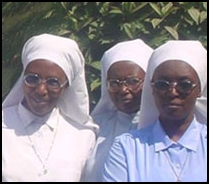 During the 1994 Rwandan genocide the Benebikira Sisters, a Catholic order of religious women, at great risk to themselves, sheltered hundreds of orphans and others who sought refuge in their convents.
Last month, 6,000 miles away from their homeland, the sisters were honored with the Courage of Conscience Award by the Peace Abbey. The women were cited for “their courage, faith and integrity during the genocide in 1994.”
Read the whole story by Kathleen Sullivan here.
Learn more about the Benebikira Sisters and the Peace Abbey.
-
Fr. Curran to Examine American Bishops and Abortion Politics


 Keep an eye out for Catholic theologian Fr. Charles Curran’s public lecture on Thursday at Southern Methodist University titled “The U.S. Catholic Bishops and Abortion Legislation: A Critique from Within the Church.”
The promo material describes it thusly:
The U.S. Roman Catholic bishops have now made legal opposition to abortion their primary social issue. This lecture will document the change that has occurred in their position about abortion laws over the years. In addition, the lecture criticizes the bishops from the perspective of Catholic theology, for having claimed too much certitude for their position. There should be room in the Catholic Church for different positions on this issue.
Dallas Catholic Bishop Kevin Farrell has denounced the lecture already, expressing his regrets that “Father Curran has chosen to criticize the position of the bishops of the United States on this matter.” Farrell’s statement has been posted on the SMU Catholic Ministry website and inserted into bulletins at Catholic Masses on campus Sunday.
Curran responded, “This paper is not about the Catholic moral teaching on abortion. In fact, the paper accepts the Catholic moral teaching that direct abortion is always wrong. The paper deals solely with abortion law and argues that one who holds the Catholic moral teaching can come to different conclusions about what the law should be.”
If anyone attends this lecture in Dallas, I’d like to hear your report. Otherwise, I will try to get a transcript and post it here. While the Catholic hierarchy has stated that Catholics cannot discuss issues such as abortion, ordination of women, or same-sex relationships and marriage on Catholic property, we certainly can and should discuss these issues — along with war and peace, nuclear weapons, the climate crisis, death penalty, health-care reform, workers rights, etc — everywhere else.
-
Where Do You Read the Bible?
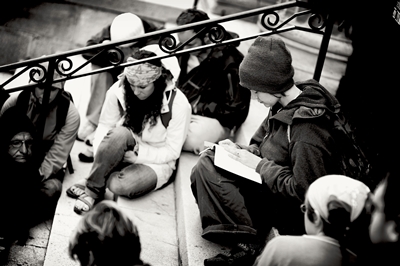
St. Mary’s Nashville http://www.justinwrightphoto.com
A shout out to John Deacon over at A Visitor’s Guide to the Homeless for clipping my Sojourners’ column Loving the World. Here’s a nice quote from John’s site:“Exegesis is the exercise of studying the scriptures with the intent of finding their original meaning and context. It is to interpret based on what the writer would have meant rather than to interpret based on what the reader subjectively ‘reads into’ the text. (i.e. ‘eisegesis)
Hermeneutics is the meaning a community finds in scripture which becomes evident in the way they live. As I reflected back on this morning’s study, I thought of how context does affect how the Bible is understood. How much closer we are to its original meaning (i.e. exegesis) when we are among people for whom ‘imprisonment’ is something more than merely imagined (i.e. eisegesis). Which hermeneutically speaking, means we can’t experience the real meaning of the scriptures without the poor.” —John Deacon
-
As Passionate as the Parisians …
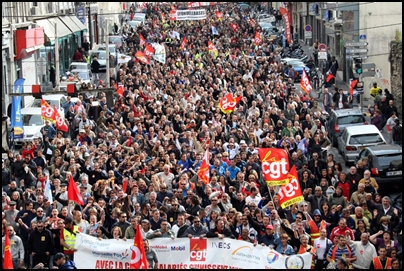
People march during a protest in Marseille, France, Oct. 16, 2010. (AP Photo/Claude Paris) They are rioting in Paris to prevent the government from resolving its debt crisis on the backs of the middle class. In England, Chancellor of the Exchequer George Osborne detailed their deepest budget cuts ever, “eliminating almost 500,000 public-sector jobs,” according to Bloomberg News.
In the midst of it all, Alison Tomlin, president of the Methodist Conference UK, preached at Central Methodist Hall this week in London, giving the perspective from Christian ministries on-the-ground. “Just in the last week,” she said, “I have been told about an emergency housing project in Birmingham at threat; a project in Newcastle working with women seeking sanctuary anxious about its future; a young offender rehabilitation project in Liverpool wondering if it must close.” All examples of governments “scrooging” the poor.
Tomlin stands in a long line of Methodist women who have taught (Susannah Wesley), funded (Lady Huntingdon) , and organized (Barbara Rucke Heck) for the Methodist revolution that believed it “inconceivable to follow Christ and not have the welfare of the poor and the vulnerable close to your heart.” Here’s a excerpt from Tomlin’s speech at Central Methodist Hall this week:
You may not have noticed but this but you are sitting in a Methodist Church, where a vibrant multi-cultural congregation meet each Sunday. When you came in on the first floor, on your left there was a life size statue of John Wesley, the founder of the Methodist Church. You may have missed it – he was a very short man.
In his journals Wesley wrote about a press that stigmatized the poor, he wrote of politicians who did not wish to look at the concerns of the poor, and who continually blamed the poor for their own fate. He wrote of people using that stigma and blame to continually treat the poorest and most vulnerable badly. Thank, goodness that was 250 years ago and could never happen now!
The past ten to fifteen years of boom benefited some sections of society but not the poorest. Relatively their income went down. Justice or, to use that popular word, ‘fairness’, demand that they do not suffer now during the bust. Earlier [ in October 2010] Eric Pickles [Secretary of State for Communities and Local Government] asked us to judge the government on how they treated the most vulnerable. That we will do.
For the past ten years Christians worldwide have been working with governments to promote policies that will end poverty. As has been repeated ad nauseam, “We have the ability, but lack the political will.” Now, as the gamblers’ deck of financial tomfoolery slides wildly out of control, Christians will need to place ourselves alongside the poor and aid in their mutual defense — against government policies, banking regulations, trade agreements, budget restructuring, etc, that will inevitably kill them.
Tomlin continued with a fine example of what makes a strong financial community:
This building was built a hundred years ago using money donated by ordinary Methodists. To ensure this was a building of ordinary people, initially no-one was allowed to donate more than one guinea. Rich and poor alike. In the historic roll, which you can see on the left as you leave the building, the names of all the people who gave one guinea, including my grandparents, are recorded.
This hall was built because Methodists believed that ordinary people, people who could afford no more than one guinea, should have a voice in the heart of Westminster. Hearing today’s contributions, the stories of ordinary people, the concern for ordinary people, I am confident my grandparents would have felt that theirs was a guinea well spent. Methodists support a wide range of views about deficit reduction. It is possible to be a Christian and a member of almost any political party. But John Wesley, and the Methodist Church he founded, believe it is inconceivable to follow Christ and not have the welfare of the poor and the vulnerable close to your heart, and we are proud to stand beside others who share those concerns today.
Rich and poor alike, if we follow Christ, then we will find ourselves deepening our relationships with the newly homeless, battered women without a refuge, and teen offenders at a loss without the re-hab programs previously available. We must be as passionate as the Parisians (without the random violence) and as courageous as the Methodist women if we are to step boldly in this new era.
Rose Marie Berger, an associate editor at Sojourners, is the author of Who Killed Donte Manning? The Story of an American Neighborhood available at store.sojo.net. This post first appeared on Sojourners God’s Politics blog.
-
Mirabai Starr: Berger’s ‘Jewel of a Book’
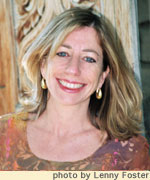 Here’s a shout out to Mirabai Starr in thanks for her lovely Amazon review of Who Killed Donte Manning?:
In her jewel of a book, Who Killed Donte Manning, Rose Marie Berger engages in the ancient prophetic tradition of calling us to bear witness to the “terrible beauty” of the sacred breaking into our ordinary lives, allowing it to transform ourselves and our communities. Through Berger’s finely tuned biblical lens, we are invited to see the whole of the human condition, from the violent death of an innocent child to the tenderness of a Muslim pizza driver kneeling in prayer as the sun sets over the streets of the inner city, as an opportunity to offer our prayers for the redemption of the world. —Mirabai Starr
Mirabai is the author of several excellent translations, including Dark Night of the Soul by John of the Cross, Teresa of Avila: The Book of My Life, and The Interior Castle.
With Sounds True press, she’s also released a set of 6 small books of devotions, prayers, and wisdom drawing on the riches of Teresa of Avila, Francis of Assisi, Michael the Archangel, John of the Cross, Hildegard of Bingen, and Our Lady of Guadalupe.
-
‘D’oh! I Thought This Was A Confessional’
 L’Osservatore Romano, the Vatican newspaper, declared Homer, Marge, Lisa, Bart, and Maggie (aka The Simpsons) to be a Roman Catholic family.
With more than 20 years of episodes under their belts, the dysfunctional working-class family whose dynamics and perspectives offer biting social critique of American society have found a home under the Vatican wing. L’Osservatore Romano wrote:
…In an article headlined “Homer and Bart are Catholics”, the Vatican newspaper said: “The Simpsons are among the few TV programs for children in which Christian faith, religion, and questions about God are recurrent themes.”
The family “recites prayers before meals and, in their own peculiar way, believes in the life thereafter”. It quoted an analysis by a Jesuit priest, Father Francesco Occhetta, of a 2005 episode of The Simpsons, “The Father, the Son and the Holy Guest Star,” which revolved around Catholicism and was aired a few weeks after the death of Pope John Paul II.
The episode starts with Bart being expelled from Springfield Elementary School and being enrolled in a Catholic school where he meets a sympathetic priest, voiced by the actor Liam Neeson, who draws him into Catholicism with his kindness. Homer then decides to convert to Catholicism, to the horror of his wife Marge, the Rev Lovejoy and Ned Flanders. The episode touches on issues such as religious conflict, interfaith dialogue, homosexuality and stem cell research.
“Few people know it, and he does everything he can to hide it, but it is true: Homer J Simpson is a Catholic,” insists L’Osservatore Romano.
The Simpsons even skewers its own success. See below U.K. graffiti artist Banksy’s dark satire of the sweat shops that produce Simpsons paraphernalia.
One could call it an animated reflection on Rerum Novarum: On Capital and Labor (Pope Leo XIII, 1891) and “the right of workers and dignity of work.”
-
Joan Chittister: From Spiritual Heroics to Wisdom
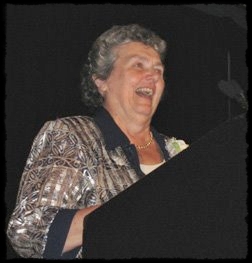 The Sufi tell stories that say all I think I’ll ever know about finding God. The first story is a disarming and compelling one. It is also, I think, a troublesome one, a fascinating one, a chastening one: “Help us to find God,” the seeker begged the Elder. “No one can help you there,” the Elder answered. “But why not?” the seeker insisted. “For the same reason that no one can help a fish to find the ocean.” The answer is clear: There is no one who can help us find what we already have.
The second story is even more challenging. “Once upon a time,” the Sufi say, “a seeker ran through the streets shouting over and over again, ‘We must put God into our lives. We must put God into our lives.’” “Ah, poor soul,” an Elder smiled wanly. “If only we realized the truth: God is always in our lives. The spiritual task is simply to recognize that.”
As a Benedictine, a disciple of an order historically devoted to the Sacrament of the Ordinary, I know how disappointing, how exhilarating that kind of advice can be. The neophyte seeks to pass the test of spiritual heroics; the wise seek to accomplish only the testimony of integrity. The young think the task is to buy God by their good efforts; the insightful know that the task is to want God beyond the lure of lesser ends, including even the trappings of spirituality.
For my own part, I entered religious life intent on being spiritually intrepid. I wanted something far more romantic than the Sacrament of the Ordinary. I expected to find formulas tried and true, ideas that were esoteric, a life that was mystical, a regimen that was at least duly demanding, if not momentously ascetic. What I found were spiritual manuals that were convoluted and academic, at best, and a community that was simple and centered in God always. The writers had missed the mark; the women were living the life. It was very disappointing. And it was very right.
God is not in the whirlwind, not in blustering and show, Scripture teaches us. God is in the breeze, in the very atmosphere around us, in the little things that shape our lives. God is in the contradictions that assail us, in the circumstances that challenge us, in the attitudes that impel us, in the motives that drive us, in the life goals that demonstrate our real aspirations, in the burdens that wear us down, in the actions that give witness to the values in our hearts. God is in the stuff of life, not in the airy-fairy of fertile imaginations bent on the pursuit of the preternatural. God is where we are, including in the very weaknesses that vie for our souls.
God is not a mystery to be sought in strange places and arcane ways. God is a mystery to be discovered within us and around us. And savored. —Sr. Joan Chittister, OSB
–from “O Wonder of Wonders,” by Joan Chittister in How Can I Find God? (Triumph Books)
-
U.S. War Vets March on Capitol Hill – 9th Anniversary of Afghanistan War
 Iraq and Afghanistan veterans marched on Washington today to demand that traumatized troops not be sent back in to combat. After gathering outside Walter Reed Army Medical Center, veterans and civilian members of Iraq Veterans Against the War, Military Families Speak Out, Civilian Soldier Alliance, and Ethan McCord of the film Collateral Damage marched 6 miles to Capitol Hill to launch Operation Recovery: Stop the Deployment of Traumatized Troops.
During a press conference on Capitol Hill, veterans testified about their experiences being redeployed while traumatized and delivered a letter to government and military officials requesting an end to the deployment of traumatized troops. (See the article on CNN.)
“October 7th marks the 9-year anniversary of the Afghanistan War, the longest ongoing war in U.S. history. Pressure from fighting two wars has put enormous strain on U.S. troops, with multiple deployments leading to an explosion of Post-traumatic Stress Disorder,” Iraq Veterans Against the War said in a press release.
“PTSD makes service members six times more likely to commit suicide. Instead of being treated, troops are often redeployed to combat while still suffering from PTSD, Traumatic Brain Injury, and Military Sexual Trauma. Officials recognize that suicides and violent crimes are on the rise, with four decorated combat vets killing themselves at Ft. Hood in one week.”
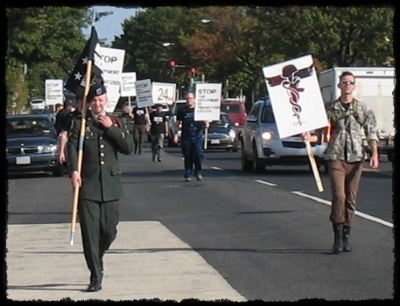
Operation Recovery: Stop the Deployment of Traumatized Troops. Washington, D.C. 7 Oct 2010 by Rose Marie Berger “I was denied treatment for the mental and physical wounds I sustained in battle, like so many others,” says Ethan McCord, a veteran whose unit was captured in the “Collateral Murder” video distributed by Wikileaks. “IVAW’s campaign is critical for soldiers because we are asserting our right to heal. Now, the government has a choice – will it recognize our right to heal, or deny it?”
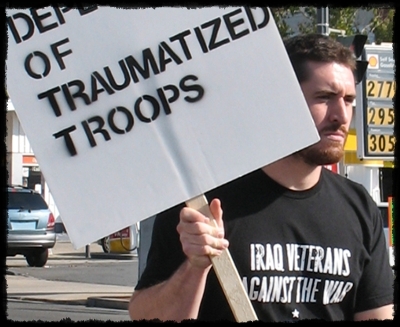
Operation Recovery: Stop the Deployment of Traumatized Troops. Washington, D.C. 7 Oct 2010 by Rose Marie Berger “Right now, 20 percent of our fighting force are being deployed on at least one psychotropic medication. These are common medications that are used for things like PTSD and TBI [Traumatic Brain Injury],” said IVAW member Jason Hurd. “I myself am a 100 percent disabled veteran with PTSD. The same medications that I’m currently on, things like Trazedone and things like Prozac, our soldiers are getting sent to Iraq and Afghanistan on these very same drugs, and I’m disabled. So, what does that say…?” Hurd served as a medic in Iraq.
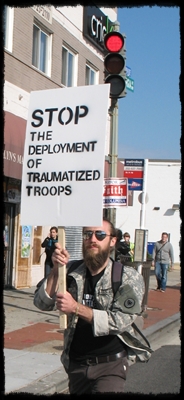
Operation Recovery: Stop the Deployment of Traumatized Troops. Washington, D.C. 7 Oct 2010 by Rose Marie Berger 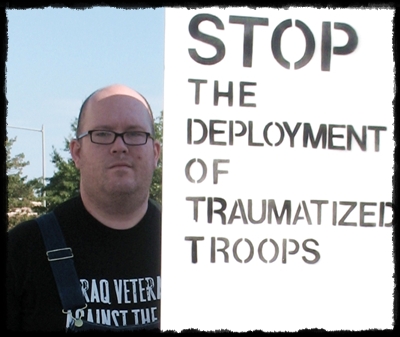
Operation Recovery: Stop the Deployment of Traumatized Troops. Washington, D.C. 7 Oct 2010 by Rose Marie Berger 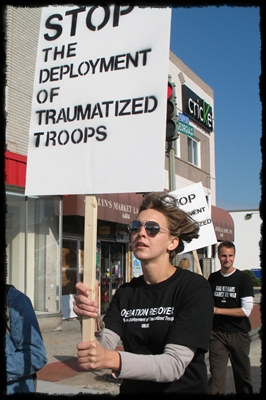
Operation Recovery: Stop the Deployment of Traumatized Troops. Washington, D.C. 7 Oct 2010 by Rose Marie Berger -
Merton: Solitude’s Special Work
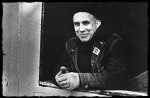
Solitude has its own special work: a deepening of awareness that the world needs. A struggle against alienation. True solitude is deeply aware of the world’s needs. It does not hold the world at arm’s length.–Thomas Merton
Conjectures of a Guilty Bystander by Thomas Merton (Image, p. 19)

-
Subscribe
Subscribed
Have a WordPress.com account? Log in now.

