-
Jim Douglass: Can a Peacemaking President Take On the Pentagon? (Part 7)
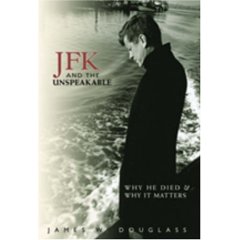 The most important book for any American to read is JFK and the Unspeakable: Who Killed Him and Why it Matters by James D. Douglass.
 Douglass’ investigation into the secret papers finally released during the Clinton era begin to uncover a deadly “family pattern” of behavior in the highest levels of political power. Now, Douglass has written an important article for Tikkun magazine that looks at how the pattern is being repeated again between President Obama, Gen. Petraeus, and Afghanistan.
Below is Part 7: Can a Peacemaking President Take On the Pentagon?
Barack Obama is a very smart and sometimes courageous man. Why did he submit to his generals by widening a disastrous war? Did he think he could at least use his waning power to improve the domestic state of the union, while hoping he could eventually find a way out of our downward spiral of war in Afghanistan, Pakistan, and Iraq?
If so, he will finally have to say no, for the sake of us all, to his generals and the powers behind them. They will always want the troops to fight more battles “for the rest of our lives and probably our kids’ lives” toward the end of “trillions of dollars worth of minerals” on a new Silk Road.
Can any president of the United States turn toward peace without being threatened, set up, and “if necessary” (from the standpoint of our national security state), assassinated?
Because of our unwillingness to connect the dots of Dallas with those of Washington, U.S. citizens have been unable to raise that post-JFK question to consciousness. In the Washington of Barack Obama, where some speak of a president’s assassination casually and others deliberately, it is time that we dealt with the question in a serious way. John Kennedy did. From his frequent remarks anticipating his own death, friends said he was obsessed by it. He seems rather to have seen his death in a remarkably detached way in a time of darkness, accepting his own demise “if necessary” (from the standpoint of his conscience) as the simple consequence of doing his duty.
Once we face the why of Kennedy’s assassination, never really mysterious and now a story documented by the mass of files made public by the Assassination Records Review Board, we can deal with an obvious question that has likely passed through the mind of Barack Obama: can a peacemaking president survive a warmaking state? A conscientious president’s survival, and the carrying out of peace initiatives against the grain of his government and corporate power, is entwined with the survival of every human being on earth. The president’s vulnerability, while he tries to turn a massive Washington warship toward peace and disarmament, is an unspeakable fact of our politics.
But the other side of the unspeakable is ourselves. Our sense of despair, when we see a president’s reluctance to choose what may kill him, raises questions about ourselves.–James Douglass, from JFK, Obama, and the Unspeakable
-
Jim Douglass: In His Own Bay of Pigs Moment, Obama Backed Down (Part 6)
The most important book for any American to read is JFK and the Unspeakable: Who Killed Him and Why it Matters by James D. Douglass. Douglass’ investigation into the secret papers finally released during the Clinton era begin to uncover a deadly “family pattern” of behavior in the highest levels of political power. Now, Douglass has written an important article for Tikkun magazine that looks at how the pattern is being repeated again between President Obama, Gen. Petraeus, and Afghanistan.
Below is Part 6: In His Own Bay of Pigs Moment, Obama Backed Down
Just as John Kennedy did, Barack Obama had a Bay of Pigs early in his presidency. He became the target of a covert operation that trapped and compromised him as president. In Obama’s case, the challenge to his authority as commander-in-chief came not from the CIA but from the Army, and not in Cuba but in Afghanistan. As in Kennedy’s case, Obama’s response to the entrapment established the pattern of his presidency, but in a direction opposite to Kennedy’s. Obama has become an obedient servant to his national security state, and as a result, a source of despair to many of his supporters.
The critical background to President Obama’s June 2010 firing of General Stanley McChrystal for his outlandish Rolling Stone interview was McChrystal’s close relationship to the man Obama named to replace him. The president’s newly appointed Afghan commander, David H. Petraeus, was McChrystal’s boss and mentor. In September 2009, in a more significant subversion of Obama’s authority than the later interview, McChrystal had been Petraeus’s point man in a Pentagon threat of revolt unless the president escalated the Afghan War.
Heavily supported by Republican leaders, McChrystal pressured Obama publicly by a series of statements questioning the president’s initial resistance to the general’s recommendation of 40,000 more troops. Petraeus also went public, telling a columnist the United States would fail in the war unless the president gave them the troops they needed. Obama’s generals were conducting a media war to force him into a decision they had chosen for him. As Secretary of State Colin Powell’s former top aide, Col. Lawrence Wilkerson, observed, “Petraeus and McChrystal have put Obama in a trick bag.”
As Bob Woodward reported in Obama’s Wars, the president was blocked at every turn by his war cabinet, as he sought alternative troop options and an exit plan from the war. However, the generals wanted their troop surge and an open-ended strategy. They provided no exit plan.
“You’re not really giving me any options,” Obama told them. “You agreed to go back and work those up.” Instead they kept pressuring him for the same troop increase, under different guises, in a war without end. “It’s unacceptable,” he said.
Obama told civilian advisers that the military heads were “really cooking the thing in the direction they wanted. They are not going to give me a choice.”
The president finally gave them 30,000 more troops, while setting a shaky, condition-based date of next July for a beginning withdrawal. The generals claimed victory. Petraeus was pleased. His counterinsurgency strategy was alive and well. As he let Woodward know, “If the president had told him at the beginning that it would come out with this strategy and 30,000 troops, Petraeus would have taken it in a second.”
Moreover, Petraeus said privately, he continued to see no end in sight in Afghanistan: “You have to recognize also that I don’t think you win this war. I think you keep fighting. This is the kind of fight we’re in for the rest of our lives and probably our kids’ lives.”
When Obama replaced McChrystal half a year later by the more subtle, more controlling Petraeus, it was a further submission to the military authorities that the president was elected to command.
After JFK was set up by the CIA (with the Pentagon’s support) at the Bay of Pigs, that new, young president bucked his national security state by firing his main adversary, Cold-Warrior-in-Chief Allen Dulles. When Obama was set up by General Petraeus, General McChrystal, and their colleagues to escalate the war in Afghanistan, our new, young president, after (to his credit) months of deliberation, reluctantly went along. His later insertion of Petraeus as his new Afghan commander put the most likely GOP candidate for president in 2012, General David Petraeus, in an ideal running position. Because Bush’s “surge” of occupying troops in Iraq (under Petraeus) has somehow been judged a “win,” Obama will be scapegoated with the “loss” if a proxy government in Iraq fails after his troop withdrawal.
In August General Petraeus warned, “If the U.S. loses [in Afghanistan], there would likely be a bloody civil war followed by a takeover by extremists.” He added, “If the U.S. succeeds and Afghanistan stabilizes, the country could become the region’s new Silk Road with the potential to extract trillions of dollars worth of minerals.”
If Petraeus fails in his counterinsurgency war to pacify that new road to corporate profits, he can keep on saying he needed more troops and more time to “win” there — preparing the political ground for another Obama “loss.” Petraeus can then return home for a GOP draft to run for president. Obama, by surrendering to his generals, has been trapped in the same kind of plotting Kennedy had the insight and courage to resist.–James Douglass, from JFK, Obama, and the Unspeakable
-
Jim Douglass: A President Assassinated by the National Security State (Part 5)
The most important book for any American to read is JFK and the Unspeakable: Who Killed Him and Why it Matters by James D. Douglass. Douglass’ investigation into the secret papers finally released during the Clinton era begin to uncover a deadly “family pattern” of behavior in the highest levels of political power. Now, Douglass has written an important article for Tikkun magazine that looks at how the pattern is being repeated again between President Obama, Gen. Petraeus, and Afghanistan.
Below is Part 5: A President Assassinated by the National Security State
Also in September, JFK initiated a secret dialogue with Fidel Castro, through U.S./UN diplomat William Attwood, to normalize U.S.-Cuban relations. Kennedy’s first back-channel representative in that dialogue, French reporter Jean Daniel, was actually meeting with Castro on the afternoon of November 22, 1963, when they heard the news that, as Castro said, ” changed everything.” The U.S.-Cuban dialogue died in Dallas.
On October 11, 1963, JFK had signed National Security Action Memorandum 263. It ordered a U.S. troop withdrawal from Vietnam — bringing home “1,000 U.S. military personnel by the end of 1963” and “by the end of 1965 … the bulk of U.S. personnel,” an order that President Johnson quietly voided. The Vietnam War was reignited in Dallas.
President Kennedy’s courageous turn from global war to a strategy of peace provides the why of his assassination. Because he turned toward peace with our enemies, the Communists, he found himself at odds with his own national security state. Peacemaking had risen to the top of his agenda as president. That was not the kind of leadership the CIA, the Joint Chiefs of Staff, and the military-industrial complex wanted in the White House. Given the Cold War dogmas that gripped those dominant powers, and given Kennedy’s turn toward peace, his assassination followed as a matter of course. Given what we know now, there can be little doubt it was an act of state. –James Douglass, from JFK, Obama, and the Unspeakable
-
Jim Douglass: Kennedy and Krushchev Ally Against Their Own Militaries (Part 4)
The most important book for any American to read is JFK and the Unspeakable: Who Killed Him and Why it Matters by James D. Douglass. Douglass’ investigation into the secret papers finally released during the Clinton era begin to uncover a deadly “family pattern” of behavior in the highest levels of political power. Now, Douglass has written an important article for Tikkun magazine that looks at how the pattern is being repeated again between President Obama, Gen. Petraeus, and Afghanistan.
Below is Part 4: Kennedy and Krushchev Ally Against Their Own Militaries
In the Cuban Missile Crisis, President Kennedy had to confront the unspeakable in the form of total nuclear war. At the height of the terrifying conflict that his own anti-Castro policies had helped precipitate, he felt the situation spiraling out of control, especially because of pressures and provocations by the Pentagon led by General Curtis LeMay. At a moment when the world was falling into darkness, Kennedy did what his generals thought was unforgivable: he not only rejected their pressures for attacking Cuba and the Soviet Union, but even worse, the president also reached out to the enemy for help. That could be considered treason.
Soviet Premier Nikita Khrushchev saw it as hope. Robert Kennedy had met secretly with Soviet Ambassador Anatoly Dobrynin in Washington, warning that the president was losing control to his generals and needed the Soviets’ help. When Khrushchev received Kennedy’s plea for help in Moscow, he turned to his foreign minister, Andrei Gromyko, and said, “We have to let Kennedy know that we want to help him.”
Khrushchev hesitated when he heard himself say “help.” Just when the U.S. president seemed to be at his wit’s end, did he, Khrushchev, really want to help his enemy? Yes, he did. He repeated the word “help” to his foreign minister: “Yes, help. We now have a common cause, to save the world from those pushing us toward war.”
How can we understand that moment? The two most heavily armed leaders in history, on the verge of total nuclear war, suddenly joined hands against those on both sides pressuring them to attack. Khrushchev ordered the immediate withdrawal of his missiles, in return for Kennedy’s public pledge never to invade Cuba and his secret promise to withdraw U.S. missiles from Turkey — as he would in fact do. The two Cold War enemies had turned, so that each now had more in common with his opponent than either had with his own generals.
Neither John Kennedy nor Nikita Khrushchev was a saint. Each was deeply complicit in policies that brought humankind to the brink of nuclear war. Yet, when they encountered the void, they turned to each other for help. In doing so, they turned humanity toward the hope of a peaceful planet.
Kennedy kept walking in that direction, as did Khrushchev.
JFK gave his greatest speech on June 10, 1963, at American University. In it he envisioned an end to the Cold War, saying he was stopping atmospheric testing of nuclear weapons and “we will not be the first to resume.” He said he wanted to negotiate a test ban treaty with the Soviets as soon as possible in Moscow (a less hostile context for negotiations with the enemy than the president’s own Washington). His long-range goal, he said, was “general and complete disarmament — designed to take place by stages, permitting parallel political developments to build the new institutions of peace which would take the place of arms.”
Khrushchev responded in the same spirit. In an astonishing six weeks, the two leaders agreed to the Partial Nuclear Test Ban Treaty. Kennedy said, however, that getting Senate ratification would be “almost in the nature of a miracle.” The president convened peace activists, business leaders, women’s magazine editors, union activists, scientists, and religious leaders in a White House council to organize massive citizen support for the treaty. Their grassroots campaign turned public opinion around. The Senate passed the Test Ban Treaty by a large majority in September 1963.–James Douglass, from JFK, Obama, and the Unspeakable
-
Jim Douglass: Dorothy Day’s Take on Kennedy’s Character (Part 3)
The most important book for any American to read is JFK and the Unspeakable: Who Killed Him and Why it Matters by James D. Douglass. Douglass’ investigation into the secret papers finally released during the Clinton era begin to uncover a deadly “family pattern” of behavior in the highest levels of political power. Now, Douglass has written an important article for Tikkun magazine that looks at how the pattern is being repeated again between President Obama, Gen. Petraeus, and Afghanistan.
Below is Part 3: Dorothy Day’s Take on Kennedy’s Character
I am a Catholic Worker. I am deeply skeptical of the power of kings and presidents — all of them. But what I also learned from Dorothy Day, mother of the Catholic Worker movement, was a belief in the goodness of every human being. Dorothy had that belief in John Kennedy. She told me pointedly, after JFK’s death, to study his life.
I didn’t know that she and Kennedy had met. Young Jack Kennedy and his older brother Joe, who would die in World War II, visited the Mott Street Catholic Worker in Manhattan one day in the summer of 1940. Catholic Worker Stanley Vishnewski recalled the incident in an interview with Bill Moyers:
I remember distinctly how bewildered [John Kennedy] was by the sight of the poverty and the misery of the place. And then Dorothy came in. She talked to him. Then Dorothy says, “Come and have supper with us.” And Kennedy looked at her, a little startled, and says, “No, come out and have dinner with us instead.” So Dorothy, and Joe and John Kennedy … we went out to a little restaurant around the corner. We had a wonderful conversation.
They talked long into the night “of war and peace and of man and the state,” as Dorothy wrote in her book, Loaves and Fishes.
Even when Dorothy Day was marching and speaking out decades later against JFK’s Cold War policies, something about him struck the chord of her belief in human goodness. So she said after he was killed: “Pay attention. Learn more about his life.” It took me over thirty years to follow her recommendation. Yes, we can learn more from his life … and his death.–James Douglass, from JFK, Obama, and the Unspeakable
-
Jim Douglass: How Kennedy Took On the Steel Industry (Part 2)
The most important book for any American to read is JFK and the Unspeakable: Who Killed Him and Why it Matters by James D. Douglass. Douglass’ investigation into the secret papers finally released during the Clinton era begin to uncover a deadly “family pattern” of behavior in the highest levels of political power. Now, Douglass has written an important article for Tikkun magazine that looks at how the pattern is being repeated again between President Obama, Gen. Petraeus, and Afghanistan.
Below is Part 2: How Kennedy Took On the Steel Industry
The steel crisis was JFK’s second step toward freedom.
On April 10, 1962, U.S. Steel chairman Roger Blough informed President Kennedy that Blough’s company was raising steel prices by 3.5 percent — breaking an agreement to control inflation that the president had just brokered between U.S. Steel and the United Steelworkers. U.S. Steel was joined publicly in the price hike by five other companies already in collusion with it. JFK was furious at being double-crossed. He said to his staff, in a sentence Wall Street would not forget: “My father always told me that all businessmen were sons of bitches, but I never believed it until now.”
President Kennedy and Attorney General Robert Kennedy launched an all-out domestic war to force the heads of the six colluding companies to cancel their price increase. The Justice Department raided Big Steel’s corporate offices. Robert Kennedy subpoenaed the steel executives’ personal and company records. The Kennedys were going for broke. Most ominously for Big Steel, the president ordered the Defense Department to market its steel business overseas, so as to take huge profits out of the hands of U.S. Steel and its cohorts, at the heart of the military-industrial complex. Faced by the fact that the Kennedys meant business — their business — the steel heads surrendered quickly, rescinding their price raise.
However, they accomplished a more sinister purpose. A Fortune magazine editorial stated with an insider’s knowledge that U.S. Steel’s decision to raise prices, made by a board of directors composed of the financial elite of the country, was designed to present the president with a dilemma: either accept the price hike and lose credibility or push back and unite the business world against him, as he did. Fortune publisher Henry Luce, the most powerful media magnate in the world, was behind the editorial. Drawing on Shakespeare’s prediction by the soothsayer of Julius Caesar’s assassination, “Beware the ides of March,” the Luce editorial’s title warned Kennedy of the fate he was tempting by his stand against imperial power: “Steel: The Ides of April.”
The powers that be had to be more than a little angry to be threatening the president so boldly. An American parable was in the making. As Kennedy turned heretically toward peace after the Cuban Missile Crisis, the parable of the president and the powers would be played out until it climaxed a year later on a sunny street in Dallas. Then it would be up to us to open our ears and hear.–James Douglass, from JFK, Obama, and the Unspeakable
-
Is Dumpster-Diving the New Gleaning? See the film.
Jeremy Seifert, a member of Pasadena Mennonite church in southern California (whose pastor is Sojourners co-founder Joe Roos) has produced an award-winning film titled Dive! Yep. It’s on dumpster-diving.
One could preach volumes on charity and justice using this film. Even the trailer raises excellent questions about the ancient biblical practice of gleaning. The custom of allowing the poor to follow the reapers in the field and glean the extras as illustrated in Ruth 2:2-23. This custom dates back to one of the earliet agricultural laws of the Hebrews (Lev 19:9; 23:22; Dt 24:19-21). Breaking this law was a punishable offense. However, was a practice of generosity or of justice or both?
Check out the trailer below.
http://vimeo.com/moogaloop.swf?clip_id=7730865&server=vimeo.com&show_title=1&show_byline=1&show_portrait=1&color=&fullscreen=1&autoplay=0&loop=0Dive! Trailer from Compeller on Vimeo.
(And now read Ryan Beiler’s excellent 1996 article The Tao of Dumpster Diving.)
-
Nopales in the Urban Desert
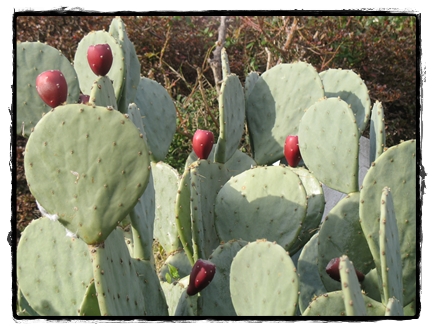
Tunas and nopales blooming in Columbia Heights “The wilderness and the dry land shall be glad; the desert shall rejoice and blossom like the crocus;
it shall blossom abundantly and rejoice with joy and singing.”–Isaiah 35:1-2 -
Jim Douglass: JFK, Obama, and the Unspeakable (Part 1)
The most important book for any American to read is JFK and the Unspeakable: Who Killed Him and Why it Matters by James D. Douglass.
The term “the Unspeakable”comes from Thomas Merton, who describes it as “an evil whose depth and deceit seemed to go beyond the capacity of words to describe.” Regarding the assassination of President John Kennedy, the Unspeakable succeeded because American citizens denied of the horrifying truth of the event and because of the plausible deniability by the government agencies responsible for the murder.
The Kennedy “conspiracy theories” have kept Americans from seriously reckoning with our country’s first military coup. Douglass’ investigation into the secret papers finally released during the Clinton era begin to uncover a deadly “family pattern” of behavior in the highest levels of political power. Now, Douglass has written an important article for Tikkun magazine that looks at how the pattern is being repeated again between President Obama, Gen. Petraeus, and Afghanistan.
Below is Part I:
Our great prophecies are contingencies. The way our greatest U.S. prophet, Dr. Martin Luther King Jr., put our common future in the nuclear age was: “The choice today is no longer between violence and nonviolence. It is either nonviolence or nonexistence.”
King’s prophecy applies to all of humankind as we decide whether to exterminate ourselves. His prophetic contingency, our turning collectively toward nonviolence or nonexistence, applies especially to the citizens of the planet’s most powerful country, the United States of America, and particularly to the citizen we elect to preside over our government: the president.
John F. Kennedy was in the same dire position every U.S. president has been in since World War II. As president, Kennedy was under the control of what his predecessor, Dwight D. Eisenhower, identified in his Farewell Address as the military-industrial complex. “[Its] total influence — economic, political, even spiritual,” Eisenhower said, “is felt in every city, every state house, every office of the federal government.”
The military-industrial complex, more powerful today than ever, imprisons the president. A U.S. president is always accompanied by a military attaché bearing a nuclear code that can incinerate the earth. That gun to the world is a gun to the president. When he accepts the power to kill everyone, the president becomes a prisoner morally and politically to the demands of our national security state. Whether his name is Dwight D. Eisenhower, John F. Kennedy, or Barack Obama, once he accepts nuclear power over the world, his permissible movement as president is confined to a very tight space — tighter than we as citizens might imagine.
How Kennedy Rebelled Against the Pentagon and CIA
President Kennedy rebelled against the “economic, political, even spiritual” influence that President Eisenhower described. During JFK’s two years and ten months in power, while that power pressured him relentlessly, he compromised with it to survive a few months but in the end stood his ground and took the bullets. In fact both he and his enemies saw the writing on the wall as early as the abortive Bay of Pigs invasion of Cuba, in the first spring of his short presidency.
The CIA lied to Kennedy about the political and geographic conditions that premised his approval of the agency’s Cuban exile brigade landing at the Bay of Pigs. He realized afterward he had been set up — he had to either send U.S. combat troops into Cuba to supersede the CIA’s futile exile brigade (as he said in advance he would never do) or accept a huge defeat. After the revealing CIA documents were declassified, the way National Public Radio commentator Daniel Schorr put it was: “In effect, President Kennedy was the target of a CIA covert operation that collapsed when the invasion collapsed.” JFK swallowed defeat instead of committing U.S. troops; in recognition of the CIA’s trap, he said he wanted “to splinter the CIA in a thousand pieces and scatter it to the winds.”
The Bay of Pigs enabled Kennedy to see the cloaked demands of the CIA and the Pentagon as a usurpation of his power as president. He began to break free from his military and intelligence commanders. Prisoners get shot for doing that. JFK’s decision to fire CIA Director Allen Dulles and his deputies in the wake of the Bay of Pigs was his first step toward freedom, meaning also death. He was asserting a presidential control that Eisenhower never did over Allen Dulles and his brother, Secretary of State John Foster Dulles. The Dulles brothers were career Wall Street lawyers who dominated Eisenhower and served the military-industrial interests that he warned against. It was a warning Ike gave only when it was too late for him to shake those interests off. He left that chore to the next president.
When JFK bowled over kingpin Allen Dulles (who would return to power as the most influential member of the “Warren” Commission), the upstart president was acting as if he — not his military and intelligence commanders — were in charge. Kennedy was shocked by the CIA’s scheming against him at the Bay of Pigs, and the CIA was shocked by Kennedy’s removal of Dulles. Who did he think he was?–James Douglass, from JFK, Obama, and the Unspeakable
-
Thomas Merton: When I Distract Even Myself
Thanks to Wendy for passing this along.

Suppose that my “poverty” be a hunger for spiritual riches: suppose that by pretending to empty myself, pretending to be silent, I am really trying to cajole God into enriching me with some experience — what then?
Then everything becomes a distraction. All created things interfere with my quest for some special experience. I must shut them out, or they will tear me apart.
What is worst — I, myself am distraction. But, unhappiest of all — if my prayer is centered in myself, if it seeks only an enrichment of my own self, my prayer will be my greatest potential distraction.
Full of my own curiosity, I have eaten of the tree of Knowledge and torn myself away from myself and God.
I am left rich and alone and nothing can assuage my hunger: everything I touch turns into distraction.–Thomas Merton
Thoughts In Solitude by Thomas Merton (p 93)
-
Subscribe
Subscribed
Have a WordPress.com account? Log in now.

