-
Largest Day of Arrests Yet at White House Pipeline Protest

Rev. Mari Castellanos WASHINGTON, DC – America’s top climate scientist and a large group of religious leaders were arrested at the White House this morning with 140 other Americans to push President Obama to deny the permit for a massive new oil pipeline. To date 522 people have been arrested at the White House protesting the pipeline.
“If Obama chooses the dirty needle it will confirm that the President was just green-washing all along, like the other well-oiled coal-fired politicians, with no real intention of solving the addiction,” said NASA’s Dr. James Hansen, who was arrested at the White House this morning.
President Obama must decide whether or not to grant a “presidential permit” for a Canadian company, TransCanada, to begin construction of the Keystone XL, a 1,700 mile pipeline from the Canadian tar sands to refineries on the Gulf of Mexico.Earlier this summer, Dr. Hansen and twenty other leading scientists sent a letter to the White House urging the President to prevent the construction of the Keystone XL pipeline, writing: “If the pipeline is to be built, you as president have to declare that it is ‘in the national interest.’ As scientists, speaking for ourselves and not for any of our institutions, we can say categorically that it’s not only not in the national interest, it’s also not in the planet’s best interest.”
Best-selling evangelical author Jim Wallis, who recently served on President Obama’s Advisory Council on Faith-based and Neighborhood Partnerships, sent a message of support to the protesters. “American Christians are demanding a new direction in America’s energy future — one that marks our turn away from oil and fossil fuels and toward cleaner and renewable energy sources,” wrote Wallis. “Developing the tar sands in Canada and building the Keystone XL pipeline through six states in the American Midwest is the wrong direction for our country and derails progress of building a responsible energy infrastructure.”
“Climate change hurts the poor first,” said Rose Berger, a Roman Catholic and editor at Sojourners magazine who led a large delegation of religious leaders participating in the protest and was arrested this morning. “The tar sands development and the permitting the Keystone XL pipeline will worsen climate change and should be stopped.”
“We must turn up the heat in a sustained effort against the scourge of climate change, which harms not just our land and water but people here and now, our human future and all earthly creation,” said Rabbi Fred Scherlinder Dobb of Adat Shalom Reconstructionist congregation in Bethesda, MD.
The executive directors of Greenpeace and 350.org, as well as the President of CREDO Mobile, also took part in today’s sit-in. So far, the ongoing White House protest that began on Saturday, Aug 21st has led to the arrest of over 500 Americans. The protest will continue until September 3rd with large crowds expected each day.
-
145 People Arrested Today at White House, Religious Leaders, Artists, Students

I’m home. I’m tired. And I feel great! Today 145 people were arrested in front of the White House to bring attention to the Keystone XL pipeline, a linchpin in the battle for climate justice. My police wristband shows that I was number 49.With more than 60 people from the religious community joining the Tar Sands Action today, we were able to push the number of arrests over the past week up to 522.
We had a very hot ride in the police van but the Park Police processed us very quickly. We were released from custody and greeted outside with water, granola bars, and hugs. What could be better?
But the point was not to get arrested. The point was to make of our lives a living witness. To make it clear that climate change has gone too far and we are no longer going to stand idly by while our sisters, brothers, and home planet are torn apart by oil companies. Here are a couple of photos from today, but see many more here.


Dr. James Hansen, Jacek Orzechowsky, OFM, Rose Berger -
‘Christianity is a Lifestyle’
 Please keep me in your prayers as I prepare myself for tomorrow’s Tar Sands Action at the White House. It will likely end in a “very civil civil disobedience,” as Bill McKibben says – and arrest. To date, 381 people have been arrested. Monday’s “religious contingent” will likely be the largest group yet. I’m grateful to be able to live my “Christian lifestyle” out loud in this way – to take a small political risk for the gospel.
It seems to me that it is a minority that gets the true and full gospel. We just keep worshiping Jesus and arguing over the right way to do it. The amazing thing is that Jesus never once says “worship me!” He says, “follow me” (e.g., Matthew 4:19).
Christianity is a lifestyle—a way of being in the world that is simple, nonviolent, shared, and loving. However, we made it into a clever “religion,” in order to avoid the lifestyle itself. One could be warlike, greedy, racist, selfish, and vain, and still believe that Jesus is their “personal Lord and Savior.” The world has no time for such silliness anymore. The suffering on Earth is too great.
Adapted from Center for Action and Contemplation: Gospel Call to Compassionate Action (Bias from the Bottom) and Contemplative Prayer
-
Did God’s Wrath Cause the East Coast Earthquake?
-
Obama: ‘Climate change cannot be denied. Our responsibility to meet it must not be deferred.’
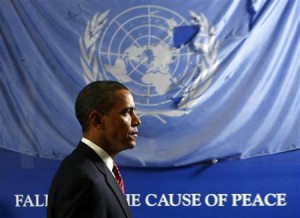 In President Obama’s 2009 address to the United Nations, he laid out four pillars that he believes are fundamental to the future: 1) nuclear non-proliferation and disarmament, 2) peace and security, beginning with Israel and Palestine, 3) the preservation of the planet, 4) a global economy that advances opportunity for all.
As of today, more than 200 people have been arrested in front of the White House protesting the Keystone XL pipeline: The largest single threat to climate change that we’ve seen so far.
Come help President Obama keep his promises on climate change. He has said repeatedly that he needs people knocking on his door in order to push forward toward sane policy. Come. Knock!
Here’s what President Obama said about climate change before the United Nations:
We must recognize that in the 21st century, there will be no peace unless we take responsibility for the preservation of our planet. And I thank the Secretary General for hosting the subject of climate change yesterday.
The danger posed by climate change cannot be denied. Our responsibility to meet it must not be deferred. If we continue down our current course, every member of this Assembly will see irreversible changes within their borders. Our efforts to end conflicts will be eclipsed by wars over refugees and resources. Development will be devastated by drought and famine. Land that human beings have lived on for millennia will disappear. Future generations will look back and wonder why we refused to act; why we failed to pass on — why we failed to pass on an environment that was worthy of our inheritance.
And that is why the days when America dragged its feet on this issue are over. We will move forward with investments to transform our energy economy, while providing incentives to make clean energy the profitable kind of energy. We will press ahead with deep cuts in emissions to reach the goals that we set for 2020, and eventually 2050. We will continue to promote renewable energy and efficiency, and share new technologies with countries around the world. And we will seize every opportunity for progress to address this threat in a cooperative effort with the entire world.
And those wealthy nations that did so much damage to the environment in the 20th century must accept our obligation to lead. But responsibility does not end there. While we must acknowledge the need for differentiated responses, any effort to curb carbon emissions must include the fast-growing carbon emitters who can do more to reduce their air pollution without inhibiting growth. And any effort that fails to help the poorest nations both adapt to the problems that climate change have already wrought and help them travel a path of clean development simply will not work.
It’s hard to change something as fundamental as how we use energy. I know that. It’s even harder to do so in the midst of a global recession. Certainly, it will be tempting to sit back and wait for others to move first. But we cannot make this journey unless we all move forward together. As we head into Copenhagen, let us resolve to focus on what each of us can do for the sake of our common future.
-
Catch the Vision: Tar Sands Protest Art

Day 1: Sixty-five arrested. Locals were released by 8 p.m. Out-of-towners held in D.C. jail until Monday morning arraignment. The D.C. police seem to want to make an example of the first group in order to discourage the next 13 days of sustained protest.
What we know is that the small but real sacrifice of these few to be held over the weekend will be joined by hundreds of others. In determined peaceableness, we will flood the streets. We will raise the banners. We will fill the jails. Because we can not do otherwise. The cost of inaction is simply too high.
Some highlights from Saturday: Jim Antal, former head of Fellowship of Reconciliation and now president of the Massachussetts Conference of the United Church of Christ was arrested. Kristy Powell, originator of the One Dress Protest, was arrested. Lt. Dan Choi, leader of the protest against the former military policy of “Don’t Ask, Don’t Tell”, was arrested. Fr. Jim Noonan, Maryknoll Catholic priest, who spent years in Cambodia under Pol Pot serving AIDS patients was arrested.
-
Keystone Pipeline and the ‘Social Cost of Carbon’

Randy Thompson, Merrick County, Nebraska, is leading the charge against this dirty oil pipeline. Starting today in Washington, D.C., “we, the people” will raise our citizen voices against TransCanada/Cononco Keystone XL pipeline project. People will sit in front of the gates of the White House to bring attention to this issue. The Park Police will slap plastic handcuffs on them and keep them under custody for the day. Then, more than likely, fine ’em and let ’em go.
Somewhere between the brilliant chaos of Nebraska farmers, Jewish rabbis, office workers, Catholic priests and nuns, people hell-bent on saving the world, retirees, indigenous leaders, bright-eyed youth, the “temporarily unemployed,” and hundreds of other regular folks risking arrest on the White House sidewalk and the stunningly powerful government-speak of the EPA’s comment on just how bad this pipeline is I find a refreshing mix that is democracy.
“Moreover, recognizing the proposed Project’s life time is expected to be at least fifty years, we believe it is important to be clear that under at least one scenario, the extra GHG [green house gas] emissions associated with this proposed Proje ct may range from 600 million to 1.15 billion tons CO2-e, assuming the lifecycle analysis holds over time (and using the SDEIS’ [State Departments Environmental Impact Statement] quantitative estimates as a basis). In addition, we recommend that the Final EIS explore other means to characterize the impact of the GHG emissions, including an estimate of the “social cost of carbon” associated with potential increases of GHG emissions.
The social cost of carbon includes, but is not limited to, climate damages due to changes in net agricultural productivity, human health, property damages from flood risk, and ecosystem services due to climate change. Federal agencies use the social cost of carbon to incorporate the social benefits of reducing CO2 emissions into analyses of regulatory actions that have a marginal impact on cumulative global emissions; the social cost of carbon is also used to calculate the negative impacts of regulatory actions that increase CO2 emissions.”–Cynthia Giles, U.S. Environmental Protection Agency (letter 6 June 2011)
-
Prayer Should Be ‘Short and Pure’
 Today, I dipped into Robert Ellsberg’s wonderful All the Way to Heaven: Selected Letters of Dorothy Day for encouragement and some of Dorothy’s straight-up truth.
In the autumn of 1964, Dorothy spent six months at her daughter’s farm in Vermont minding her grandchildren their father left. In a letter to artist Fritz Eichenberg during that time, she recounts the children’s spirituality.
“Eric is 16 and Nickie is 14, and they still so trustfully put up their foreheads for me to make the sign of the cross on them before they go to bed at night and before they go to school in the morning. I urge them, as St. Benedict did, to short and frequent prayer, as they go down the road to the school bus in the morning…” (p.304)
The Rule of St. Benedict Dorothy refers to was written to make it easier for us to be good and to love God. Chapter 20, on “Reverence in Prayer” says:
it is not in saying a great deal that we shall be heard (Matthew 6:7),
but in purity of heart and in tears of compunction.
Our prayer, therefore, ought to be short and pure,
unless it happens to be prolonged
by an inspiration of divine grace. -
Who Knew Merton Had Colitis? An Interview with Jim Finley
James Finley left home at the age of 18 for the Abbey of Gethsemani in Trappist, Kentucky, where Thomas Merton lived as a contemplative. He later earned degrees from the University of Akron, Saint John College, and the Fuller Theological Seminary. Today James Finley is a writer, psychotherapist, and retreat leader.
Recently, Finley led a retreat at Holy Wisdom Monastery in Madison, Wisconsin. Mike Sweitzer-Beckman took a few minutes to interview Jim about his two years sitting in Merton’s novice classes.
When did you first meet Thomas Merton?
In my home growing up, I was exposed to physical, sexual and emotional abuse. My mother was a devout Roman Catholic, and she taught me how to pray to deal with my alcoholic father. In 9th grade, I attended a Catholic high school in Akron, Ohio, and one of the Holy Cross brothers talked about monasteries. He mentioned Thomas Merton. That day I went to the school library, and they had The Sign of Jonas. When I opened the book, I saw his entry on December 13, 1946, “For myself, I have one desire, and that is the desire for solitude … to be lost in His teeth.” At 14, I was very struck by that. I was very strongly drawn to go to the monastery. My master plan was to sit at Merton’s feet and be brought to God. I started writing to the monastery and when I graduated from high school, I left my high school and entered the Abbey of Gethsemani in 1961. Merton was the senior monk and assigned to the role as novice director. I had about two and a half years of regular contact with him. I was introduced to the mystical heritage of Christianity. When I left the monastery, I continued reading Merton.
What was Merton like on a day-to-day level? What did he like to eat?
We were all vegetarians. Our life in the monastery was very regimented. Merton had colitis so he ate in a separate refectory so he could have meat to get more protein. The quality that stood out to me was that he was very bright in person, a very gifted person. He was very committed to the search for communion with God, and he was devoted to this. They built a hermitage on the grounds for him. At this time, he was very involved between social justice, writing books about how contemplative practices should lead us to awareness about the Vietnam War and atomic bombs. He was in dialogue with Abraham Heschel, Daniel and Phil Berrigan, Thich Nhat Hahn, etc. He was very in touch with how dialogue and nonviolence interacted. He was very down-to-earth, didn’t like bullshit, didn’t want to play games. He had a temper, kind of a wound-up guy with his energy. I got the impression that he was very grounded, and very accepting of his own energy patterns with the impulse to write. He was really a father figure to me, and was very healing for me.
What’s one takeaway you have for our Benedictine Bridge readers from studying with Thomas Merton?
What we’re really trying to come to is this experiential discovery for the infinite love of God, to completely permeate our brokenness. We’re already precious in our brokenness and frailty. We have to accept our brokenness, and in a paradoxical way we can come to peace with ourselves as we are. What we are usually doing is going around with a secret list about ourselves—once I do this then God and I will be close. To realize that with God there are no lists, you don’t need to do that to get to God.–by Mike Sweitzer-Beckman
Jim Finley’s books include Merton’s Palace of Nowhere, The Contemplative Heart, and Christian Meditation.
-
‘The Changing Moods of the Human Heart’
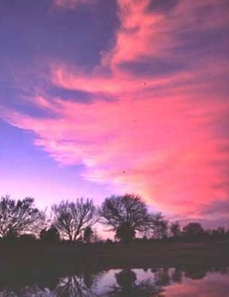 When the days seem plodding and dull, sometimes a prayer like this makes its way into our sight line and lifts our eyes to gaze beyond ourselves.
God in heaven,
God of power and
Lord of mercy,
from whose fullness
we have received
so generously,
direct our steps
in our everyday efforts.
May the changing
moods of the human heart
and the limits that
our failings impose on hope
never blind us to you,
source of every good.
Faith gives us the promise
of peace and makes known
the demands of love.
Remove the selfishness
that blurs the vision of faith.
Grant this through our Lord
and brother, Jesus.Adapted from Living With Christ (Feast of St. Stephen of Hungary)

-
Subscribe
Subscribed
Have a WordPress.com account? Log in now.

