-
Catholic Bishops: ‘Just Say No To Nukes’
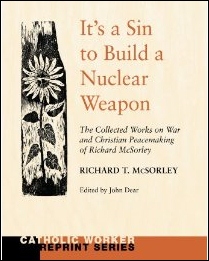 Among recent examples of Catholic bishops acting very poorly indeed, here’s an example of bishops acting “good.” They joined representatives of various groups advocating nuclear arms reduction to present a petition with over 50,000 signatures to the White House.
On May 7, Stephen Colecchi, USCCB’s director of International Justice and Peace, representing the US bishops delivered the petition in a meeting with Ben Rhodes, deputy national security advisor for strategic communications and speechwriting. Leaders of arms control groups, including the Arms Control Association, the Council for a Livable World and Center for Arms Control and Non-Proliferation, and the Union of Concerned Scientists, also participated in the meeting.
In response to the petition, Rhodes said: “The White House appreciates the engagement of citizens across our country who support efforts to stop the spread of nuclear weapons and seek the peace and security of a world without them. This type of grassroots activism is critical to build awareness around the dangers of nuclear weapons, and to support common sense arms control policies.”
In a March 2 letter to National Security Adviser Thomas Donilon, Bishop Richard E. Pates of Des Moines, Iowa, chairman of the USCCB Committee on International Justice and Peace, outlined some moral considerations to take into account during the study:
The current review of nuclear weapons policy by the Administration presents a once-in-a-decade opportunity to make significant strides towards a safer, more secure future for our nation and world. For decades, the United States Conference of Catholic Bishops and the Holy See have supported nuclear nonproliferation and verifiable efforts to reduce and eventually eliminate nuclear weapons.
As you advise the President, I urge you to recommend further reductions in U.S. nuclear forces. The horribly destructive capacity of nuclear arms makes them disproportionate and indiscriminate weapons that profoundly endanger human life.
At a time of fiscal restraints, tens of billions of dollars currently allocated to maintaining Cold War-based nuclear force structures could be redirected to other critical needs, especially to programs that serve poor and vulnerable people at home and abroad. As the Second Vatican Council taught, “[T]he arms race is an utterly treacherous trap for humanity, and one which ensnares the poor to an intolerable degree.”
-
Kate Ott: Remembering Ada María Isasi-Díaz
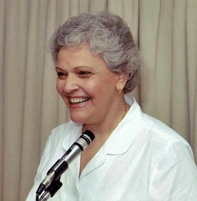
Kate Ott, assistant professor of Christian Social Ethics at Drew University and a Catholic, has written a lovely memorial to feminist theologian Ada Maria Isasi-Diaz. This was posted on the Feminist Studies in Religion blog:
As many reading this blog may have already heard, Dr. Ada María Isasi-Díaz passed away in the early morning on May 13, 2012. While there are many other more qualified scholars, colleagues and friends to write a memorializing blog than I, I take up the task with humility and responsibility. I have known Ada since 1999 when she spoke in one of Rev. Dr. Letty Russell’s courses, Third World Women’s Theologies. This was a transformative class for my own formation, but what I could not believe was that one of the authors of our assigned readings came to have lunch and teach us. As my partner often reminds me, I proclaimed that evening, “I met one of the coolest women in the world.”
After that meeting I was lucky enough to have a number of other opportunities to get to know Ada and continue to study her scholarship. From a travel seminar to Cuba to hearing about her recent pilgrimage in Spain, from a quiet lunch in New York City to lectures at three different seminaries, I had plenty of opportunity to learn from Ada, who always had a story and advice to share. Ada was an inspiration to me as Roman Catholic woman wondering where my place in academia might be. I also often found myself uncomfortable in conversations with her, especially as a Master’s student rather clumsily discovering how my race and nationality blinded me to my privilege.
-
Merton: Made in the Image of Love

“To say that I am made in the image of God is to say that love is the reason for my existence, for God is love. Love is my true identity. Selflessness is my true self. Love is my true character. Love is my name.” –Thomas Merton
New Seeds of Contemplation by Thomas Merton (New Dimensions Press, 1961)
-
Mother of Mujerista Theology Dies, Isasi-Diaz Was 69
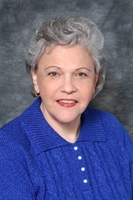 Cuban-born mujerista theologian Dr. Ada-Maria Isasi-Diaz died Sunday, May 13, the Feast Day of Our Lady of Fatima. She was diagnosed with cancer less than six weeks ago. She was 69.
The March 2012 issue of Sojourners magazine ran Associate editor Elizabeth Palmberg’s interview with Isasi-Diaz, Faith at the Tipping Point. The interview was conducted November 2011 at the Call to Action conference in Milwaukee.
 “She leaves behind an amazing legacy. More than just a theologian, she was active in the struggle of others,” said Drew University colleague Dr. Laura Kearns, noting Isasi-Diaz’s 2009 leadership in protesting the closure of Our Lady Queen of Angels church in Harlem (see the NYT article).
Ada María Isasi-Díaz was a major force in Hispanic, mujerista, and feminist theology, liberation theologies rooted in the everyday experience of Latinas. As her foundational 1996 book Mujerista Theology: A Theology for the Twenty-First Century put it, her work aims at creating “a public voice for Latinas and capturing a political space for that voice,” including in academic theology. Isasi-Díaz was professor emerita of ethics and theology as well as founder and co-director of the Hispanic Institute of Theology at Drew University in Madison.
Watch an amazing video of Ada Maria Isasi-Diaz from Harvard’s Women’s Studies in Religion Conference.
Ada’s family has been blogging about her illness and last days at Ada’s Blog. Her sister Gloria writes:
There was no struggle, agony nor any signs of discomfort. She has now moved on to her eternal life, having left behind a remarkable legacy. The lives of all who knew her and loved her were immensely enriched by her presence. She walked un Buen Camino and triumphed in La Lucha for compassion and solidarity. It is time to celebrate her life and honor her memory.
“Ada Maria lived what she taught,” commented Notre Dame’s liberation and Hispanic theologian Virgilio Elizondo. “She was a great pioneer not just of creative theological thought but even more so of prophetic and visionary work among the people. She lives in our hearts and memory.”
+ Ada Maria Isasi-Diaz – PRESENTE! +
Read more:
Ada Marìa Isasi-Díaz, Mother of Mujerista Theology by MICHELLE GONZALEZ MALDONADOIsasi-Diaz’s many books include:
Mujerista Theology: A Theology for the Twenty-First Century
En la Lucha / In the Struggle: A Hispanic Women’s Liberation Theology (Biblical Reflections on Ministry)
En La Lucha/In the Struggle: Elaborating a Mujerista Theology (10th Anniversary Edition)
La Lucha Continues: Mujerista Theology
Inheriting Our Mothers’ Gardens: Feminist Theology in Third World Perspective by Letty M. Russell, Kwok Pui-lan, Ada Maria Isasi-Diaz and Katie Geneva Cannon
Hispanic Women, Prophetic Voice in the Church: Toward a Hispanic Women’s Liberation Theology by Ada Maria Isasi-Diaz and Yolanda Tarango
Women of God, Women of the People: Four Biblical Meditations -
Video: Connecting the Climate Change Dots
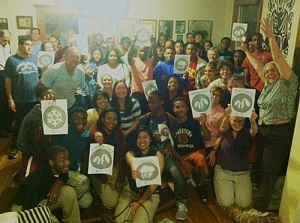
Last week I joined with folks around the world in “connecting the dots” on global climate change. Here’s a video from the worldwide event and a photo of our little “connect the dots” group at Dorothy Day Catholic Worker in Washington, D.C. Check out Climate Dots.
-
Richard Deats: On the Death of Great ‘Principalities and Powers’ Theologian Walter Wink

Theologian Walter Wink died on May 10, 2012. A shout out and thank you to Richard Deats for sending me his beautiful reflection on the passing of his friend and theologian Walter Wink.
Rev. Richard Deats, editor emeritus of Fellowship magazine, has led nonviolence workshops around the globe, including in southern Africa with Walter Wink during the apartheid era. Here’s an excerpt of Richard’s memorial (and I hope you’ll read the whole thing at the Fellowship of Reconciliation site):
“Walter Wink, 76, one of the most creative and influential scholars of our day, died peacefully at his home in Sandisfield in the Berkshire Mountains of Massachusetts on May 10, 2012. His health had been declining since he was diagnosed with Lewy body dementia.
Wink was born in Dallas, Texas. He was a graduate of Southern Methodist University, after which he received Master of Divinity and Doctor of Theology degrees at Union Theological Seminary in New York City. He was assigned as pastor of the First United Methodist Church in Hitchcock, Texas for five years. Then, for nine years, he served at Union Seminary as professor of New Testament, followed by becoming professor of biblical interpretation (1976-2005) at Auburn Theological Seminary, also in New York City. Outspoken against the Vietnam war, from 1967 to 1976 he served on the national steering committee of Clergy and Laity Concerned about Vietnam.
Wink became a prolific author of prize-winning and widely studied books. He wrote 16 books and hundreds of articles in the fields of biblical interpretation, war and peace, and nonviolence.
His acclaimed trilogy on “the principalities and powers,” The Powers – Naming the Powers: The Language of Power in the New Testament; Unmasking the Powers: The Invisible Forces that Determine Human Existence; and Engaging the Powers: Discernment and Resistance in a World of Domination – has been of continuing influence. Engaging the Powers was completed during a sabbatical when Wink received a coveted Peace Fellowship from the U.S. Institute of Peace. …” —Richard Deats
Read the whole reflection and see more photos.
-
Eric Holder And The Targeted Killing of Americans
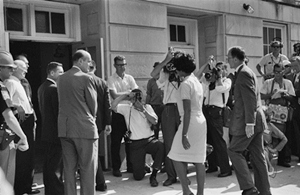
11 June 1963: Vivian Malone entering Foster Auditorium to register for classes at the University of Alabama. Vivian Malone, one of the first African Americans to attend the university, walks through a crowd that includes photographers, National Guard members, and Deputy U.S. Attorney General Nicholas Katzenbach. Recently, I listened to the 5 March 2012 speech by U.S. Attorney General Eric Holder in which he defend the targeted killing of U.S. citizens at the sole discretion of the president of the United States.
It sounded to me like the death knell of the great democratic experiment. If citizenship doesn’t convey the right to protection by the State balanced with just due legal process to address criminality, then citizenship really doesn’t mean much. And when one can be put on a “death squad list” without ever having a chance to be judged by a jury of one’s peers (not members of the NSA, CIA, etc), then The great Declaration of the Rights of Man and of the Citizen and the U.S. Bill of Rights–two cornerstones of modern, liberal, rights-based democracies–have been tossed in the shredder.
I believe Eric Holder is a “good man.” I think he understands the very real consequences of inhumane laws through the life story of his sister-in-law Vivian Malone Jones, who along with James Hood, stood a “the schoolhouse door” while Alabama Gov. George Wallace blocked their entrance to the University of Alabama. Wallace was defending “segregation now, segregation tomorrow, segregation forever!” The courageous stand by Jones and Hood led to the integration of the University of Alabama.
In Holder’s speech before Northwestern University’s law school yesterday he said, “Some have called such operations “assassinations.” They are not, and the use of that loaded term is misplaced. Assassinations are unlawful killings. Here, for the reasons I have given, the U.S. government’s use of lethal force in self defense against a leader of al Qaeda or an associated force who presents an imminent threat of violent attack would not be unlawful — and therefore would not violate the Executive Order banning assassination or criminal statutes.”
As Thomas Merton reminded us in Raids On the Unspeakable,
“It is the sane ones, the well-adapted ones, who can without qualms and without nausea aim the missile, and press the buttons that will initiate the great festival of destruction that they, the sane ones, have prepared What makes us so sure, after all, that the danger comes from a psychotic getting into a position to fire the first shot in a nuclear war? Psychotics will he suspect. The sane ones will keep them far from the button. No one suspects the sane, and the sane ones will have perfectly good reasons, logical, well-adjusted reasons, for firing the shot.”
Richard Rohr also explores this issue of the “good man’s” capacity for unspeakable evil in his book Things Hidden. Rohr writes:
“The ego is that part of the self that wants to be significant, central, and important. It is very self-protective by its very nature. It must eliminate the negative to succeed. (Jesus would call it the “actor” in Matthew 23, usually translated from the Greek as “hypocrite”.)
The shadow is that part of the self that we don’t want to see, that we’re afraid of and we don’t want others to see either. If our “actor” is well-defended and in denial, the shadow is always hated and projected elsewhere (we tend to hate our own faults in OTHER people!). One point here is crucial: The shadow self is not of itself evil; it just allows you to do evil without recognizing it as evil! That is why Jesus criticizes hypocrisy more than anything else. He does not hate sinners at all, but only people who pretend they are not sinners!
Jesus’ phrase for the denied shadow is “the plank in your own eye,” which you invariably see as the “splinter in your brother’s eye.” Jesus’ advice is absolutely perfect. “Take the plank out of your own eye, and then you will see clearly enough to take the splinter out of your brother’s eye” (Matthew 7:4-5).”
The American body politic has long denied the “plank in our own eye.” And so we inexorably become more and more like those we deplore. The rarefied air of the White House and Justice Department is a super-food for the ego and slowly strangles self-reflection, self-doubt, or anything that might lead to embracing one’s shadow side. And, truth be told, even if one did find space to embrace the shadow, the system is so deeply entrenched that it would brook no opposition.–Rose Marie Berger
-
Obama on Civil Marriage for Gays and Lesbians and His Christian Faith
President Obama discusses his evolving thinking on civil unions and civil marriages, “Don’t Ask, Don’t Tell” policy, the difference between state solutions and a federal act, religious liberty, the Black church, college Republicans and gay issues, the Defense Against Marriage Act, and his Christian faith. I highly recommend reading the transcript to get the full texture and context of the President’s comments.
Transcript: Robin Roberts ABC News Interview With President Obama (9 May 2012)
ROBIN ROBERTS: Good to see you, as always–
PRESIDENT OBAMA: Good to see you, Robin.
ROBIN ROBERTS: Mr. President. Thank you for this opportunity to talk to you about– various issues. And it’s been quite a week and it’s only Wednesday. (LAUGH)
PRESIDENT OBAMA: That’s typical of my week.
ROBIN ROBERTS: I’m sure it is. One of the hot button issues because of things that have been said by members of your administration, same-sex marriage. In fact, your press secretary yesterday said he would leave it to you to discuss your personal views on that. So Mr. President, are you still opposed to same-sex marriage?
PRESIDENT OBAMA: Well– you know, I have to tell you, as I’ve said, I’ve– I’ve been going through an evolution on this issue. I’ve always been adamant that– gay and lesbian– Americans should be treated fairly and equally. And that’s why in addition to everything we’ve done in this administration, rolling back Don’t Ask, Don’t Tell– so that– you know, outstanding Americans can serve our country. Whether it’s no longer defending the Defense Against Marriage Act, which– tried to federalize– what is historically been state law.
I’ve stood on the side of broader equality for– the L.G.B.T. community. And I had hesitated on gay marriage– in part, because I thought civil unions would be sufficient. That that was something that would give people hospital visitation rights and– other– elements that we take for granted. And– I was sensitive to the fact that– for a lot of people, you know, the– the word marriage was something that evokes very powerful traditions, religious beliefs, and so forth.
But I have to tell you that over the course of– several years, as I talk to friends and family and neighbors. When I think about– members of my own staff who are incredibly committed, in monogamous relationships, same-sex relationships, who are raising kids together. When I think about– those soldiers or airmen or marines or– sailors who are out there fighting on my behalf– and yet, feel constrained, even now that Don’t Ask, Don’t Tell is gone, because– they’re not able to– commit themselves in a marriage.
At a certain point, I’ve just concluded that– for me personally, it is important for me to go ahead and affirm that– I think same-sex couples should be able to get married. Now– I have to tell you that part of my hesitation on this has also been I didn’t want to nationalize the issue. There’s a tendency when I weigh in to think suddenly it becomes political and it becomes polarized.
-
Video: Reverend Billy Takes It To The Streets
God bless Rev. Billy, my favorite televangelist activist, pastor of The Church of Stop Shopping. This is what the gospel looks like. A 5-minute video.
Reverend Billy from 2gee on Vimeo.
People are angry, they want to be heard.
Billy's got the Bullhorn. -
Richard Rohr: ‘For the Ego Everything is a Commodity’
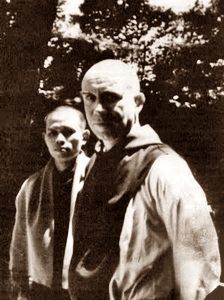
Thích Nhat Hanh and Merton in 1966 We don’t teach meditation to the young monks. They are not ready for it until they stop slamming doors.–Thich Nhat Hanh to Thomas Merton in 1966
The piercing truth of this statement struck me as a perfect way to communicate the endless disguises and devices of the false self. There is no more clever way for the false self to hide than behind the mask of spirituality. The human ego will always try to name, categorize, fix, control, and insure all its experiences. For the ego everything is a commodity. It lives inside of self-manufactured boundaries instead of inside the boundaries of the God-self. It lives out of its own superior image instead of mirroring the image of God.
The ego is constantly searching for any solid and superior identity. A spiritual self-image gives us status, stability, and security. There is no better way to remain unconscious than to baptize and bless the forms of religion, even prayer itself, instead of surrendering to the Substance Itself. First stop slamming doors, and then you can begin in the kindergarten of spirituality. Too many priests, bishops, and ministers are still slamming doors.
In the name of seeking God, the ego pads and protects itself from self-discovery, which is an almost perfect cover for its inherent narcissism. I know this because I have done it all myself.–Richard Rohr, OFM
Adapted from Contemplation in Action by Richard Rohr. Read more by Richard Rohr and learn about the Center for Action and Contemplation.

-
Subscribe
Subscribed
Have a WordPress.com account? Log in now.

