“It is not that the Gospel has changed, it is that we have begun to understand it better … the moment has come to discern the signs of the times, to seize the opportunity to look far ahead.”–Pope John XXIII
On Oct. 11, 1962, Pope John XXIII (“Good Pope John”) opened the Second Vatican Council. As American Catholics look at where we’ve been and where we want Vatican II to take us in the future, I offer this reading list below.
We are at a time ripe with conversion and energy around new ways to be Catholic that are vital for our world today. While current Vatican leadership is practicing “Curial conservatism,” fleeing backwards into the dimming halls of time, the laity continue to lean forward into “aggiornamento,” as Pope John XXIII put it, updating the modes of our faith to match the desperate needs in our world. We are taking up the Resurrection banner and carrying it forward into a world in need of the sacramental life Catholicism has to offer.
Here are 5 articles and books that are important reading for today’s Vatican II Catholics:
1. Survival Guide for Thinking Catholics by Tom Reese, SJ
Not all Catholics agree with the Church all the time, and Tom Reese, S.J., will tell you there is no point in denying it. Questioning is not, however, something most Catholics undertake lightly. These disagreements are often born out of conscience, of genuinely believing in the faith while believing equally something that is at odds with the accepted teachings of the Church. Reese, the former editor of the Jesuit weekly magazine America, delivered this lecture in 2006 at Santa Clara University, outlining his strategies for Catholics who think, question, doubt, debate, and disagree. I hear he’s working on turning it into a book.
2.The final interview with Jesuit Cardinal Carlo Maria Martini, who died in August 2012. Corriere della Sera published the original interview on Sept. 1 and Commonweal offered this translation. Martini says that the Catholic Church is 200 years behind the times and called for it to recognize its mistakes and embark on a radical journey of change. He says the wealthy Church in Europe and America is worn-out. “Our culture has aged, our churches are big and empty and the church bureaucracy rises up, our rituals and our cassocks are pompous.” He calls for the sacraments to be a channel for healing, “not a tool for discipline.” Cardinal Martini’s short reflections remind us that there is a prophetic tradition in the church that still functions at the highest levels, even when it is obscured.
3. Navigating the Shifts by Sr. Pat Farrell, osf. This is Sr. Pat’s address to the Leadership Conference of Women Religious assembly in 2012. She cogently outlines where some of the fault lines are in contemporary Catholicism, what is the American genius that we offer to the universal church, and how to move forward with disciplined wisdom. I think these are the nonviolent “marching orders” for the American Catholic liberation movement.
4. Consider Jesus: Waves of Renewal in Christology by Elizabeth A. Johnson, CSJ. On the rare occasions when I meet up with leading Catholic writers and thinkers, I always try to ask one question: Who is doing the most important biblical or theological work right now? More often than not they give me one name: Elizabeth Johnson. A member of the Sisters of St. Joseph of Brentwood, New York, Beth Johnson is Distinguished Professor of Theology at Fordham University. Consider Jesus is a short, very accessible introduction to the critical theological questions of our time and why some theological questions are important to engage for our spiritual maturity.
5. Prophets In Their Own Country: Women Religious Bearing Witness to the Gospel in a Troubled Church by Sandra Schneiders, IHM. Based on her brilliant series of articles published in The National Catholic Reporter, these reflections on religious life were inspired by the Vatican’s announcement of an “Apostolic Visitation” of U.S. women religious from 2009-2011. Schneiders articulates anew the meaning of religious life, the biblical theology underlying it, the reasons for the renewal undertaken after Vatican II, and the forms of apostolic religious life that have developed since. While this book addresses an issue for Catholic women’s communities in the U.S., it is addressed to all Vatican II Catholics. She begins to frame a new form of ministry within the Catholic church–one not based on “monastic/apostolic mission” but instead on “prophetic ministry.”
What else would you add?
*Pacem in Terris, Pope John’s masterpiece encyclical
*The Good Pope by Greg Tobin — easy-to-read history of John XXIII and his work to call and open the second Vatican Council before his death from stomach cancer.
St. John Coltrane (September 23, 1926-July 17, 1967)
“My goal is to live the truly religious life, and express it in my music. If you live it, when you play there’s no problem because the music is part of the whole thing. To be a musician is really something. It goes very, very deep. My music is the spiritual expression of what I am – my faith, my knowledge, my being.” —John Coltrane (September 23, 1926 – July 17, 1967)
Spend some time this month with Brother John Coltrane. Let the vibrations of his prayer fill your body, mind, and spirit. (Listen or watch “Dear Lord.”) Here are the lyrics to Coltrane’s A Love Supreme:
A love supreme … a love supreme … a love supreme …I will do all I can to be worthy of Thee O Lord. It all has to do with it. Thank you God. Peace. There is none other. God is, It is so beautiful. Thank you God. God is all. Help us to resolve our fears and weaknesses. Thank you God. In You all things are possible. We know. God made us so. Keep your eye on God. God is. He always was. He always will be. No matter what…it is God. He is gracious and merciful. It is most important that I know Thee. Words, sounds, speech, men, memory, thoughts, fears and emotions – time – all related…all made from one…all made in one. Blessed be His name. Thought waves – heat waves – all vibrations – all paths lead to God. Thank you God. His way…it is so lovely…it is gracious. It is merciful – thank you God. His way…it is so lovely…it is gracious. It is merciful – thank you God. One thought can produce millions of vibrations and they all go back to God…everything does. Thank you God. Have no fear…believe…thank you God.
The universe has many wonders. God is all. His way…it is so wonderful. Thoughts – deeds – vibrations, etc. They all go back to God and He cleanses all. He is gracious and merciful…thank you God. Glory to God…God is so alive. God is. God loves. May I be acceptable in Thy sight. We are all one in His grace. The fact that we do exist is acknowledgement of Thee of Lord. Thank you God. God will wash away all our tears…He always has…He always will. Seek Him everyday. In all ways seek God everyday. Let us sing all songs to God To whom all praise is due…praise God. No road is an easy one, but they all go back to God. With all we share God. It is all with God. It is all with Thee. Obey the Lord. Blessed is He. We are from one thing…the will of God…thank you God.
I have seen God – I have seen ungodly – none can be greater – none can compare to God. Thank you God. He will remake us…He always has and He always will. It is true – blessed be His name – thank you God. God breathes through us so completely…so gently we hardly feel it…yet, it is our everything. Thank you God. ELATION – ELEGANCE – EXALTATION – All from God. Thank you God. Amen. —John Coltrane, A Love Supreme
Lyrics from John Coltrane – December, 1964. Cited from the liner notes of A Love Supreme John Coltrane Deluxe Edition. Copyright 2002. The Verve Music Group, USA (314 589 945-2).
Joan Chittister, OSBJoan Chittister and the Erie Benedictine’s have put out a new book called Following the Path for all of us who are trying to navigate the second half of life as faithfully as we navigated the first half. Chittister’s newest, along with Richard Rohr’s Falling Upward, are two excellent guides for this season of life.
Chittister writes:
“The only man I know who behaves sensibly,” George Bernard Shaw wrote, “is my tailor; he takes my measurements anew each time he sees me. The rest go on with their old measurements and expect me to fit them.”
Sometime in the early middle of life, we wake up one morning to discover that our measurements have changed. What we have been doing for years, we begin to realize, simply does not fit us anymore. We have outgrown the young life that we thought would go on forever and have found within us a whole new person. Worse, we find ourselves lodged in a life we no longer find stimulating or satisfying or exciting. We are unfamiliar—even to ourselves. We find that we are living some kind of creeping death, sloughing off what fit us in the past, in the old life we thought we loved, and unable to find a new way to fit into our present.
The feelings that come with the realization are overwhelming. One part guilt, one part fear, they make us ill in soul. We know what we cannot admit. If we do not stay as we are, we will feel forever unfaithful. If we force ourselves to stay as we are, we will go to dust inside.
There is so much at stake now. So much life behind us has been invested in what we now find to be lifeless. And yet there is so much life left to live. How can we possibly live it like this? And where did we go wrong? What happened to our commitment to the life decision we made in an earlier life? And what is at the root of this shift of centeredness: a lack of the kind of personal responsibility that sees a thing through? Immaturity? A lack of focus? What?
And the usual answer is “none of the above.”
Assuming that tomorrow will be the same as today is poor preparation for living. It equips us only for disappointment or, more likely, for shock. To live well, to be mentally healthy, we must learn to realize that life is a work in process.–Joan Chittister, OSB
“Love affects more than our thinking and our behavior toward those we love. It transforms our entire life. Genuine love is a personal revolution. Love takes your ideas, your desires, and your actions and welds them together in one experience and one living reality which is a new you.”–Thomas Merton
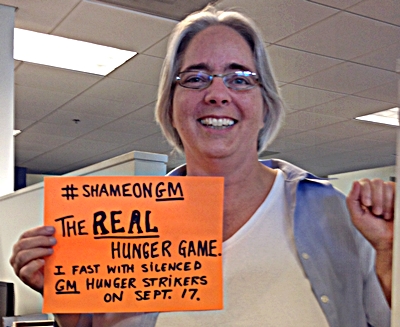
“Our lives have been left in ruins by GM. We were fired due to work-place injuries and offered no severance, no worker’s compensation insurance and the company lied about the reason for our dismissal.”–Jorge Parra, injured GM worker
A group of injured Colombian workers are on a hunger strike. They were wrongfully fired by GM due to workplace injuries and have called on people across the country to take action to demand justice from GM. September 17 is a fast-day in solidarity for worker justice.
I traveled to Colombia with Witness for Peace in 2001 (see In The Time of Coca). And it is the Witness for Peace team that is organizing with GM workers in Colombia to protect their worker and human rights. GM in Colombia fired them after they were injured on the job, without any compensation. They’ve been fighting this injustice in Colombia since May 2011. Now they are bringing their grievance to GM’s world headquarters in the United States.
This demon of injustice is deeply embedded–but it must be cast out. For the sake of the injured workers who deserve justice–and for the sake of GM executives who need to do what is right for the salvation of their own souls. But some demons, as Jesus said, can only be driven out by prayer and fasting (Mark 9:29).
Fr. Jon Pedigo serves Our Lady of Guadalupe parish in San Jose, Calif. He’s written a wonderful and insightful piece for PICO National Network on how the outcome of elections impacts his community:
I’m a Catholic pastor working in a Mexican immigrant community in the east side of San José. My community is less than a 15 minute drive away from some of the wealthiest real estate in Silicon Valley. Our Lady of Guadalupe Parish is in the neighborhood formerly known as, “Sal Si Puedes” (“Leave If You Can”). Though we are minutes away from some of the wealthiest dot-com tycoons, we might as well be living in another country. In my community only two out of 100 children graduate from college and more than half of the students drop out of high school. I am writing this article one week after we buried three murder victims. My community has dozens of families affected by deportation. On my first day at this parish – just this past July – two parents were deported leaving behind four children. The oldest is 14, the youngest 20 months.
Our Lady of Guadalupe is mired in poverty, deportations, a failing educational system and violence. This community, however, is resilient. They regularly engage in society through community organizing. Over the recent past we have had small victories built upon small victories that have resulted in the establishment of charter schools, a change in police and city policies that are more immigrant friendly, and more positive police engagement in our neighborhoods. Obviously we have a long way to go and not all our problems can be solved by community actions. Our community must also engage in the electoral process.
The Catholic Church regularly publishes, “Faithful Citizenship,” a handbook for Catholics designed to help us engage in the political process. Catholics are encouraged to consider their faith values – (and I add and emphasize the word, “all” faith values) – when we vote. Moral theology also teaches that we must also consider the context of our life when applying these values. The context that we must consider is the growing economic gap between the rich and poor and all the social complications that happens when there is gross inequality and how marginalized communities such as mine, are affected by budget cuts that result in fewer police officers on our streets, closure of after school programs, and larger class sizes. We must consider how our national budget will affect the people who depend on entitlement programs and the ways that immigration policy affects our children. To my community, these are literally issues of life and death.
Conscientious Catholics are aware that our faith values are not captured by any single political party or in any single candidate. We must therefore tread very carefully through the political process. Some Catholics have a suspicious and even negative view of the political process. Other Catholics take on a rather simplistic approach when voting, applying only one or two faith criteria when voting. To vote “single issue” is not responsible voting. We must use a discernment process before we enter the ballot box. … —Fr. Jon Pedigo
“This is the very perfection of a person, to find out our own imperfections.” –Saint Augustine
Humanity is a mixture of blunders. That’s what makes it so charming, so interesting to be around. Because none of us is complete, we all need one another. It’s only when we convince ourselves that we are the fullness of all that is, that we become spiritually poor.
The nice thing about being human is that you get to fail a lot. Value that; it’s priceless. It gives us such respect for everybody else. The reason clowns and slapstick comedians are so popular is that, if truth were known, we all see in them the parts of ourselves we try too hard to hide. When we take ourselves too seriously, we forget that the only thing we know for sure that’s eternal is God.
Making mistakes is part of the growth process. We must learn to be much gentler about this with other people. We must also learn to be gentler with ourselves. Otherwise what we expect of ourselves, we will expect of everybody else. And that can be tragic. For all of us.
Never be afraid to admit that you “don’t know” or “can’t find” or “couldn’t do” something. Our imperfections and inabilities are the only thing we have that give us the right to the support of the rest of the human race.
The gift of knowing what we lack is the gift we have to give to the abilities of others. As the Irish proverb says, “it is in the shelter of each other that the people live.”–Joan Chittister, OSB
This morning Amy Goodman conducted an excellent and informative interview with South African ambassador Ebrahim Rasool at the Democratic National Convention.
I traveled with Ambassador Ebrahim Rasool in 2011 on a civil rights tour of Alabama. He is a delightful and thoughtful man who spent time in a South African prison with Nelson Mandela. Rasool is a committed disciple of nonviolence, a member of the ANC, a Muslim, and currently South Africa’s ambassador to the United States.
Here’s an excerpt from Goodman’s interview regarding Obama and climate change:
AMY GOODMAN: We were just in Durban, South Africa, for the climate change conference. There is a group of donors to the Democratic Party that are now raising deep concerns that President Obama has not raised the issue of climate change in this convention through the various speakers. What about that? You’ve been observing this election, and you’ve been—you’ve been observing this convention, and you’ve been—of course, South Africa, just as the United States, is deeply affected by climate change.
AMBASSADOR EBRAHIM RASOOL: I think that that’s precisely the reason why someone like myself, representing a country like South Africa, can’t give any party a blank check. I think that there are global issues which are being subsumed by certain narrow discussions within the U.S., namely the desire to elect a president, that there is not the requisite leadership to say we need to make sure that the world is a better place, that it is a world that is freer of carbons than before. And what is amazing is that Tampa was threatened by a hurricane, that there are floods, there are fires, there are droughts, there are enorm—heat waves through the United States, and yet the elephant in the room is not being addressed. And that’s the shortcoming of conventions. If this had been an ANC convention in South Africa, it would have been rough. It would have been a rough policy debate. It would have been a rough electoral contest. But we expect that the U.S. is different, but it can be substantially out of step with the world. And so, part of what my job is, while South Africa is the president of COP17, it is to bring greater awareness to the challenges of climate, to the global warming situation, and to be able to assist in ways in which the United States can begin to face up to that debate.
Mitt Romney bravely mentioned the “poor” once and “poverty” twice in his acceptance speech before the Republican National Convention. Last night, Bill Clinton also raised the P-word (“poor” seven times and “poverty” three times) at the Democratic National Convention. Will President Obama address this critical issue tonight in his acceptance speech before the Dems? 46.2 million Americans living below the poverty line want to know.
Sojourners believes Christians need to raise up the stories of the poor and powerless. Poverty needs to be back on the public agenda. Sojourners worked with an Emmy-award winning writer and producer to create a new film called The Line that reveals what poverty in America looks like today.
This 30-minute documentary features real people, their economic struggles, and their inspiring and creative responses to the challenges they face. This resource will help break through traditional political divides, foster honest dialogue, and re-focus our society on the common good.
The film will premiere at 8 p.m. EDT October 2, and we’re organizing viewing parties of The Line across the nation. It’ll be a powerful tool for your churches, communities, families, and organizations to use in raising awareness and fostering conversation about poverty’s effects and potential solutions.
I’m sharing the film’s trailer here in hopes that you’ll ask your friends, family, and community to host screenings. Additional details about the film and information on arranging a viewing can be found at www.thelinemovie.com.
This film is really good! I’m proud to be part of this Sojourners project. (And you get to see some footage of my Columbia Heights neighborhood.)
 “It is not that the Gospel has changed, it is that we have begun to understand it better … the moment has come to discern the signs of the times, to seize the opportunity to look far ahead.”–Pope John XXIII

 “Love affects more than our thinking and our behavior toward those we love. It transforms our entire life. Genuine love is a personal revolution. Love takes your ideas, your desires, and your actions and welds them together in one experience and one living reality which is a new you.”–Thomas Merton
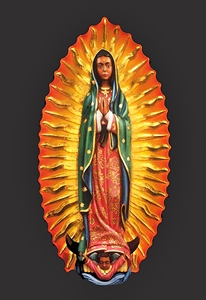 Fr. Jon Pedigo serves Our Lady of Guadalupe parish in San Jose, Calif. He’s written a wonderful and insightful piece for PICO National Network on how the outcome of elections impacts his community: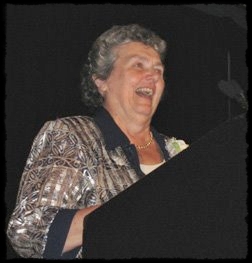
 This morning Amy Goodman conducted an excellent and informative interview with South African ambassador Ebrahim Rasool at the Democratic National Convention.