“God remains silent so that men and women may speak, protest, and struggle. God remains silent so that people may really become people. When God is silent and men and women cry, God cries in solidarity with them but doesn’t intervene. God waits for the shouts of protest.”–Elsa Tamez
Rabbi Waskow arrested. (Photo Credit: John Zanga, #NoKXL Actions, D.C.)
It gladdened my heart to be with Christians, Muslims, Jews, and other people of good will outside the White House on Thursday for the Interfaith Moral Action on Climate’s public witness marking Passover and Holy Week.
Rabbi Shneyer blew the shofar to announce the danger President Obama is putting the planet in by not denying the Keystone XL pipeline. And we prayed together to claim our human right of eminent domain over corporate interests that endanger the earth.
Rabbi Arthur Waskow of The Shalom Center, one of the great Jewish leaders of the justice movement in America, at age 80, was one of the 15 who were arrested and taken to jail in Anacostia.
Here’s an excerpt from Rabbi Waskow’s Huffington Post article describing the event:
“In a circle of 70 people in the midst of Pennsylvania Avenue, we had just completed a religious service. Rabbi David Shneyer had blown the shofar of warning and liberation. We had heard the Muslim call to prayer from the Quran, an invocation of the Four Winds in the spiritual tradition of the First Nations, and a Christian prayer.
The only argument FOR the Keystone XL pipeline that held any moral weight was that pipeline construction would produce “jobs, jobs, jobs.” The need for jobs is a desperate one. And any construction project will produce sporadic work. But no self-respecting hard-hatter would work on a project that’s going to overheat the world.
Read an excerpt from yesterday’s Sojourners blog post on the Keystone XL and jobs:
When it comes to the Keystone XL pipeline, the oil and gas industry want you to believe that you have to choose between jobs and prairie grass. This tactic is called the “divide and conquer” or “divide and rule” strategy. It’s as old as the empires of ancient Greece and Rome. It still works because human nature hasn’t changed that much.
Two years ago I sat down across the table from Dr. Kerri-Ann Jones, the highest ranking State Department official (short of the Secretary of State) to weigh in on the Keystone XL pipeline permit process. A group of religious leaders were delivering thousands of petitions to Dr. Jones asking her to to stop the pipeline.
I said to her, “If this decision about the pipeline was made purely based on the climate science, we wouldn’t be here having this discussion.” She’s a scientist. She knows the score. She didn’t disagree. “But,” she said, “everywhere we go across the country we hear about the need for jobs – especially in the middle of the country.”
As I said in yesterday’s post, the stories are beginning to pour in about the tremendous affect that Gordon Cosby had thousands of people around the world — and he did it without hardly ever traveling beyond his neighborhood of Adams Morgan in Washington, D.C.
(See links to testimonies below. Also see Elaina Ramsey’s In Remembrance of Gordon Cosby, a collection of Gordon & Mary’s writings for Sojourners over the years.)
As I preached outside the White House today, linking Palm Sunday with the movement against the Keystone XL pipeline, I could feel Gordon’s encouragement. I could hear him say: “Well, Jesus surely stirred up a hornet’s nest in Jerusalem and it looks like this new group against this pipeline has got some of that same spirit.”
Now we walk into Palm Sunday and Holy Week knowing that Gordon is cheering us on from that great cloud of witnesses. He’s getting a perspective on things that even he never had before.
“Agape love is the power to love the unlovable. It is the power to love people we do not like. Jesus commands us to love our enemies in order to be like God. We are not told to love in order to win our enemies or to get results, but that we may be children of God, who sends the rain on the just and the unjust, who looks after both the good and the evil. The predominant characteristic of this agape love is that, no matter what a person is like, God seeks nothing but his or her highest good.”–Gordon Cosby, Church of the Saviour
At a quarter of four this morning I awoke caught up in a stream of prayer for and with Gordon Cosby, the beloved elder, prophet, and pastor of Church of the Saviour in Washington, D.C. I could feel his soul shifting and I just stepped into the Spirit-stream with him and all the saints surrounding him.
We’ve known for several months that Gordon was in hospice care. In his mid-90s, he was still fighting St. Paul’s good fight and was coming to rest in a small apartment in the shelter for homeless men that he helped found. Earlier in the week the news had gone round that Gordon was ready to begin letting go. He decided to stop eating.
Then this morning the notice arrived:
It is with great joy, as well as sadness, that we convey to you the word that at 4:15 this morning, March 20–on the first day of spring–our beloved brother in Christ, Gordon Cosby, quietly slipped into the fullness of God’s Realm.
Our hearts are full. … Your presence, even across the miles, is deeply felt during these extraordinary days.
His beloved wife of 70 years, Mary, was asleep at his side.
Tonight I took hydrangeas over to Christ House with a little sign that said “N. Gordon Cosby – presente!” and then walked down to Potter’s House where the great and broad swath of humanity who called Gordon their “spiritual father” was beginning to gather and share memories.
“In 1971, my soul was spiritually bankrupt,” said one. “Then I found Gordon Cosby.”
“Gordon taught us how to live. And more recently, he’s taught us how to die,” said another.
“Gordon always taught that there is a god in every person and so every person has a call. It’s our job to figure out what that call is and to do the figurin’ out together.”
“Gordon told me once that he’d had a great vision as a young man, a dream. He said that Christ showed him the whole world and all the poor people were working together in a great ministry of service, and then with middle-class and some rich people too. But in the end you couldn’t tell one from the other. They were just all gathered together in service to God,” said someone else.
“Last week we had a board meeting up in Gordon and Mary’s apartment about a neighborhood credit union that we are working on starting. We thought Gordon was asleep. But as we started to wind things up, he raised his hand from the bed and we gathered around. ‘We’re not going to be like those big banks that abuse and steal from the poor, are we?!’ he demanded. He was fighting for justice until the end.”
“Gordon said not long ago, in his wry humor and gravelly voice: ‘I’m startin’ to enjoying this dyin’ bit!’”
There will be a memorial service sometime after Easter. In the meantime, it will become clear how souls across the world were saved and transformed by the gentlemanly, fierce, soulful spirit that was N. Gordon Cosby.
Vatican announces that Cardinal Jose Mario Bergoglio, 77, archbishop of Buenos Aires, Argentina, is the new pope of the Catholic Church. He is the first non-European pope in modern history. First American pope. He is the first Jesuit pope!
In Buenos Aires, he chose not to live in the ornate church mansion, preferring a simple bed in a downtown room heated by a small stove. For many years, he took public transportation around the city, and cooked his own meals.
He was a chemistry teacher before becoming auxilary bishop of Buenos Aires. He was also provincial of the Jesuits.
Jorge Mario Bergoglio, who would be the first Jesuit pope if chosen, has spent nearly his entire career at home in Argentina, overseeing churches and shoe-leather priests.
He has taken the name of St. Francis of Assisi — showing his dedication to the poor and his love for the people of Italy.
He asked first for the people of God to pray for him and bowed low as he received it from the people. Only then did he offer his papal blessing. He said:
“As you know, the duty of the conclave was to appoint a bishop of Rome. It seems to me that my brother cardinals have chosen one who is from far away, but here I am.
“I would like to thank you for your embrace, also to … the bishops, thank you very much.
“First and foremost, I would like to pray for our emeritus pope, Benedict XVI. Let us pray all of us together … so that he’s blessed by the Lord and guarded.”
Pope Francis then asked everyone to join him in praying the Lord’s Prayer and the Hail Mary. What a stunning moment!
“Is Bergoglio a progressive – a liberation theologist even? No. He’s no third-world priest. Does he criticize the International Monetary Fund, and neoliberalism? Yes. Does he spend a great deal of time in the slums? Yes,” said his biographer Sergio Rubin.
John Allen’s earlier report included these quotes from Bergoglio below:
“Only someone who has encountered mercy, who has been caressed by the tenderness of mercy, is happy and comfortable with the Lord,” Bergoglio said in 2001. “I beg the theologians who are present not to turn me in to the Sant’Uffizio or the Inquisition; however, forcing things a bit, I dare to say that the privileged locus of the encounter is the caress of the mercy of Jesus Christ on my sin.”
“We have to avoid the spiritual sickness of a self-referential church,” Bergoglio said recently. “It’s true that when you get out into the street, as happens to every man and woman, there can be accidents. However, if the church remains closed in on itself, self-referential, it gets old. Between a church that suffers accidents in the street, and a church that’s sick because it’s self-referential, I have no doubts about preferring the former.”
I’m watching the live stream from St. Peter’s Square with tears in my eyes. White smoke signals the choosing of a new pope. This is an historic moment in the life of our Catholic church and the world. The bells are ringing, crowds are singing and chanting “Viva Il Papa!.”
“Pray with great confidence based upon the goodness and infinite generosity of God and the promises of Jesus Christ: God is a spring of living water which flows into the hearts of those who pray.”–St. Louis-Marie De Montfort
by Trish MurphyThank you to Vasu who sent this beautiful meditation from the writings of the 19th century Bahá’u’lláh, founder of the Bahai faith. Vasu serves as the “Asia regional director” for a democratic empowerment training organization. The excerpt offers Christians another way into Lenten “detachment” so necessary before we can more deeply embrace the gospel:
“When the channel of the human soul is cleansed of all worldly and impeding attachments, it will unfailingly perceive the breath of the Beloved across immeasurable distances, and will, led by its perfume, attain and enter the City of Certitude. Therein he will discern the wonders of His ancient wisdom, and will perceive all the hidden teachings from the rustling leaves of the Tree — which flourisheth in that City. With both his inner and his outer ear he will hear from its dust the hymns of glory and praise ascending unto the Lord of Lords, and with his inner eye will he discover the mysteries of “return” and “revival.” How unspeakably glorious are the signs, the tokens, the revelations, and splendours which He Who is the King of names and attributes hath destined for that City!
The attainment of this City quencheth thirst without water, and kindleth the love of God without fire. Within every blade of grass are enshrined the mysteries of an inscrutable wisdom, and upon every rose-bush a myriad nightingales pour out, in blissful rapture, their melody. Its wondrous tulips unfold the mystery of the undying Fire in the Burning Bush, and its sweet savours of holiness breathe the perfume of the Messianic Spirit. It bestoweth wealth without gold, and conferreth immortality without death. In every leaf ineffable delights are treasured, and within every chamber unnumbered mysteries lie hidden.”–Bahá’u’lláh
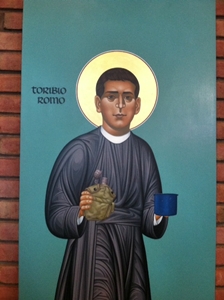
At Mass this morning at St. Camillus, Friar Erick Lopez preached a wonderful homily about St. Toribio Romo, known as the “Holy Coyote” or Santo Pollero for how he helps migrants cross the border between Mexico and the U.S. (He was canonized by Pope John Paul II in 2000.) We were even more blessed at Mass to have a new icon in the church. It’s a stunning painting by Brother Robert Lentz of none other than St. Toribio Romo. (Take note of the army surplus store canteen for bringing water to those crossing the desert and the saint also has muddy shoes.) I trust the U.S. Catholic bishops are praying mightily to St. Toribio for help passing comprehensive immigration reform and a seven-year path to citizenship. Here’s the gist of the popular stories still told about Santo Toribio:
Located about two hours from Guadalajara and near the town of Jalostotitlan, the village (of Santa Ana) consists of a few houses, fertile land for planting, and the temple where the martyr is venerated.Saturday is the most popular visiting day of the faithfulIn the makeshift parking lot (by the temple) one sees autos with United States licenses, but with Mexican owners. In one of them Otilio (Othello) has traveled here, a brown-skinned young man wearing cowboy boots and a Texan hat. He comes from Nevada in order to see the saint, who just little more than a year ago, helped him cross the border. “A friend and I left Jalostotitlan with the intention of working in the United States, but when we were close to the border, we were assaulted and beaten up. They (the robbers) took all our money, and we were disheartened. We didn’t have any money left to pay the “pollero;” not even enough to pay for our passage back home. Suddenly, an auto stopped beside us, and a priest invited us to get in. We told him about what had happened to us, and he told us not to worry. He would help us cross the border. And he did. As we were getting out of his car, he gave us some money and told us to look for work in a nearby factory. We would get hired there.” (more…)
Thanks to Koos for this excellent 6-minute video on wealth distribution in these United States. An interesting Bible study would be to watch this video and read the prophet Amos, chapters 4 and 5.
“You levy a straw tax on the poor and impose a tax on their grain. Therefore, though you have built stone mansions, you will not live in them; though you have planted lush vineyards, you will not drink their wine. For I know how many are your offenses and how great your sins. There are those who oppress the innocent and take bribes and deprive the poor of justice in the courts.”- Amos 5:11-12
“A corporation, essentially, is a pile of money to which a number of persons have sold their moral allegiance.”—Wendell Berry
“We have lived our lives by the assumption that what was good for us would be good for the world. We have been wrong. We must change our lives so that it will be possible to live by the contrary assumption, that what is good for the world will be good for us. And that requires that we make the effort to know the world and learn what is good for it.”—Wendell Berry


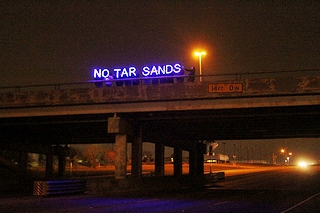 The only argument FOR the Keystone XL pipeline that held any moral weight was that pipeline construction would produce “jobs, jobs, jobs.” The need for jobs is a desperate one. And any construction project will produce sporadic work. But no self-respecting hard-hatter would work on a project that’s going to overheat the world.
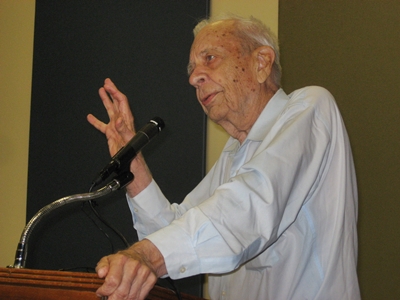 As I said in yesterday’s post, the stories are beginning to pour in about the tremendous affect that Gordon Cosby had thousands of people around the world — and he did it without hardly ever traveling beyond his neighborhood of Adams Morgan in Washington, D.C.
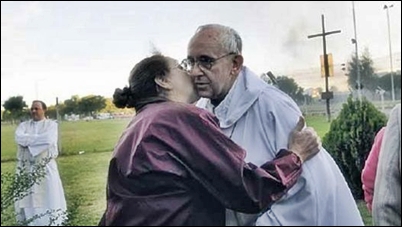 Vatican announces that Cardinal Jose Mario Bergoglio, 77, archbishop of Buenos Aires, Argentina, is the new pope of the Catholic Church. He is the first non-European pope in modern history. First American pope. He is the first Jesuit pope!