Certainly more people watch Penn State football than listen to Vatican pronouncements. But insular, all-male institutions that operate on principles of domination foster a culture of cognitive dissonance where paradoxical things are held to be true, e.g. “I am an upright and moral defensive coordinator for a winning team and I sexually molest boys” or “I am a good Catholic, successful coach, who works with good people and whatever’s going on in the showers is none of my business.”
Jerry Sandusky, former defensive coordinator for Penn State is charged with multiple counts of deviant sexual acts with at least eight male minors — most under age 12. But around a long-term child sexual abuser is always a complicit community. As Mark Esposito writes in this case it was made up of “university administrators who did nothing despite horrific credible eyewitness accounts of explicit sexual acts in locker rooms and showers.” And we end up with “Disadvantaged kids taken advantage of by an authority figure who founded an organization ostensibly to help them, but apparently designed to fulfill his own aberrational desires.”
Child molesters don’t see themselves as sexual predators. They most often see themselves as regular folks who love kids and want to help them and whose affinity for children just happens to have a sexual element. Then, under stress, their need to satisfy that sexual urge compels them to take an action which they convince themselves isn’t such a big deal. They hardly ever believe that they are harming children – and often believe they are helping them.
Fixated child molesters exist – in small numbers, but they exist. However, the rest of us often participate in cultures and emotional habits that protect them and those practices can be dismantled. Those narratives that we create of “protecting the greater good” or “he’s such a nice guy” or “to make a great Penn State omelet a few eggs gotta get broken” must be dismantled.
… using the term “scandal” to describe what went on at Penn State, where a former defensive coordinator under Paterno, Jerry Sandusky, stands accused of molesting several boys over 15 years, seems to diminish it.
In the world of big-time college sports, the term has been cheapened by overuse. If these allegations prove to be true — Sandusky has maintained his innocence — they’ll be a far cry from football players’ trading memorabilia for discounts on their tattoos.
A better comparison would be the sexual molestation scandals that rocked another insular, all-male institution, the Roman Catholic Church.
The parallels are too striking to ignore. A suspected predator who exploits his position to take advantage of his young charges. The trusting colleagues who don’t want to believe it — and so don’t.
Even confronted with convincing proof, they choose to protect their institution’s reputation. In the face of a moral imperative to act, there is silence.
This was the dynamic that pervaded the Catholic clerical culture during its sexual abuse scandals, and it seems to have been no less pervasive at Penn State.
Where does Paterno fit in?
If Penn State was the Catholic Church, Paterno was the Holy See of Happy Valley. Unlike two other top university officials implicated in the scandal, he has not been charged with a crime. But he is almost certainly guilty of cowardice and hypocrisy.
When a distraught graduate assistant told Paterno in 2002 that he had seen Sandusky with a boy in the locker-room showers, Paterno reported the incident to the athletic director but did nothing further, according to the grand jury statement. In other words, the great molder of young men discharged his legal obligation and moved on.
To be clear, this happened in 2002, when the Catholic Church sex scandals were front-page news just about every day. As a practicing Catholic himself, Paterno must have been following them; he was probably even pained by them.
Of course, Paterno did have other things on his mind. The Nittany Lions were coming off a dismal season and he was fighting off the first calls for his retirement.
With his effective silence, Paterno was protecting not only himself but also 50 years of mythology that had been building up around him since he arrived at Penn State as an assistant during the Truman administration.
“You cannot believe in God unless you are capable of questioning the authority of prejudice, even though that prejudice may seem to be religious. Faith is not blind conformity to a prejudice – a ‘pre-judgment.’ It is a decision, a judgment that fully and deliberately takes in the light of a truth that cannot be proven.”–Thomas Merton
Cardinal Peter TurksonOn October 27, Cardinal Peter Turkson, president of the Pontifical Council for Justice and Peace, identified climate change as a critical challenge in the modern world in his welcome to world religious leaders at the Day of Reflection, Dialogue and Prayer for Peace and Justice in the World held in Assisi, Italy.
The Assisi event celebrated and reiterated Pope John Paul II’s 1991 convening for world peace in St. Francis’ hometown.
“We come from different religious traditions and from various parts of the world to renew and strengthen a quest for the truth that each of us, out of our own tradition, is ceaselessly committed to. We come also to bear witness to the great power of religion for good, and to renew a common commitment to building peace, to reconciling those in conflict and to bringing man back into harmony with creation.
The twenty-five years of our joint effort for peace have richly displayed our sense of brotherhood and solidarity in the service of our world and the human family. But the years have also been fraught with challenges to the sense of man and history. We have entered a century in which ideologies would reduce the sense of human person, and distort the relationships with nature. The strong resource competition among peoples in a climate-constrained environment threatens to dissolve the fabric of human society and devastate the very order of creation which Francis of Assisi praised in his Canticle of the Sun. The beautiful song bespeaks an awakening to the universe to be seen not only as a collection of things to be worked and consumed but also as a “community of life” to be entered into profoundly, humbly and creatively.”–Roman Catholic Cardinal Peter Turkson, president of the Pontifical Council for Justice and Peace
I joined 12,000 people on Sunday afternoon to circle the White House. We were sending President Obama a message: Don’t sell the American Heartland to a Corporation. It’s not in the our national interest. Say ‘No’ to the Keystone XL pipeline.
“He’s got a difficult decision to make,” said one person I spoke with. “It will take a lot of moral courage for him to buck the system. The forces arrayed against him are obvious, so all we can do is pray that he will have the strength of heart and courage to take a step in the right direction and deny the permit.”
As part of the Word and World mentoring circle that I belong to we have been reading Protestant theologian William Stringfellow and talking about the Occupy Movement.
Here’s a concise insight from Tim Nafzinger:
>>It’s very interesting, in light of our recent discussion on William Stringfellow’s An Ethic for Christians and Other Aliens in a Strange Land to read George Monbiot’s column in The Guardian naming the Corporation of the City of London (the official name of the square mile in London that houses many of the world’s most powerful banks and financial institutions) as “Babylon” in yesterday’s Guardian. Note this is a completely different legal entity from the London where 3 million people live. Monbiot writes:
It’s the dark heart of Britain, the place where democracy goes to die, immensely powerful, equally unaccountable. But I doubt that one in 10 British people has any idea of what the Corporation of the City of London is and how it works. This could be about to change. Alongside the Church of England, the Corporation is seeking to evict the protesters camped outside St Paul’s cathedral. The protesters, in turn, have demanded that it submit to national oversight and control. …
[The City] has also made the effective regulation of global finance almost impossible. Shaxson shows how the absence of proper regulation in London allowed American banks to evade the rules set by their own government. AIG’s wild trading might have taken place in the US, but the unit responsible was regulated in the City. Lehman Brothers couldn’t get legal approval for its off-balance sheet transactions in Wall Street, so it used a London law firm instead. No wonder priests are resigning over the plans to evict the campers. The Church of England is not just working with Mammon; it’s colluding with Babylon.
Fittingly enough, from a Stringfellow perspective, this private banking world is often just referred to as “The City.”
Monbiot’s naming and shaming (along with the resignation of three Church of England clergy members) seems to have had its effect. This morning the Church of England stopped its attempts to evict Occupy London. Now it’s just Babylon against them…<<
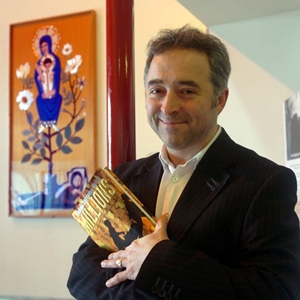
Brilliant and hilarious lecture by Frank Boyce on the conversion of John Henry Newman from Anglican to Catholic and what spurred Newman to leave the ivied towers of Oxford and take up the life of a Catholic priest in Birmingham. Well worth reading Boyce’s newman-lecture-2011, especially if you want a look at the side-splitting, seedy side of Catholic saints. But below is a nice section on the surprising power of stories. Happy All Saint’s Day.
[Writers] have our mission though we may not know what it is. We commit ourselves to something without knowing how it’s going to turn out – but isn’t that also true of parents, of cooks, or teachers, of anyone who starts any project that seems to be failing but which they keep going? Maybe he should be the patron saint of anyone who keeps going in spite of doubt and failure? The patron saint of anyone who can marry strong belief with a toleration of others?
There is an ecology in the World of Knowing things. An Ecology that is often forgotten or undermined. Intellectual rigour can only thrive if our other means of apprehension – imagination, faith, emotion, pleasure – are all at work too. These are all intertwined and when we try to unravel them, we lose. In the current face off between fundamentalist science and fundamentalist religion, for instance, one group has switched off their intellect, the other their sense of wonder.
We think in stories. Before you can build a rocket to go to the Moon, you have to dream of being able to do so. Before you can sail across the Atlantic to America you have to dream of Hy Brazil or the Happy Isles. Think of what an important part of your mental equipment the story of The Ugly Duckling is, or Frankenstein, Cinderella or the Prodigal Son. These stories are like scientific discoveries – they name something that exists in the world but which we couldn’t see clearly – or feel clearly – until we were told the story.
The truly creative act – I’m speaking about writing because it’s what I know but it’s also true of parenting, teaching, evangelising, engaging with others – is a kind a scientific experiment in which all our different ways of knowing are fully engaged. It’s a voyage of discovery. Every voyage of discovery has to begin with the possibility of failure. Almost every discovery made in the history of thought was not quite the discovery that the discoverer was hoping for. You have your definite purpose. You may not know what it is. But you do have your definite purpose.–British screenwriter and novelist Frank Cottrell Boyce, Inaugural Cardinal John Henry Newman Lecture 2011
All the believers were together and had everything in common. They sold property and possessions to give to anyone who had need. Every day they continued to meet together in the temple courts. They broke bread in their homes and ate together with glad and sincere hearts.—Acts 2:44-46
“I went down to Occupy Baltimore last night. And although I did not see one cross displayed nor one prayer being prayed I felt as though I were seeing a vision of what “the early church” may have looked like. There was a spirit in the place, it had its own pulse. How many times have I read the book of Acts and wondered what it must have been like to be there at the moment my religion began. Now I have a glimpse of it: people of all walks of life, including people who the majority of society would have shunned or written off as lunatics, gathering together and grasping for truth, justice.
Slowly rituals are being formed. I looked all around and saw youth sitting cross-legged in circles in the damp grass wiggling their fingers in the air at each other. This childlike movement is now a symbol of agreement with something that is being said. I watched the grins and warmth exchanged between strangers who knowingly wiggled their fingers at each other. The “mic check” was performed with riotous pride during a general assembly meeting. These are the beginnings of things that hold people together even after the last sleeping bag has worn out and the cardboard of the last picket sign disintegrates.
I know this won’t last forever. But for me I feel that I have been blessed. For many this is new, but I have witnessed something ancient.”–from an anonymous union organizer
"Golden Calf" returns to Wall Street, October 2011.
Economist Jeffrey Sachs explains the Occupy Wall Street protesters and the anti-Keystone XL pipeline movement to the Wall Street Journal editorial board and hedge-fund managers. Sachs is also Special Adviser to United Nations Secretary-General on the Millennium Development Goals.
I love to see the prophetic imagination played out in the headlines of our times!
“Is it not the rich who are exploiting you? Are they not the ones who are dragging you into court? Are they not the ones who are slandering the noble name of him to whom you belong?”–James 2:6
“For wicked men live among My people. They watch like fowlers lying in wait. They set a trap; they catch men. Like a cage full of birds, so their houses are full of deceit. Therefore they have grown powerful and rich.”–Jeremiah 5:26-27
“The [Occupy Wall Street] protesters are not envious of wealth, but sick of corporate lies, cheating, and unethical behavior. They are sick of corporate lobbying that led to the reckless deregulation of financial markets; they are sick of Wall Street and the Wall Street Journal asking for trillions of dollars of near-zero-interest loans and bailout money for the banks, but then fighting against unemployment insurance and health coverage for those drowning in the wake of the financial crisis; they are sick of absurdly low tax rates for hedge-fund managers; they are sick of Rupert Murdoch and his henchman David Koch trying to peddle the Canada-to-Gulf Keystone oil pipeline as an honest and environmentally sound business deal, when in fact it would unleash one of the world’s dirtiest and most destructive energy sources, Canada’s oil sands, so that Koch can profit while the world suffers. And they are sick of learning how many Republican politicians – the most recent news is about Herman Cain – are doing the bidding of the Koch brothers.
Here, then, Wall Street and Big Oil, is what it comes down to. The protesters are no longer giving you a free ride, in which you can set the regulations, set your mega-pay, hide your money in tax havens, enjoy sweet tax rates at the hands of ever-willing politicians, and await your bailouts as needed. The days of lawlessness and greed are coming to an end. Just as the Gilded Age turned into the Progressive Era, just as the Roaring Twenties and its excesses turned into the New Deal, be sure that the era of mega-greed is going to turn into an era of renewed accountability, lawfulness, modest compensation, honest taxation, and government by the people rather than by the banks. …”
Much thanks to Heather Wilson and Cathleen Falsani over at Sojourners for dressing up the video of my speech last week outside at the rally against the Keystone XL pipeline.–Rose
Sojourners Associate Editor Rose Marie Berger addressed hundreds gathered outside State Department hearings in Washington, D.C. last week, to protest the Keystone XL oil pipeline.
If approved by the Obama administration, the pipeline would transport crude oil from the tar sands of Alberta, Canada 1,600 miles south — through the American Heartland — to the oil fields of Texas near the Gulf of Mexico.
In the September/October issue of Sojourners Magazine, environmental activist Bill McKibben called the Keystone proposal, “the ugliest project you’ve probably never heard of.” McKibben, author of The End of Nature and founder of the group 350.org, explained:
And make no mistake — that pipeline is a radical act. It helps unlock the planet’s second-largest pool of carbon, outmatched only by the oil wells of Saudi Arabia. There’s enough carbon up there that if you could burn it all off you’d raise the atmosphere’s carbon concentration from its current 390 parts per million to nearly 600. Even burning a much smaller amount of these tar sands would mean that it’s “essentially game over” for the climate, according to [NASA scientist James] Hansen.
The pipeline is ugly for other reasons too — it trashes native lands and endangers prime American farmland (can you imagine running an oil pipeline atop the Ogallala Aquifer?). But it’s beautiful for one reason: President Obama, all by himself, can stop it. Since it crosses national borders, it requires the man himself to sign a piece of paper saying it’s “in the national interest.”
On Oct. 7, the State Department held its final public hearings on the proposed U.S.-Canada pipeline, including testimony from various activists and faith leaders, such as the Rev. Jacek Orzechowski of the Franciscan Action Network, the Rev. Mari Castellanos of the United Church of Christ, John Elwood of the Evangelical Environmental Network and Joelle Novey of the Greater Washington Interfaith Power and Light.
C-SPAN has made video of the lengthy hearings (4+ hours) available online. Watch HERE.
A decision on the Keystone XL pipeline is expected from the Obama administration by the end of the year.
The video of Rose Marie Berger was produced by Heather Wilson, associate web developer at Sojourners. Cathleen Falsani, Sojourners’ Web Editor and Director of New Media, also contributed to this report.
“If this is going to be a Christian nation that doesn’t help the poor, either we have to pretend that Jesus was just as selfish as we are, or we’ve got to acknowledge that He commanded us to love the poor and serve the needy without condition and then admit that we just don’t want to do it.” – Stephen Colbert, Catholic comedian and social satirist
 Certainly more people watch Penn State football than listen to Vatican pronouncements. But insular, all-male institutions that operate on principles of domination foster a culture of cognitive dissonance where paradoxical things are held to be true, e.g. “I am an upright and moral defensive coordinator for a winning team and I sexually molest boys” or “I am a good Catholic, successful coach, who works with good people and whatever’s going on in the showers is none of my business.”
  “You cannot believe in God unless you are capable of questioning the authority of prejudice, even though that prejudice may seem to be religious. Faith is not blind conformity to a prejudice – a ‘pre-judgment.’ It is a decision, a judgment that fully and deliberately takes in the light of a truth that cannot be proven.”–Thomas Merton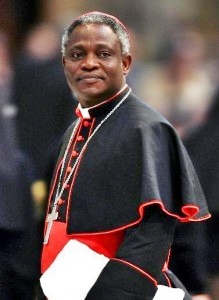

 Brilliant and hilarious lecture by Frank Boyce on the conversion of John Henry Newman from Anglican to Catholic and what spurred Newman to leave the ivied towers of Oxford and take up the life of a Catholic priest in Birmingham. Well worth reading Boyce’s newman-lecture-2011, especially if you want a look at the side-splitting, seedy side of Catholic saints. But below is a nice section on the surprising power of stories. Happy All Saint’s Day.

 “If this is going to be a Christian nation that doesn’t help the poor, either we have to pretend that Jesus was just as selfish as we are, or we’ve got to acknowledge that He commanded us to love the poor and serve the needy without condition and then admit that we just don’t want to do it.” – Stephen Colbert, Catholic comedian and social satirist
