-
George Herbert: ‘Love bade me welcome’
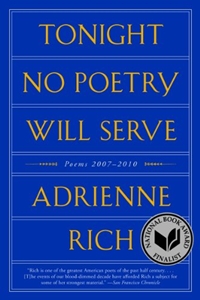 In the middle of the night, I was reading the notes in Adrienne Rich’s new poetry collection Tonight No Poetry Will Serve. Rich quotes from Simone Weil’s The Iliad or The Poems of Force. The reference pushed me off to look up collections of Weil’s writings. While reading an article on Weil’s experience reciting the “Pater Noster” in Greek, I came across a reference to her favorite poem: “Love” by George Herbert (1593-1632). I leave it here for you, as an offering of gratitude.
Love
by George HerbertLove bade me welcome; yet my soul drew back,
Guiltie of dust and sin.
But quick-ey’d Love, observing me grow slack
From my first entrance in,
Drew nearer to me, sweetly questioning
If I lack’d anything.‘A guest,’ I answer’d, ‘worthy to be here.’
Love said, ‘You shall be he.’
‘I, the unkinde, ungrateful? Ah, my deare,
I cannot look on thee.’Love took my hand and smiling did reply:
‘Who made the eyes but I?’
‘Truth, Lord; but I have marr’d them; let my shame
Go where it doth deserve.’
‘And know you not,’ says Love; ‘who bore the blame?’
‘My deare, then I will serve.’
‘You must sit down,’ says Love, ‘and taste my meat.’
So I did sit and eat. -
“Meeting Bone Man” For the First Time
 My friend Joseph Ross’ poetry collection, Meeting Bone Man, is now available for pre-order from the Main Street Rag Publishing web site. Please buy this book.
A launch reading for Meeting Bone Man will take place on April 15, 2012, at 5:00pm at Busboys & Poets, 14th & V Streets NW, Washington, D.C. He will be reading with poet Randall Horton.
Here’s an excerpt of what you’ll find in this hauntingly authentic collection:
Grieving
Thinking of her
is kindof a search, a voyage
of lookingfor signs and moments,
shadows and gaspsof her. I still
move toward the phonethen stop myself,
a foolish sonwho doesn’t remember
his mother isdead. So begins
the search.A hummingbird
dips into ablood-colored flower
and I strainmy eyes to search,
to seethe other side
of my breath.–Joseph Ross, Meeting Bone Man
Some advance praise for Joe’s book from leading poets in our time:
“I finish this beautiful, brave book with tears and a desire to run outside into blue chill day singing, calling to dogs and birds, sifting layers of elegy and affection that surround us all, gifts of recognition/recovery, precious connections and letting go, all of it at once, with our minds and our bones, yes, with everything we know. Oh brother, thank you, Joseph Ross.”–Naomi Shihab Nye, You and Yours (2005)
“Joseph Ross gives us a collection of poems that traces words down the center of the back of death. Like a graffiti artist he tags our emotions. Ross takes us from the streets of DC to the land of Darfur. After every poem we are forced to ask — what is the deep truth? When Basquiat meets the Buddha only the Bone Man can tell the tale. Ross writes like a witness to a new religion. Have faith in these poems; they are filled with the type of light the darkness would love to kiss.”–E. Ethelbert Miller, The Ear is an Organ Made for Love (2009)
“These poems by Joseph Ross in Meeting Bone Man read like translations–not from another language, but from a separate way of being, of understanding. Ross writes his way into the depths of the world in which we live, respecting and properly naming each similarity and difference for what it is–sometimes, for what it should be. This is a lovely book of poems.”–Jericho Brown, Please (2008)
-
Plastic Flip Flops: The Nonviolent Weapons of the Poor?

Protesters in Jakarta, Indonesia, bring plastic flip flops to the police station in a satirical action criticizing the beating and arrest of a boy for allegedly stealing a pair of cheap sandals from a Mobile Brigade officer.
According to the Associated Press: Indonesians have found a new symbol for their growing frustration at uneven justice in this young, democratic nation: cheap, worn-out flip-flops.
They have been dropping them off at police stations throughout the country to express outrage over the arrest and trial of a 15-year-old boy for lifting an old pair of white sandals outside a boarding house used by police in northern Indonesia.
The teen — who was later interrogated and badly beaten by three of the officers in the Central Sulawesi provincial capital of Palu — faces up to five years in prison.
Thousands of people have dropped off their old shoes at police stations in recent days as a form of protest.
-
Thomas Merton: ‘Make All Beauty Holy’

“The eyes of the saint make all beauty holy and the hands of the saint consecrate everything they touch to the glory of God, and the saint is never offended by anything and is scandalized at no [person’s] sin because [s]he does not know sin. [S]He knows nothing but the love and the mercy of God and [s]he is on earth to bring that love and that mercy to all.”
From Seeds of Contemplation by Thomas Merton (New Directions Books, 1949, p 21)
-
Remembering ‘The Barefoot Diva’ Cesaria Evora
“Cesaria Evora was born on the 27th August 1941 in Mindelo, Cape Verde. Her bright voice and physical charms were soon noticed, but her hope of a singing career remained unsatisfied. A Cape Verdean women’s group and the singer Bana both took her to Lisbon to cut a few tracks, but the recordings failed to catch the ear of a producer. In 1988, a young Frenchman of Cape Verdean extraction invited her to Paris to make a record. At 47, she had nothing to lose. Having never seen Paris, she agreed. …” Read more.
-
Thomas Merton: ‘Stable As The Land’

How necessary it is for monks to work in the fields, in the rain, in the sun, in the mud, in the clay, in the wind: these are our spiritual directors and our novice masters. They form our contemplation. They instill virtue into us. They make us as stable as the land we live in. You do not get that out of a typewriter.–Thomas Merton
From The Intimate Merton, ed. Patrick Hart and Jonathan Montaldo (HarperCollins, 1999, p. 80)
-
What You Need to Know About Stieg Larsson Before Seeing ‘Girl With the Dragon Tattoo’
 Naomi Pfefferman over at the Jewish Journal has posted an interesting interview about Stieg Larsson of “Girl With the Dragon Tattoo” fame — just in time for the U.S. film release. (In theaters tomorrow!)
Pfefferman examines Larsson’s history fighting neo-Nazi movements in Europe and his grandfather’s time spent in a little known Swedish concentration camp.
I read Larsson’s Millennium trilogy and couldn’t put them down. An amazing investigation into modern evil – from the financial industry to far-right anti-democratic movements. With his fantastic protagonist Lisbeth Salander, Larsson flips the femme fatale script on its head. This girl uses her wicked smarts, rough-hewn moral code, and a vicious instinct for life to overcome her attackers. These novels are very violent–but it’s violence with a purpose and it takes readers into worlds where many people live and most of us would never ever want to visit.
Here’s an excerpt from Pfefferman’s article:
Stieg Larsson, the Swedish author of the international best-selling “Millennium” series, including “The Girl With the Dragon Tattoo,” died in 2004 at age 50 of a heart attack, before the publication of his crime thrillers made him one of the most famous writers of the decade. They have sold tens of millions of copies worldwide, already spawned three Swedish films and, on Dec. 21, fans will no doubt be lining up for the opening of Hollywood’s “The Girl With the Dragon Tattoo,” directed by David Fincher and starring Daniel Craig and Rooney Mara, with a screenplay by the Oscar-winning “Schindler’s List” scribe Steven Zaillian. (The film opens in selected theaters on Dec. 20.)
But amid all this “Stieg industry,” as the late author’s life partner, Eva Gabrielsson, put it, a crucial element often has been overlooked: Just how much Larsson embedded in his novels a fundamental passion of his life — his crusade against neo-Nazism and violent far-right movements, which he viewed as anathema to Sweden and to all modern society.
“Those who see Stieg solely as an author of crime fiction have never truly known him,” Gabrielsson writes in her memoir, “There Are Things I Want You to Know About Stieg Larsson and Me” (released last June by Seven Stories,and due out in paperback on Jan. 10). The “Millennium” series, she said, “is only one episode in Steig’s journey through this world, and it certainly isn’t his life’s work.”
“The trilogy is an allegory of the individual’s eternal fight for justice and morality, the values for which Stieg Larsson fought until the day he died,” Marie-Francoise Colombani wrote in the foreword to Gabrielsson’s book. … –by Naomi Pfefferman
Read Pfefferman’s whole article.
-
Jesus of the Billboard: Catholic Sisters Launch Midwest Campaign

Pro-immigrant billboard campaign in Iowa As Iowa considers taking up anti-American laws targeting immigrants modeled after Arizona, Catholic sisters in throughout the Midwest are leading a public education campaign about what Jesus says about the situation.
“Rooted in the Gospel and the spirit of St. Francis and St. Clare,” say the Franciscan sisters of Dubuque, “we publically proclaim that immigrants have God-given rights to be treated with respect and dignity, to work and to access services that satisfy their basic needs. Basic human rights, the right to life and to migrate in search of the means to sustain life, are conferred not by citizen ship but by person hood. We support comprehensive immigration reform that will respect these right.”
Read more below:
Iowa Billboards Show Sisters Support for Immigration Reform
Catholic Sisters Launch ‘Welcoming Communities’ For Immigration Reform
Ten Communities of Catholic Sisters Launch Immigration Campaign
-
3 Women, 1 Prize: Priceless Courage

Joint Nobel peace prize winners Yemeni journalist and activist Tawakul Karman, Liberian activist Leymah Gbowee and Liberian President Ellen Johnson Sirleaf hold hands after receiving their honors Saturday. Liberian president and Catholic Ellen Johnson Sirleaf, 72, Liberian “peace warrior” and graduate of Eastern Mennonite University Leymah Gbowee, 39, and Yemen’s Arab Spring activist Tawakkul Karman, 32, accepted their Nobel Peace Prize on Saturday. As all three women make clear in their acceptance speeches, they represent millions of women around the world who decide every morning that today is the day they will fight for justice, risk for peace, and defend human dignity. Thank you all …
Below are quotes from the wonderful Nobel lectures offered by these three.
From Tawakkul Karman’s lecture “In the Name of God the Most Compassionate and Merciful”:
What Martin Luther King called “the art of living in harmony” is the most important art we need to master today. In order to contribute to that human art, the Arab states should make reconciliation with their own people an essential requirement. This is not merely an internal interest, but also an international one required for the whole human community. The dictator who kills his own people doesn’t only represent a case of violation of his people’s values and their national security, but is also a case of violation of human values, its conventions and its international commitments. Such a case represents a real threat to world peace.
Many nations, including the Arab peoples, have suffered, although they were not at war, but were not at peace either. The peace in which they lived is a false “peace of graves”, the peace of submission to tyranny and corruption that impoverishes people and kills their hope for a better future. Today, all of the human community should stand with our people in their peaceful struggle for freedom, dignity and democracy, now that our people have decided to break out of silence and strive to live and realize the meaning of the immortal phrase of Caliph Omar ibn al-Khattab, “Since when have you enslaved people, when their mothers had given birth to them as free ones.”
When I heard the news that I had got the Nobel Peace Prize, I was in my tent in the Taghyeer square in Sana’a. I was one of millions of revolutionary youth. There, we were not even able to secure our safety from the repression and oppression of the regime of Ali Abdullah Saleh. At that moment, I contemplated the distinction between the meanings of peace celebrated by the Nobel Prize, and the tragedy of the aggression waged by Ali Abdullah Saleh against the forces of peaceful change. However, our joy of being on the right side of history made it easier for us to bear the devastating irony.
-
The Osawatomie Speech: Obama and Roosevelt
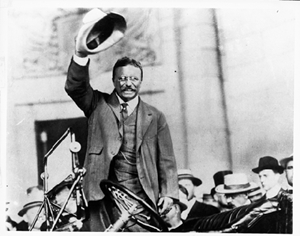 President Obama is slowly swinging back toward his base as he moves toward a reelection campaign. Yesterday, he gave an important and revealing speech in Osawatomie, Kansas. Building on Theodore Roosevelt’s New Nationalism language from Roosevelt’s 1910 Osawatomie speech, Obama lays the framework for reprising his platform of populist economics.
But Obama is not yet Roosevelt. “We grudge no man a fortune in civil life if it is honorably obtained and well used. It is not even enough that it should have gained without doing damage to the community,” Roosevelt said in his speech. “We should permit it to be gained only so long as the gaining represents benefit to the community.” For Obama to get to that level, he needs to ask Elizabeth Warren to write his speeches and run as his 2012 vice presidential candidate.
Here are some highlights from Obama’s speech this week:
… Now, just as there was in Teddy Roosevelt’s time, there is a certain crowd in Washington who, for the last few decades, have said, let’s respond to this economic challenge with the same old tune. “The market will take care of everything,” they tell us. If we just cut more regulations and cut more taxes – especially for the wealthy – our economy will grow stronger. Sure, they say, there will be winners and losers. But if the winners do really well, then jobs and prosperity will eventually trickle down to everybody else. And, they argue, even if prosperity doesn’t trickle down, well, that’s the price of liberty.
Now, it’s a simple theory. And we have to admit, it’s one that speaks to our rugged individualism and our healthy skepticism of too much government. That’s in America’s DNA. And that theory fits well on a bumper sticker. But here’s the problem: It doesn’t work. It has never worked. It didn’t work when it was tried in the decade before the Great Depression. It’s not what led to the incredible postwar booms of the 50s and 60s. And it didn’t work when we tried it during the last decade. I mean, understand, it’s not as if we haven’t tried this theory. …
We simply cannot return to this brand of “you’re on your own” economics if we’re serious about rebuilding the middle class in this country. We know that it doesn’t result in a strong economy. It results in an economy that invests too little in its people and in its future. We know it doesn’t result in a prosperity that trickles down. It results in a prosperity that’s enjoyed by fewer and fewer of our citisens.
(more…)


-
Subscribe
Subscribed
Have a WordPress.com account? Log in now.

