-
Backstory on Public Radio’s “Backstory with the American History Guys”
 This morning — bright and early at 7 a.m. — I got to jump on a call with some of my local heroes: Peter Onuf (18th century guy), Ed Ayers (19th century guy), and Brian Balogh (20th century guy) aka “The American History Guys” from the University of Virginia. Our topic was World War I.
As an avid listener of the show, I sent in two questions on the topic:
1. What was the role of women in the U.S. military during WWI? What was the Yeoman (F) class that first allowed white women into active duty in the Navy? I understand that Loretta Walsh was one of the first non-nurse women to serve and actually get full benefits. And were there African-American women who served in the military during WWI? I know that the Harlem Hellcats went with the French forces and I think there were African-American women nurses who were recruited specifically to care for wounded black soldiers.
2. We hear so much about the European and British poets, artists, and novelists of “The Lost Generation,” but less about the Americans: Dos Passos, Stein, and others. What was the American art and literature that arose from the American “Lost Generation”?
The guys took up my first question and we didn’t go into the second one. (If you’ve got responses about art and “the Lost Generation,” send them in to me!)
Our conversation was fun, lively, and brought up complex questions about whether war and the military has been a force for progressive social change when we look at women and minorities and about the military’s use of women as “pin up girls” lure in male recruits.
Listen for this show on Sunday, August 24, 2014 (or listen to the podcast). Find out where to hear Backstory.
-
Video: Living While Black and Michael Brown
In 1917, white mobs attacked a black neighborhood in East St. Louis. The memory remains. Michael Brown’s murder happens in a context of 40 years of a mass incarceration strategy. (Here is a good primer and bible study on Mass Incarceration and the New Jim Crow by Correctional Ministries and Chaplains Association in 2013. It’s perfect for a traditional Christian or evangelical audience.)
The Malcolm X Grassroots Movement released a report on police brutality against African Americans and extrajudicial killings called Operation Ghetto Storm. Read this report while holding it in one hand and Lamentations 3 in the other.
I have been hunted like a bird
by those who were my enemies without cause;
they flung me alive into the pit
and cast stones on me;
water closed over my head;
I said, ‘I am lost.’
I called on thy name, O Lord,
from the depths of the pit;
thou didst hear my plea, ‘Do not close
thine ear to my cry for help!’[c]
Thou didst come near when I called on thee;
thou didst say, ‘Do not fear!’ -
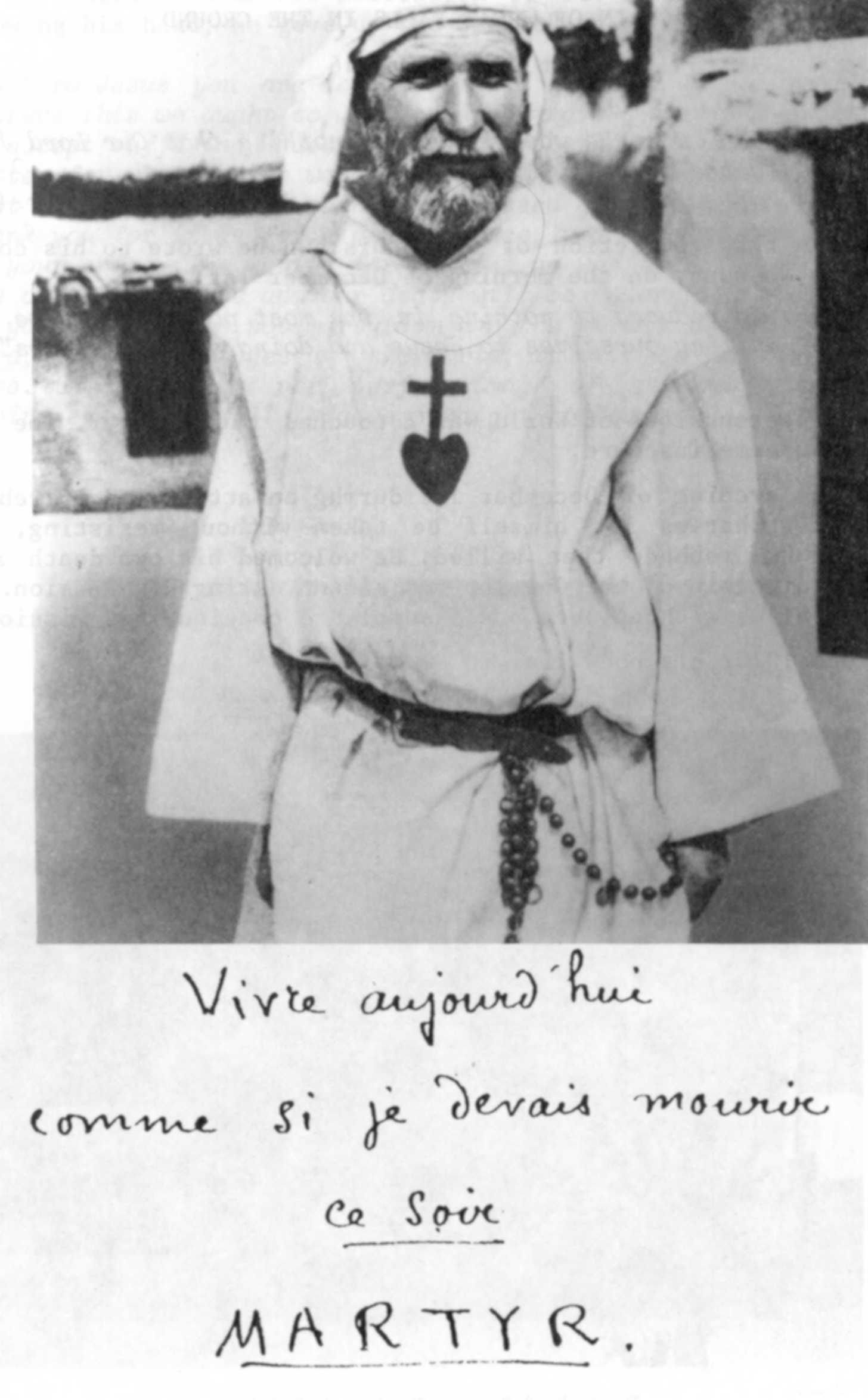
Charles de Foucald: Many Ladders to Heaven

“God does not ask all souls to show their love by the same works, to climb to heaven by the same ladder, to achieve goodness in the same way of life. What sort of work, then, must I do? Which is my road to heaven? In what kind of life am I to sanctify myself?”–Charles de Foucauld
-
Jose Sueiro: The Columbia Heights Legacy of Bob Moore
 History in our neighborhood of Columbia Heights. We are remembering the life and work of Bob Moore, who oversaw the redevelopment and gentrification of Columbia Heights. Moore’s is a mixed – but unmistakable – legacy. Without his work Sojourners would not have been able to gain nonprofit space in the new Tivoli building and could not have afforded to remain in Columbia Heights. Here’s an excerpt from Jose Suiero’s article:
“New residents to the Columbia Heights (CH) neighborhood of Washington DC have no idea the conditions of the area after the 1969 riots through the crack epidemic of the late 80’s and downturns of the 90’s, but it was a far cry from the prosperous, bustling, relatively secure, upscale neighborhood it has become. To his eternal credit, the late Robert L. Moore, longtime leader of the Development Corporation of Columbia Heights (DCCH) who just passed away, was the chief architect and promoter of this transformation. We owe him credit for rebuilding Columbia Heights into the thriving, multi-cultural urban village it has become. He need not worry about his legacy. It is everywhere.
When Bob took over the fledgling community development organization there were burned out vacant lots virtually on every side street of the 14th St. corridor from U all the way up to Spring Road. The Target shopping mall remained an empty lot for close to 20 years with the infamous Waffle Shop anchoring the corner at 14th & Park Rd. The Tivoli stood empty for decades, a hollowed out empty shell. The 1400 block of Park Road was a drug bazaar and Lincoln Jr. High one of the most violence prone schools in the city.
During the Barry years when the urgency of renewing the city core was a top priority the government reached out to Moore to help spur economic development in the ‘Heights’. With an extensive affordable housing background and experience in DC government as head of the DC Housing Authority, Bob took the lead in acquiring boarded up row houses, repairing them and selling them as affordable homes keeping long term residents in their neighborhood. Under his leadership DCCH designed and built a small strip mall along 14th St. at Belmont Rd. The Nehemiah Shopping Center was eventually demolished to build housing, but this first attempt at bringing retail back to CH was the precursor to the DC/USA mall. …” —Jose Sueiro
Read Jose Sueiro’s whole article here.
-
Jeremiah and the Wine Jars

Amphora, Isle of Hydra, Aegean Sea (photo by Rose Berger) From this morning’s scripture reading:
“You shall speak to them this word: ‘Thus says the LORD, the God of Israel, “Every jar shall be filled with wine.”‘ And they will say to you, ‘Do we not indeed know that every jar will be filled with wine?’ Then you shall say to them, ‘Thus says the LORD: Behold, I will fill with drunkenness all the inhabitants of this land: the kings who sit on David’s throne, the priests, the prophets, and all the inhabitants of Jerusalem. And I will dash them one against another, fathers and sons together, says the LORD. I will not pity or spare or have compassion, that I should not destroy them.’” Hear and give ear; be not proud, for the LORD has spoken.”–Jeremiah 13:12-15
“The figure of full wine jars is used to assert that all inhabitants of the community will be filled with drunkenness (Jeremiah 13:13). But the metaphor remains enigmatic, until it is recognized that drunkenness may be taken as a protoapocalyptic figure for instability and judgement. The notion of drunkenness here is not related to immorality, but to loss of equilibrium, of being dizzy and unbalanced. The image is of a person so unstable, as in crazy drunk, that they will bump against and hurt each other. They will be helpless, unable to act differently, or responsibly. They will be at the mercy of their condition, out of control. Indeed, the only one who could save them from this uncontrolled act of self-destruction is Yahweh.” — Walter Brueggemann (“A Commentary on Jeremiah: Exile and Homecoming,” p. 129)
-
Elizabeth of the Trinity: ‘That Divine Glance’

“It seems to me that nothing can distract one from God when one acts only for God, always in God’s holy presence, under that divine glance that penetrates to the depths of the soul. Even in the midst of the world it is possible to listen to God in the silence of a heart that wants to be God’s alone.”–Blessed Elizabeth of the Trinity
Élizabeth Catez was born in France in 1880. She taught religion to children who worked in factories. In 1901 she joined the Discalced Carmelite monastic community of Catholic nuns. She died five years later of Addison’s disease. Read more about her here.
-
Richard Rohr: Letting Go of Tempting Compulsions
 “The spiritual journey is a journey into Mystery, requiring us to enter the ‘cloud of unknowing’ where the left brain always fears to tread. Precisely because we’re being led into Mystery, we have to let go of our need to know and our need to keep everything under control. Most of us are shocked to discover how great this need is.
There are three primary things that we have to let go of, in my opinion. First is the compulsion to be successful. Second is the compulsion to be right—even, and especially, to be theologically right. (That’s merely an ego trip, and because of this need, churches have split in half, with both parties prisoners of their own egos.) Finally there is the compulsion to be powerful, to have everything under control.
I’m convinced these are the three demons Jesus faced in the wilderness (Matthew 4:1-11). Until we each look these three demons in their eyes, we should presume that they are still in charge in every life. The demons have to be called by name, clearly, concretely, and practically, spelling out just how imperious, controlling, and self-righteous we all are. This is the first lesson in the spirituality of subtraction.”–Richard Rohr
Adapted from Simplicity: The Freedom of Letting Go by Richard Rohr (pp. 42-43)
Find out more about Richard Rohr here.
-
Video: Bill Wylie-Kellermann and the Gospel of Detroit
Pastor Bill Wylie-Kellermann tells his story at The Secret Society Of Twisted Storytellers, Friday, March 21, 2014, at The Charles H. Wright Museum of African American History, hosted by Satori Shakoor.
Videographer/Editor Don Wellman (https://www.248pencils.com)
-
Richard Rohr: ‘My Kingdoms Go’
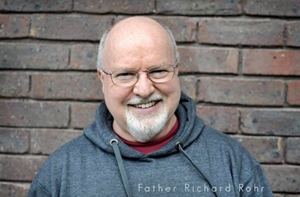
“To pray and actually mean ‘thy Kingdom come,’ we must also be able to say ‘my kingdoms go.’ Francis and Clare’s first citizenship was always and in every case elsewhere, which ironically allowed them to live in the world with joy, detachment, and freedom.” — Richard Rohr
-
The Great and Powerful Grace Lee Boggs and the Gospel of Detroit
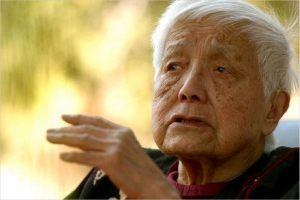 Guernica magazine published an amazing interview with 99-year-old Grace Lee Boggs of Detroit done by Michelle Chen. Bogg’s most recent book is The Next American Revolution. The book is accompanied by a biographical documentary film titled American Revolutionary: The Evolution of Grace Lee Boggs.
Here’s an excerpt from Michelle Chen’s interview:
Guernica: Where do people draw the power that they need to seize in order to start this revolution?
Grace Lee Boggs: I think people look at revolution too much in terms of power. I think revolution has to be seen more anthropologically, in terms of transitions from one mode of life to another. We have to see today in light of the transition, say, from hunting and gathering to agriculture, and from agriculture to industry, and from industry to post-industry. We’re in an epoch transition.
Guernica: Do you feel that talking about power and conflict might take away from that, or distract people from that focus on long-term transition?
Grace Lee Boggs: It does. Because when you think of power, you think the state has power. When you look at it in terms of revolution, in terms of the state, you think of it in terms of Russia, the Soviet Union, and how those who struggled for power actually became victims of the state, prisoners of the state, and how that led to the dissolution of the Soviet Union. We have to think of revolution much more in terms of transitions from one epoch to another. Talk about Paleolithic and Neolithic.
Guernica: Given the fact of increasing government intrusion into our lives, it seems like it would be difficult to ignore these power structures.
Grace Lee Boggs: Just think of Obama and think of how powerless he is. I think we have to understand that the nation-state became powerful in the wake of the French Revolution, whereas the nation-state has become powerless in light of globalization.
Read the whole interview.



-
Subscribe
Subscribed
Have a WordPress.com account? Log in now.

