-
Ched Myers: 50/500: A Season of Protest and Remembering
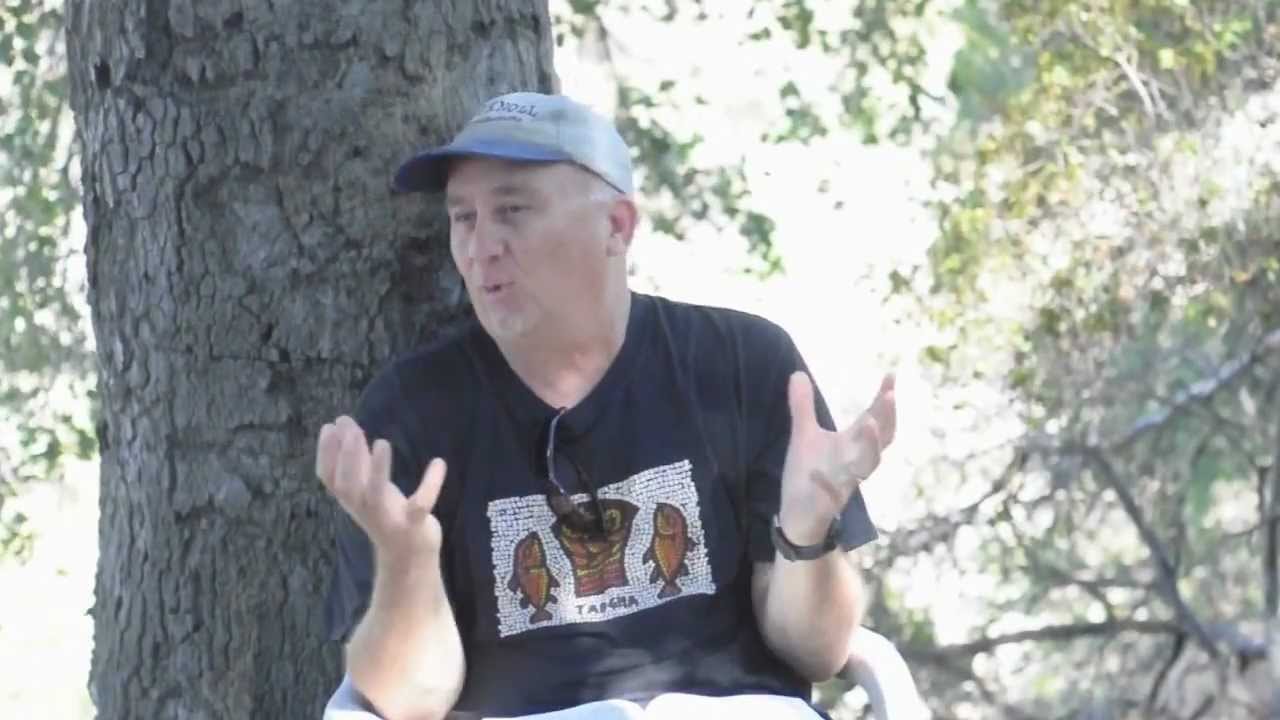 by Ched Myers
“[As] we prepare to embrace that great feast of remembering, the “Triduum of Saints”: All Hallow’s Eve, Saints and All Souls Day, or Dia de los Muertos (learn more about the Triduum by reading this blog or linking to this free 2012 BCM webinar).
As I have gotten older this season of the Saints has become my favorite time of year. This morning Elaine and I sat and prayed at our table, pictures of parents and other missed loved ones spread out. We both cried telling stories. Tears always help.
This season is personal, but also political. It reminds us that Movement history matters. A few days ago, on October 27th, we commemorated the 50th anniversary of the “Baltimore Four” action. And today is Reformation Day, which this year marks the 500th anniversary of Martin Luther’s famous protest, tacking 95 Theses onto Wittenburg’s door.
Luther was publicly naming what he saw as excesses and apostasies in his Roman Catholic Church (see more here), an action that eventually led to the world-historical changes of the Protestant Reformation, for good and for ill. Later in 1521 when called before Holy Roman Emperor Charles V at the Diet of Worms, Luther confessed: “My conscience is captive to the Word of God… Here I stand. I cannot do otherwise.”
The Baltimore Four witness, while not nearly as famous, was perhaps equally consequential, inaugurating a series of more than 100 subsequent draft board actions across the country between 1967–72. And it was just the second time in U.S. history that a Catholic priest was arrested for civil disobedience—the first being five days earlier, when Phil’s brother Daniel was arrested at the Pentagon in an anti-war protest …”–Ched Myers
Read Ched Myers’ full reflection and support the work of Bartimaeus Cooperative Ministries.
-
Abbot Philip: The Lord’s Positive and Negative Blessings
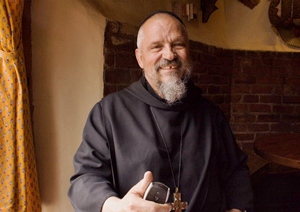
Abbot Philip, OSB “…The challenge is simply to cling to Christ every day, in good and in evil circumstances, and to know that He is present with His love.
All of us, especially those of us who are older, can look back in time and see the blessings of the Lord. We can also see the catastrophes and crises that had to be taken up as blessings. Anything that remains in the past and has not been accepted as a blessing is something that will eventually cause us harm or grief or will impact our lives in negative ways.
In the present age, many people prefer to see themselves as victims of all that has happened in their lives—and that creates an illusion and a false vision of life. All is blessing if we are able to receive it and are capable of choosing it as blessing. Yes, of course, there have been negative things in every life. It is the receiving in a positive way of all that has happened to us that will form us into persons who reflect God’s glory!
We see this fairly often when there are terrible crimes against people. Some people react with hatred and rejection and anger and all negativity. This only injures further the person who has already been injured. On the other hand, at times we see incredible examples of people who have forgiven others and have forgiven situations. I think here especially of Immaculée Ilibagiza, the writer from Ruanda, who was able to witness the murders of her family members and forgive those who murdered them. There are countless witnesses like this in our own times: people who are able to forgive what many others consider unforgivable.
On talk radio we can often here the opposite: “I will never forgive.” “I hope they burn in hell.” “I hope that they suffer horribly.” “Forgiveness is impossible.” Such people are unable to understand and follow the teachings of the Lord Jesus. The challenge, however, is for us, you and me, to follow His teachings and forgive all who have ever harmed us. Such forgiveness brings life and grace and the blessing of God.
-
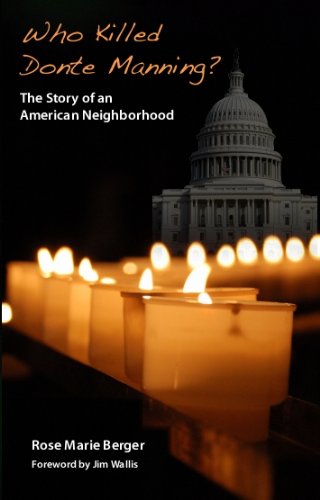
Who Killed Donte Manning? Local D.C. News Report
OCT 24 2017 01:02AM EDT
by Paul Wagner, FOX 5 News
WASHINGTON – The shooting of a little boy playing outside of his Washington D.C. apartment 12 years ago really touched a nerve in the city. The police chief at the time was so angry that he offered a huge reward to find his killer. It is a reward that still stands today.The murder of 9-year-old Donte Manning has never been solved, but the lead detective in the case says he came awfully close. Manning was an innocent bystander back in March 2005 when he was shot in the face on a sidewalk on 13th Street in Northwest D.C.
It was a case FOX 5 covered extensively back then. The bullet ended up getting lodged in the back of his head, according to police. After fighting for his life for over a month at the hospital, Manning died after being taken off life support.
The reward in this case shot up to $125,000.
“Every case that I have been involved in that particular neighborhood, an arrest was made without a problem, and this is the only case that I have been involved in that neighborhood where an arrest has not been made yet,” Detective Mitch Credle for the Metropolitan Police Department’s Major Case/Cold Case Unit said back in August 2006.
Eleven years later, Credle said he believes based on the information that they gathered, he believes he knows who was firing their weapon on the street that night in 2005 and who that person was shooting at.
“I believe we were close to making an arrest,” he said.
Credle is now retired. He agreed to discuss this case with FOX 5 as long as names were not revealed.
“I do remember receiving a call and this individual telling me he had information in Donte Manning’s murder,” said Credle. “I talked to detectives in Virginia and detectives told me, ‘Yes, he helped us close a murder, and yes, he was a witness in a case and his information was good.’”
Credle also said, “A lot of information did check out, but I couldn’t find a set of eyes to help me confirm some of the things he was saying that occurred here that particular night.”
The investigation hinged on the theft of a gun from a deputy sheriff’s car. It is a service weapon the informant says was stolen by the man suspected of shooting Manning.
“He said once he stole the weapon, one day he responded to the area, the ABC building where Donte Manning was murdered – he went up there to buy drugs and while he was up there to buy drugs, he was robbed of that particular gun,” Credle said. “He said the guy laid him down, took his money, took his gun and he left the area and never came back. At some point later, he found out the guy who robbed him was here in this neighborhood in front of the building where the murder occurred, so he told the informant that he came up here and saw the guy – he stood on the corner and fired shots at him – and at that time he did not know until later on in the news that a kid was shot during that particular time.”
The stolen service weapon was now the key to the case.
“The gun was later recovered in the same area in the Third District, which was three blocks from where Donte Manning was shot,” said Credle.
Credle said the people he has concluded that were probably involved are not currently walking the streets.
“Based on all of the information that I gathered during the investigation, those are the two people who at this particular point could bring some type of closure to this particular case, and one is doing 40 years-plus and the other one is doing life,” the retired detective said.
Credle told us that this case still bothers him to this day.
“A lot people said Donte used to come down to the Boys and Girls Club where I was a volunteer, but I never met him personally that I can recall and it’s always just [like], ‘Why? Why it occurred?’” said Credle. “And for me to be the detective on the case, I couldn’t bring closure to it in a neighborhood where I am rooted, where I know everyone. Man, this thing is going to haunt me forever. It really is and that’s the truth.”
-
Questions on a Sunday with Ursula LeGuin, Daniel Kahneman, and Ched Myers
My Sunday rest found me listening to an interview with Daniel Kahneman and completing the 800-page collection of Ursula Le Guin’s collected novellas. In the middle of those two, I studied Ched Myers’ Bible study on Isaiah 5-6 (Ecological Theology of the Vineyard).
Below are quotes that are significant to me and questions that arose:
 From Paradises Lost by Ursula K. Le Guin:
” ‘You have a sense of duty,’ Bingdi told [Luis] affectionately. ‘Ancestral duty–go find a new world … Scientific duty–go find new knowledge … If a door opens, you feel it’s your duty to go through it. If a door opens, I unquestioningly close it. If life is good, I don’t seek to change it. Life is good, Luis.’ He spoke, as always, with little rests between the sentences. ‘I will miss you and a lot of other people. I’ll get bored with the angels [those who stay on board the spaceship]. You won’t be bored, down on that dirtball [planet]. But I have no sense of duty and I rather enjoy being bored. I want to live my life in peace, doing no harm and receiving no harm. And, judging by the films and books, I think this [the spaceship] may be the best place, in all the universe, to live such a life.’
‘It is a matter of control, finally, isn’t it,’ Luis said.
Bingdi nodded. ‘We need to be in the control. The angels and I. You don’t.’
‘We aren’t in control. None of us. Ever.’
‘I know. But we’ve got a good imitation of it, here. [Virtual reality]’s enough for me.”–The Pragmatist, in Paradises Lost by Urusula K. Le Guin
“Paradises Lost” is a science fiction novella by American author Ursula K. Le Guin. It was first published in the collection The Birthday of the World (2002) and was republished in The Found and the Lost: The Collected Novellas of Ursula K. Le Guin (2016), which I just finished reading.
 From an interview with Daniel Kahneman, who won the Nobel Prize in 2002 for his work in behavioral economics in which his empirical findings challenge the assumption of human rationality prevailing in modern economic theory.
“When you look globally at people’s actions, overconfidence is endemic. I mean we have too much confidence in our beliefs, and overconfidence really is associated with a failure of imagination. When you cannot imagine an alternative to your belief, you are convinced that your belief is true. That’s overconfidence. And overconfidence — whenever there is a war, there were overconfident generals. You can look at failures, and overconfidence had something to do with them. On the other hand, overconfidence and overconfident optimism is the engine of capitalism. I mean entrepreneurs are overconfident. They think they’re going to be successful.
People who open restaurants in New York think they’ll succeed; otherwise, they wouldn’t do it. But at least two-thirds of them have to give up within a few years — more than two-thirds, probably.”–Daniel Kahneman is best known for his book Thinking, Fast and Slow. He’s the Eugene Higgins Professor of Psychology Emeritus at Princeton University, Professor of Psychology and Public Affairs Emeritus at Princeton’s Woodrow Wilson School, and a fellow of the Center for Rationality at the Hebrew University in Jerusalem. (See “Why We Contradict Ourselves and Confound Each Other” at OnBeing.org)
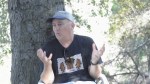 Ched Myers wrote this for the Wild Lectionary series at Radical Discipleship.
Isaiah 6:7 returns to the narrator’s voice that began the parable. The prophet now decodes the parable as an allegory about the nation. The image of Israel as a vineyard being assessed by the true Landowner recurs several times throughout Isaiah (we find a parallel song in Isa. 27:2-6). In 6:7 YHWH’s lament is a poignant play on words:
God looked for justice (mishpat),
but saw only bloodshed (mispach);
righteousness (tsdaqah),
but heard only a cry (tsa`aqah)This last verb, which could be translated as “scream” (or “groan” as Jim Perkinson calls is) connotes an outcry against injustice or a cry of distress. It is used in Exodus 3:7, upon which the whole liberation history of Israel turns: “Then the Lord said, ‘I have observed the misery of my people who are in Egypt; I have heard their cry on account of their oppressors. Indeed, I know their sufferings…’”–Ched Myers, Ecological Theology of the Vineyard
My questions:
What is duty? Where does it come from?
What is the relation between duty and community?
What constitutes control?
What is the role of religious belief in control and duty?
What is the relationship between duty and delight (see Dorothy Day quote; see also conclusion of “Paradises Lost”; see the wine vat and harvest festival in Isaiah)
What is the relationship between peace and control?
What is the relationship between overconfidence and duty?
What is the role of religious belief in imagination?
Regarding Myers’ on Isaiah, if the rich crush the worker “like grapes” and the poor “like grain,” then do the rich not eat the body of the poor and drink their blood and is this not an abomination?
What is the role of mercy in duty?
What is the role of imagination in economics?Send me your questions.
-
Video: Fr. James Alison – Reading Scripture and the LGBT Question
Fr. James Alison spoke in September at the Episcopal Seminary of the Southwest in Austin, Texas. How do we begin to understand the ways religion is used to marginalize the LGBTQ+ community? What are thoughtful ways to move out of the binds around faith and a desire to be affirming? James considers the framework around scripture pertaining to gender and sexuality.
Alison is one of my heroes for the gentle and tenacious way he opens scripture, especially using the interpretive lens of Rene Girard’s mimetic theory and scapegoating. Here he examines Genesis 9:20-29, 2 Samuel 10:1-5, Genesis 19 and Judges 19-21 (Sodomites and Benjaminites), Leviticus 18:22, Acts 10:1-11:18, Romans 1-3, Mark 5:1-20.
His talk is one hour, followed by 25 minutes of Q & A.
-
Video: Protecting the Sacred – Water, the Environment, and Climate Change
This 30 minute CBS News video includes some of our best leaders on water, climate change, and watershed discipleship.
Christiana Zenner Peppard is a professor of theology, science, and ethics at Fordham University. She wrote in Come Ye to the Waters (If You Can Afford It) in Sept-Oct 2017 Sojourners and is author of Just Water: Theology, Ethics, and the Global Water Crisis.
Tara Houska, Ojibwe, is a tribal-rights attorney and the national campaigns director for the indigenous-led environmental-justice organization Honor the Earth. She has served as adviser on Native American issues for Bernie Sanders’s campaign, cofounded Not Your Mascots to fight the appropriation of indigenous culture, and protested the Dakota Access pipeline at the Standing Rock Indian Reservation.
Katharine Hayhoe is a climate scientist at Texas Tech University. She wrote Climate Scientist, Christian on Climate Change and Wildfires for Sojourners, as well as the book A Climate for Change: Global Warming Facts for Faith-Based Decisions and contributed to the June 2017 Global Climate Report.
Melinda Harnish Clutterbuck (pastor at Community Mennonite Church of Lancaster) and Mark Clutterbuck are cofounders of Lancaster Against Pipelines. Sister Sara Dwyer, ASC, is peace, justice, and integrity of creation coordinators for the Adorers of the Blood of Christ. I wrote about their courageous witness in Developers Are Trying to Build a Pipeline Through a Watershed. These Nuns Built A Chapel In Its Path.
This week, Oct 1-6, Lancaster Against Pipelines and the Adorers will be defending their land and waterways through blocking Transco-Williams’ bulldozers. Please pray and contribute to the collection for these saints.
-
Randy Woodley on U.S. people and knowledge
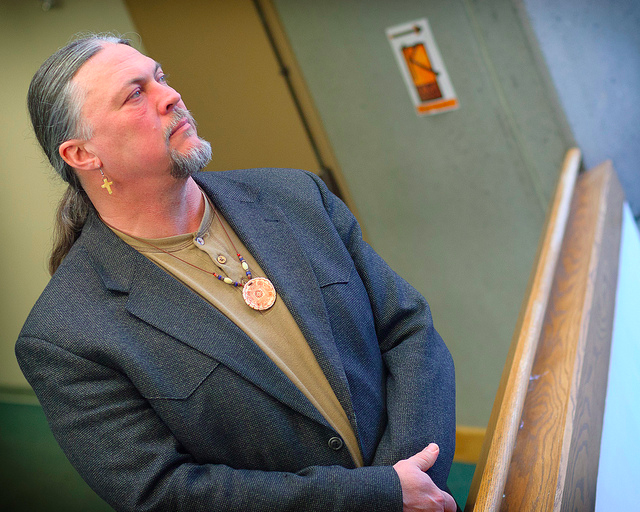
“People in the United states are so abstract and dualistic in terms of how they understand knowledge and what they do with it. They think if they know something that they’ve lived it–as opposed to actually living out what they know. That’s the problem in the church and with the citizenry. Just because you know of something doesn’t mean you really know it. You don’t know it until you live it out.”–Dr. Randy Woodley
Elaine Enns and Ched Myers interviewed Randy Woodley on their webinar commemorating the 25th Anniversary of the 1992 worldwide protests around the Columbus Quincentenary and explored the legacy of Indigenous activism that arose in its wake, including the United Nations Declaration on the Rights of Indigenous Peoples, which was 10 years old the week of this broadcast.
Rev. Dr. Randy Woodley is a Keetoowah Cherokee Indian descendant. He currently serves as Distinguished Professor of Faith and Culture and was director of Intercultural and Indigenous Studies at Portland Seminary in Portland, Oregon. He talked about his journey, his writing (recommended book “Shalom and the Community of Creation: An Indigenous Vision,” Eerdmans, 2012), and gave the background to the recent theological statement condemning White Supremacy he helped draft (https://www.thedeclaration.net/).
-
Catholic Nonviolence Initiative Launches Global Roundtables
 It’s been a busy summer! Below is an update on the Catholic Nonviolence Initiative, a project I’ve been deeply involved in. Amid the chaotic violence in our own country and around the world, I’m grateful to have this opportunity to contribute toward building positive peace–and grateful to Sojourners for supporting me in it!
Keep the Catholic Nonviolence Initiative — and Pope Francis and Cardinal Turkson — in your prayers. (Also here’s the “offering basket” in case you want to contribute. This is, of course, an unfunded global project currently supported by voluntary labor and the barter system!)–Rose
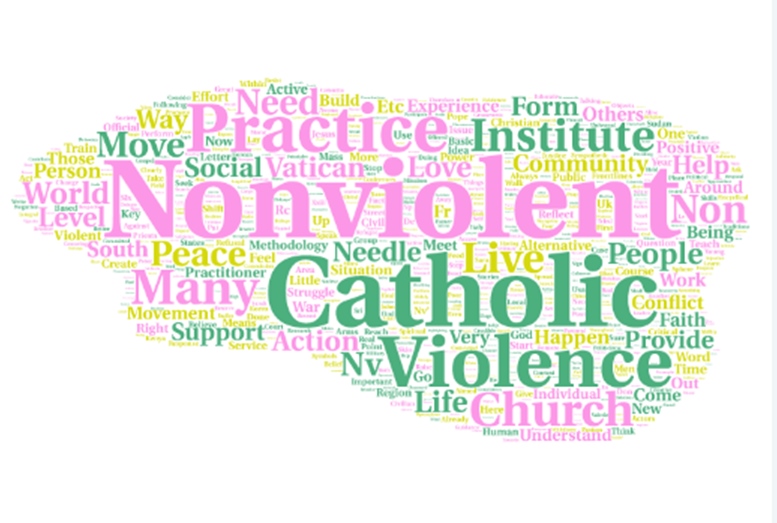
September 2017 — The Catholic Nonviolence Initiative (CNI) is focused on promoting a renewed commitment to Gospel nonviolence at the heart of the Church, including the possibility of a new official teaching on nonviolence.
One part of our work toward this goal is to research and elaborate on the theological, scriptural, ecclesial and practical components of nonviolence. In order to do this, we have organized five “roundtables” each of which includes between 7-20 participants from around the world. Each roundtable, addressing a particular topic, ultimately will produce a well-curated document by the end of 2018; hopefully at that time, representatives from each group will meet for a second conference on nonviolence and just peace.
We’re humbled by the number of theologians and peace practitioners who have agreed to participate in these roundtables – all five groups have now started their work via online conversations.
1) Toward a foundational theology of nonviolence: This roundtable process will research, map and elaborate a comprehensive theology of nonviolence as a foundational basis for the Church’s re-commitment to the centrality of Gospel nonviolence. Co-conveners: Ken Butigan (CNI executive committee; DePaul University, Chicago, IL, USA), Jose Henriquez (National University of Ireland, Galway, Ireland) and Maria Clara Bingemer (Pontifícia Universidade Católica, Rio de Janeiro, Brazil)
2) The biblical foundations of nonviolence, including its centrality to the life and mission of Jesus: This roundtable process will illuminate the biblical roots of active nonviolence and the Gospel nonviolence at the core of Jesus’ life, mission, and way, and thus at the core of the life, mission, and way of the Church. Co-conveners: Sr. Teresia Wamuyu Wachira (CNI executive committee; St. Paul University, Nairobi, Kenya) and Terrence Rynne (Marquette University, Milwaukee, WI, USA).
3) Nonviolence and Just Peace: A new moral framework for Catholic theology in the context of a violent world: This roundtable process will research and frame a new moral framework rooted in Gospel nonviolence in response to the violence and injustice of our time. Co-conveners: Marie Dennis (CNI executive committee; Pax Christi International, Washington, DC, USA) and John Ashworth (adviser to South Sudan Catholic Bishops, Nairobi, Kenya).
4) Integrating Gospel nonviolence at every level of the Church: This roundtable process will imagine and elaborate concrete ways Gospel nonviolence can be explicitly integrated into the life of the Church. Co-conveners: Gerry Lee (CNI executive committee; Maryknoll Office for Global Concerns, Washington, DC, USA), Fr. Boniface Mendes (former director of Federation of Asian Bishop Conferences Human Rights Office and member of the Pontifical Council for Justice and Peace, Pakistan) and Fr. Felix Mushobozi (Union of International Superiors General Justice & Peace, Integrity of Creation Commission, Rome, Italy).
5) The power of nonviolence: Concrete experience, principles, methods, and effectiveness – Past, present, and envisioned future: This roundtable will comprehensively profile active nonviolence—its dynamics, its impact, its history, its contemporary applications, and a series of concrete examples—and frame how it can be spread and applied globally to respond to the monumental challenges of our time. Co-conveners: Pat Gaffney (CNI executive committee; Pax Christi British section, London, UK) and Rose Berger (Sojourners, Washington, DC, USA).[]
-
Maddow Takes on Russia’s Maskirovka
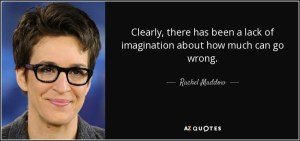
Rachel Maddow took on Russia’s military-intelligence tactics (maskirovka) on Friday (Sept. 8), providing a helpful timeline of the Russia-Trump investigation. I used her timeline plus the Moyers and Company timeline and tracked down primary sources to help me think through the progression of these investigations into US political corruption and collusion with a foreign power.
As of this week, we finally have confirmation that Facebook was used as the tool (willingly or unwillingly) to run a psy-ops campaign on targeted U.S. voters to influence the election.
Some key questions are: Were there American confederates involved in collusion and who violated the Federal Elections Campaign Act by using foreign money to influence a US political election?
It’s hard to care about this stuff that is confusing and appears to be primarily the one0percenters playing one-percenter games, but government corruption on this scale mostly hurts the “little guy,” those who are most vulnerable and who only have the tools of democracy to use as leverage in the playground of the gods. It’s an imperfect system, but it is one of the best tools for nonviolent transfer of power that we’ve got.
For the longterm health of our nation, it’s important that our judicial and legislative branches be strong enough to resist this kind of inside-outside political takeover.–Rose Berger
So here’s my timeline:
- September 2015 –
FBI began investigating cyber breaches targeting US political organizations, including the Democratic National Committee.
- April 2016 –
The Democratic National Committee’s IT department notices suspicious computer activity, contacts the FBI and hires a private security firm, CrowdStrike, to investigate.
- May 2016 –
“In May 2016, a Russian military intelligence officer bragged to a colleague that his organization, known as the GRU, was getting ready to pay Clinton back for what President Vladimir Putin believed was an influence operation she had run against him five years earlier as Secretary of State. The GRU, he said, was going to cause chaos in the upcoming U.S. election. … The intelligence officials have found that Moscow’s agents bought ads on Facebook to target specific populations with propaganda. … Facebook official stays the company has no evidence of that occurring.“—Massimo Calabrese (Time), see more.
- June 2017 –
Key Trump campaign officials meet with Russian intelligence liaison on Clinton opposition research.
Trump, Jr., Manafort, and Kushner Met With Lawyer Tied to Kremlin to get opposition research on Hillary Clinton—Associated Press (see more).
Testifying before the Senate Intelligence Committee, the Department of Homeland Security’s acting director of the Office of Intelligence and Analysis Cyber Division says that individuals connected to the Russian government tried to hack election-related computer systems in 21 states.
And New York Times reports that one person at that meeting was Rinat Akhmetshin, with Russian intelligence background, “a gregarious, fast-talking man with a sharp sense of humor, was a skilled practitioner in the muscular Russian version of what in American politics is known as opposition research. From his base in Washington, Mr. Akhmetshin has been hired by an ever-changing roster of clients, often Russians, to burnish their image and blacken those of their rivals. Some clients were close to the Kremlin. Others were its bitter foes.”
- July 2016 –
Comey closes Clinton investigation and Democratic Party servers are hacked and emails released (DCLeaks and Guccifer 2.0 release documents stolen from Democratic Party)
FBI Director James Comey holds a press conference announcing that the bureau has closed its yearlong investigation into Hillary Clinton’s use of a private email server while she was secretary of state.
“We assess with high confidence that the GRU used the Guccifer 2.0 persona, DCLeaks.com, and WikiLeaks to release US victim data obtained in cyber operations publicly and in exclusives to media outlet.”… We assess with high confidence that the GRU relayed material it acquired from the DNC and senior Democratic officials to WikiLeaks.”—National Intelligence Agency report
“Investigators at the House and Senate Intelligence committees and the Justice Department are examining whether the Trump campaign’s digital operation overseen by Jared Kushner helped guide Russia’s sophisticated voter targeting and fake news attacks on Hillary Clinton in 2016. Congressional and Justice Department investigators are focusing on whether Trump’s campaign pointed Russian cyber operatives to certain voting jurisdictions in key states – areas where Trump’s digital team and Republican operatives were spotting unexpected weakness in voter support for Hillary Clinton, according to several people familiar with the parallel inquiries. … Mike Carpenter, who in January left a senior Pentagon post where he worked on Russia matters, also has suspicions about collaboration between the campaign and Russia’s cyber operatives. There appears to have been significant cooperation between Russia’s online propaganda machine and individuals in the United States who were knowledgeable about where to target the disinformation,” he said, without naming any American suspects.” —Peter Stone and Greg Gordon (McClatchy)
“When reached for comment, Facebook said that it has found no evidence of Russian entities buying ads during the election”—Tom LoBianco (CNN)
The FBI opens an investigation into possible collusion between members of the Trump campaign and Russian operatives.
- August-September-October 2016 lead up to Election Day
In a joint statement, the Department of Homeland Security and the Director of National Intelligence say, “The US Intelligence Community (USIC) is confident that the Russian government directed the recent compromises of emails from US persons and institutions, including from US political organizations…
“Russia’s state-run propaganda machine—comprised of its domestic media apparatus, outlets targeting global audiences such as RT and Sputnik, and a network of quasi-government trolls—contribute to the influence campaign by serving as a platform for Kremlin messaging.”—National Intelligence Agency report
Prior to the election, Russian hackers had targeted election systems in at least 21 states. Among the victims was VR Systems, an outside vendor that operates voting systems in North Carolina and seven other states.
- November 2016 –
Hillary Clinton loses White House, though wins popular vote
January 2017 –
Donald Trump sworn in as 45th president of U.S.The CIA, FBI and NSA release their unclassified report, concluding unanimously, “Vladimir Putin ordered an influence campaign in 2016 aimed at the US presidential election.” The three intelligence agencies agree that “the Russian government aspired to help President-elect Trump’s election chances when possible.”
- May 2017 –
Trump fires FBI director Comey
- June 2017 –
Special counsel Robert Mueller assumes control over a federal grand jury criminal investigation of Mike Flynn’s ties to Turkey, as well as the criminal investigation involving Paul Manafort.
- Sept. 6, 2017
Facebook Says Russian Accounts Bought $100,000 in Ads During the 2016 Election by Alana Abrasion (Time)
Facebook says it sold political ads to Russian company during the 2016 election …”A Facebook official said, ’There is evidence that some of the accounts are linked to a troll farm in St. Petersburg, referred to as the Internet Research Agency.’… (Washington Post)
“Russia used trolls as well as RT as part of its influence efforts to denigrate Secretary Clinton. This effort amplified stories on scandals about Secretary Clinton and the role of WikiLeaks in the election campaign. The likely financier of the so-called Internet Research Agency of professional trolls located in Saint Petersburg is a close Putin ally with ties to Russian intelligence. A journalist who is a leading expert on the Internet Research Agency claimed that some social media accounts that appear to be tied to Russia’s professional trolls—because they previously were devoted to supporting Russian actions in Ukraine—started to advocate for President-elect Trump as early as December 2015.”——National Intelligence Agency []
-
Refinery Healing Walks Around the San Francisco Bay
Indigenous activists from Idle No More San Francisco (SF) have been working with 350.org to stand up to Big Oil for years. These brave warriors live near 5 oil refineries in what is known as the “refinery corridor.” This corridor includes California’s largest refinery, owned by Chevron. A 2012 explosion put this refinery on the map, sending 15,000 people to the hospital with respiratory problems.
In response, Idle No More SF organized 16 “healing walks” over the last four years. These healing walks have brought to life a beautiful vision of different communities coming together to pray for clean air, clean water, and clean soil for all who live alongside these refineries. Many of the communities near the refineries are people of of color, poor people, and Indigenous Peoples. These communities experience high rates of respiratory problems, cancer and other health conditions due to the extreme air pollution the refineries create.
350.org has proudly partnered with Idle No More SF in organizing and supporting past healing walks. In the months ahead Idle No More SF will be joining with 350.org and other partner organizations to begin work to stop new tar sands fossil fuel infrastructure projects. Together, we are also organizing to make sure that CA Governor Brown’s 2018 Climate Summit lives up to its promises to communities in the refinery corridor.
Thank you for supporting Idle No More SF and 350.org’s ongoing work to shut down these refineries and keep fossil fuels in the ground in the name of public health and a safe climate for all.–350.org
-
Subscribe
Subscribed
Have a WordPress.com account? Log in now.

