-
Lenten Meditation on Chelsea Manning
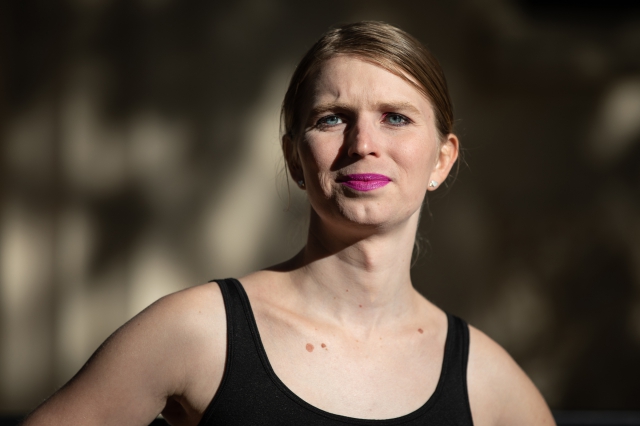
Mandatory Credit: Photo by Tom Nicholson/LNP/REX/Shutterstock (9907709c) American whistleblower Chelsea Manning poses for photos ahead of a public talk as guest of honour at the Institute of Contemporary Arts annual dinner. Chelsea Manning at the Institute of Contemporary Arts, London, UK – 01 Oct 2018 Since March 8th, Chelsea Manning has been re-incarcerated in Arlington, Va., after refusing to testify before a grand jury convened for unknown reasons, but likely related “to her 2010 disclosures of information about the nature of asymmetric warfare to the public.” She’s been held in solitary confinement for more than a month.
Today’s arrest of Wikileaks’ Julian Assange in London, after 7 years in protected asylum at the Embassy of Ecuador, will bring greater pressure and scrutiny on Manning. Many believe the grand jury wants her testimony against Assange in order to strengthen the U.S. government’s case to extradite Assange to the U.S., where he faces initial conspiracy charges but potential death penalty if found guilty under the Espionage Act.
Manning, 32, is a former U.S. Army soldier who was court martialed in July 2013 of violations of the Espionage Act and other offenses, after disclosing to WikiLeaks nearly 750,000 classified and unclassifed but sensitive military and diplomatic documents, which gave evidence of U.S. war crimes. She was imprisoned between 2010 and 2017, much of it in solitary confinement.
Despite not being charged with or even accused of any crime, she could be held for up to 18 months for her refusal to offer further testimony than what she gave in a military court in. For more information on Chelsea Manning’s incarceration and to donate to her legal defense go to: https://xychelsea.is/
Chelsea Manning is a prisoner of conscience that the religious community must defend, protect, and pray for. As one theologian said to me, “She is the Mary Magdalene of our time.” Our traditional pieties make some of us uncertain whether we should stand with a young transgender woman with no obvious religious leanings. We don’t want to look at her. We find Julian Assange distasteful. We don’t know if he’s a “good guy” or not. We find them all guilty by association. Should Chelsea be our hero? Does she deserve our support?
Yes. Chelsea Manning is defending truth and freedom with her life and body. Below is a stunning “open letter to Chelsea Manning” from Edward Curtain offering a Lenten meditation. Today, the trial of truth is enacted before our very eyes. Where will we place ourselves in the story?–Rose Berger
An Open Letter to Chelsea Manning: A Free Woman in An American Jail
April 4, 2019
“We are now faced with the fact, my friends, that tomorrow is today. We are confronted with the fierce urgency of now. In this unfolding conundrum of life and history, there is such a thing as being too late. Procrastination is still the thief of time. Life often leaves us standing bare, naked, and dejected with a lost opportunity.”– Rev. Martin Luther King, Jr., “Beyond Vietnam.” Riverside Church, April 4, 1967
Dear Chelsea,
Do not lose heart, for as a prisoner of conscience, your inspirational witness sustains so many of your less free brothers and sisters on the outside. Our hearts and hands reach out to you with love and thanksgiving. Your courage is contagious, or so I hope, for it resonates in the soul of every person who senses the meaning of the power of individual conscience to oppose state violence and the beauty of those who will not betray a comrade, who will not deliver the Judas kiss demanded by the killers, as you will not betray your brave brother, Julian Assange, also held under lock and key for the “crime” of revealing the truth.

Sophia Magdalena Scholl (1921-1943) You remind me of another young woman from long ago and far away whose bravery in the face of radical evil is celebrated today as a sign of hope in dark times. She is Sophie Scholl, the young German college student who, like you, was arrested for releasing documents exposing state atrocities, who, like you, was prompted by a higher power, by her conscience, who, like you, was arrested for releasing documents exposing such crimes against humanity, in her case those of Hitler.
Little seems to change over the years, doesn’t it? The killers go on killing, from Golgotha in ancient Jerusalem to Hitler’s Germany to Vietnam and Iraq and on to Palestine and Syria today. Why bother with the list. History is a litany of bloodbaths. Where does it all go, this blood? Does the good earth soak it up?
But in all the darkness, certain lonely voices of resistance have kept the lighted chain of faith alive. You stand in that line, a living embodiment of a faithful non-violent warrior. So does Julian.
I am writing this epistle to you on 4 April, the day in 1967 that our brother Dr. Martin Luther King stood tall in the pulpit of Riverside Church in New York City and followed his conscience by breaking with those who urged him to ignore the truth eating at his soul. The truth that he must not remain silent about the U.S. obscene war against Vietnam. “A time comes when silence is betrayal,” he said. Then he added:
The truth of these words is beyond doubt, but the mission to which they call us is a most difficult one. Even when pressed by the demands of inner truth, men do not easily assume the task of opposing their government’s policy, especially in time of war. Nor does the human spirit move without great difficulty against all the apathy of conformist thought within one’s own bosom and in the surrounding world… This I believe to be the privilege and the burden of all of us who deem ourselves bound by allegiances and loyalties which are broader and deeper than nationalism and which go beyond our nation’s self-defined goals and positions. We are called to speak for the weak, for the voiceless, for the victims of our nation, for those it calls “enemy,” for no document from human hands can make these humans any less our brothers…. A true revolution of values will soon cause us to question the fairness and justice of many of our past and present policies. On the one hand, we are called to play the Good Samaritan on life’s roadside, but that will be only an initial act. One day we must come to see that the whole Jericho Road must be transformed so that men and women will not be constantly beaten and robbed as they make their journey on life’s highway. True compassion is more than flinging a coin to a beggar. It comes to see that an edifice which produces beggars needs restructuring…. When I speak of love, I am not speaking of some sentimental and weak response. I am not speaking of that force which is just emotional bosh. I am speaking of that force which all of the great religions have seen as the supreme unifying principle of life. Love is somehow the key that unlocks the door which leads to ultimate reality. This Hindu-Muslim-Christian-Jewish-Buddhist belief about ultimate reality is beautifully summed up in the first epistle of Saint John: “Let us love one another (Yes), for love is God. (Yes) And every one that loveth is born of God and knoweth God. He that loveth not knoweth not God, for God is love. . . . If we love one another, God dwelleth in us and his love is perfected in us.” Let us hope that this spirit will become the order of the day.
Chelsea, you have heeded Dr. King’s message and you have put to shame those of us who profess faith in “the living God” that informed Martin’s call for a non-violent revolution.
You, like Sophie and Julian, have released documents that tell the truth about the savage actions of our government.
You have suffered for us many times over. You have stood strong and tall, like Jesus in front of Pilate, and you have shown the road we must all travel out of the darkness that threatens to consume us.
You have shown us by your actions “that silence is betrayal” when it comes to one’s government’s immoral and illegal actions.
And you have shown us by your sacred silence in Caesar’s court that is a U.S. grand jury, that your conscience will never allow you to betray another truth-teller.
You are, Chelsea, the embodiment of faith, hope, and courage.
You are America’s conscience.
While you are in prison, none of us is free.
We demand your freedom and that of brother Assange.
Here is a song of love to boost your spirits. I hope you can hear it. Maybe I send it to boost my own, to help me carry on as you have done. Maybe it will help us all.
You keep teaching us what it means to be free and walk in faith.
Blessings for carrying it on.[]
Edward Curtain teaches sociology and religion in modern society at the Massachusetts College of Liberal Arts in North Adam, Mass.
-
Vatican City: Faith leaders, peace practitioners deepen Church’s commitment to nonviolence and just peace
FOR IMMEDIATE RELEASE
6 April 2019

Vatican City – On 4-5 April, the Vatican’s Dicastery for Promoting Integral Human Development and Pax Christi International’s Catholic Nonviolence Initiative organised a workshop on the theme, “Path of Nonviolence: Towards a Culture of Peace.”
With a consideration and understanding of current situations of conflict and violence, participants engaged in dialogue about the roots of violence, the hope for peace and reconciliation, and reflected on paths to a conversion to nonviolence. They noted that nonviolence is not only a method but a way of life, a way to protect and care for the conditions of life for today and tomorrow.
“Our conversations on nonviolence and peace filled our hearts and minds with a consideration of the dignity of each person – young people, women and men, people who are impoverished, citizens and leaders,” said Mons. Bruno Marie Duffé, Secretary of the Dicastery. “Nonviolence and peace call us to a conversion to receive and to give, to gather and to hope.”
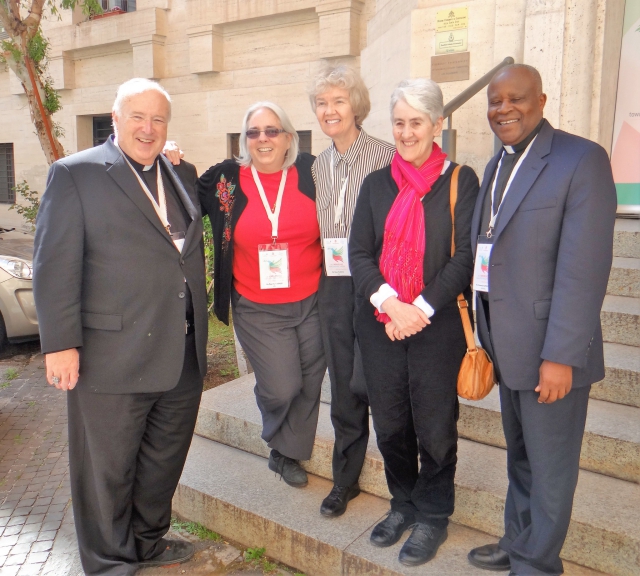
Robert McElroy (Archbishop of San Diego), Rose Berger (Sojourners), Mary Yelenick (Pax Christi International), Valerie Flessati (Pax Christi UK), Emmanuel Katongole (Notre Dame) “Pax Christi International deeply appreciates the support and participation of the Dicastery in this workshop, which has been a significant and positive step in the work of the Catholic Nonviolence Initiative,” said Marie Dennis, Co-president of Pax Christi International. “We are touched by the interventions from all the participants, who reiterated the importance of nonviolence rooted in respect, patience and spiritual strength.”
Workshop participants hailed from Mexico, Venezuela, Costa Rica, Colombia, Honduras, Brazil, Canada, the United States, Uganda, Philippines, Pakistan, Sri Lanka, Fiji, South Sudan, Kenya, Nigeria, Ethiopia, Palestine, the United Kingdom, France and Italy, and included Bishops, Archbishops, peace practitioners, theologians, social scientists, educators and those in pastoral ministry. In addition, the Dicastery’s Prefect Cardinal Peter Turkson (Ghana) was present, as was Cardinal Joseph Tobin (Newark, New Jersey, USA).

Rose Berger (Sojourners) and Peter Chong (Archbishop of Oceania) at Vatican consultation on Catholic nonviolence and just peace (April 2019) Participants will continue their dialogue and research; their reflections will be shared with the Holy Father, with the hope for a possible encyclical that will address these issues and challenges and will promote nonviolent initiatives as a way for mediation, rights, hope and love.
“We need to be artisans of peace, for building peace that is a craft that demands serenity, creativity, sensitivity and skills.” (Pope Francis, Apostolic Exhortation Gaudate et Exultate, 19 March 2018)
____________
Photos from the conference:
____________
For more information, contact:
- Johnny Zokovitch, Senior Communications Officer, Pax Christi International, j.zokovitch@paxchristi.net
- Judy Coode, Catholic Nonviolence Initiative coordinator, Pax Christi International, j.coode@paxchristi.net
- Pamela Fabiano, Press and Media Office, Dicastery for Promoting Integral Human Development, press@humandevelopment.va
-
“Flood Stage” in American Midwest

Nebraska flooding, Spring 2019 An excerpt from “Confessions of a Westward Expansionist” in Bending the Arch (Wipf & Stock, 2019) by Rose Marie Berger
FLOOD STAGE
From the plane I see
acres green with corn
hay rolls full of foam
soy swirling and swaying
the tassels poke skyward
from an ancient interior seaBefore the last glacial maximum
when people were thin on the groundThe planet was in drought
and sea levels fell to expose the plainsThe great ice sheets
began to meltWe
are the peoplewho came after
the iceCan you hear
the American Midwest
inhaling, exhaling?Do you desire to enter into life
the baptismal question
to have life in all its abundance?Earth lodge to sod house to condominium
in less than a hundred years
less than the span
of three generations–Rose Marie Berger
An excerpt from “Confessions of a Westward Expansionist” in Bending the Arch (Wipf & Stock, 2019) by Rose Marie Berger
-
Happy Feast of Saint Patrick!
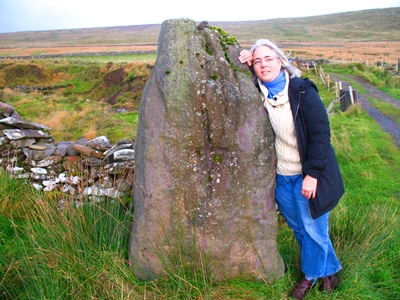
Pilgrim trail marker at Crough Patrick, Dingle Peninsula, west coast of Ireland, 2008. -
Radical Discipleship: Interview With Rose Marie Berger on Bending the Arch: Poems
ORDER Bending the Arch: Poems.
Radical Discipleship: Bending the Arch is a heavily annotated collection of poems, can you talk about the relationship between the poetry and the history and information in the back?
Rose Marie Berger: It’s a good question. I just finished reading Micheal O’Siadhail’s The Five Quintets, a 350-page poem examining the Modern era with no endnotes or explanations. It’s a stunning, ground-breaking work. But it requires a lot of work by the reader. Bending the Arch requires a lot from the reader also, but I wanted to lower the bar a little. Make it a little easier and more accessible. There are themes in Bending the Arch that I want readers to explore more on their own. My hope is that the endnotes will encourage readers to dig into the suppressed historical narratives in their own families and regions.
RD:What was the process like for writing the book?
RMB: I wrote the earliest version of “Confessions of a Westward Expansionist” (or what was then titled “Saarinen’s Arch”) in 1994, a quarter-century ago, in response to my own sense of cultural dislocation. I am a cultural Californian, a West Coaster, and Catholic who has lived for more than half my life in the culture of the Anglo-Protestant urban East and in neighborly relations with people who mostly migrated from the rural South to Washington, D.C. Since I migrated East from the Sacramento valley, I’ve been trying to get my footing, find my standing ground.
On a trip to St. Louis in the mid-1990s during one of the great spring floods, I dreamed that I was looking west through the Gateway Arch, designed by architect Eero Saarinen in 1947. Instead of seeing the Mississippi River, I saw the Pacific Ocean, two thousand miles away. In an instant, something ignited in me: I wanted to know about the spiritual powers in operation between St. Louis and the Pacific in the age of expansion and extermination, an age which my Irish Catholic and German Mennonite immigrant family took part only three generations ago.
“Confessions of a Westward Expansionist” also became my masters thesis for my MFA in poetry at the Stonecoast at the University of Southern Maine. My mentor Dennis Nurkse (Love in the Last Days: After Tristan and Iseult) never shirked from the expansiveness of my vision for the work and helped me learn the technical skills I needed to pull it off. …
Read the rest of the interview here.
-
Wendy Clarissa Geiger: On Climate Crisis

Friend Wendy Clarissa Geiger in Jacksonville, Fl. I’m honored to be on the receiving end of epistles from Quaker Friend Wendy Clarissa Geiger, peacemaker, poet, planter, and purveyor of historical memory, who roots herself on her family farm near Jacksonville, Florida. In her recent letter she intersects with my earlier blog post Jem Bendell’s Deep Adaptation and beyond. Here is Wendy’s note from yesterday:
Dear Friends, Family, and Other Scattered Pilgrims, a Wendynote re Climate Crisis,
First, a story. In the eighties, in East Germany, there appeared a notice on a church door that basically read: Those interested in making sure the Berlin Wall comes down a thousand years from now, and discuss what we must do, now, for the Berlin Wall to come down a thousand years from now, meet in the church basement on Saturday…
A small group met, growing larger and larger, with more groups forming, as the months went on. More and more creative protests as the months went on. Of course, there was solidarity protesting to bring down the Berlin Wall in West Germany, in the United States and elsewhere. In only a few years, in 1989, the Berlin Wall came down, much sooner than “a thousand years from now.” At Checkpoint Charlie, many, many persons danced atop the Wall as it was coming down, singing “We Shall Overcome.” Soon thereafter, on “McNeil-Leherer News Hour,” a representative from a conservative U.S. think tank admitted that it was the Peace movement that brought down the Wall, not Ronald Reagan.
Recently, I read of a paper on Climate Crisis (as I call it – not “Climate Change”) that has been so harrowing to contemplate once read, folk are seeking therapy and forming support groups. Last night, I printed: the paper “This Is a Crisis – Facing Up To the Age of Environmental Breakdown,” initial report from the Institute for Public Policy Research, February 2019, a report from a progressive think tank that incorporates awareness of the paper’s contents, though this report reportedly is not as dire as the original paper; and, “The Climate Change Paper So Depressing It’s Sending People to Therapy,” by Zing Tsjeng, February 27, 2019, about the paper. The original paper is by Jem Bendell BA (Hons) PhD, of the Institute of Leadership and Sustainability at the University of Cumbria in the United Kingdom. Here is the link to the pdf of “Deep Adaptation: A Map for Navigating Climate Tragedy” by Jem Bendell (IFLAS Occasional Paper 2).
So, Dear Friends, what must we-you-I do now, so there will be a livable and living, viable, healed and healing Planet Earth “a thousand years from now?” In the tradition of Thomas Berry: Planet Earth is leaving the Anthrocentric Age and continuing into the Ecocentric Age…with or without humans…
In school, we learned that centuries ago, some (some…not all) people thought Earth was the center of the Universe. Now, how will life on Earth be when humans are not the center?…when White folk are not the center?…when the United States are not the center?…when men are not the center?… Will humans transform? Will we “disappear from view,” to use Thomas Merton’s words, and commit omnicide (not suicide or genocide, but all…omnicide…)? As in: humans have to be the center of attention or nothing at all (and take everyone else with us).
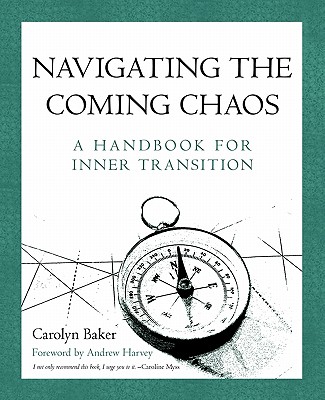
There are two books to contemplate that I recommend, both by Carolyn Baker: Navigating the Coming Chaos – a handbook for inner transition and Collapsing Consciously. A third book I recommend is Coming Back To Life, by Joanna Macy and Molly Brown. That book describes many of the thinking and body-moving exercises done in workshops. Her talks may be found on www.youtube.com , and her website is www.joannamacy.net . There are dvd’s about “The Work That Reconnects,” as Joanna Macy calls her work (workshops, lectures) around the world. On YouTube may be found Joanna Macy addressing the Bioneers Conference (about 9 minutes long, as I recall). Related, “The Souls Are Coming Back” is a marvelous, compelling, encouraging song by Holly Near, also, on YouTube, also, sung to the Bioneers Conference. Also, on YouTube, may be found Holly Near (and Emma’s Revolution) singing “I Am Willing” (another marvelous, compelling, encouraging song) to the School of the Americas Watch gathering 10+ years ago.
(more…) -
Louis Templeman: ‘The Face of Gone’ on how to live after your world ends
Yesterday I posted Jem Bendell’s Deep Adaptation and beyond and raised questions about what those us of formed in Western Christianity do when humans are no longer the center of God’s creation covenant? How then shall we live when no “Red Sea” miracle or Deus-ex-machina moment will save us from climate-induced social collapse? Where does hope fit as a theological theme when humans are decentered?
I also asked for conversation with people whose worlds have ended before–such as displaced Indigenous communities, refugees, prisoners. Noting that they may have practical guides and spiritual resources on how to live post climate collapse.
Today, I offer you an eloquent response from Louis Templeman, who was an inmate in Baker Correctional Institution, in Sanderson, Fla. What can we learn from Louis’ wisdom about how to live after the end of the world?–Rose Marie Berger
From Louis Templeman: I haven’t read your links yet. Just your letter. I apologize for not waiting until time to pass so I can rewrite. But, it is disposable anyway. Hope it mirrors the trouble you feel. Here’s what prison is like:
All over, all gone, alright.
All over, all gone, alright.
Uselessness and Helplessness, the religious
of the apocalypse, embrace me and squeeze me
and invite me to endure. And wait. And wait.
And, yes, wait.
But waiting is over. I’m already there. They’re
Already here. Already here. Already here.
Pain calls for sleep. Sleep runs from pain. Noise calls
For more, more, more. Listening calls for sense.
Sense calls for meaning. Meaning runs from every damn thing.
Waking up means more of the same. The sleep is short.
The truth sleeps, faking death. The sleep trucks in more of the same.
The same. The same. The same. The same shit.
Yet, the human condition, bred for hope, cries for
something else. Something not coming.
The face of Gone, the face of Over, is ever, ever
ugly and unchanging. Disaster, boring
until painful, calls the sisters to pray for your sight
so, you can watch, and feel, and watch.
–Louis TemplemanLouis Templeman is the father of five adult daughters and very happily married to Joy. He is author of Ice Water from Hell (published under his pen name Gano Rinehart) and has worked as a social worker, Pentecostal pastor, and house painter. He was an inmate in Baker Correctional Institution, Sanderson, Fla.
-
Jem Bendell’s Deep Adaptation and beyond
I read Jem Bendell’s paper on Deep Adaptation in the age of climate collapse last August and it sent me into an existential panic. It took about three months and quite a few transformative conversations with folks at Sojourners and in the Watershed Discipleship movement before I moved to another response: something akin to Job’s lament but told from the point of view of the whales.
Bendell’s paper and subsequent conversations raise questions for me about what do those us of formed in Western Christianity do when humans are no longer the center of God’s creation covenant? How do we offer ceremonies in a way that seduce the Sacred presence to return? How then shall we live when no “Red Sea” miracle or Deus-ex-machina moment will save us from social collapse? Where does hope fit as a theological theme when humans are decentered?
I’m committed to staying in conversation with Bendell’s paper, my faith, and my community of Watershed disciples and act out of any wisdom that may arise. I also want to be in conversation with people whose worlds have ended before–such as displaced Indigenous communities, refugees, prisoners. They all may have practical guides and spiritual resources for how to live after the end of the world.
Above is a video with Jem Bendell. Below is an excerpt from a Vice article on Bendell’s article by Zing Tsjeng.–Rose Marie Berger
The Climate Change Paper So Depressing It’s Sending People to Therapy
“What if I told you there was a paper on climate change that was so uniquely catastrophic, so perspective-altering, and so absolutely depressing that it’s sent people to support groups and encouraged them to quit their jobs and move to the countryside?
Good news: there is. It’s called “Deep Adaptation: A Map for Navigating Climate Tragedy.” I was introduced to it via an unlikely source—a guy formerly in advertising who had left his job to become a full-time environmental campaigner. “We’re fucked,” he told me. “Climate change is going to fuck us over. I remember thinking, Should I just accept the deep adaptation paper and move to the Scottish countryside and wait out the apocalypse?”
“Deep Adaptation” is quite unlike any other academic paper. There’s the language (“we are about to play Russian Roulette with the entire human race with already two bullets loaded”). There’s the flashes of dark humor (“I was only partly joking earlier when I questioned why I was even writing this paper”). But most of all, there’s the stark conclusions that it draws about the future. Chiefly, that it’s too late to stop climate change from devastating our world—and that “climate-induced societal collapse is now inevitable in the near term.”
How near? About a decade.” —The Climate Change Paper So Depressing It’s Sending People to Therapy by Zing Tsjeng
-
Ash Wednesday by Louis Untermeyer

… The candles hiss; the organ-pedals storm;
Writhing and dark, the columns leave the earth
To find a lonelier and darker height.
The church grows dingy while the human swarm
Struggles against the impenitent body’s mirth.
Ashes to ashes. . . . Go. . . . Shut out the light. …Read Louis Untermeyer’s complete Ash Wednesday poem.
-
Celebrating Women: Pat Gaffney on 30 Years with Pax Christi UK
From Pax Christi Peace Stories (March 1, 2019)
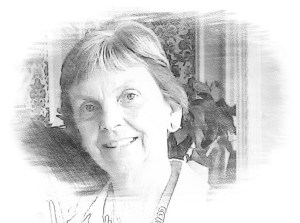
Pat Gaffney, Pax Christi UK Pat Gaffney is graduating/retiring as the General Secretary of Pax Christi UK this year. She wrote the reflection below on her nearly 30 years in that role. I have had the honor of working with Pat since 2016 on the Catholic Nonviolence Initiative–though, after meeting we quickly found lots of connections, including that she’s the godmother of the children of my highschool ceramics teacher! Pat and I have spent hours on Skype and even spent a week in London together, Pat’s home town. She is a phenomenal woman and friend. Sharing these stories of women doing gospel work over the long haul is how we extend God’s circle of hospitality and justice. Sign up for more Pax Christi Stories.—Rose Berger
FROM PAT GAFFNEY:
1 April 1990: the day my contract with Pax Christi began. 29 years on, I am still here (how did that happen?) but preparing to move on and create space for some new thought and energy. This article takes a long view of our work over this period, of changes within the global and domestic arenas, and in technology. Our movement has undertaken so many challenges with a spirit of ingenuity, flexibility and faithful persistence to Gospel peacemaking.
1990 was a good time to come on board. Talk was of a Peace Dividend. With the Cold War behind us, new opportunities were unfolding for economic and social growth. Spending on defence would decline and investment in arms conversion would follow. The Greenham Common Women’s Peace Camp had helped to get rid of cruise missiles. Pax Christi’s valiant East-West group, coordinated by Peggy Attlee, having worked towards one Europe, was prepared for the new challenges of creating a common home. In the summer of 1990 our British section of Pax Christi hosted in Clifton Diocese an international ‘route’ for young people, with the theme, Let’s build a Europe of Peace. Sadly, many of those hopes crashed on 2 August when Iraq invaded Kuwait and what was to become protracted war in the Gulf and Middle East began. Goodbye peace dividend.

As a ‘new’ person four months into the job, the prospect of sliding into war was daunting! Thankfully, friends in the Fellowship of Reconciliation, Christian CND, the National Peace Council (NPC) and Campaign Against Arms Trade (CAAT) were ready to create common plans. Could we de-escalate the tension by urging our Government to prevent a full military response from the USA? Setting up communication systems was key. Pax Christi at that time had one temperamental computer, an old but sturdy Adler typewriter, and a photocopier. My first big purchase was a FAX machine – essential for getting out press notices, sharing drafts of leaflets, sending letters to Government and so forth. By Spring 1991 we had established the Christian Coalition for Peace in the Gulf and a ‘Call for Action’ supported by church leaders, religious communities and groups around the country. In response to military attacks and then years of sanctions against Iraq, weekly vigils were held nationwide. The NPC ran a conference that became a springboard for much joint work, including the creation of the Peace Education Network (PEN) and a more focused response to the UK’s arms trade to the region – in particular that of British Aerospace.
(more…)

-
Subscribe
Subscribed
Have a WordPress.com account? Log in now.

