I met Fr. Gustavo Gutiérrez one time–but he has shaped my life.
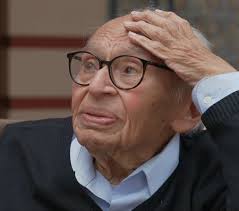
Fr. Gustavo Gutiérrez Merino, OP
8 June 1928 – 22 October 2024
In the spring of 2005, I was in El Salvador to attend a week of theological reflection commemorating the 25th anniversary of the assassination of Archbishop Oscar Arnulfo Romero. It was held at the Jesuit Central American University (UCA) in San Salvador where eight Jesuit priests and two co-workers were brutally murdered by a Salvadoran army hit squad in November 1989. The large speaking events were held in an auditorium that held thousands. Every seat was filled.
In the afternoon of March 31, as I surged with a huge crowd into the venue, a chant rose up. I couldn’t quite make out the words. But it kept getting louder. Along with feet stamping on the bleachers. A wave of movement rippled through packed bodies as room was made for a very small man to pass by me and toward the stage. The chant echoing off the rafters was: “Gus-Tav-O! Gus-Tav-O!”
The diminutive “father of liberation theology” was welcomed as a hero by a crowd of mainly young people as he approached the microphone to speak about the importance of Romero’s work and to “talk about God in Latin America from perspective of the socially insignificant.”
Later at that event, I shook Fr. Gutiérrez’s hand and thanked him for all he had done and continued to do. It was awkward and unforgettable. Gutiérrez’s books, particularly A Theology of Liberation and We Drink From Our Own Wells, honed an outlook on the world given to me first by my family and sharpened in my years living in Columbia Heights in Washington, D.C., with Sojourners community.
When I moved to D.C. in 1986, I soon met with members of the Assisi Community, co-founded by Fr. Joe Nangle, ofm, and Marie Dennis, a Catholic base community a few neighborhoods over from Sojourners. Fr. Joe served in Peru in the 1960s and was a student of Gutiérrez’s in Lima as Gutiérrez was formulating his questions and thoughts on what came to be known as a theology of liberation. To this day, Joe is a living transmitter of the gospel perspective that Gutiérrez articulated.
Once when I was headed to Peru, Joe Nangle suggested that I track down the artist that created the powerful image for the cover of Gutierrez’s books. The famous indigenous crucified Christ on the cover of A Theology of Liberation was created by Peruvian artist Edilberto Merida, later deemed “sculptor laureate of Latin American liberation theology.”
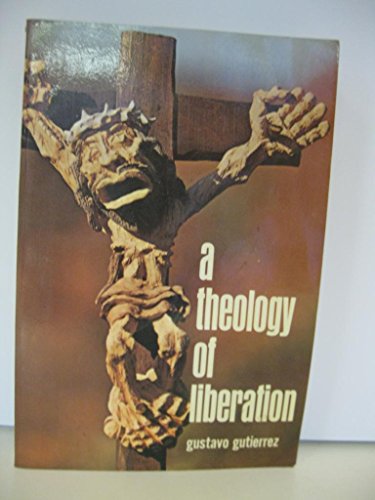
Merida’s clay crosses with an Incan Jesus writhing in agony defined a generation of Peruvian art–the people’s art, the art of the real. Photos of Merida’s work were on the book covers of theologians Leonardo Boff and Gustavo Gutierrez. When I arrived in Cusco, I asked person after person in front of the Cathedral where I might find the artist. Everyone had heard of Señor Merida, but no one knew exactly where he lived. I was thoroughly frustrated and ready to give up when a man approached me. “Are you lost?” he asked. “I’m looking for the great artist Merida, but no one seems to know where he lives.” He was astonished. “I am Merida,” he replied, extending his large rough hands. “Are you certain you are looking for me?” I asked, “Are you the sculptor who makes the crosses?” And Señor Merida replied, “I am he.”
We spent the afternoon in his home studio discussing the Cuzqueña school of art and his own work, particularly his “liberation theology” crosses and “Mother Hunger”–a grotesque sculpture of a gaunt woman with her starving children pushing out through the prison of her rib cage. It was a conversation about life–and the process of “becoming children of God,” as John’s gospel puts it—disciplined, always, by the groans of those begging for freedom.
This is one tiny strand of the living legacy of Fr. Gustavo Gutiérrez. + Presente! +
–Rose Marie Berger
OTHER INFORMATION:
Below is a quote from Fr. Gustavo Gutiérrez given in Nov. 3, 2021, to celebrate the 50th anniversary of the publication of A Theology of Liberation.
“Given the situation in Peru, I once again feel the need to call for a conversion to the message of Jesus. As a priest, I have frequently lived among the poor. Poverty today is living apart from the world that progresses, from the one’s who have goods and security. Even if they live in the same city, the poor live differently. Issues of poverty and inequality now do not belong only to Peru or Latin America. They are a central problem for the entire planet. Poverty is early and unjust death; it is destructive of people and families. As Hannah Arendt said, ‘The poor is the one who does not have the right to have rights.’ The love of God however is universal. It does not exclude anyone. But Jesus asked us to give preference to the weakest, to those ‘discarded,’ as Pope Francis says. That is why the commitment to the poor cannot avoid denouncing the causes of poverty. I see Peru living like many other countries. The best reason to find points of agreement should be solidarity with those who suffer the most. The fight against poverty is part of a general fight to overcome all oppressions. Among these is the plight of women. It is the most serious because it divides humanity in half. I especially want to tell my friends, let’s go to that ‘other world’ where the poor live. Let’s create more sources of dialogue and solidarity with them. Thank you for everything you have worked for and for listening to me. Gustavo.” –Fr. Gustavo Gutiérrez
OBITUARIES and COMMEMORATIONS:
Falleció el padre Gustavo Gutiérrez, fundador de la teología de la liberación (La Republica)
Gustavo Gutiérrez, champion of the poor, dies aged 96 (Vatican News)
Liberation theology icon and champion of the poor Gutiérrez dies (BBC)
Father Gustavo Gutiérrez Merino, seismic Catholic reformer who launched ‘liberation theology’ (The Telegraph)
Gustavo Gutiérrez and the life-changing theology of liberation by Joe Nangle, ofm
Father of liberation theology, a tiny man with a giant legacy, dead at 96 (Crux)
 Rose Marie Berger